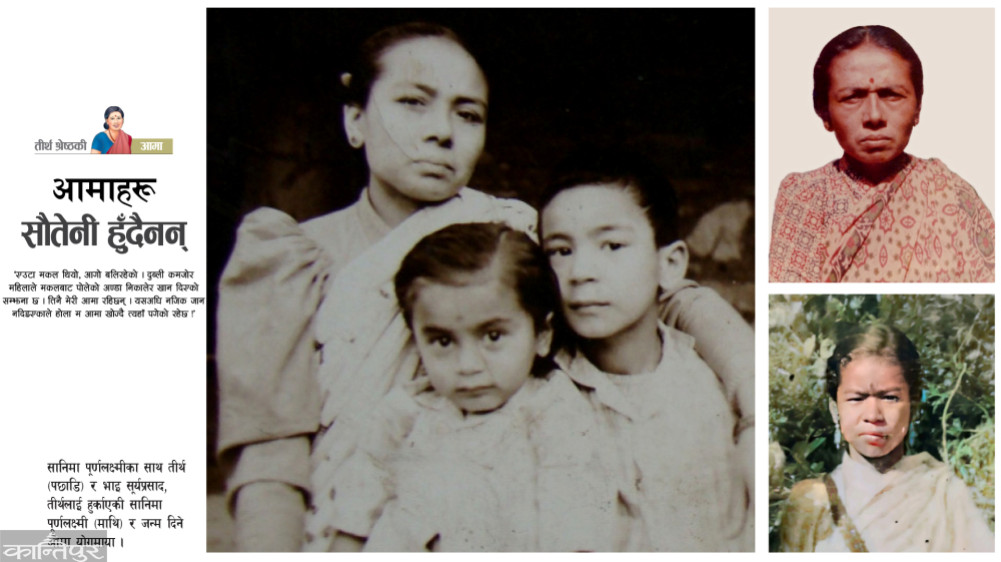
There was a fire burning. It is remembered that a weak woman in Dubli took out a burnt egg from a muckal and gave it to eat. She remains my mother. I have been there looking for my mother because I was not allowed to get close before!'
We use Google Cloud Translation Services. Google requires we provide the following disclaimer relating to use of this service:
This service may contain translations powered by Google. Google disclaims all warranties related to the translations, expressed or implied, including any warranties of accuracy, reliability, and any implied warranties of merchantability, fitness for a particular purpose, and noninfringement.
The old people say, 'When you see your mother, you lose your hunger.' The poet Tirtha Shrestha did not see his mother when he knew he was hungry. Having lost his mother at the age of three, he satiates his hunger for maternal love by writing poems about his mother.
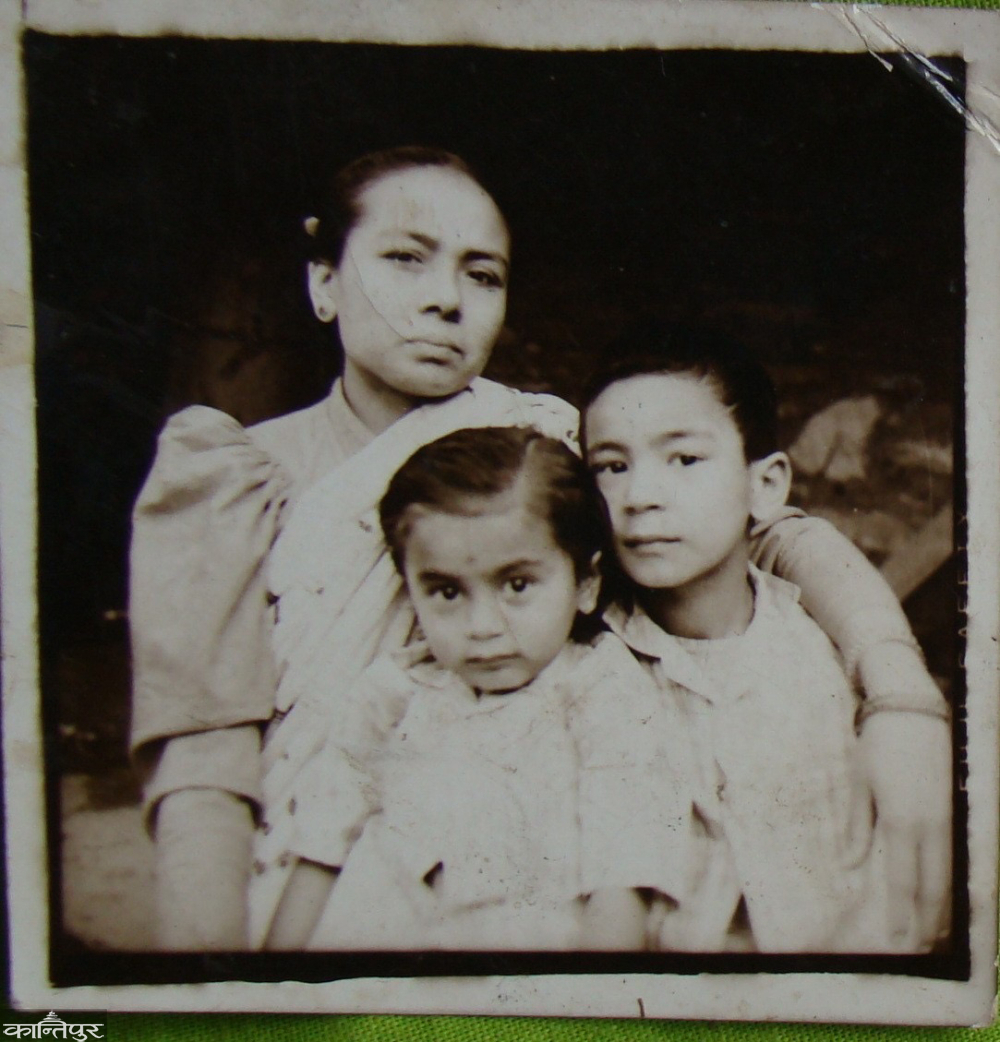
2016 He was born from the womb of Yogamaya Shrestha on 16th October 2016, when the mother was 15 years old. Tuberculosis struck him. After being sick and kept in a separate room, he did not have much closeness to his mother. Grandmother Bhadrakumari nursed him and brought him up. Only one dim memory of him with his mother remains. Tuberculosis was considered terrible at that time. The mother was kept in a separate room, where she could defecate, cook and sit. Maybe he was in some kind of isolation. I remember a little,' he turned the pages of his memory on Monday morning, 'there was a muggle, a fire was burning. It is remembered that a thin, thin and weak woman took out the burnt egg from that muckal and left it to eat. I found out that she is my mother. Maybe I went looking for my mother because I wasn't allowed to get close ∕'
Tirtha's sister is born. Maiti took Beni to the mountains to take care of the pregnant mother. Unfortunately, the mother and daughter passed away shortly after arriving. "They say they took me too, but I don't remember that much," Tirtha says, "That one chapter is over." My sister passed away after birth, it just happened that she saw the world. I have a very short memory of the mother who gave birth to me. After my mother's death, grandmother Maiyadevi, elder father Ratna Prasad and great grandmother Bhadrakumari did not let the lack of love. When Tirtha was five years old, his father Dharma Prasad got married again. Purnalakshmi was brought from Gorkha market to Palungtar and brought to Pokhara by ship. Near the Vindhyavasini temple, the shrine found the needle that the father brought the younger mother to Guruba's house. He remembers that he went to see his younger mother with his friend because the place for reading and playing was there.
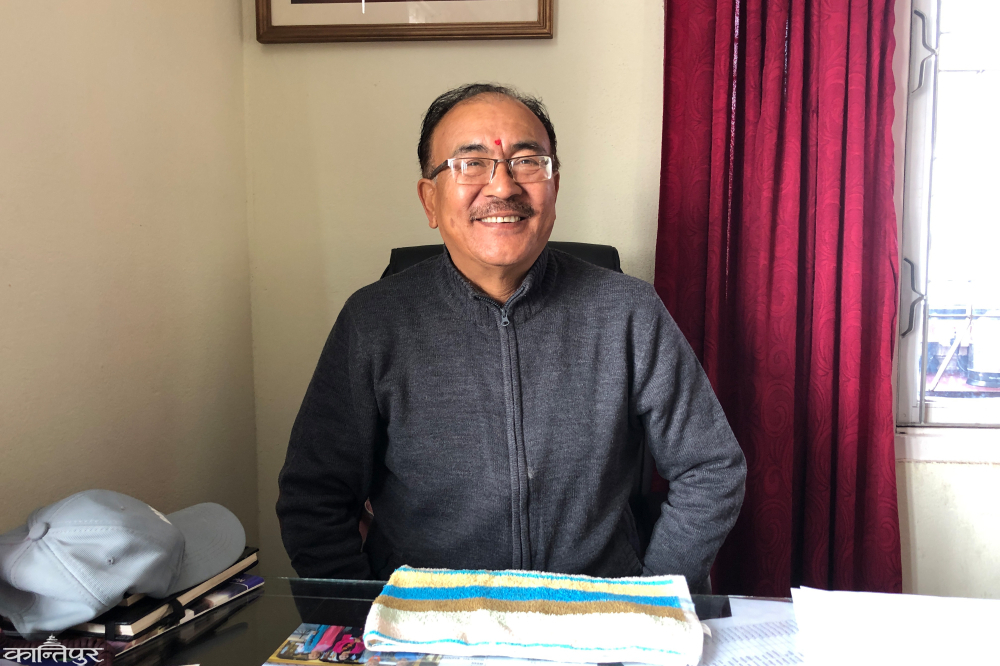
Grandma was like a mother to him. While other brothers get five or ten paise, Tirtha used to get one mohor from her grandmother. When he was 12 years old, his grandmother died in 2008. After that, Sanima's role increased. He later realized that after Purnalakshmi's entry, there was some kind of fear in Grandmother and Phoopoo. "I have a feeling that there was some fear about the kind of upbringing after the arrival of the stepmother," he said, "I also had a doubt after the arrival of the mother." Later I developed such a relationship with my mother, she gave me so much love that I started to forget the mother who gave birth to me.'
She didn't feel any pain when she lost her birth mother. He was not even old enough to feel the sadness of his mother's death. When he was 12-13 years old, he cried for the first time remembering his mother. He says that he wept profusely when he was fasting with his brothers. "I wish my mother had been present at that special festival of Vratbandh," he said. From whom no matter how much love you get, the pain of the memory of the mother who gave birth will be different.'
029 When he was 13 years old, his uncle went home . After reaching Beni, he met Bajebjayi and wept profusely. Somewhere on the banks of the Kaligandaki river, he cut his mother's cremation. After inquiring with his uncle, Mavali pointed to the suspension bridge a little above the house. "I used to remember that my mother was cremated here," he sounded emotional, "Sometimes I used to offer fruits on the banks of Kaligandaki." After reading, he used to play two or three times a night. Allare Bella was just entering adolescence. He used to walk across fields and forests. It was customary to go to the river and bathe. Sanima used to pull her and bathe her saying that 'even after being bitten, you still carry lice'. Two brothers and a sister were born to Sanima. Even after the birth of siblings, Sanima did not let her lack of love.
She had learned that Tirtha had done politics a little and was interested in literature. Sanima was afraid of being caught and beaten up by the police when she joined the anti-panchayat movement. While contesting the Swaviyu president election at Prithvi Narayan campus, although her father encouraged her, her mother was only interested in whether she would be beaten. Purnalakshmi used to remind me that when the father got angry and quarreled with his son.
Sanima had a burning desire to see her daughter-in-law brought in before she died. To fulfill Sanima's wish, the father arranged the marriage of Tirtha. 038 Sushila was brought home on 4th June. The day after the daughter-in-law came in, Sanima took out a bunch of keys and gave them to Sushila. "You said that you will take care of this house after putting the key in your hand," he said, taking the words of Sushila to him, "Even though he did not see that scene with his own eyes, he still remembers it." Misfortune ∕ One month after the wedding, Sanima passed away due to the illness of her mother. Tirtha was 22 years old when Sanima passed away.
The siblings were younger. Sushila had to play the role of a mother. 'An elderly father, who was suffering from the lack of a spouse to open his heart,' Tirtha said, 'At that time, the father had to carry the responsibility of the mother's work, but we paid great attention to the father's lack of mother.' kept playing Along with poet Manjul and photographer Kumar Ale, he took the American students to Arthur Dandakhark in the mountain around 054. Bhupi stayed for dinner at Thakali Hotel in Dobilla on Sherchan Highway. While cooking food, Modi drew a poem sitting on a big stone in the Kaligandaki river:
Being a mother
is very difficult.
To be allowed to rise...'
After Khana Khaivari ascended from Dobilla, he took a class in one of Arthur's schools. He recited the poem 'Mother' to the students. The teacher, Isu Miss, handed over a white sheet and told her to write a poem with her own hand. The next day, Miss Jesus invited three people to her house for lunch. When he reached home, the old woman with wrinkled face was sitting on a stick. Remembering his own mother, he asked her to write a poem on the page. He was incredibly happy when he saw the 'Aama' poem hanging on the wall. After returning from there, a joint collection of Kumar Ale's photographs, Manjul and Tirtha's poems, Pailaka Neevanar, was published. The collection included the poem 'Mother'.
There was an annual poet symposium at Yalmaya Center. The next day, at the request of Amrit Gurung of Nepathya, he went to visit Namobuddha. On the way, he said to Tirtha, 'I have done a task without asking you, can't you be angry?' Tirtha asked, 'What task?' He recited the composition on the cassette. Tirtha also liked it. Later, Nepathya included the song in the album 'Mero Desh'.
Saw Kalni's mother cooking. The way to my Mawli is also the same, I wrote the poem remembering that my mother also passed away somewhere there,'' he narrated. Before that, he remembers writing a poem, "In every home, a mother greater than God has lived...". He recounted the occasion when both these poems were recited in Hong Kong a decade ago. Sarubhakta along with Tirtha and Pragya Pagani reached Hong Kong to recite poems on 'Shiva' ticket. A group of Nepalese mothers have rented a house and built a monastery in Englungar Kowloon there. A mother wept bitterly while reciting a poem in Yinglung. 'Mother' is in poetry:
'Where do children reach
Where do dreams reach
Where do dreams reach
Like clean birds'
Only a month ago Manjul and Shiv Gautam's poetry collection 'Mother' has been published. The collection contains 15 of his new and old poems written about mothers. In his poetry collection 'Dharsaidharsako Chakravyuh', the top poem is about mother. He doesn't miss reciting two lines on every platform where he recites poems about mothers:
'mothers are not stepmothers,
stepmothers are not mothers...'
He has not finished this poem. He explains the sentiment of the poem in this way, "In our society, there is a custom of looking at the stepmother like a black mark of stigma." A comment has been made that the stepmother is seen as a symbol of cruelty and what the stepmother does. Those who have a mother's heart in their heart are not stepchildren. If the mind is a stepmother, she cannot be a mother.'
'Mothers are not stepmothers' is long before writing. He is preparing to bring this poem that has not been published anywhere and has not been recited anywhere.
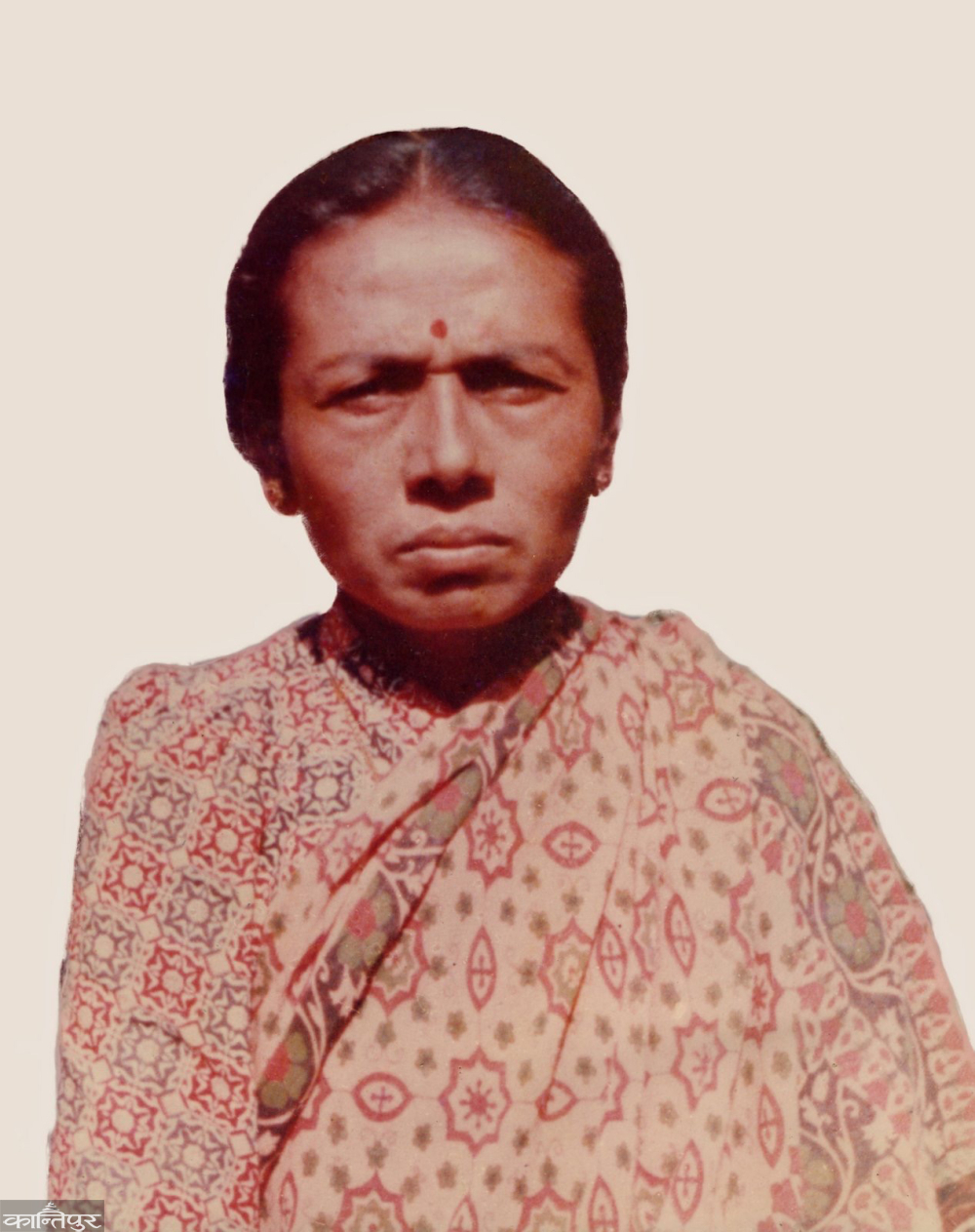
His friend did not know that his three brothers and one sister were children of two mothers. In 2005, when he published 'Tirtha Shresthaka Kavita', he put a picture of two mothers and dedicated it as 'My mother Yogamaya from whose womb I was born, my mother Purnalakshmi in whose arms I grew up'. Only then did they realize that they were children of different mothers.
Gurungseni's mother's furnace was in front of her house in Ward 1 Simhanath village of the then Pokhara Nagar Panchayat. When the Gurungs came from the village, they used to stay and eat. As she was an orphan, her mother used to take the pilgrim from home and feed her. He found the taste of sukuti there. At that time there were few people in the society. The grief of one house was known to the other house. The whole society used to join in marriage," he remembers. "When someone dies in someone's house, the whole society joins in and completes the work. Our society is not like that now. We entered the era of catering.'
He is influenced by the mothers of Guru Nanak, BP Koirala and Prithvi Narayan Shah. Tirtha is clear that even if there are many mothers in life, even if 'God' does not come to any of those mothers. A loving grandmother, a birth mother, a protective grandmother or a nurturing 'step' mother. Who will she choose? If you have to choose, perhaps it is when you write in poetry:
'Mothers are not comparable,
there are no children to compare...'