The general public and working class complain that wages have remained the same for years despite the continuous increase in the prices of electricity, rent, and rations. They say that despite the expectation that the government would bring a transformative budget, it has done the exact opposite.
We use Google Cloud Translation Services. Google requires we provide the following disclaimer relating to use of this service:
This service may contain translations powered by Google. Google disclaims all warranties related to the translations, expressed or implied, including any warranties of accuracy, reliability, and any implied warranties of merchantability, fitness for a particular purpose, and noninfringement.
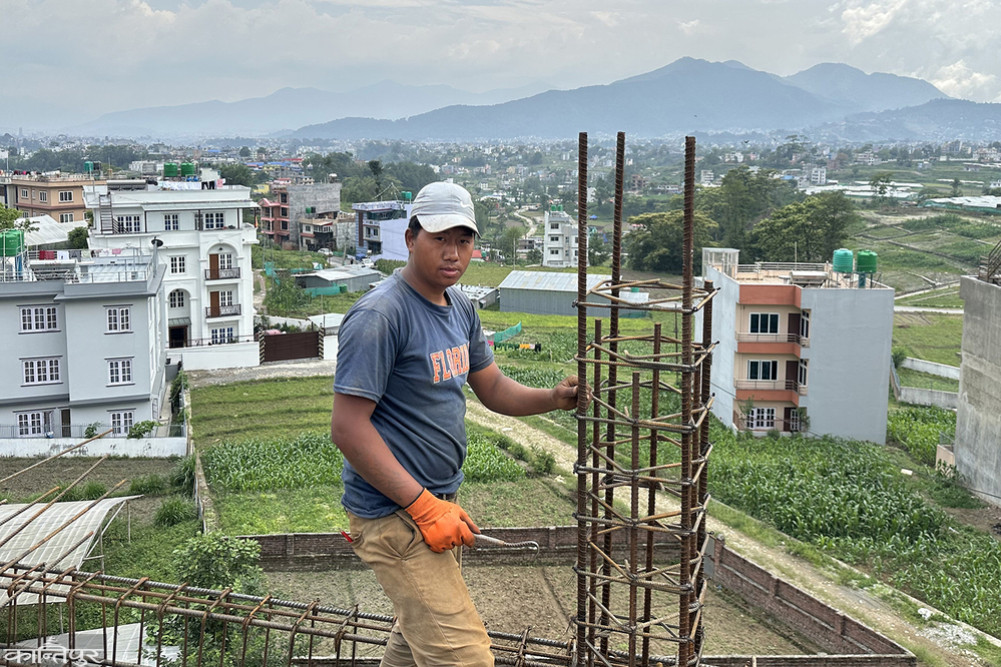
Dipendra Tamang, a resident of Hetauda, has been working as a ‘steel fixer’. Born into a normal family, he says he started earning by working as a daily wage labourer at the age of 11. He says that he is not much interested in the budget as it does nothing for his welfare. ‘We are at work from 6 am to 6 pm. That is why we do not watch much news,’ he said, ‘When did the budget come during the government’s term? Inflation increases, room rent increases, ration increases, but the wages for the work we do from morning to evening are always the same.’
Dipendra said that although there were great hopes from the new government, it seems that nothing has been done for the welfare of the workers.
‘Inflation has increased like this. The price of ration and water has reached the sky. The government had already seen the increase in prices,' he said, 'but we have been working at the same price for years even though we work according to the number of days. The government should have taken care of this.' He said that work is not always available and sometimes the work we get makes it difficult to meet household expenses.
Presenting the budget for the upcoming fiscal year 2083/84 on Friday, Finance Minister Swarnim Wagle had said that significant improvements would be made in the rights and interests of workers. Workers have expressed dissatisfaction as the budget has increased taxes on electricity even to provide relief during a time of rising prices.
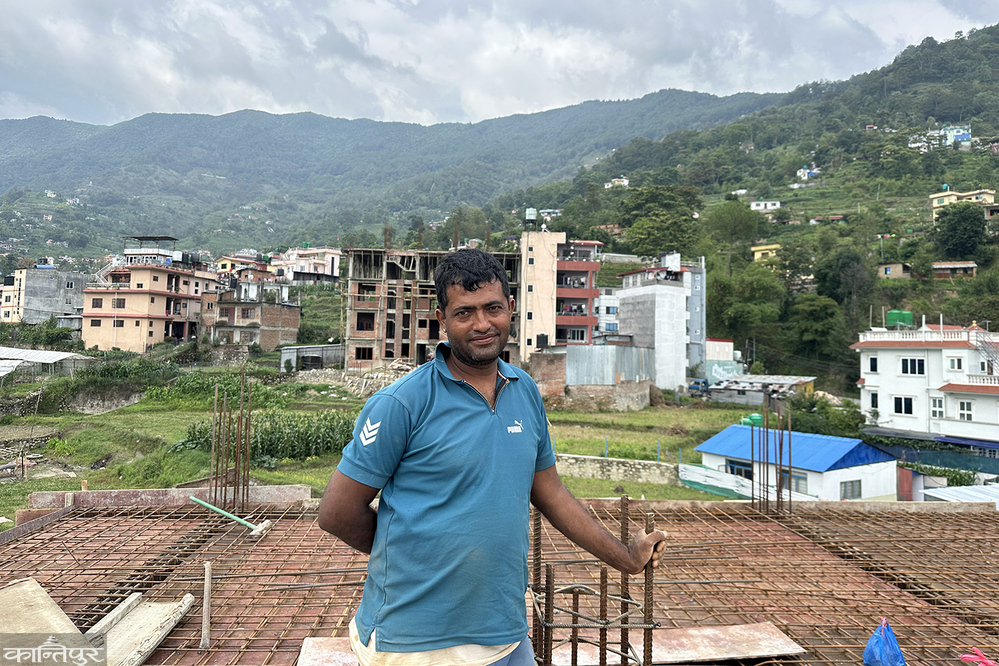
Han Bahadur Bhandari, who hails from Kavre, is also a worker. He has been working as a carpenter for the past 17 years. He said that the budget speech was very different from what he had expected. 'Common people like us have many hopes and expectations from the new government. But it felt like the budget was only for those who can do government jobs and investments,' he said, 'It is always difficult for those who are illiterate and work for others.'
The 38-year-old says that even though he has been living in Kathmandu, it is difficult. 'There is always work.' Even though we had to borrow money, we had a family living in Kathmandu. There are rumors that the children's school fees will also increase,' he said, 'They are saying that the electricity bill has also increased. Now the housewives will have to take more. What does it matter to others? It is difficult for us poor people.'
The government has also stated that it will be mandatory for workers and employers to be registered with the labor registry.
Similarly, the budget stipulates standards for services such as insurance, housing and digital complaint management provided by organizations licensed to supply construction, agriculture, hospitality, transportation and industrial workers in addition to security guards and domestic workers. The budget also mentions mandatory written contracts in the labor sector, minimum wage, insurance, workplace safety standards, and payment of wages through banks.
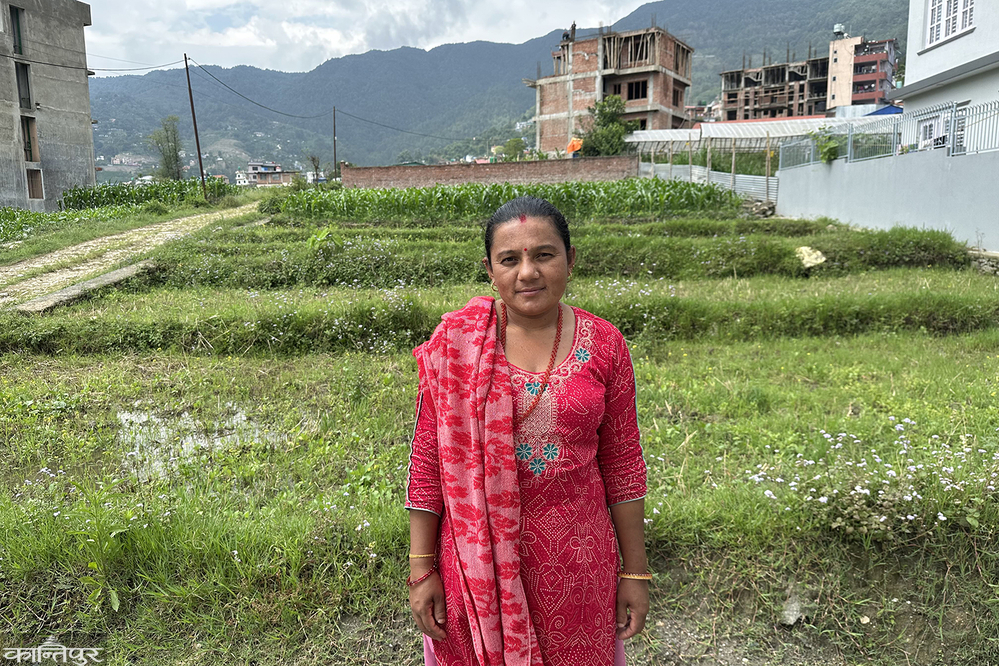
Similarly, Rampyari Chhetri, who hails from Nuwakot, has been working as an assistant. The 36-year-old said that she learned about the budget from her daughter. ‘Even after seeking loans, I finally sent both my children to boarding school.’ Her daughter said that taxes would increase,’ she said, ‘Now school fees will increase. We were afraid that we would be in trouble from everywhere.’ She has been earning alone to cover household expenses.
Although she is not very knowledgeable about the budget, she said that she wants inflation to decrease, but she knows that many things will increase. ‘If the budget reduces inflation, I would be interested.’ The electricity bill is even higher. What should we be concerned about?,' she said, 'The budget does not provide relief to the poor. It will bring inflation.' She said that she did not know what was allocated in the budget speech for the welfare of the workers. 'I do not know what they said for the workers. But the increase in electricity and school taxes is visible as soon as you open Facebook,' she said.
Anjali (name changed) from Pokhara is a 'pharmacist'. She has been working in a hospital in Pokhara for the past 6 years. She says that there is inequality in the budget. 'Every sector of the medical sector should be equal.' Those who work in many sectors in the hospital have to work night shifts,' she said, 'But it is wrong to give allowance only to nurses and ignore others.'
The government has also announced that it will resolve labor disputes through labor tribunals by mid-December and develop a system to bring contract violations, wage fraud, and labor exploitation under the legal ambit of economic crimes.
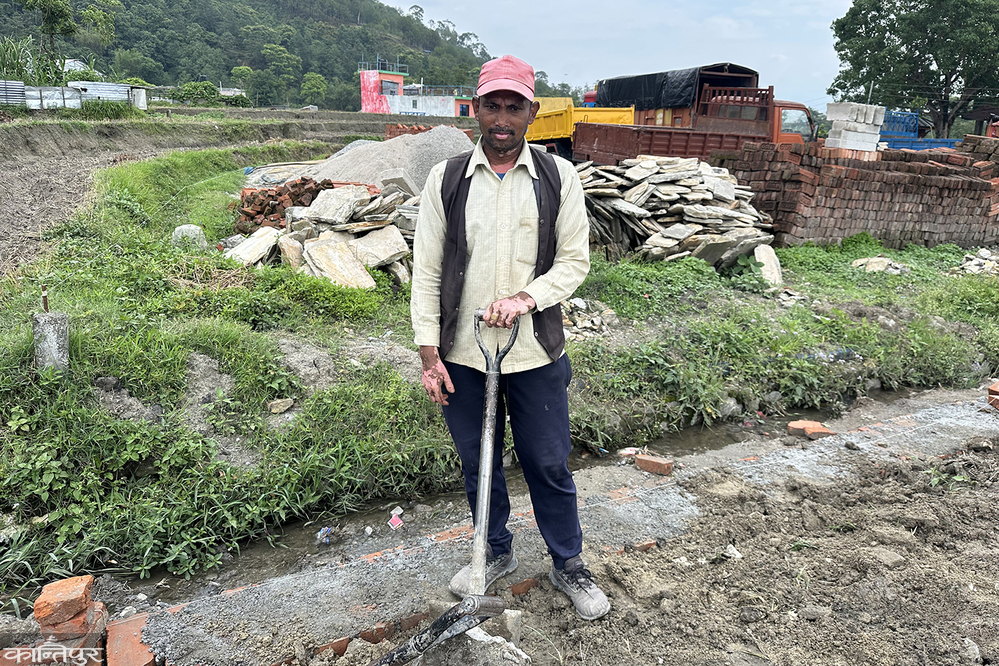
47-year-old Kumar Sarki was found shoveling dirt on the side of the road. He hails from Okhaldhunga and says that he has been doing work like carrying heavy loads, shoveling sand, cleaning, and clearing roads for the past 20 years. He said that he does not know much about the budget, but he wants the same wage for the work he has been doing.
‘Whether it is in the budget or not, I have worked for 600 a day even when I have not been able to get work,’ he said. ‘If I get work, it is 800 to 1,000. But if I always get it at the same price. If that was in the budget, it would be a relief,’ he said.
Asmita Sunar, a goldsmith from Palpa, is a gold and silver businessman. She, who has been doing business in Kathmandu for 11 years, said she was both happy and sad after the budget speech. ‘I am sad that my daughters’ fees will increase. I have to pay more for electricity than before. I am sad that I will not be able to go to the hospital,’ she said.
She said that there has been little relief in her business sector. ‘I am happy to hear that the 2 percent luxury tax imposed on gold and the 13 percent VAT imposed on diamonds and stones that the government had imposed for some time now have been abolished,’ she said. ‘This is a matter of joy not only for gold traders but also for customers. But what can I do, I will not be able to buy gold.’

The 29-year-old said that although she expected a lot from the budget speech, the results have been different. ‘I had thought the government’s budget speech brought by the youth was a little different,’ she said. ‘It seems that the poor have been made unable to think about making electricity, private schools and hospitals accessible to everyone.’
Experts say that the budget has come in a way that will hurt the workers.’
Laxman Basnet, general secretary of the South Asian Regional Trade Union Council, says that it is not yet clear whether the government will implement the provision that requires workers and employers to be mandatorily registered in the labor registry.’ ‘Although there has been talk of making it mandatory for employers to be registered in the labor registry, this issue has been limited to discussions for the past 20 years,’ he says. ‘It is not possible to say whether its implementation will be easy in the current political structure, let’s see.’
Basnet says that workers are being neglected due to the political structure. ‘The current political structure seems to be neglecting workers. Their rights are not protected. The current laws are more in favor of the workers than the workers,’ he says. ‘In the past 20 years, the economic growth of the employees has increased hundreds to thousands of times, but the condition of the workers is the same. Even though the employees are doing well, it seems that the workers are not getting the proper benefits, making it very difficult for them to make a living.’ Basnet says that even if the salaries of civil servants increase, it will not provide much relief due to the high inflation in the market. In addition, he says that the lives of the workers are becoming more difficult as prices and inflation will continue to rise.
‘The condition of workers working in the private sector is even more miserable.’ It seems that they are being paid less than the minimum wage,' he says, 'Due to rising inflation, private sector workers are struggling to even afford basic living expenses. In the current political and economic structure, there is not much room for workers to get relief.'
Nepal Trade Union General Secretary Bishnu Lamsal says that the government has presented a different budget than expected for the welfare of workers.
It is true that the government has increased the salaries of civil servants, but it has not said anything about the salary increase of workers in other labor sectors, Nepal Trade Union General Secretary Bishnu Lamsal expresses dissatisfaction. 'Only the salaries of civil servants have been increased. But there was no talk of increasing the salaries of workers working in other informal sectors. It seems that the state has made a unilateral and biased decision in this,' he says, 'We disagree with this.' If we are to progress the nation, the upliftment of those who actually work is the most important .’
He says that there is no equality in the budget .
‘The budget has come in the exact opposite of what the people and workers expected that the government would make some changes,’ he says, ‘It seems that this budget has failed to bring equality for the workers .’