David Attenborough spent his entire life documenting the turbulent times the Earth has experienced, with his team traveling endlessly across oceans, jungles, islands, mountains, and deserts.
We use Google Cloud Translation Services. Google requires we provide the following disclaimer relating to use of this service:
This service may contain translations powered by Google. Google disclaims all warranties related to the translations, expressed or implied, including any warranties of accuracy, reliability, and any implied warranties of merchantability, fitness for a particular purpose, and noninfringement.
World-renowned documentary broadcaster and environmentalist Sir David Attenborough has turned 100. On the occasion of his 100th birthday, he announced on Friday that he will also be narrating the ongoing series 'Blue Planet 3'. His birthday was celebrated at the Royal Albert Hall in London in the presence of world-renowned figures including Britain's King Charles and Prince William. Attenborough said that he was speechless after receiving birthday wishes from around the world.
He has played an important role in spreading the popularity of the British television BBC worldwide. Attenborough, who loves nature and the environment, is also known for his powerful voice. He spent his entire life describing the turbulent times the Earth has experienced. For that, his team traveled endlessly to oceans, forests, islands, mountains and deserts. The in-depth nature documentaries prepared by his team have become an inspiring history for those involved in environmental protection.
Attenborough also narrated the BBC's 1958 documentary about Nepal, Land of the Gorkhas. He narrated the BBC's 1958 documentary about Nepal, Land of the Gorkhas. This documentary, which shows traditional Nepali society and life, was filmed by Austrian anthropologist Christoph Monfurer Hemidorff. Attenborough has narrated many such documentaries.
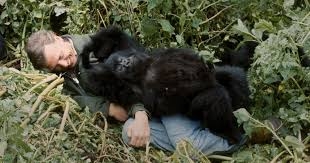
His fame increased in 1979 when the BBC broadcast the series Life on Earth. The BBC estimates that the series, which consisted of nine programs, was watched by about 500 million viewers. He lived with gorillas in Rwanda while filming these series. The gorillas, which most people consider very aggressive, were very polite to Attenborough. He walked barefoot in the habitat of dangerous insects many times. Sometimes he interviewed the audience with penguins from Antarctica and sometimes with zebras from the African desert. Sometimes he informed the world about aquatic animals, sometimes terrestrial animals, sometimes plants and sometimes birds.
‘I think Life on Earth is the greatest story ever told because it shows the development of life on Earth,’ he said in an interview with Anderson Cooper on the American television program ‘Sixty Minutes’ in 2020. Similarly, he produced the documentaries The Living Planet (1984), The Trails of Life (1990), Life in the Freezer (1993), The Private Life of Plants (1995), The Life of Birds (1998), The Life of Mammals (2002–03), Life in the Undergrowth (2005), and Life in Cold Blood (2008) under the Life series. These nine series, also known as the ‘Life Series’, brought out new facts about the transformation, behavior, and ecological cycles of organisms.
Attenborough not only narrated these series, but also provided information to the audience about various environments by connecting directly to the camera. The excellence of the visuals, powerful voice, and distinct narrative made these series timeless. It used time-lapse cinematography to show plant growth, slow-motion footage to show animal movements, macro cinematography, underwater photography in the sea, and infrared and low-light cameras to record nighttime activities.
Attenborough never hesitated to get close to animals that people consider dangerous. He considered these behaviors that others considered risky to be a joy of life, where excitement and curiosity are mixed. ‘It is rare to celebrate 100 years of happiness.’ Even more rare is to live a hundred years to observe the transformation of the Earth closely,’ Britain’s Prince William said on Attenborough’s birthday on Friday, ‘Your boundless curiosity, wisdom and commitment have opened our eyes.’ By revealing the beauty and fragility of the earth, you have reminded us of our collective responsibility to protect it.'
Born on 8 May 1926 in Isleworth, London, Attenborough grew up in Leicester. His father, Frederick, was a teacher at a local school. His mother, Mary, was a social worker who was active in the protection and care of refugee children during the Spanish Civil War and World War II.
Attenborough was interested in history and nature from an early age. In 1945, he won a scholarship to Clare College, Cambridge University, and studied geology and biology under the Natural Sciences program. His brother Richard went into filmmaking and eventually became a world-famous actor and film director. He produced and directed the world-famous film 'Gandhi'. For that, Richard won the Oscar for Best Director and Best Picture in 1982.
After graduating with a degree in natural science in 1947, David Attenborough served in the British Navy for two years. After completing his training at the BBC in 1952, he began working there as a construction worker.
In 1954, he began a television series called ‘Zoo Quest’ with Jack Lester, a reptile specialist. It featured live animals in their wild habitats and zoos. Attenborough’s powerful voice and engaging delivery made the show popular. He then began to voice over many of the BBC’s educational programmes.
When the BBC launched ‘Channel BBC Two’ in 1965, Attenborough became its controller. In this role, he produced historical cultural-educational series such as Jacob Bronowski's 'The Ascent of Man' and Kenneth Clarke's 'Civilization'. He also produced influential comedy series such as 'Monty Python's Flying Circus'.
He was promoted to director of television programmes at the BBC in 1968, but resigned in 1972 to focus on writing and researching television series. He then worked independently and made nine documentaries through the 'Life Series'. Attenborough was directly involved in filming and would wait in the field for long periods of time to capture the behaviour of rare creatures.
Apart from the Life series, Attenborough is known for his many programs including ‘The Blue Planet’ (2001), ‘Planet Earth Series’ (2001) and ‘We Are Changing Planet Earth’ (2006). ‘The Blue Planet’ aims to show the ecological cycle of the world’s oceans. Similarly, the Planet Earth series shows a picture of the changing Earth. Following its success, he also brought Planet Earth Two in 2016. Focusing on global warming, he presented the programs ‘State of the Planet’ (2000) and ‘We Are Changing Planet Earth’ (2006).
 He provided voice in Blue Planet Two (2017). It shows the threat posed by plastic pollution to marine life. For this, Attenborough also won an Emmy Award. Attenborough last produced ‘Asia’ in 2024 at the age of 98.
Attenborough has written several books. Some are based on his documentaries. Some are memoirs. These include ‘Life on Air: Memoirs of a Broadcaster’ (2002), ‘Adventures of a Young Naturalist: The Zoo Quest Expedition’ (2017) and ‘Journey to the Other Side of the World: Further Adventures of a Young Naturalist’ (2018). Attenborough has spent his entire life advocating for the conservation of wildlife and plants threatened by human activity.
 He has played a key role in expanding the World Wildlife Fund (WWF) worldwide since its inception. For decades, he has carried the WWF's message around the world through various campaigns as its ambassador. He served as a member of the UK government's Nature Conservancy Council from 1973 to 1982. He was knighted in 1985, adding the title 'Sir' to his name. He was awarded the Knight Grand Cross (his second knighthood) in 2022.
Attenborough has received numerous honours and awards, including eight BAFTAs, including a Peabody Award (2014) and three Primetime Emmy Awards (2018, 2019, 2020). In 2025, at the age of 99, he won an Emmy Award for The Secret Lives of Orangutans (2024). The Emmys are considered the Oscars of television broadcasting.
He has experienced that other animals are becoming extinct as humans fill the earth. ‘Sustainable development and loss will be reduced when humans reduce fossil fuels by using renewable energy,’ he said in 2024. ‘We can save many rare wildlife species if we want.’ But everyone must be prepared for this.’
(With the help of the agency)

