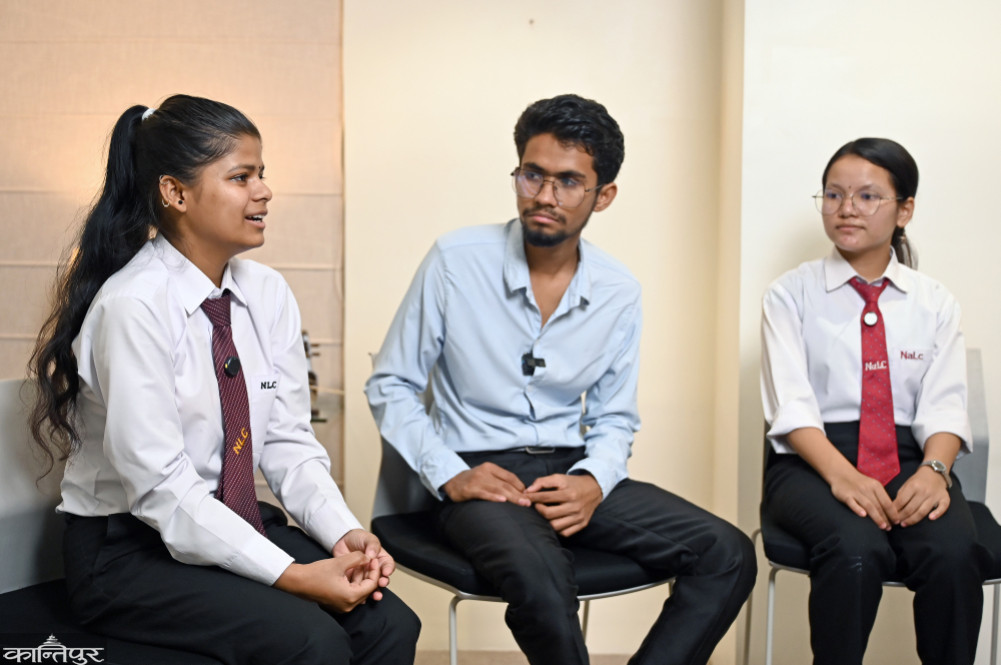
A new form of untouchability and discrimination can now be seen on digital platforms as well. There are comments on social media with a sense of hatred. In the interviews of people from the Dalit community, it is found that caste is mentioned by many
We use Google Cloud Translation Services. Google requires we provide the following disclaimer relating to use of this service:
This service may contain translations powered by Google. Google disclaims all warranties related to the translations, expressed or implied, including any warranties of accuracy, reliability, and any implied warranties of merchantability, fitness for a particular purpose, and noninfringement.
When Anuja Kumari Ram (19) was young, she did not know that she was a Dalit. In the village, his parents used to call their caste 'Rai'. "It was our parents' obligation to hide their caste like this," she says, "because they were afraid of caste discrimination."
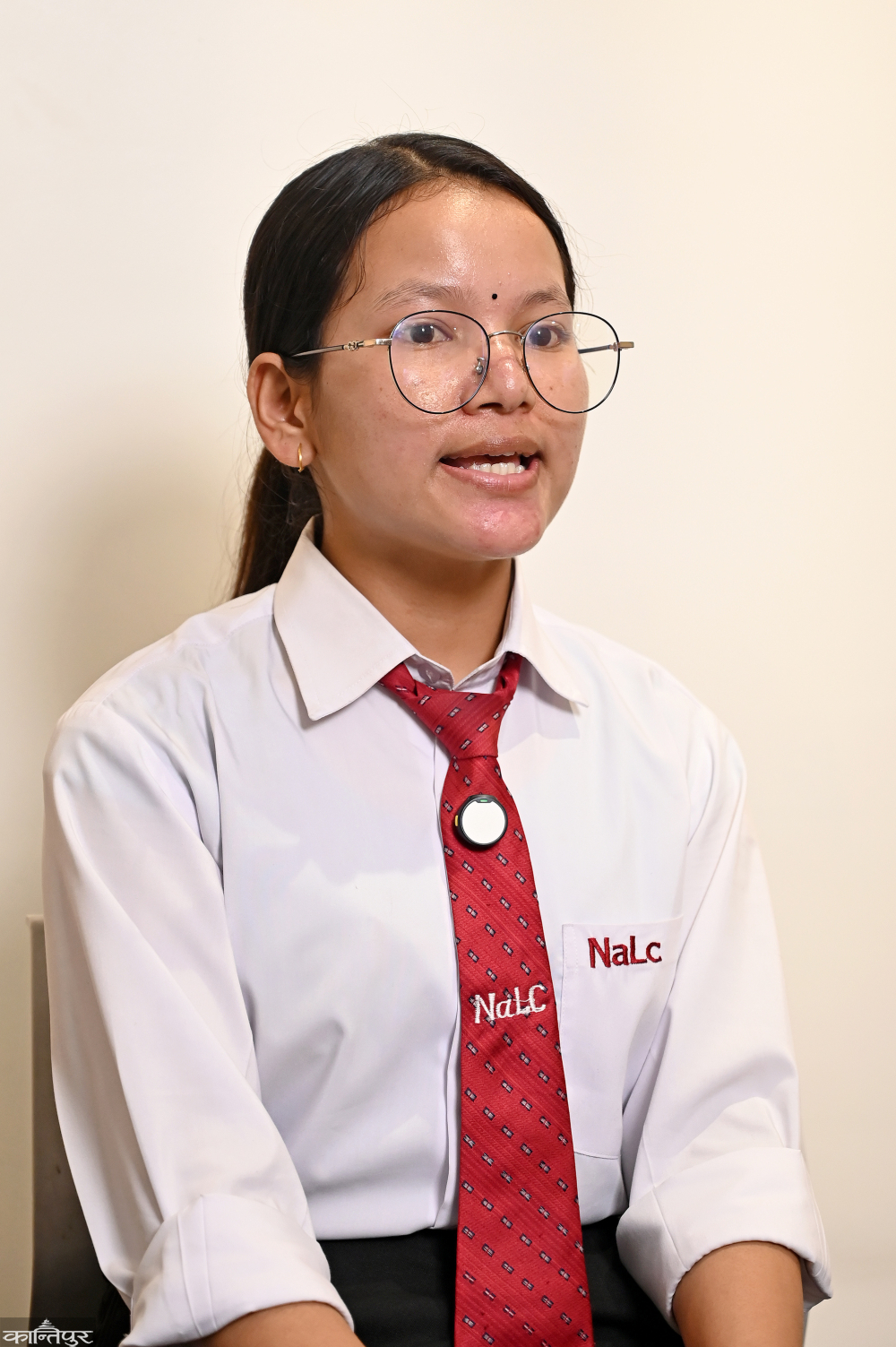
Sarita Mizar's experience is similar. She used to live in Kathmandu with her family as a child. The parents gave their identity as 'we are Magar'.
One day suddenly his father told him to leave Kathmandu and go to the village. "After going to the village, we were admitted to school," says Sarita. Only then did we know our real caste.
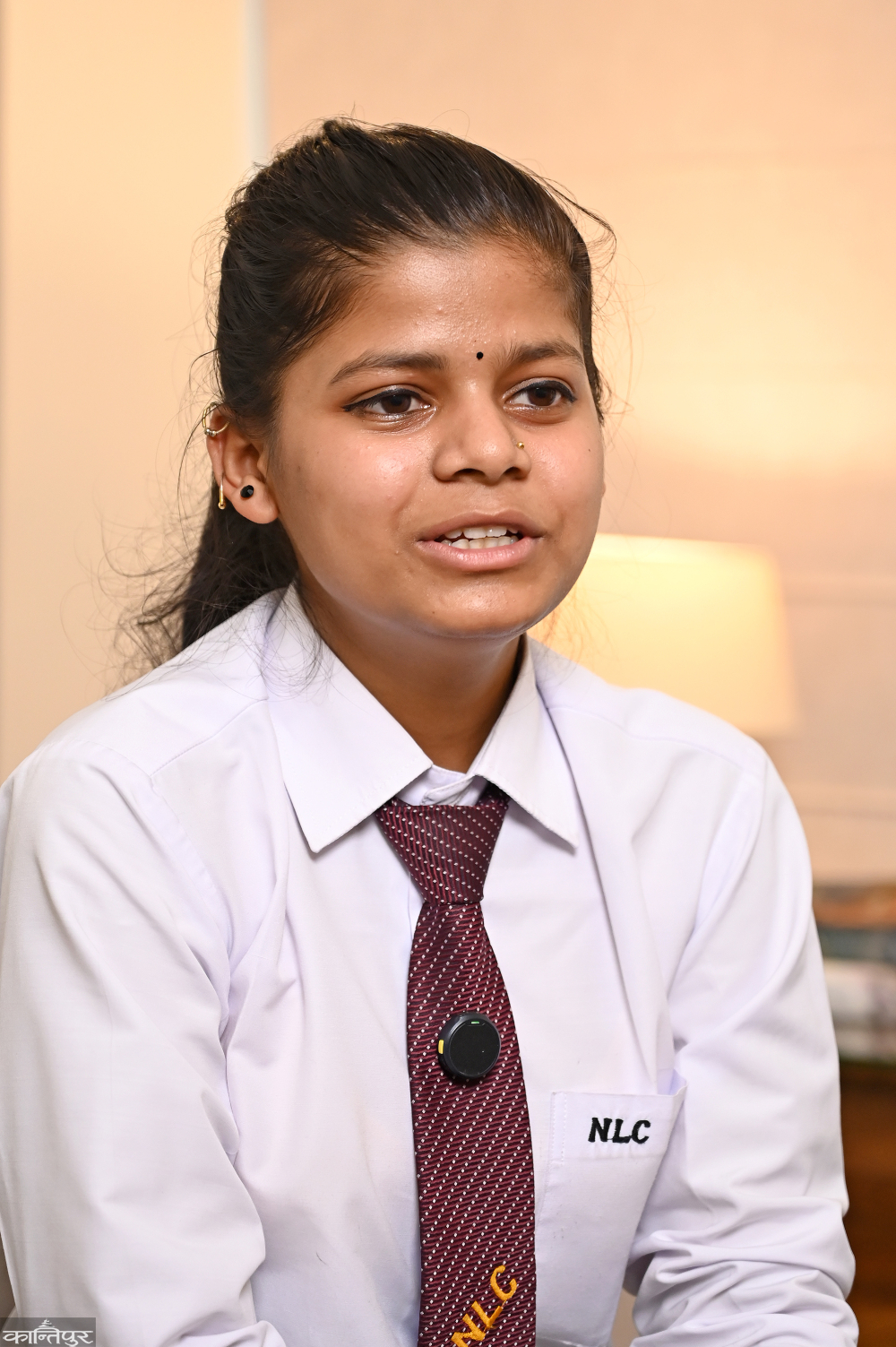
Anuja and Sarita's parents hid their caste for fear of facing caste discrimination. But after experiencing discrimination in Kathmandu, Sarita's family returned to the village because they could not stay. However, the differences were the same in the villages. He used to go to neighbors to get fire to light the stove at home. At that time, they were not allowed to enter the houses of the neighborhood. "Our parents went to the village fearing discrimination, but it was not easy for us in the village either," Sarita said.
Shishir Vishwakarma was studying in class 5-6. He went to a wedding party with his mother. At that time, everyone else was sitting in the tent and eating, but they were kept in the field. Shishir asked his mother, 'Why did you keep us in the field?' The mother said, 'We are not allowed to enter.'
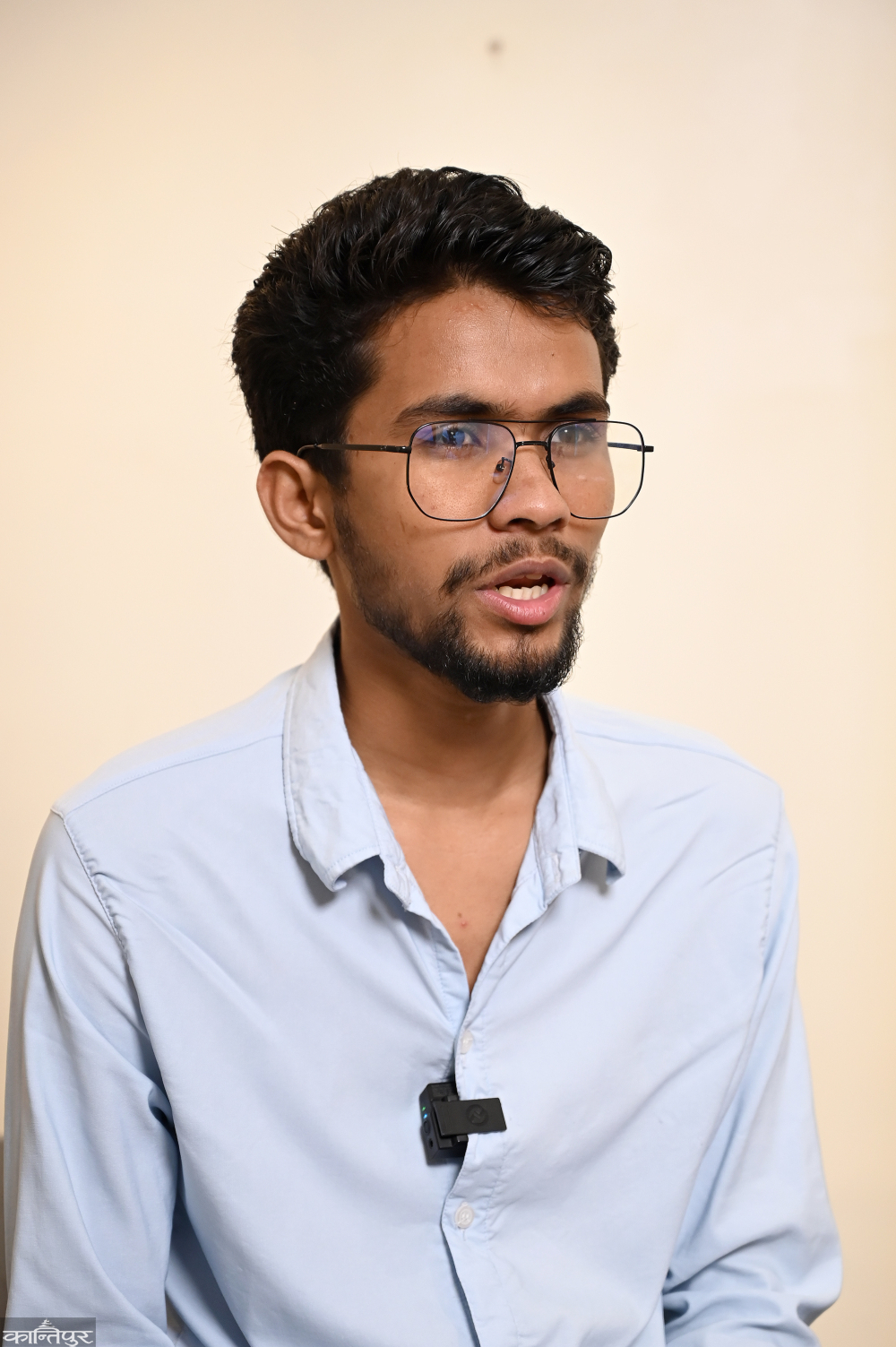
How does racial discrimination affect child psychology? Where does that lead to their family, financial status? The representative story of these three characters tells. They were like other children. He used to play like that and enjoy himself. But as they grow up, they realize that society discriminates against them. Like other friends, it was difficult for them to say their caste. Somehow it started to be felt that others had 'shucked away'. Then they came to know, 'We have been discriminated against on the basis of birth. We are Dalits.'
Then they started to directly experience and feel the discrimination against them. Shishir says, "Because we are Dalits, we grew up tolerating others." In his village, there was a Dalit who had a bit of a revolutionary spirit. He tries to eat by entering the kitchen at a non-Dalit's wedding. After that, the non-Dalits made a decision, 'From now on, they will not be invited to any wedding in the village.' The pain of being a Dalit is so intense that some of them did not even get citizenship easily. His village sister Parne was excluded from the Maiti party after marrying Damai. That sister did not have citizenship. That's why they couldn't register the birth of their children.
'You are not allowed to enter other people's houses, you are not allowed to touch other people's food, you are not allowed to go to the temple, you are not allowed to sit in good deeds,' Sarita says, 'Everyone has to work together during the fair, but when they eat lunch, their father has to gossip with someone on the way.' was doing At that time, a priest will arrive through the same road. The priest said to his father that he had been touched by a Dalit and left the road with contempt. His father stood where he was. Then the priest went back another way. After the
, Sarita's father and that priest met somewhere and started talking. His father slapped the priest. The villagers got together and stoned the house. At this time, instead of giving justice, the police administration arrested his father for 'beating a Brahmin'. "At that time, I thought it was a sin to be born as a Dalit," says Sarita. It is their experience that Dalits have always been oppressed by the so-called upper class of the society. In the society, those who say they know and those who say they are bigoted are the ones who discriminate. 'Our ancestors made ploughs, made household weapons, made idols,' says Sarita, 'the supposed upper classes who used the same materials kept treating us as workers, laborers or lower class.' grew up His grandfather had to bury dead cows because he was a Dalit. His father could not sit in the school classroom. "After a little understanding, I came to know how much discrimination our ancestors had to live with," she says, "This discrimination has not disappeared even in my time." The new form of untouchability and discrimination can now be seen on digital platforms as well. In the social media, especially in the interviews of people from the Dalit community, many people comment on caste.
The latest generation is not in favor of silently tolerating such discrimination or oppression. They neither hide their caste nor tolerate discrimination. Shishir says, "My friend has been hiding his name while staying in the room. They have changed their name on their Facebook account so that the housewives will know. But I don't hide my caste. They believe that people's awareness should be changed to eliminate this discrimination and untouchability prevalent in the society.