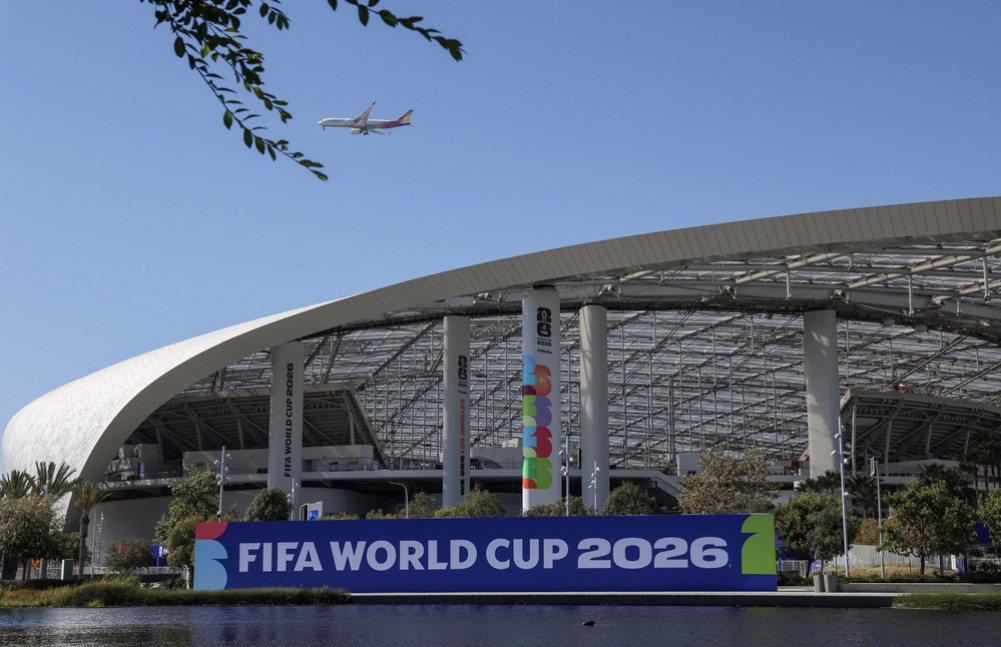
While the players are ready to run the ball on the field, political struggles and diplomatic maneuvers are raging outside.
We use Google Cloud Translation Services. Google requires we provide the following disclaimer relating to use of this service:
This service may contain translations powered by Google. Google disclaims all warranties related to the translations, expressed or implied, including any warranties of accuracy, reliability, and any implied warranties of merchantability, fitness for a particular purpose, and noninfringement.
The 2026 FIFA World Cup is set to become the most expensive tournament in history. Not only will players from 48 countries participate in this year's World Cup, jointly hosted by the United States, Mexico, and Canada. Spectators from all over the world have begun to travel to the United States, Canada, and Mexico to support them.
The impact of the Iran-US war in particular has pushed this grand event into the center of a political power struggle. While the players are ready to run the ball on the field, political struggles and diplomatic maneuvers are raging outside.
Westwood, located west of Los Angeles, has long been known as 'Tehrangels', where the world's largest Iranian community outside of Iran resides. The area is also home to Iranian-American activist and CEO of the Los Angeles Chamber of Commerce, Rozbeh Farahanipour.
He has stated that the Islamic Republic team, not the Iranian team, is participating in this World Cup. Farahanipour, who left Iran for political reasons in 2000, has no way of separating football from politics.
The World Cup has become even more complicated for the Iranian community. Although Iran is preparing to play in Los Angeles and Seattle, the political environment there is extremely sensitive. There are anti-Iranian government demonstrations outside the stadium, where the flag of the Iranian monarchy, the lion and the sun, is being hoisted.
Iranian-Americans consider this to be the real Iran. However, FIFA has banned the flag inside the stadium, calling it a political symbol. The Iranian Football Federation has made it mandatory to 'respect the official flag and national emblem' to participate in the tournament, which has put more pressure on supporters and players. Ticket quotas for Iranian fans have been canceled. Financial transactions have been halted due to US sanctions.
The Somali referee's refusal to enter the US has also added to the controversy at the World Cup. Reports have emerged of strict checks and interrogations of players from some other countries.
Some Iranian team officials have been denied visas citing security reasons. This has angered the Iranian side, which calls it political interference in sports and accuses the protests outside the stadium of being sponsored.
The Iranian team is currently staying in Mexico. As of this writing, they are only allowed to enter and leave the US on the day of the match. Such a rule is rare in World Cup history. However, if we look at history, football has always been a symbol of peace.
During World War I, in 1914, British and German troops played football to stop the fighting. In 1969, when the great footballer Pele's club Santos arrived in Nigeria, a temporary ceasefire was reached between the two sides in the civil war. In 2005, Ivory Coast's Didier Drogba also used football to send a message of unity to end his country's civil war.
FIFA President Gianni Infantino has called the World Cup 'the greatest celebration in human history'. That is why football is all about world peace and unity. When players from 48 countries take to the field for a common goal, it must transcend national borders - football, only football.