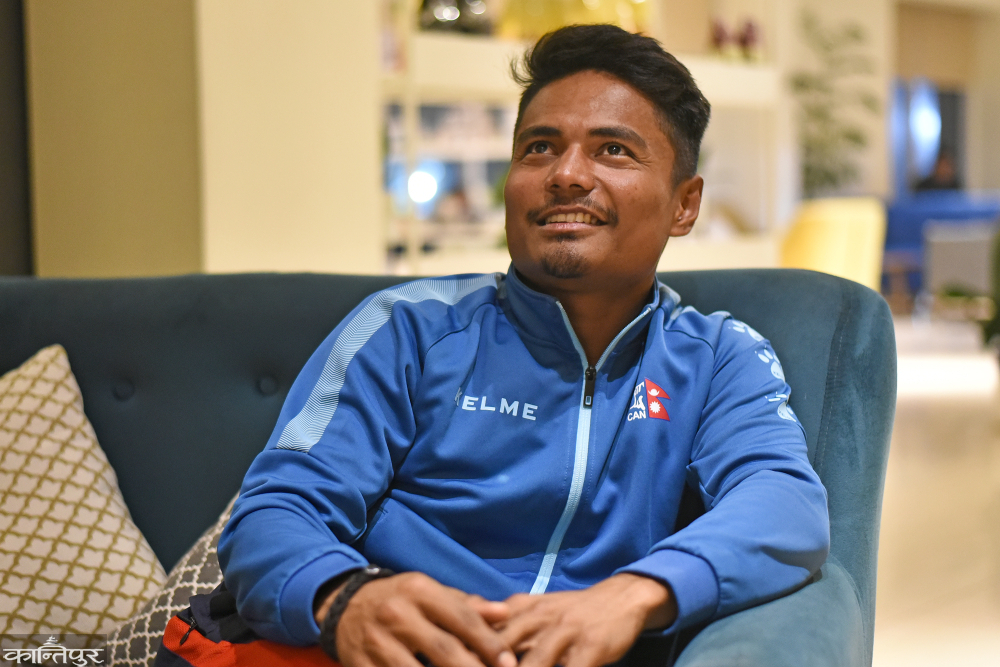
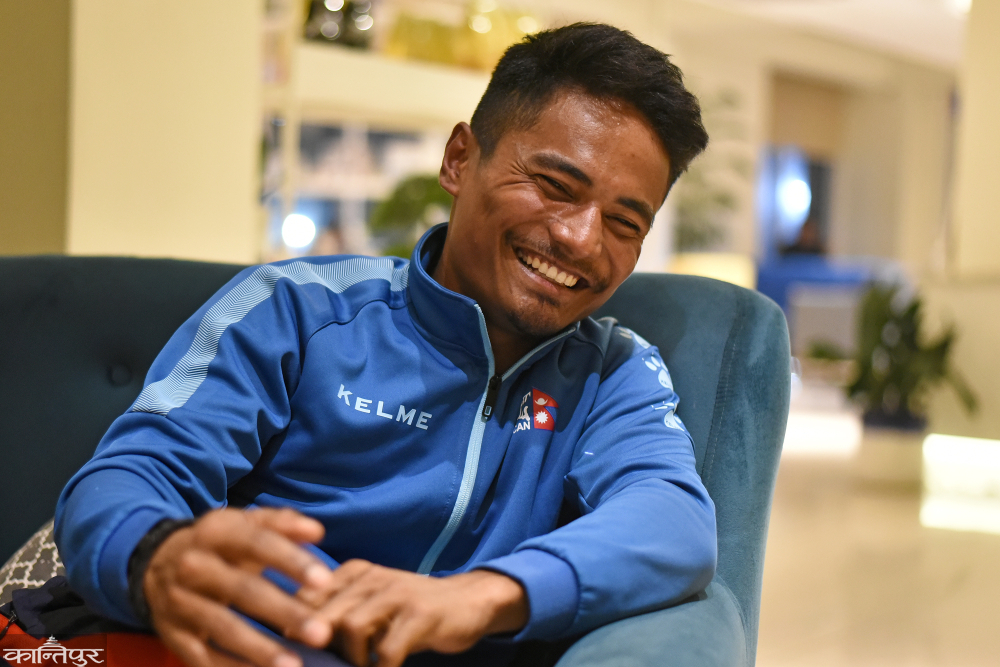
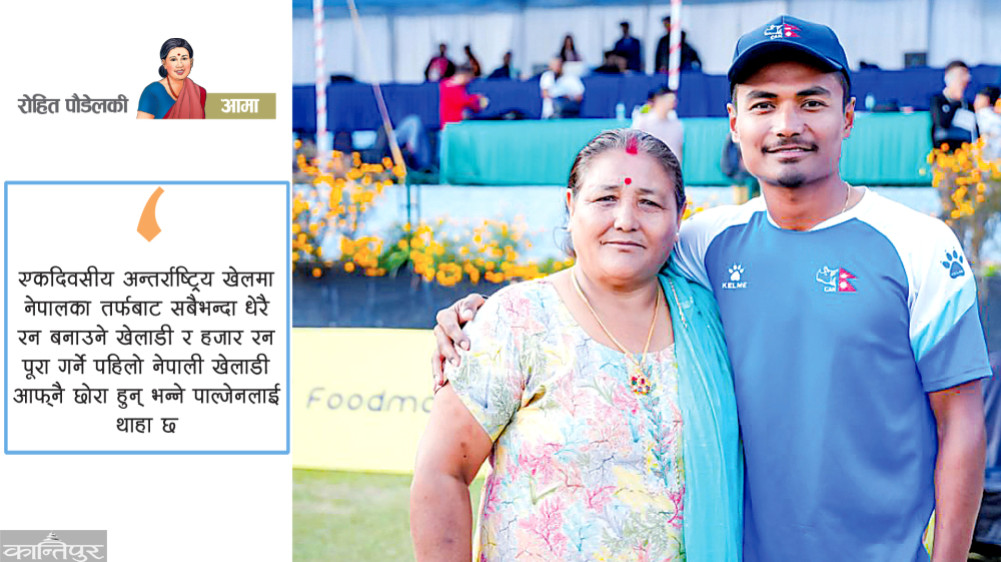
Paljen knows that his son is the highest run scorer for Nepal in ODIs and the first Nepali player to complete 1000 runs.
We use Google Cloud Translation Services. Google requires we provide the following disclaimer relating to use of this service:
This service may contain translations powered by Google. Google disclaims all warranties related to the translations, expressed or implied, including any warranties of accuracy, reliability, and any implied warranties of merchantability, fitness for a particular purpose, and noninfringement.
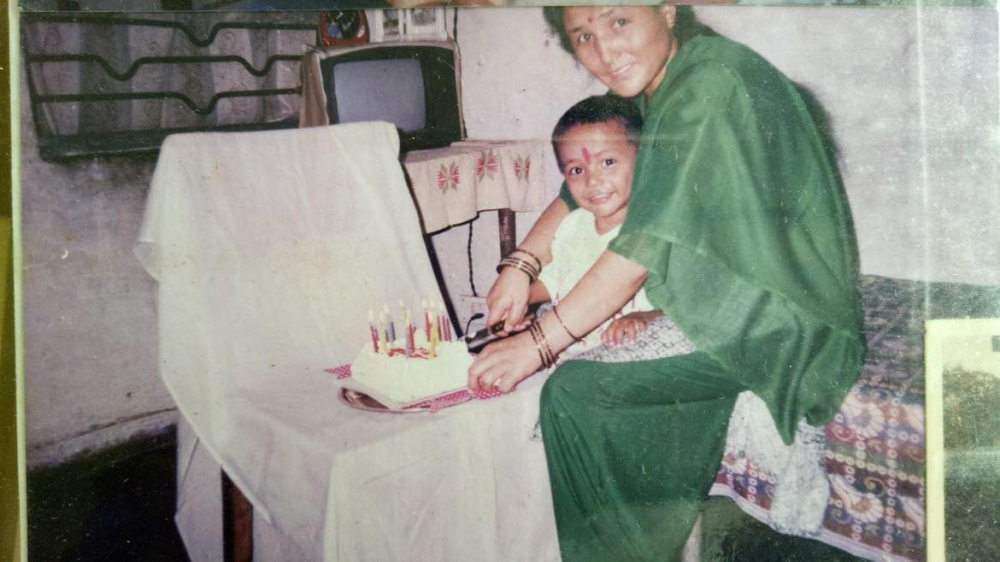
In his childhood, he remembered that captain Rohit Paudel's memory revolved around three things - mother, cricket and beating. Ever since he could walk from his mother's arms, Rohit used to go to the field and play cricket. As a result, the mother was beaten. His house was in Buddh Tol near Bardghat in Nawalparasi. There was a field one and a half to two kilometers away from the house.
'I used to go there to play cricket, my mother used to come later and try to bring me back' Rohit recalled his childhood, 'I used to insist on playing cricket and my mother used to come to Sursar without letting anyone go.' ? Obviously, fights happen. And, in a fight, he who is the least gets the beating. This rule continued to be applied in the life of child Rohit without fail, for many years.
There was a private school in the village – Little Buddha. After studying here all day, Rohit used to come home as soon as the holiday was over, emptying his bag and changing his clothes, five-six years old He used to come out with ball and bat in hand. Then, he would go to his friends' houses and collect the players and reach the field. This was his daily routine. There were other team members around the bike he was riding. Supposedly, he wanted to shoulder the responsibility of future captaincy from now on ∕ preventing him from doing so, his mother tried to see Rohit engrossed in his books and beat him for disobedience, which she considered a role she did not want to perform. And yet, Rohit escaped from his mother's hands and did not stop going to the field, did not stop playing. His running was probably his mother's training, to run like lightning on the field. If success in the game is about facing obstacles head on, Rohit got his first training from his mother.
At that time, Rohit did not know the adage that pole bhabi ghamai jati, kute bhai jati amai jati. And he didn't know that his mother beat him thinking of his own good. His mother Paljen is tormented not because her son plays cricket, but because of the fear that he will be unsafe.
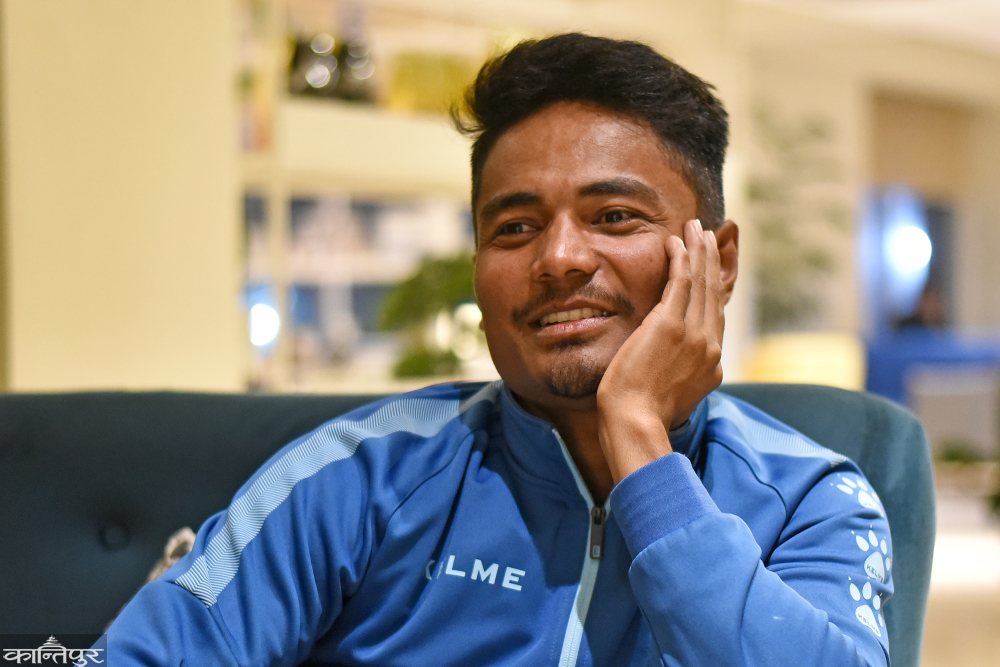
'I understood this after a long time,' as Rohit put his hands on the purpuro, 'at that time, I used to get angry and leave the house and fight with my mother so that she would know.' In those days when Captain Rohit was engraved on the memorial plaque, he started to realize the different nature of his mother's love.
'The mother's first and only concern is the safety of the child,' says Rohit, 'for that, mothers can even beat the child, I didn't even know that!' Rohit realizes that it is happening when his mother makes a video call while he is tired of playing cricket somewhere and says, 'Look, only your nose is left, are you hungry or not?' Lin is eager to know the progress of the ongoing game or appreciate the runs he has scored in the past games. There is a mother who has no interest in all this. He wants to know what Rohit ate, whether he is satisfied or not. And why are you scolding that your son did not call even after all these days.
'People talk about unconditional love, I miss my mother' Rohit, who has been living outside the house for ten years continuously in pursuit of cricket, picked up the bat and the ball last week and ran to the pitch of his own feeling, remembering his mother, 'Because, in this world, there is only one mother. Rohit's father, Kumar Paudel, was an Indian soldier and could see the glory of cricket in the neighboring country. In the soft light of that experience, he understood his son's love of cricket and bought bats and balls to fuel it. His brother Raju, who is 9 years older than him, is a cricket connoisseur himself, so he used to support his brother by playing. Chitra, who is five years older, stood up for her mother and said that she had played cricket knowingly, and Dattachit played the role of a catalyst until the occasion and beating her. Sun-rain, wind-wind and cold-heat did not say anything, Rohit would leave the field as soon as he reached his mother's eyes or the hands of those who came to catch him. In this case, mother would come to the field and wrap Rohit while Eksur was playing. Sometimes, Raju was also accused of cheating on his brother. Seeing this, Chitra looked at them with a sharp look of satisfaction, which they knew meant one of 'fixed' or 'Khuching', even if no one said it.
When he was a little older, Rohit would leave the field and sit in front of the television screen with curious eyes and a joyful heart, like a child before a magician. Chitra used to watch Hindi teleserial with the same intention. The problem is that there was one TV in the house and two different viewers of different scenes whose interests did not match. 'There used to be fights between my sister and me, whether to watch cricket or to watch serials', Rohit remembers now and reminisces about the raw but memorable days of his teenage years, when the hair of the caretaker was hot. , didi met chutai !'
days are not always the same. When Rohit's passion for cricket did not decrease, Paljen reduced her anger towards it, or at least removed it completely. There was a moment like this, Rohit was able to sit and watch the 2014 Twenty20 World Cup played by Nepal in front of the same television set under the same roof with his father and brother, with great celebration. Mother and sister did not make a single comment about the mood, instead they made the atmosphere sweet by serving tea and snacks.
Rohit, who has been living with a mustache since that year, was not hindered by his mother from playing. No matter how long she went and played, she did not say anything. Instead, she said, wherever you go, take care of yourself, eat and rest. Until then, the village ground had become too small for Rohit. He would come to take training at the Baluwatar Cricket Academy in Kathmandu. This was Rohit's first away cricket trip and he was coming to the capital city for the first time. She was accompanied by Chitra who was married and lived with her husband in Baluvat. Now Rohit sat in Didi Vinajuka and confidently started learning cricket at night.
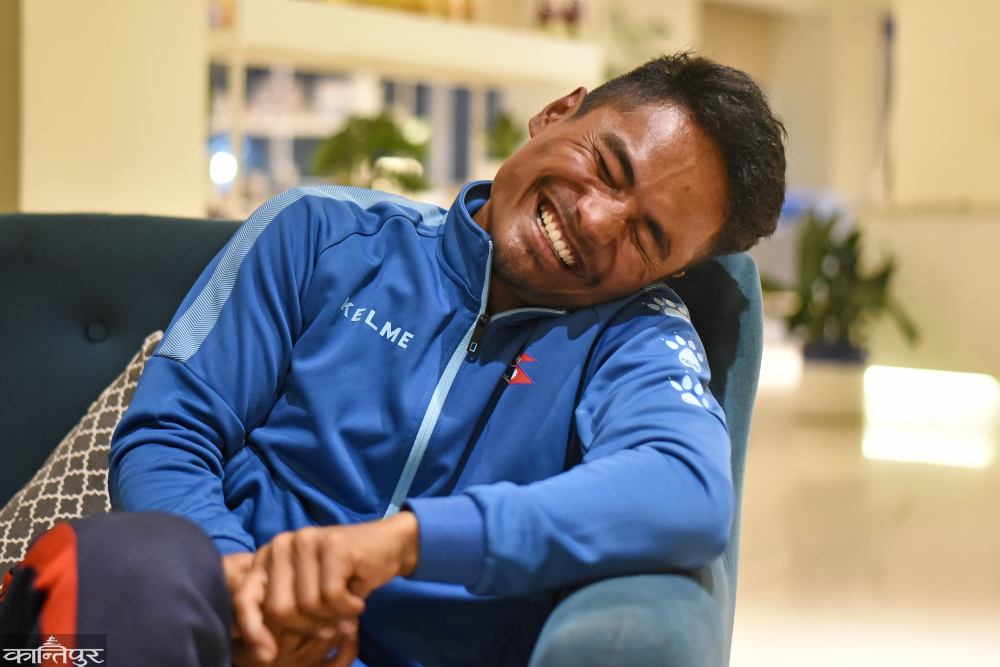
His tongue had probably already realized that the soybean-potato vegetable cooked by his mother is no longer available in any restaurant in Kathmandu. Perhaps because of that, Rohit returned home after two months, for a short time. This time he was coming to Kathmandu alone. When she left the house, her mother burst into tears, Rohit was shocked. 'I have never seen tears in my mother's eyes before and after that' Rohit is still speechless when he remembers Paljen's teary eyes, 'It's good after seeing my mother cry.' He devoted himself to cricket training. His coaches Sunil Lama and Rikesh Lama were impressed with Rohit's batting skills and wanted to play him in the U-19 Asia Cup. For this, he suggested to play the regional tournament from Bhairahawa in the qualifying stage. Rohit did the same and got selected. There were 52 other players who were selected like him in Kathmandu. Among them, he was also selected in the U-19 Asia Cup Nepali team. There is a proverb in English – 'Luck favors the prepared.' Rohit's preparation over the years was supported by luck when he was able to travel to Sri Lanka to play in the U-19 Asia Cup in 2016, where he shone like a star with 68 runs against mighty India. Overnight, he was searched on social media and read-seen-and-heard in the media. She heard singing from the neighborhood that her son has done well. She got to see how her son was playing in 2018 when Rohit invited his mother to the stadium to watch him play against Pokhara Paltan in the Pokhara Premier League. The feeling that her mother was watching the match gave Rohit extra motivation to score runs and Paljen clapped along with the other spectators in response.
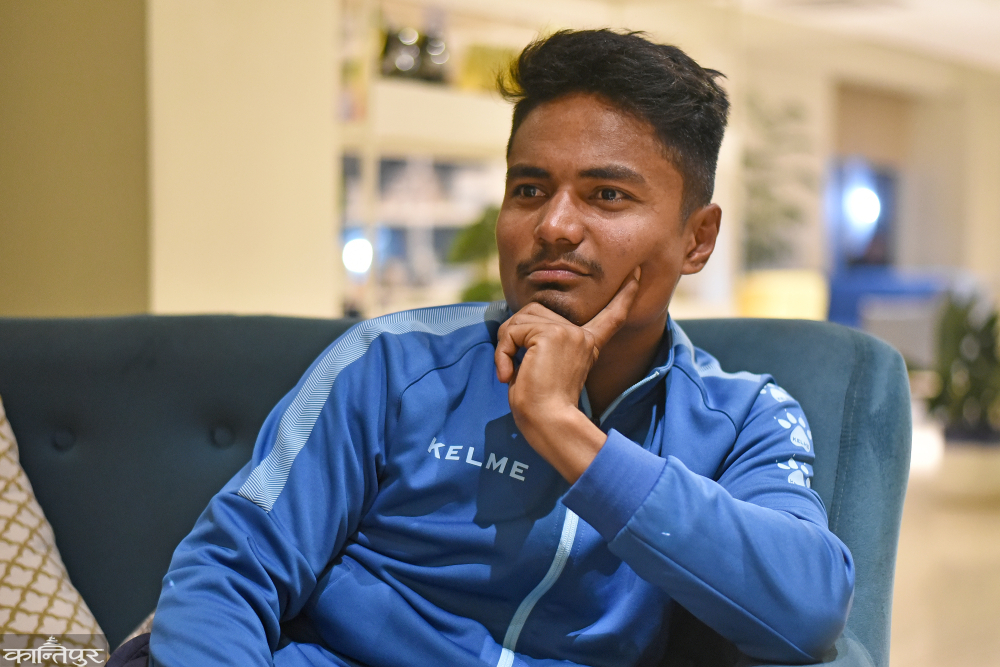
'After that, mother recently came to Kirtipur to watch my World Cup Qualifier,' Rohit's eyes flashed with victory as he told the story of how his mother, who did not allow him to go to the ground far away from home, has now started visiting her on far, far away grounds. You understand the rules, you get to know all the players in Nepal and you keep track of all the runs you have scored.' Sister Chitra, who is looking for a remote control, comes to the ground in Kathmandu with her husband to watch him, she watches foreign competitions on television. Watching the
performances live, Raju comments on Bhai's weaknesses. On such evenings, mother would call him and say, 'Brother is making fun of you, play better.' Then Raju would pick up the phone and advise you to play this way and that way. And the father speaks and tells the ways to not get too excited, to breathe comfortably and to throw the balls in the air with great concentration.
'Not only from the field, my regular training is also from there,' said Rohit, 'If I can't do it accordingly, my brother will hit me!' It is forced. That's why, his successes are coming one after the other. Rohit is the one, under whose captaincy, Nepal has passed the qualifying stage and played the Asia Cup while maintaining the ODI international status and is now preparing to play the World Cup. This achievement is a testament to his ability, hard work and dedication to the game. Rohit has consistently displayed extraordinary skills by representing Nepal in many international competitions, which his mother watches unfailingly. He knows that his son is Nepal's highest run scorer in ODIs and the first Nepali player to complete 1000 runs.
The last Asia Cup watched on the big screen around the world was also watched in Rohit's village, which was when his mother first saw her son's craze in public. On the way back home, the same badger brother came to pick him up at Bhairahawa airport, and hugged him with great affection as soon as he saw him. Along with some car people came there. When Rohit reached Bardghat, he was surprised to see that the entire Nawalparasi was waiting for him with flower garlands. He was taken in a chariot, traveling 9 km from Bardghat to his home. In the dailo, the mother was waiting for her son with flower garlands. "I saw my mother the happiest at that time," Rohit narrowed his eyes, "I was happier than when I won the game." Rohit now wants to trick this Lava Laskar who was fun at first. Now he is safe. In Nepali cricket's busy calendar, he doesn't even have much free time to go home. In the last one year, he reached home only once. Like a boy reaching the same field alone where no one cares, he wants to get home alone without getting lost.
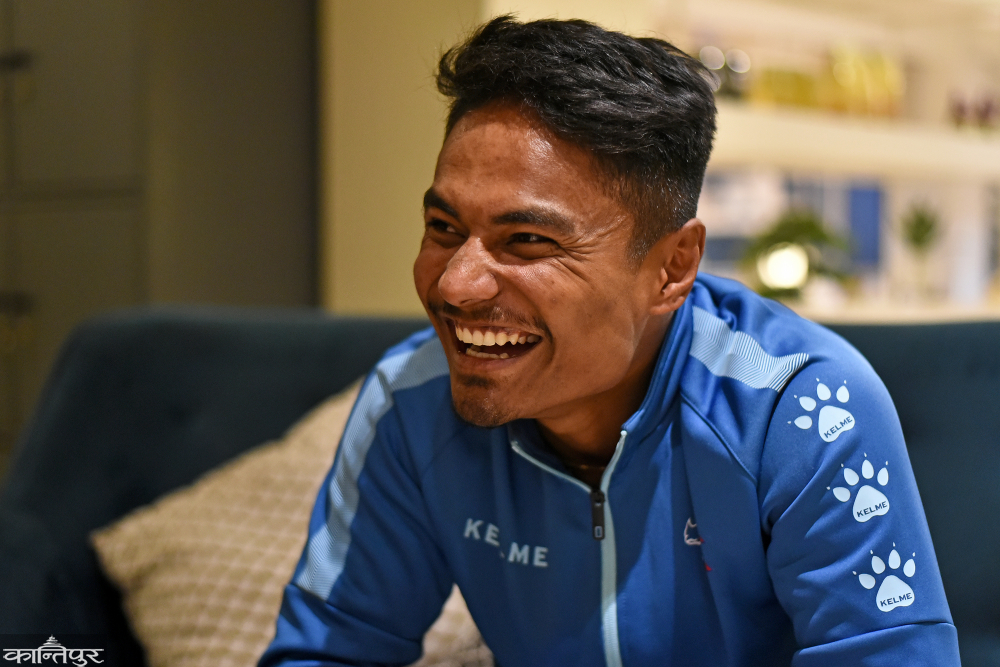
So he reached home this time on Dasain without informing anyone. The daughter of a brother who runs a hardware business in the village is one year old. She did not recognize Kakaba as she had never seen him, she only looked at him like a stranger. "I feel uncomfortable with this, I feel like a stranger in my own home," Rohit took a long breath, "What should I do?" The desire to play for the team and the country is such that it is really difficult to think about yourself and your family.'
Photos: Angad Dhakal