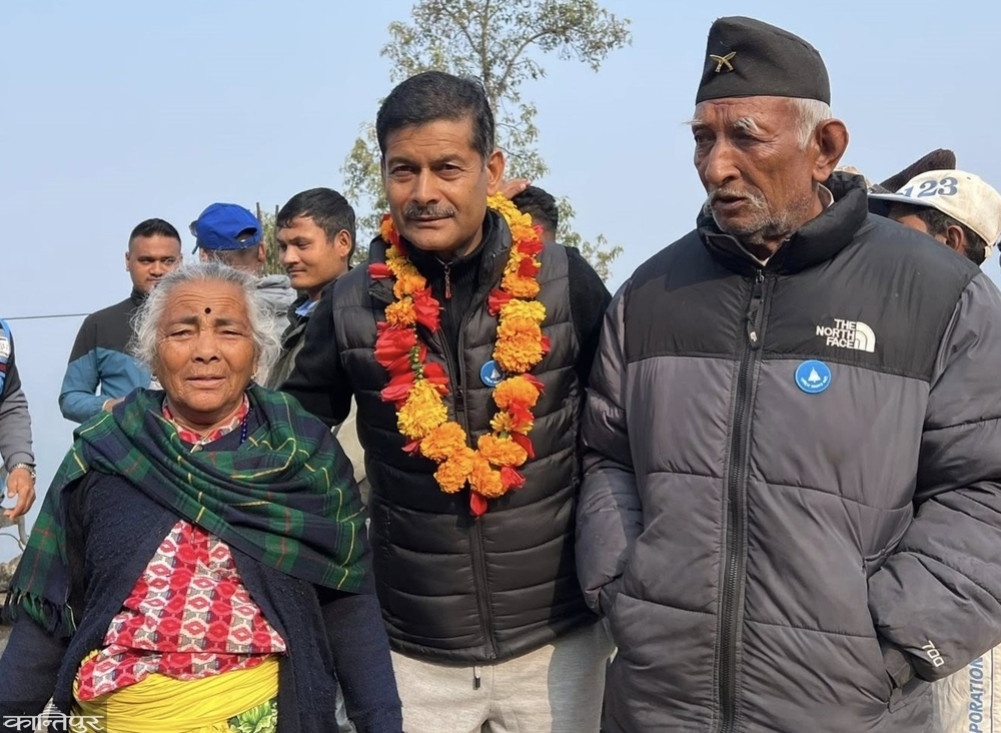
In the 2070 elections, Dhan Bahadur Ghale of UML, Khem Prasad Lohani of UML in 2074, and Ramnath Adhikari of Nepali Congress in 2079 were elected. This time, Shrestha, who entered the fray as a new party and a new face, won the trust of the voters.
We use Google Cloud Translation Services. Google requires we provide the following disclaimer relating to use of this service:
This service may contain translations powered by Google. Google disclaims all warranties related to the translations, expressed or implied, including any warranties of accuracy, reliability, and any implied warranties of merchantability, fitness for a particular purpose, and noninfringement.
Bodh Narayan Shrestha, a candidate of the National Independent Party (NISP), has been elected as a member of the House of Representatives from Dhading Constituency No. 2. He secured 26,143 votes, defeating his nearest rival, Ramesh Dhamala of the Nepali Congress, by a margin of 5,865 votes.
Dhamala got 20,278 votes. CPN-UML's Dhan Bahadur Ghale got 10,084 votes and Nepal Communist Party's Ram Bahadur Bhandari got 9,037 votes.
Shrestha's victory from the Rashtriya Swayamsevak Sangh (RSS) in Dhading-2, which is considered to be the traditional influence of UML and Congress, is seen as a meaningful change in local political circles. This area, which includes Ruby Valley, Gangajamuna, Khaniyabas, Netravati Dabjong and Tripurasundari rural municipalities and Nilkantha Municipality, had long been under the influence of big parties.
In the 2070 election, UML's Dhan Bahadur Ghale, UML's Khem Prasad Lohani in 2074, and Congress' Ramnath Adhikari in 2079 were elected. This time, Shrestha, who entered the fray as a new party and a new face, won the trust of voters.
Who is Bodh Narayan?
Bodh Narayan Shrestha's childhood was spent in the rural environment of Dhading. Born in an ordinary family, he began his formal education from the village's Sanskrit Primary School (now Sanskrit Secondary School). He passed his SLC from Samibhanjyang Secondary School in 2043 BS.
According to his teacher Sitaram Adhikari, he was a very calm, disciplined but curious student. Although he was not a 'topper' student in the class, his interest in social subjects, debates and group activities was remarkable. Teacher Adhikari recalls - 'He was always a quiet student in the class. Although he was average in studies, he was very curious about social and political issues.'
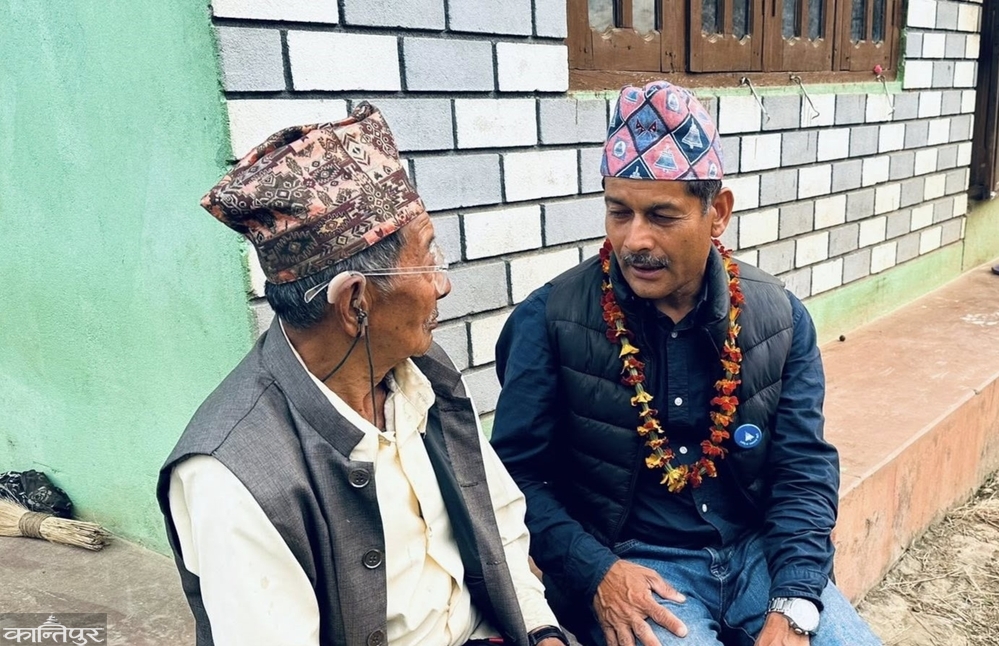
He passed his SLC in 2043 BS. At that time, passing SLC from a rural area was considered a great achievement in itself. He then reached Kathmandu in search of higher education. After reaching the new environment of the capital from the limited opportunities of the village, his outlook also broadened. This stage made him more active in social and political activities.
Shrestha's political awareness began in school life. Around 2039 BS, it was customary to form student unions and hold elections in schools. At that time, he participated in organized political activities for the first time. At that time, various organizations of the left wing were active in student politics. Shrestha became close to the then Masal-supported student organization 'ANRFSU VI Sixth'. At that time, ideological competition between the 'Fifth' and 'Sixth' groups was intense.
He became active in activities such as organization building, debates and program organizing at the school level. This process attracted him to ideological politics. While active in student politics, he gained initial experience in organization management, leadership development and ideological debate. This experience later became the basis of his political journey.
Leftist background and ideology
After the people's movement of 2046 BS, a multi-party system was reestablished in the country. After that, local and national politics began to be restructured in a new way. Around 2048 BS and 2049 BS, while preparations were being made for the local body elections, efforts were being made to coordinate between leftist forces in Dhading. At that time, it was not easy to coordinate between different leftist movements.
In this situation, Shrestha played the role of a mediator even in his youth. He was responsible for negotiations and coordination to bring about electoral coordination between UML (then ML) and MASAL. Under his coordination, an attempt was made to find a consensus among the left forces at the local level. Although the Congress won that election, the incident identified Shrestha as a skilled organizer.
The time and struggle of the people's war
In the 2050s, the Maoist movement in Nepal intensified. The people's war that began after 2051 changed the political landscape of the country. In that political environment, Shrestha also joined the leftist movement. He remained active in organizing, political campaigns, and activities to spread public awareness.
At that time, the conflict between the state and the rebel faction was very intense. Like many activists involved in the movement, he also had to face difficult circumstances. During the movement, he was arrested several times and also spent some time in detention and prison.
The people's movement of 2062/63 and the subsequent peace process changed the political direction of the country. From this time on, Shrestha began to focus his professional life on development and the social sector. From 2065, he joined the international organization UNICEF Nepal. There, he worked under the Drinking Water, Sanitation and Hygiene (Bas) program.
For about 17 years, he worked in various districts of Madhesh, Bagmati, Lumbini, Gandaki, Koshi and Karnali provinces. While going from village to village and conducting programs on sanitation, clean water, nutrition and public health improvement, he got the opportunity to understand the real situation of rural Nepal up close. He is said to have played an active role in programs related to open defecation-free campaign, clean drinking water, public health and behavior change.
Shrestha was one of the people working on the front lines during the devastating earthquake of 2015, floods in various years and the COVID-19 pandemic. He remained active in work such as relief distribution, coordination with local levels, and conducting rehabilitation programs. His involvement in the field of humanitarian service is also visible. He has worked as an office bearer in Nepal Red Cross Society Dhading.
He has a special relationship with Samibhanjyang Secondary School in the former Maidi of Dhading. After becoming the chairman of the management committee of that school, he took various initiatives for the educational development of the school. Budhi Gandaki Campus was established under his leadership in 2067 BS.
The campus was established with the aim of providing higher education opportunities to students in rural areas. He had launched various social campaigns to raise financial resources at the local level. Such initiatives in the education sector made him known as a social activist.
From leftist to Rashtriya Swatantra Party
Shrestha, who spent a long time in leftist politics and social sectors, recently decided to look for a new political alternative. At a time when the demand for reform, good governance and transparency in the country's political culture was increasing, he chose the National Independent Party. He has been saying that he is close to the Rashtriya Swatantra Party's agenda of 'good governance, accountability and service'.
During the election campaign, Bodh Narayan Shrestha made good governance and corruption control the main agenda. He plans to implement health as a fundamental right, expand services through technology in rural areas, and improve the infrastructure and human resources of health institutions.
Similarly, he has said that he will create jobs related to tourism, commercialize agriculture, and expand the market for local products by emphasizing skill-based and vocational education in remote areas. He has also prioritized improving drinking water, sanitation, and hygiene.