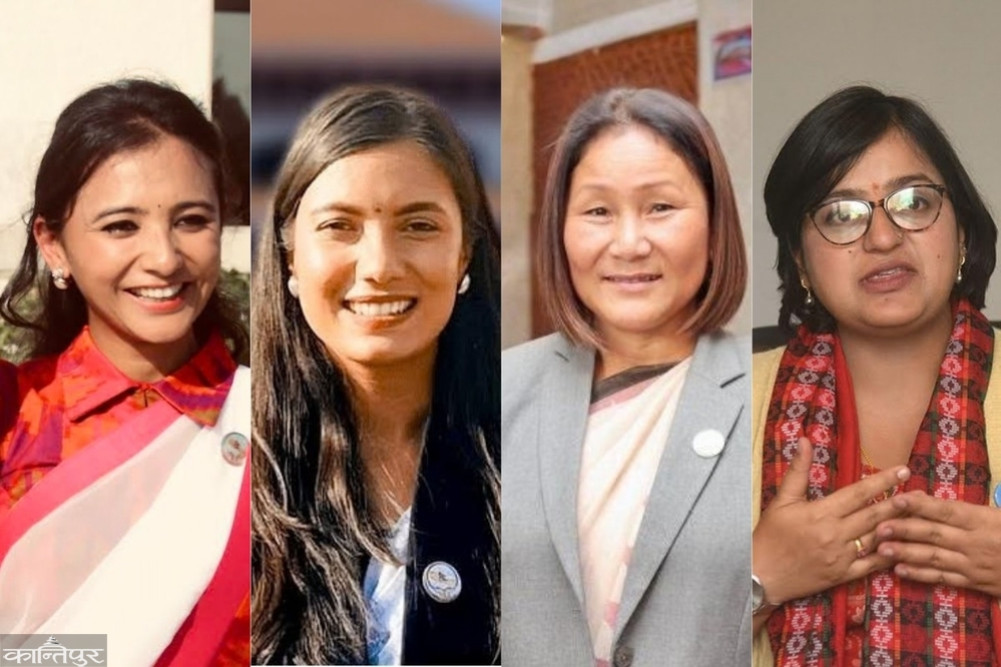
Most of the female candidates of the Rashtriya Swayamsevak Sangh (RSS) have won by wide margins.
We use Google Cloud Translation Services. Google requires we provide the following disclaimer relating to use of this service:
This service may contain translations powered by Google. Google disclaims all warranties related to the translations, expressed or implied, including any warranties of accuracy, reliability, and any implied warranties of merchantability, fitness for a particular purpose, and noninfringement.
Out of the 16 female candidates fielded by the Rashtriya Swayamsevak Sangh (RSS) in the House of Representatives elections, 13 have won. In Jumla, Binita Kathayat was defeated by Gyanendra Shahi of the RPP, and in Sunsari-1, Sarin Tamang was defeated by Harkaraj Rai of the Shram Sanskriti Party. In Humla, Tasi Lhanjom was limited to fourth place.
Ranju Darshana opened her account of victory in Kathmandu-1. She won by a wide margin, defeating Congress candidate Prabal Thapa Chhetri with 15,455 votes. Toshima Karki won for the second time in Lalitpur constituency number-3. In the 2079 elections, Karki was elected by defeating Maoist candidate Pampha Bhusal, who was also the then Energy Minister, and UML candidate Amrit Khadka. Now, she has won by a huge margin, defeating Jitendra Kumar Shrestha of the Nepali Congress and Rajkaji Maharjan of the Nepal Communist Party with 43,096 votes.
Sobita Gautam Yaspala, who became an MP from Kathmandu-2 in the 2079 House of Representatives elections, won from Chitwan-3. She defeated former mayor of Bharatpur Metropolitan City and Nepali Communist Party candidate Renu Dahal by a huge margin by getting 59,277 votes.
Rubina Acharya of the Rashtriya Swayamsevak Sangh (RSS) who studied MBA from Kathmandu University secured a huge victory from Morang Constituency No. 6 in this election. Acharya won with 55,513 votes while her rival Koirala got only 12,850 votes. Here, Binod Dhakal of the UML was limited to 8,317 votes.
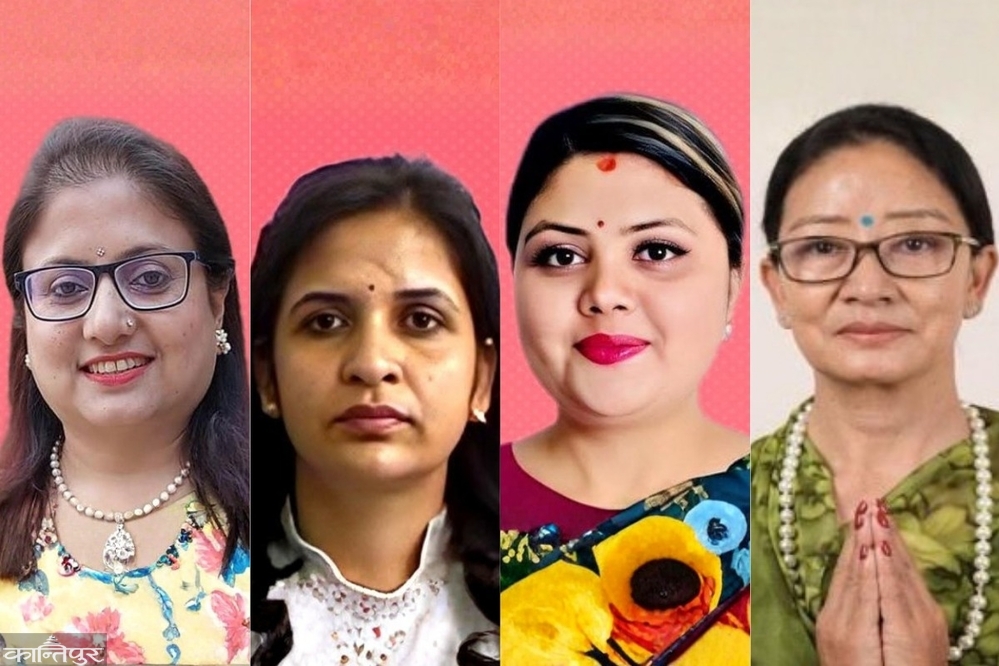
Bina Gurung of the RSSS won from Kaski Constituency No. 3. She defeated Congress candidate Manoj Gurung by a three-fold margin. Born in Parbat and making Pokhara her home, 53-year-old Bina Gurung was active in social service.
Komal Gyawali of the Nepali Congress won from Kailali Constituency No. 1. Gyawali was elected to the House of Representatives with 17,862 votes, while her nearest rival Chaudhary got 12,867 votes. Komal, a local resident of Tikapur, has a bachelor's degree in management. Before entering politics full-time, she had a successful agricultural business.
Asha Jha of Morang-5 also won by a wide margin. She defeated Congress's Phul Kumar Lalwani by a margin of more than 20,000 votes. While Jha got 30,434 votes, her main rival Lalwani of the Nepali Congress got 9,415 votes. Jha of Biratnagar-13 has a bachelor's degree in public health. Before entering politics, she was a health volunteer.
Bhandari Karki won in Sarlahi constituency number-1. She won by getting 44,181 votes, while her rival Shambhulal Shrestha of the Congress got 7,871 votes, while Manoj Kumar Devkota of the UML got only 6,101 votes.
Another candidate of the Rashtriya Swayamsevak Sangh (RSS) Nisha Dangi won from Jhapa-1 by getting 45,680 votes. Her rival Nepali Congress candidate Keshav Raj Pandey got 10,550 votes, while Keshavaram Rai of the Shram Sanskriti Party came in third with 10,004 votes. When she was elected from the Rashtriya Swayamsevak Sangh (RSS) through the proportional quota (Khas-Arya group) in the 2079 general election, she created history by becoming the youngest 'youngest MP' in the federal parliament.
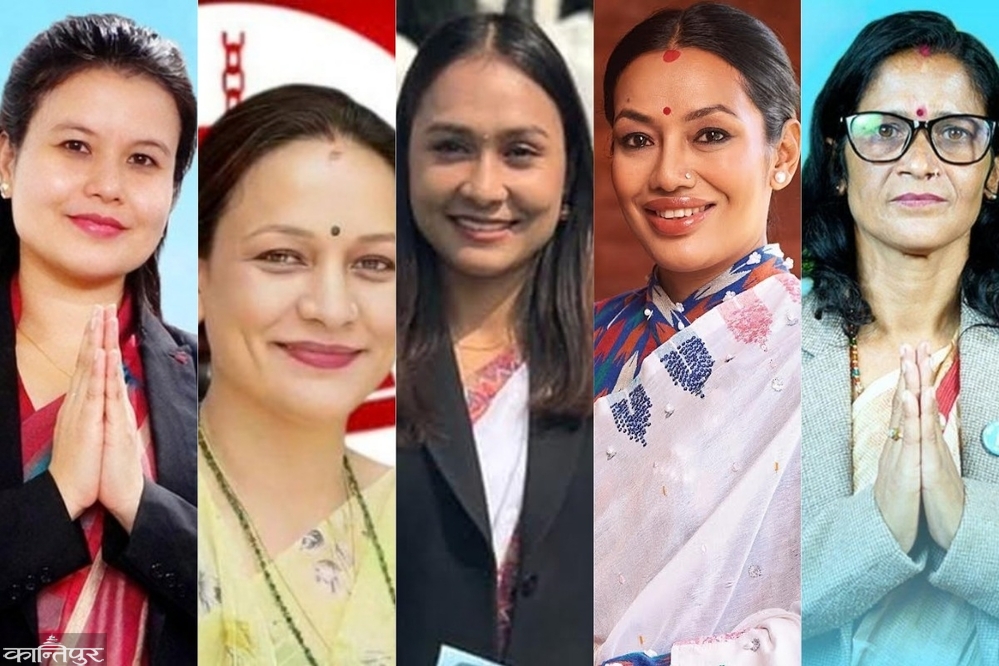
Former Deputy Speaker of the House of Representatives Indira Rana Magar won from Jhapa-2. She got 60,110 votes while UML candidate and former Speaker Devraj Ghimire got only 11,338 votes. In this constituency, Keshav Kumar Bhandari of Shram Sanskriti Party came third with 7,291 votes. She became a member of the House of Representatives of the Rashtriya Swayamsevak Sangharsi Party from the proportional representation system in 2079 and also served as the Deputy Speaker.
Ashika Tamang, who is a strong advocate for social issues and is vocal on social media, also started her journey to parliament by winning from Dhading Constituency No. 1. She got 39,128 votes while Bhumi Prasad Tripathi of CPN-UML got 15,032 votes and Rajendra Prasad Pandey of CPN-UML got 14,709 votes.
Pushpa Kumari Chaudhary, 36, of the Rashtriya Swayamsevak Sangharsi Party won from Saptari-1 by a wide margin. While he got 38,195 votes, Swabhiman Party's Sumit Kumar got only 7,847 votes.
Rashtriya Swayamsevak Sangh (RSS)'s Gauri Kumari also won from Mahottari-4. While he got 30,132 votes, his rival Janata Samajwadi Party's Surendra Kumar Yadav got 8,742 votes. Congress candidate Mahendra Kumar Raya came third with a total of 6,944 votes.