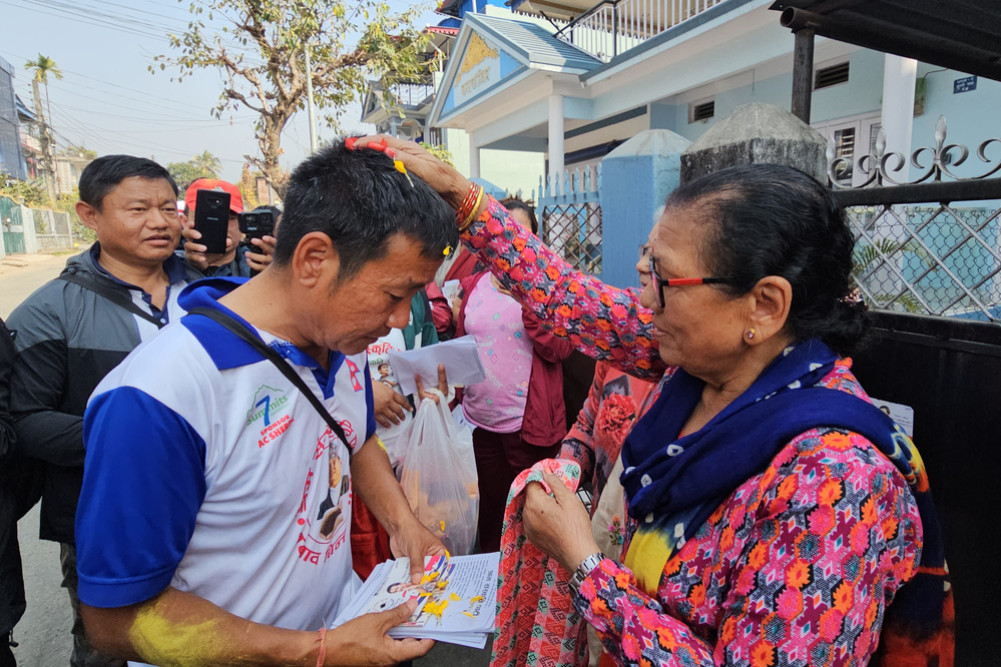
Twenty-six candidates from Dharan and Sunsari-1 constituencies are running an intense campaign to attract voters with agendas on drinking water, roads, education, health, employment, and development.
We use Google Cloud Translation Services. Google requires we provide the following disclaimer relating to use of this service:
This service may contain translations powered by Google. Google disclaims all warranties related to the translations, expressed or implied, including any warranties of accuracy, reliability, and any implied warranties of merchantability, fitness for a particular purpose, and noninfringement.
The issue of drinking water has become the main election slogan in Sunsari-1, where Labor Culture Party Chairman Hark Sampang is running. Sampang, the former mayor of Dharan Sub-metropolitan City, became popular with his distinctive style, public participation, and Shramdan campaign.
When he was the mayor of the sub-metropolitan city, he launched a labor donation campaign to solve the drinking water problem, which had a positive impact at the local level. Sampang, who became a candidate for the House of Representatives, has put forward an agenda of long-term solution to the drinking water problem, control of corruption, transparent governance, job creation, development of tourism infrastructure, and development of Dharan as an economic center.
Sampang has prioritized direct dialogue with voters during the election campaign. He has been active in meeting voters by reaching villages and toll booths and listening to their problems and suggestions. He is asking for votes by explaining to voters that public participation is essential in development work. He says that people's trust can be won only through transparency.
Due to his independent political image and social campaign, his influence has been seen especially among the youth and voters with alternative political views. Surya Bahadur Bhattarai (Manoj), who has been elected as ward chairman twice, has become a candidate from the Nepali Communist Party (NCP). He resigned from the post of ward chairman and became a candidate for the House of Representatives.
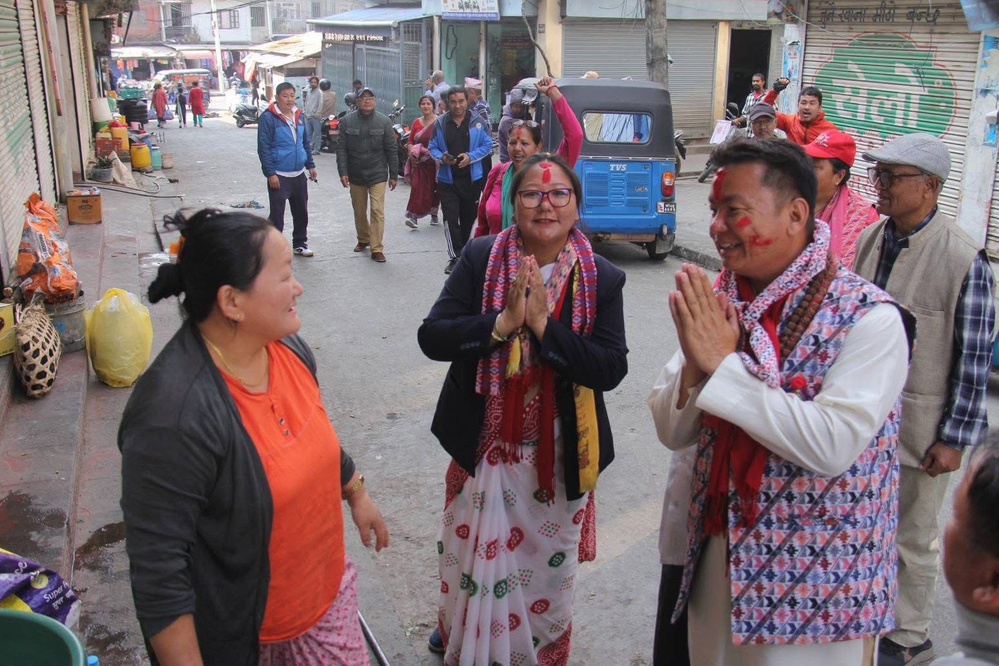
Having worked at the local level for a long time, he is gathering support based on the development work he has done during his tenure. He has made public 16 main agendas including policy formulation, policy reforms, physical infrastructure development, solving the drinking water problem, urban management, education and health service reforms, modernization of the agricultural sector and creating employment for the youth. Manoj said that cooperation with the federal government is necessary for the planned development of Dharan.
He believes that major development projects can be implemented by coordinating between the local, provincial and federal governments. Stating that a clear policy, effective plan and strong political will are necessary to advance development in the long term, he has committed to taking the initiative for that.
The competition between Sampang and Manoj is seen as the main competition in this area. Since their time in the local government, these two leaders have been publicly accusing each other. The relationship between them had cooled due to the series of criticisms of each other on social media.
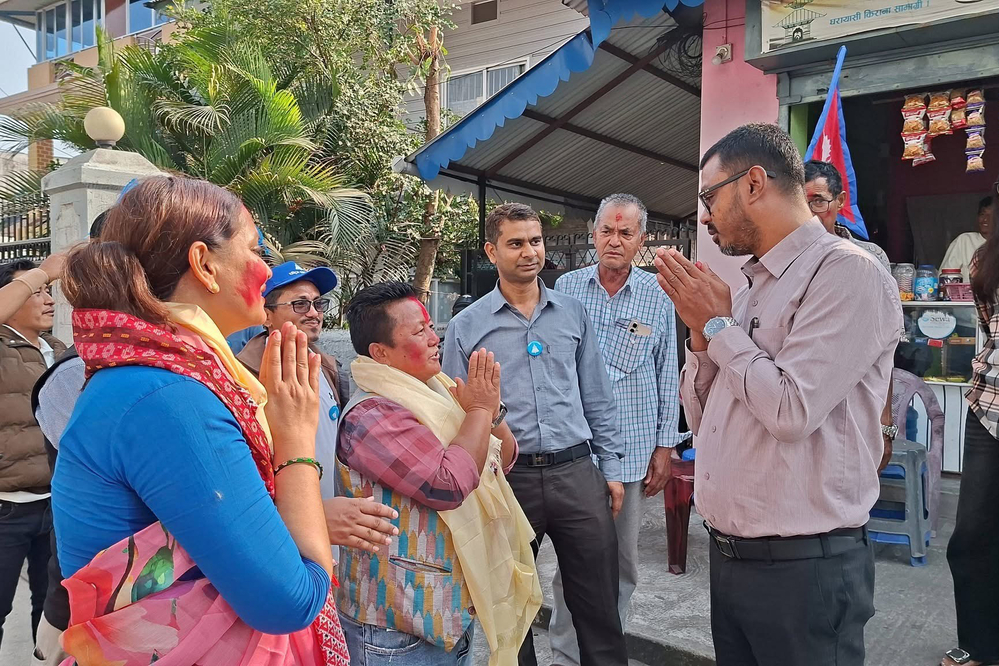
The election has become more interesting and intriguing as the old competitors are re-elected this time. UML candidate Tikaram Mangle has entered the fray with the aim of protecting the party's traditional base. He has made infrastructure development, expansion of health services, quality education, agricultural modernization and tourism promotion his main agenda.
Expressing his commitment to complete the development projects started in the past under the UML leadership, he is seeking support from voters. He says that his candidacy is for the overall development of the constituency and improvement of the living standards of the citizens. Janata Samajwadi Party Nepal candidate Sanjay Rai is also active in the election campaign by intensifying door-to-door programs. He is engaged in the work of reaching the doorsteps of voters and directly communicating with the people to understand their problems, suggestions and expectations.
Rai has specifically put forward the development of physical infrastructure, expansion of quality health services, reform of the education sector, resolution of long-term drinking water problems, and issues of identity and rights as his main election agenda. He has said that he is committed to the overall development of the region by ensuring inclusive development and equal participation of all communities.
Candidates from other parties are also currently busy with election campaigning and door-to-door campaigning. Candidates are promising to develop Sunsari-1 as a well-organized, modern, and economically viable city. The drinking water problem has been a major issue in the Dharan region for a long time.
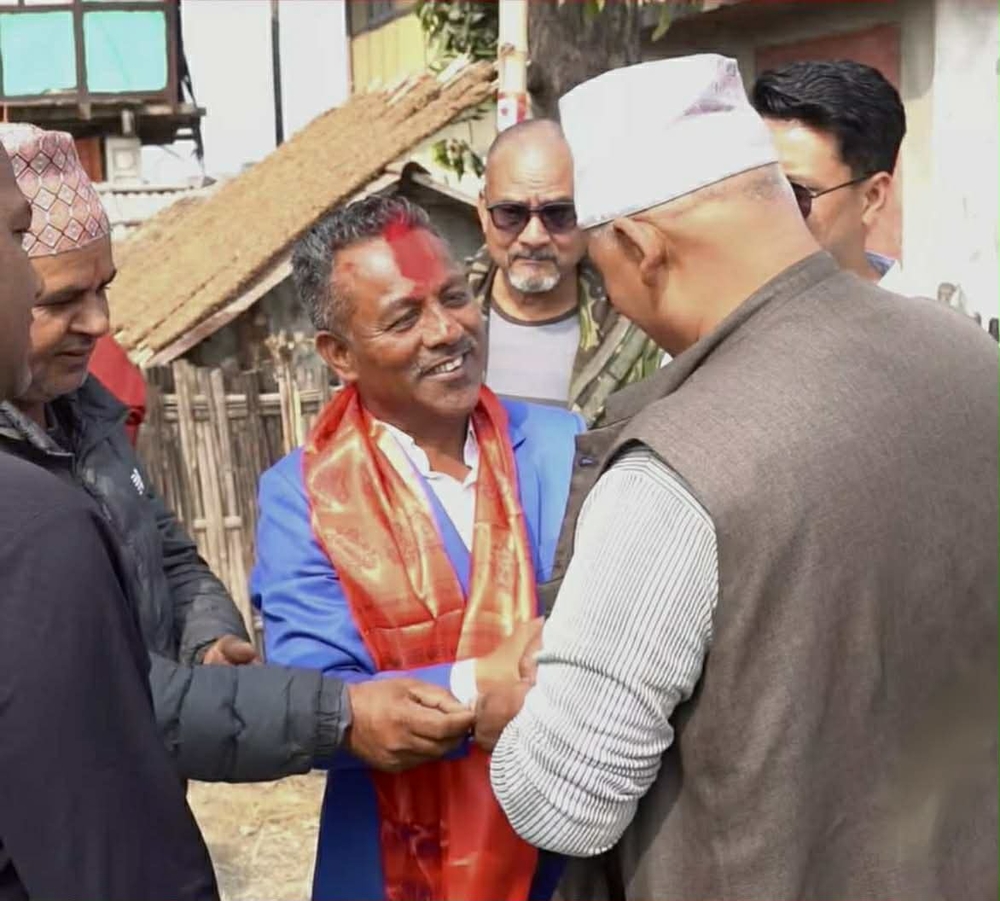
All candidates are expressing their commitment to solving these problems in the long term. Similarly, creating employment for the youth, running self-employment programs, promoting local industries, developing tourism, and expanding infrastructure are the main election agendas of most candidates.
The voters here are preparing to make decisions based on the candidate's agenda, past performance, honesty and commitment to development.
Laxmi Rai, 68, of Dharan-17, said that issues such as drinking water problems, road conditions, unemployment, education and health service improvements are becoming election issues. However, despite the commitments, she said that no work has been done on them. They always give only assurances and gossip. She said that this time she will vote only after understanding.
Congress candidate Sujendra Gole Tamang is also presenting his election agenda and 17-point commitments by visiting the villages and meeting the voters. His main agenda is to prioritize education, health, employment, drinking water, road infrastructure and irrigation management. Similarly, he has said that he will start a new development plan by completing the unfinished plans of Dharan Sub-metropolitan City, Barahakshetra and Ramdhuni Municipality.
He is clarifying his plans with the voters on the long-term solution to the drinking water problem in coordination with the federal government, taking initiatives to protect and upgrade places of worship and public places, developing them as religious tourist sites, and maintaining transparent good governance at the local level through youth participation.
Similarly, Sarin Tamang, a candidate of the National Independent Party (RSWP), who lost to Ashok Rai in the 2079 BS House of Representatives election, is in the fray with the aim of winning the election with a new strategy and approach in this election. Taking the previous defeat as an experience, she has emphasized on direct dialogue with the voters, door-to-door and problem-solving focused campaigns.
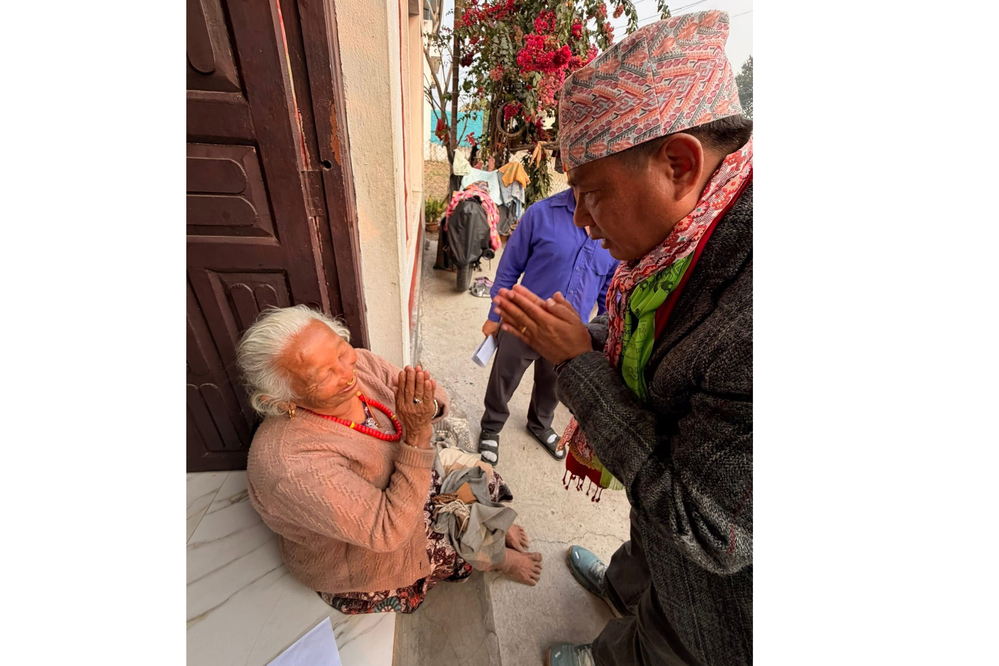
She claimed that she would win the upcoming election by getting more votes than she got in the previous election. She had received 16,606 votes in the 2079 BS election.
Similarly, Janata Samajwadi Party Nepal candidate Sanjay Rai has also been busy reaching out to voters to understand their problems, suggestions and expectations. Rai has specifically put forward physical infrastructure development, expansion of quality health services, reform of the education sector, solving the long-term drinking water problem and issues of identity and rights as his main election agenda. He has also said that he is committed to the overall development of the region by ensuring inclusive development and equal participation of all communities.
There are 26 candidates in Sunsari-1. Of these, 19 have filed their candidacies for various parties and 7 for independent candidacies. Mahesh Shrestha is the candidate from Nepal Workers and Peasants Party, Rajendra Gurung from Mongol National Organization, Dil Bahadur Bastola (Nagendra) from CPN-Maoist, Bhupi Rai from Rastriya Sajha Party, Rajkumar Limbu from Federal Democratic National Forum, Rajkumar Rai from Nepali Janashramdan Culture Party, Naresh BK from Samyukta Nagarik Party, Dambar Lawati from Ujjaya Nepal, Shyam Narayan Rajdhami from NECFA Samyukta, Yam Bahadur Limbu from Janamuti, Raya Bahadur Bista from Aam Janata, Nagendra Bahadur Limbu from Janata Samajwadi Party, Uddhav Shrestha from Rastriya Prajatantra Party and Dr. Raksha Kumar Rai from Miteri Party Nepal are the candidates. Om Krishna Udas, Shesh Prasad Regmi, Subash Bishwakarma, Chet Bahadur Rai, Jeevan Kala Rai, Sumit Rai and Deuman Limbu are the independent candidates.
All candidates are running intense election campaigns to attract public opinion in their favor. There are a total of 150,393 voters in Sunsari-1. Of these, 72,180 are men, 78,212 are women, and 1 is a sexual and gender minority.
This constituency includes 20 wards of Dharan, wards 1, 2, 3, 4, and 5 of Barahakshetra, and wards 6 and 7 of Ramdhuni. In this constituency, which is a mix of urban and semi-urban areas, issues such as drinking water, roads, employment, education, health, and good governance are the main agendas of the candidates.