Kamal Rai, 74, of Mechinagar-4, Bahundangi, says, ”Elephants have digested everything from firecrackers, bees, chillies and electric shocks. There is no way to stop them.”
We use Google Cloud Translation Services. Google requires we provide the following disclaimer relating to use of this service:
This service may contain translations powered by Google. Google disclaims all warranties related to the translations, expressed or implied, including any warranties of accuracy, reliability, and any implied warranties of merchantability, fitness for a particular purpose, and noninfringement.
After dusk, a herd of elephants always starts to come to the border village of Bahundangi. The locals have been playing Paunthe Jori with the herd of elephants for years. The 'fight' between humans and elephants has been going on for years. Neither humans nor elephants have won this fight.
At one time, the locals were so terrified of elephants that they were even tempted to kill them. The then chairman of Bahundangi VDC, Nilakantha Tiwari, made a controversial statement saying, ‘People should be given guns to kill elephants.’
But, even though that anger has subsided now, their pain has doubled. Currently, the locals are in search of human-elephant coexistence.
Kamal Rai, 74, of Mechinagar-4, Bahundangi, has been playing Paunthe Jori with elephants for more than 50 years. He recalls his childhood, ‘Elephants used to come here since he was little. They used to chase the elephants away by lighting firecrackers.’ Rai is still suffering from the pain of elephants every day. Elephants that used to flinch when they lit a fire are now not afraid of electric fences. ‘Elephants have digested firewood, ants, bees, chillies and electric shocks,’ says Rai, ‘There is no way to stop them.’ 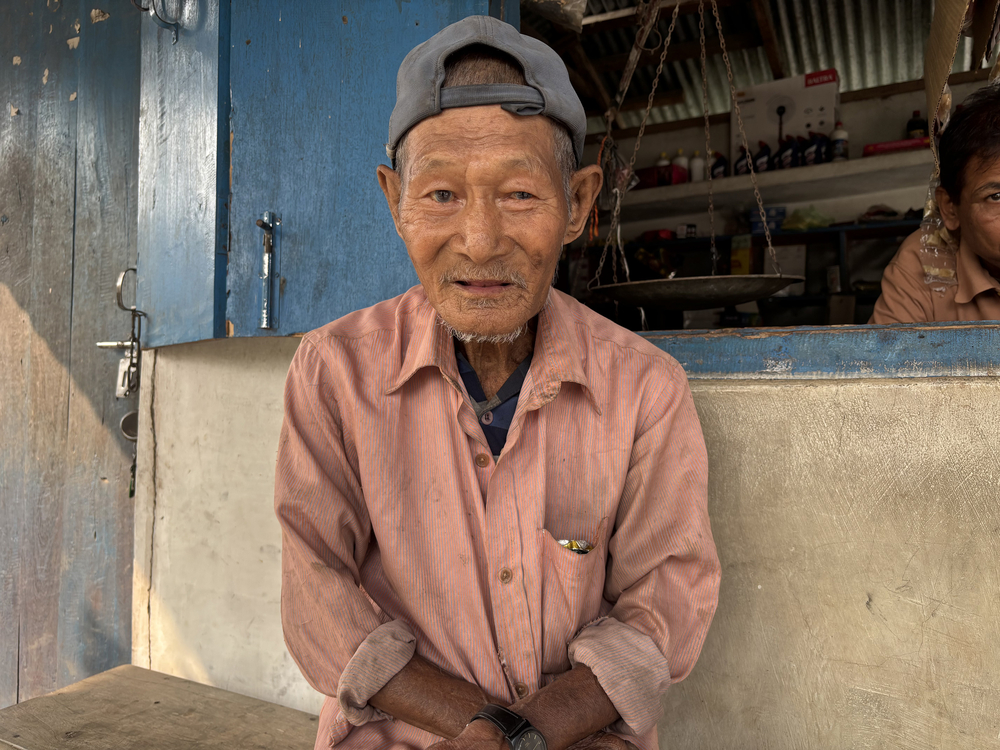 Kamal Rai
The pain of this area becomes the election agenda every time in local, provincial and House of Representatives elections. Leaders ride on the pain of the Bahundangi and run as MPs in the city, province and union. But, the pain here is always the same. Local Dilliram Baral, who has been suffering from elephant terror since 2046, says, ‘Leaders who win with our votes become MPs and ministers, we are always victims.’
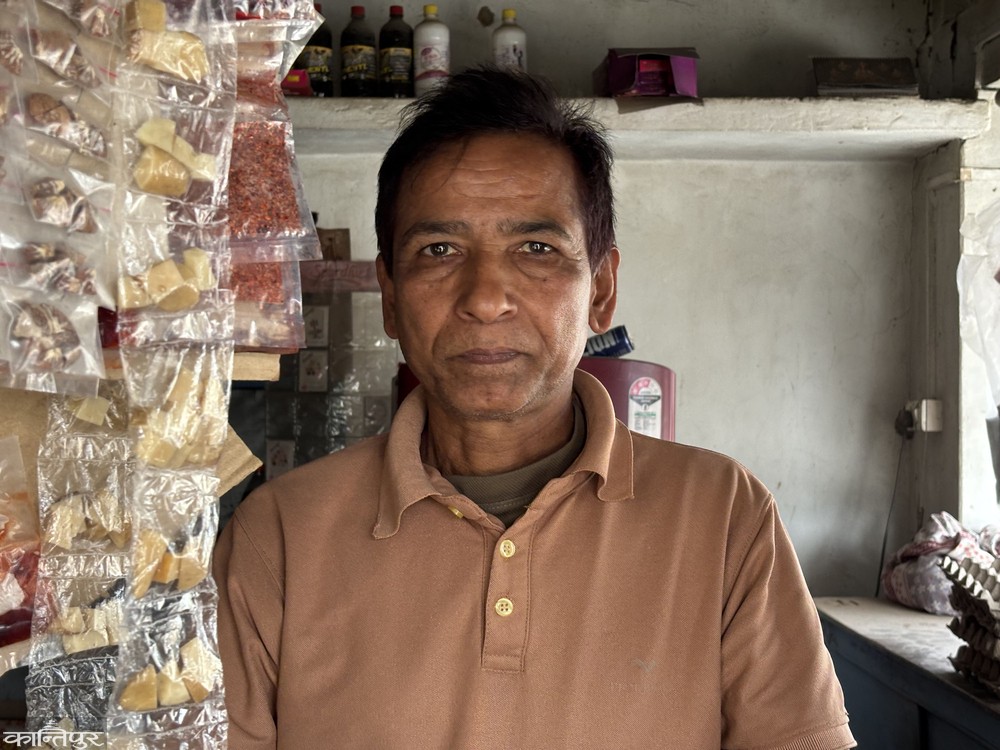 Dilli Baral
According to elephant experts and forest department officials, this area was an elephant ‘corridor’ in the past. When human settlements settled, the corridor was destroyed. ‘Elephants have been walking here for years,’ says elephant expert Dr. Narendra Pradhan, ‘Now, elephants are walking on the path they have been walking on for years, and now there is a conflict with people.’ According to him, in the past, there were not many houses here. That is why the elephants’ suffering was not so severe. But now, with the increase in population, the elephant terror has also increased.’
‘Elephants were not so much terror before,’ says 72-year-old Kamala Dahal, who has been living in Bahundangi since 2028 BS. ‘After 2050 BS, the terror has started to increase a little.’ According to her, elephants used to come in droves in the past too. The damage was very minimal. Dahal says, ‘The elephants would come back on their own path and would not cause much damage.’
According to experts, the damage started to increase when elephants were started to be dispersed. Expert Pradhan says, ‘Teasing and teasing elephants is fatal.’
Locals, who have been suffering from the fear of wild elephants for years, ask the leaders who come to seek votes the same question, ‘How much longer do we have to endure the pain of elephants?’
A little further down the Bahundangi market, women were harvesting mustard. One of them, Januka Khatiwada, said, ‘From this time on, elephants have started eating mustard too. Now we have to leave nothing.’ Ward No. 4 had introduced a program called ‘Tori Mauri-Ghar Lauri’ last year as a crop that is not damaged by elephants and provided mustard subsidies to farmers.
However, a few days ago, they became more worried after elephants damaged the mustard of farmers in the Aldangi area of Ward No. 4. ‘Elephants have to leave nothing behind,’ says local Usha Dahal, ‘our leaders do not understand our pain.’
Local Bimala Dahal, however, has a different demand for elephant control. The governments of Nepal and India should work together to stop elephants at the border. ‘Only then will we finally get relief,’ she adds, ‘otherwise this pain will never be relieved.’
Wild animals including elephants do not belong to any country. They belong wherever they go. However, farmers in Bahundangi feel that India deliberately releases elephants to feed on Nepal’s crops. Due to which they have to suffer. ‘India sends them to graze when they say that the crops are ready in Nepal,’ Dahal alleges, ‘otherwise why did the elephants come when the rice and maize are ripe?’
It is not that there were no promises of elephant control in the previous local, provincial and federal elections. Talking about the past two decades, in 2064, the Maoist Dharma Ghimire promised to control the elephants, won and became an MP, but the elephants did not stop coming. After Ghimire, Rabin Koirala of the UML was elected as a member of the House of Representatives. He also made the same promise as Ghimire. He also tried to control them. But he could not. After Koirala, Maoist leader Ram Karki ascended the Parliament building. His promise also went to waste. Last time, Congress Vice President Bishwaprakash Sharma made the same commitment as the previous leader. He also carried out work including construction and maintenance of electric fences. However, the elephants did not stop coming.
‘Even the leaders are unable to solve the problem here,’ says local Dal Bahadur Karki, ‘The leaders’ job is only to win elections with our votes, to get into parliament, our suffering is the same.’
Wards 1, 2, 3 and 4 of Mechinagar are elephant-affected areas. In addition, the upper part of Buddhashanti, the Chure area of Arjundhara and the upper area of Damak are suffering from elephants. This suffering is not only a common problem of area number 1, but also of all 5 constituencies. However, the elephant-affected voters of the respective constituencies allege that no leader has made any effort to solve this problem.
‘KP Oli became the Prime Minister three times,’ says local Rana Bahadur Karki, ‘Jabo could not come up with any concrete and long-term plan to control the elephant terror of Jhapa.’
Elephant attacks have claimed more than a hundred lives in two decades in Jhapa, according to the Division Forest Office, Jhapa. More than 30 elephants have also been killed during this period. There has been material damage worth crores. The damage to crops is also similar.
Local Krishnamaya Khatri says, ‘The roads in Dhulamye have been blacktopped, drinking water has been provided.’ But what stopped the leaders from solving the elephant problem?’ Khatri had been cultivating about four bighas of land in Adhiya. However, she was forced to give up farming because of the elephants. ‘Two years ago, I couldn’t even harvest a single grain of grain,’ she says. ‘How long can I live enduring such pain?’
Many farmers have given up paddy farming and started tea farming because of the elephants. However, they are worried about not getting the right price for tea. Tea farmer Min Bahadur Karki says, ‘The cost is increasing, but the price is not there when selling.’
There is a fence worth crores of rupees, but it is ineffective.
The electric fence was built with the help of the World Bank at a cost of about two crore rupees to prevent elephant terror. However, locals complain that the structure is now becoming ineffective. The elephants that come daily by climbing the fence and damaging farmers’ crops and destroying their homes have not stopped. Local Bimal Khadka says, ‘If the fence had stopped them, where would the elephants be entering?’ According to him, the solar batteries have been damaged, the wires have been cut or stolen, and the structure is in a dilapidated state. It seems that repairs are also being made from time to time. However, the electric fence has not stopped the elephants from coming. Locals have demanded that the government declare Bahundangi an 'elephant disaster area'. Locals are angry that no formal announcement has been made yet. They accuse the public representatives of not showing interest in the matter. 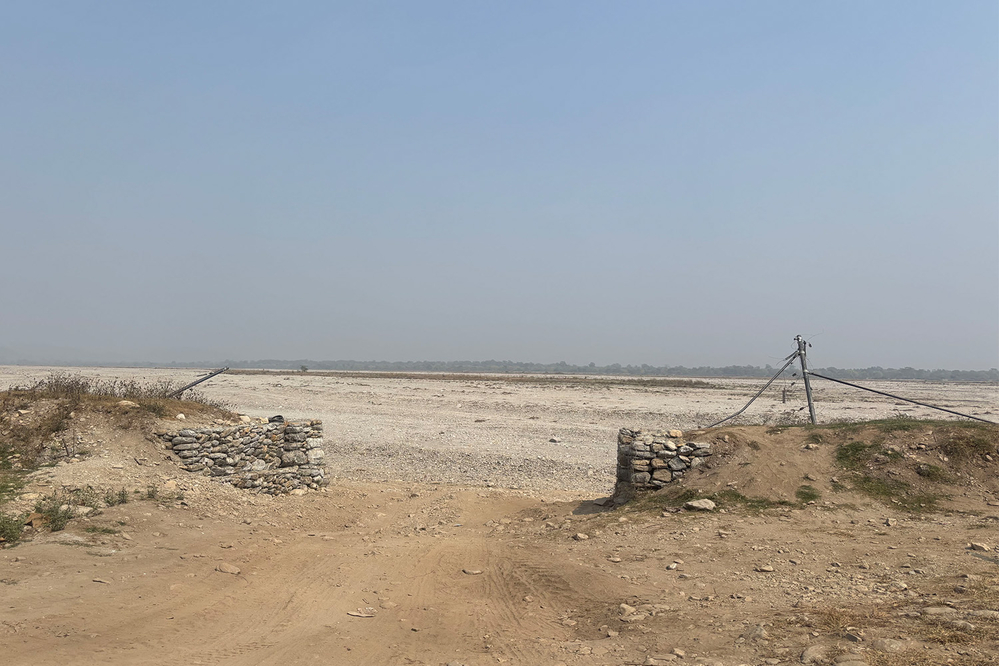 Arjun Kumar Karki, the chairman of Ward No. 4, who has been active in controlling elephant terror for a long time, says, 'There is an elephant terror.' The ward is taking initiatives in relief programs including insurance and compensation for the people. According to Karki, initiatives are being taken to insure the affected farmers in collaboration with an organization called Ujjaya Nepal of Bardiya.
According to Shankar Luitel, a local who is familiar with the elephant problem and indigenous elephants in Bahundangi, he points out the need for a long-term solution to the elephant problem. “A long-term plan is needed to protect the existence of both humans and elephants in this area,” says Luitel, “only then will the common people here be free from elephant terror. Elephants will also be able to move freely.”