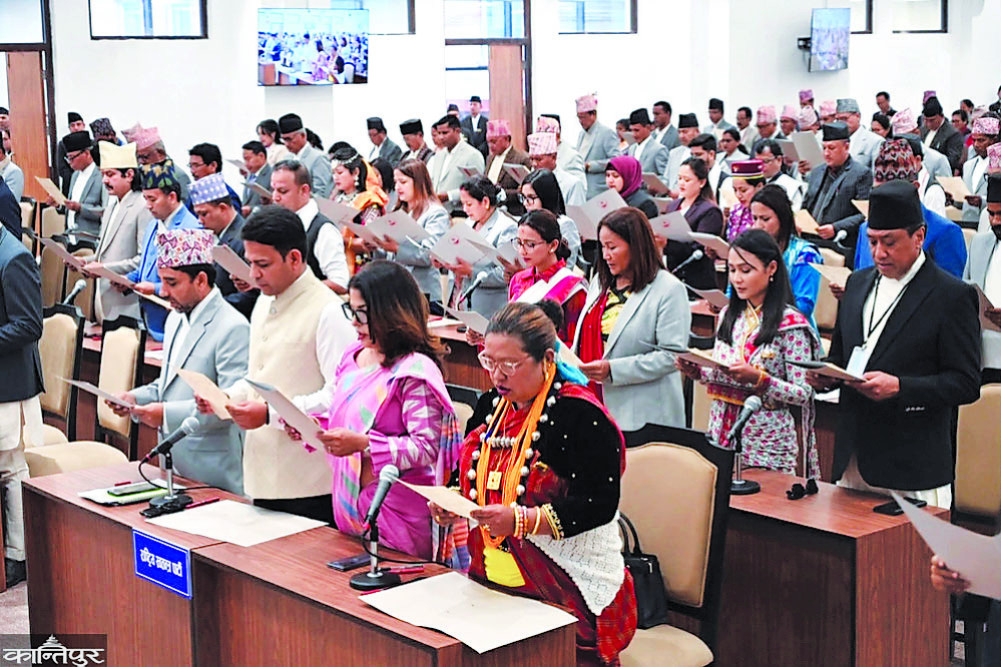
A democratic system is only viable when the opposition plays a constructive role in parliament. There has been talk of a parliament without an opposition in Nepal from time to time. If a parliament without an opposition is envisioned after the adoption of a parliamentary system, it is a desire for a unitary and autocratic style of governance.
We use Google Cloud Translation Services. Google requires we provide the following disclaimer relating to use of this service:
This service may contain translations powered by Google. Google disclaims all warranties related to the translations, expressed or implied, including any warranties of accuracy, reliability, and any implied warranties of merchantability, fitness for a particular purpose, and noninfringement.
An important aspect of the parliamentary democratic system is the opposition. Because, the essence and longevity of democracy also depend on the role of the opposition. This time, as a result of the votes in the House of Representatives elections, parties including the Congress can be seen in the role of the opposition.
The people were upset due to the power-centric activities and opaque working style of the old political parties. Which gave birth to the Gen-G rebellion. The disappointment that has been in the people for years was expressed in the elections and the Rashtriya Swayamsevak Sangh (RSS) won almost two-thirds of the seats. As a result, Balendra Shah has been appointed as the Prime Minister and has already started working.
The beautiful aspect of the democratic system is the adult franchise and periodic elections. The elections determine the government and the opposition. The opposition is a 'waiting government', it should monitor and warn the working style of the current government and also draw the attention of the government to address the problems of the people.
As the first elected Prime Minister, BP Koirala did not get to practice the democratic parliamentary system effectively. King Mahendra hijacked the democratic system. He implemented the Panchayat system in the country. Even the referendum of 2036 failed to produce results in favor of democracy. After the first people's movement of 2046, the Nepali Congress was established as the first party in the parliamentary elections of 2048.
UML became the main opposition party. In some subsequent elections, these two parties became the first and second. In 2064, the Maoists became the largest party. In 2070, the Congress, in 2074, the UML, and in 2079, the Congress became the largest party. They formed an alliance between different parties and continued to run the government. In Asad 2081, the two largest parties in the House of Representatives, the Congress and the UML, came to power. But the country did not progress as expected. As a result, the country suffered unrest.
The number of opposition seats in the upcoming parliament is small. In that too, since there are political parties with different ideologies, the role of the opposition is being looked at with interest; In recent years, no political party has been able to stop the misrule and corruption of any political party. The eyes of the political parties and their leadership were always on power, never on the people. The sovereignty of the people could not be established. The people were always understood by the leaders only as a vote bank and a ladder to power.
Through this year's election, the people gave almost two-thirds of the seats to the Rashtriya Swayamsevak Sangh (RSS) with great hopes and gave it a record-breaking majority. On the other hand, the old major political parties including the Congress, which have been enjoying the utmost power for years, have joined the ranks of the opposition.
If no such adverse situation arises in the country, the current government and the MPs will have the opportunity to complete their five-year term efficiently. The term has become one aspect. However, the role of the opposition is also significant in increasing the effectiveness of the parliament. Parliamentary practice is meaningless without the role of the opposition. As a result, the government's autocracy, autocracy and impunity may increase. The head of the executive and every activity of the executive should be accountable and responsible to the parliament. For that, the opposition should raise its voice.
A democratic system is only viable when the opposition plays a constructive role in the parliament. There has been talk of a parliament without an opposition in Nepal from time to time. If a parliament without an opposition is envisioned after the adoption of the parliamentary system, it is a desire for a unitary and autocratic style of governance. In the past, when our political parties were unable to play the role of the opposition in a strong manner, instability, inconsistency, corruption and arbitrary style took precedence in the country. Instead of warning against the undemocratic and unconstitutional steps of the government, the political parties in the role of the opposition openly indulged in political division, which led to many distortions in the country.
The government, which has taken over all the power of the state, does not hesitate to make undemocratic and unconstitutional decisions under the guise of power. The opposition should make the executive accountable and responsible to the parliament and force it to withdraw from illegal and unconstitutional steps. The opposition should closely monitor every activity of the government. The opposition does not have the facility to remain silent.
The number of opposition seats in the upcoming parliament is small. In that, the role of the opposition is being watched with interest because there are political parties with different ideologies. The Labor Culture Party, which entered parliament for the first time, and its leader Hark Sampang, are seen in a different style. Although they appeared constructive towards the government's working style from the beginning, their full role remains to be seen.
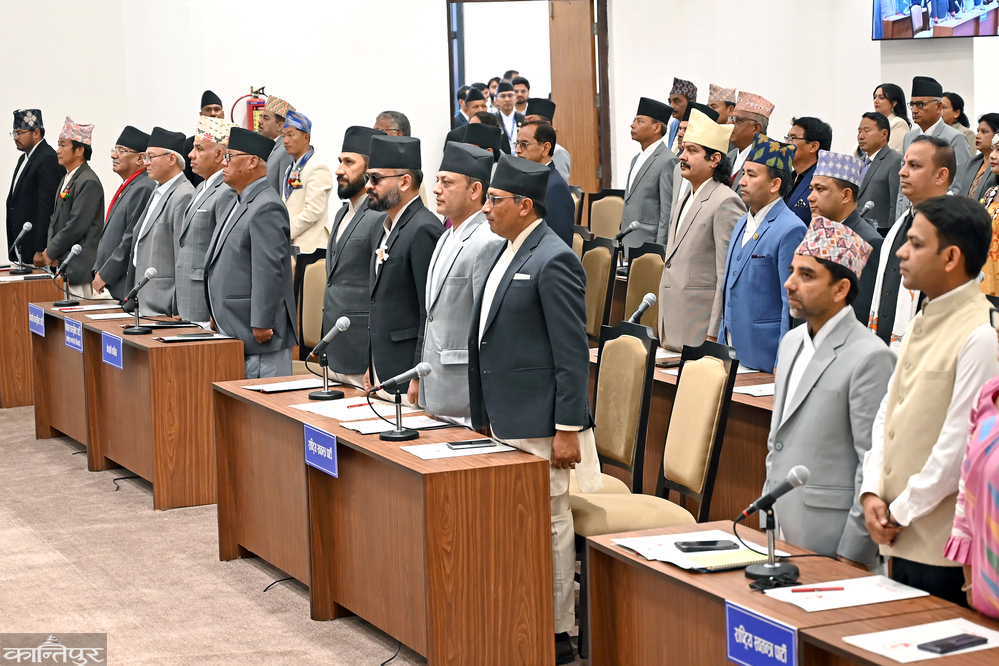 Since the situation this time is different from other times, the role of the opposition also needs to be different from other times. The Rashtriya Swayamsevak Sangh (RSS) party, which has secured almost a two-thirds majority, has put forward the amendment of the constitution as the main issue. While the debate on the amendment of the constitution is going on, there are some provisions of the constitution that are unamendable, and the opposition should be particularly interested in them. Since a clear majority will be reached regarding the formulation, amendment and repeal of general laws, the opposition's monitoring of the government's steps should be strengthened.
The opposition needs to pay attention to everything from the policies and programs brought by the government to the balanced distribution of the budget and program priorities. The country's foreign policy and the geopolitical impact of it are sensitive issues, so the opposition should raise awareness. Transparency and accountability of every decision made by the Council of Ministers should be sought. Pressure should be exerted for good governance and control of corruption. Autocratic and arbitrary steps that may be taken due to the arrogance of the majority should be continuously raised in the parliament. It is the responsibility of every MP to support the good work of the government and practice efficient parliamentary practice without opposing it in the name of opposition.
While discussing the role of the opposition, it should not be forgotten that the role of every MP representing the parliament is equal. Keeping in mind national independence and constitutional supremacy, every MP should convey the problems of the common people to the government. They should also be able to become a means of solving them. The common people, the media and all representatives of the people have an equal responsibility to revive the parliamentary democratic system. Keeping in mind national independence, revitalizing the constitutional supremacy and democratic governance system is the need of the day.
(Budhathoki is studying at the School of Law Faculty of Lumbini Buddhist University)