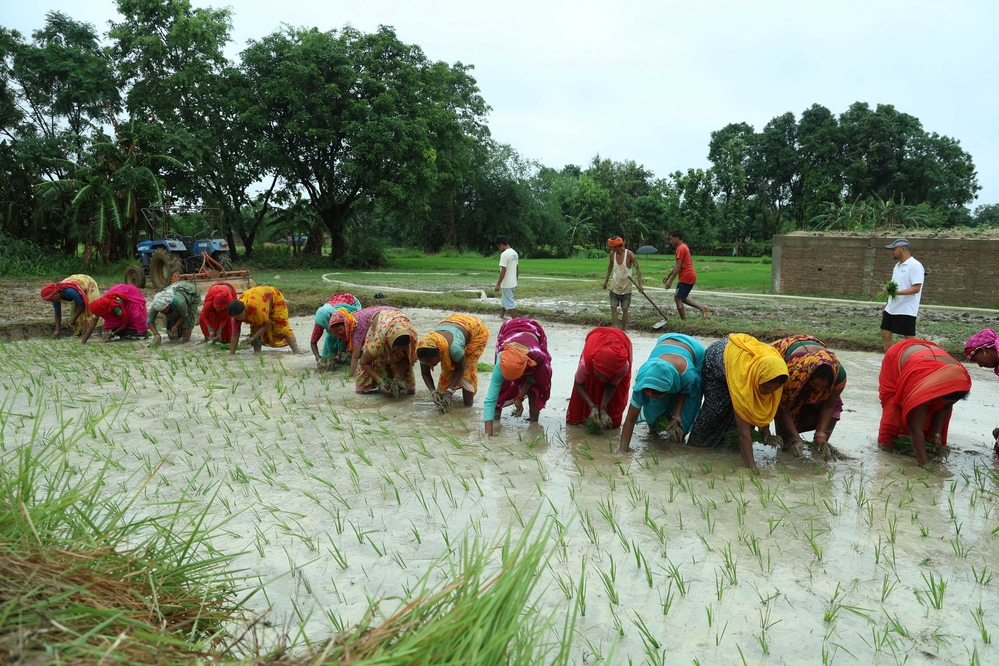
In many districts, rice planting is being done directly in the mud; even though the Agriculture Inputs Company Limited and Salt Trading Corporation have stocks, some cooperatives have set low quotas, resulting in many farmers not receiving fertilizer.
We use Google Cloud Translation Services. Google requires we provide the following disclaimer relating to use of this service:
This service may contain translations powered by Google. Google disclaims all warranties related to the translations, expressed or implied, including any warranties of accuracy, reliability, and any implied warranties of merchantability, fitness for a particular purpose, and noninfringement.
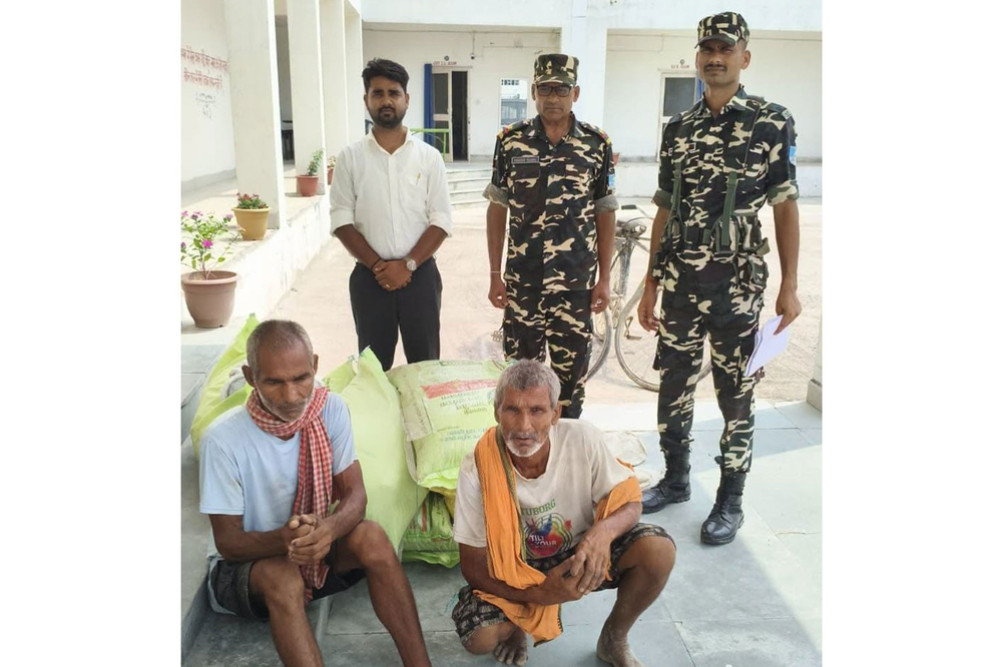
Two farmers from Balara-5 in Sarlahi, 60-year-old Nagendra Prasad Singh and 55-year-old Suresh Prasad Singh, were bringing chemical fertilizer from Sonbarsa Bazaar in Sitamarhi district across the border on the 17th of Asar. They were arrested on the way by a team from the Agriculture Department and the Sashastra Seema Bal (SSB). They were accused of being fertilizer smugglers.
After their arrest, the Singh brothers were handed over to the Sonbarsa police station. They are currently being held in Dumra Jail in Sitamarhi district. The court in Dumra has stated that the hearing will only take place after receiving documents from the Sonbarsa police station. “We were called because they said they might be released on bail on Thursday itself, but when we arrived, we were informed that the hearing would only be held the day after tomorrow,” said Nagendra’s son Aditya.
The Singh brothers, who have been living in Malangwa for seven years, had gone home to plant their fields. They have two and a half bighas of land (each brother owns a little over one bigha). Since fertilizer was not available in Nepal, they went to India. There, they bought two sacks of urea and six sacks of DAP. They were arrested while bringing them back.
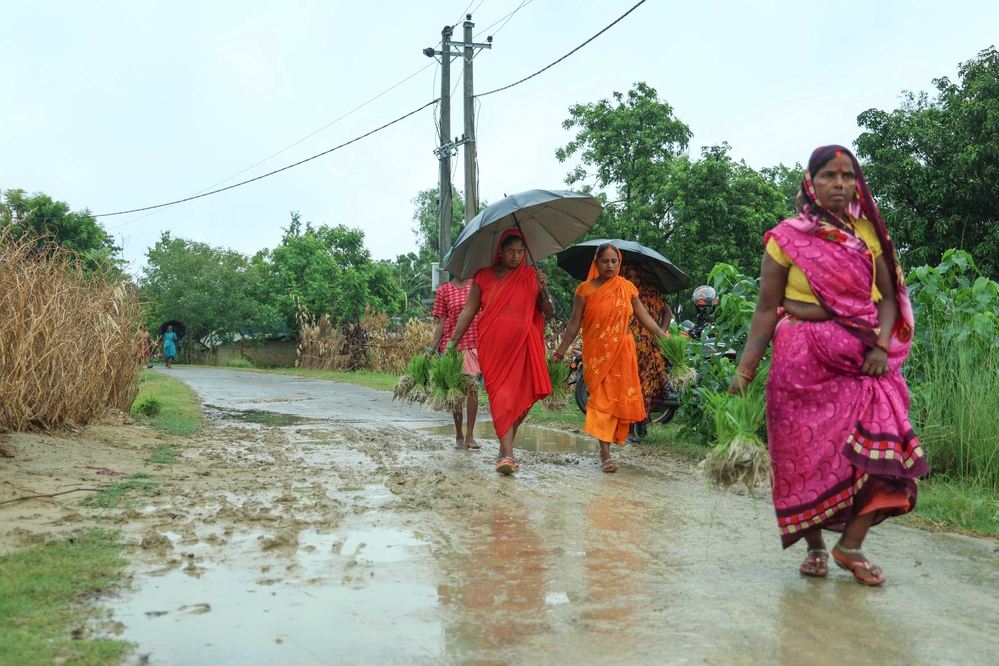
Currently, there is an acute shortage of chemical fertilizer across the country. Although there is a shortage of fertilizer every year during the planting season, farmers say the problem is much worse this year. Farmers, who should be busy planting, are instead running from one cooperative depot to another and even across the border in search of fertilizer. It is not easy to bring fertilizer from across the border either. This year, Indian security personnel have tightened controls at the border. There is a risk of being caught, just like the Singh brothers.
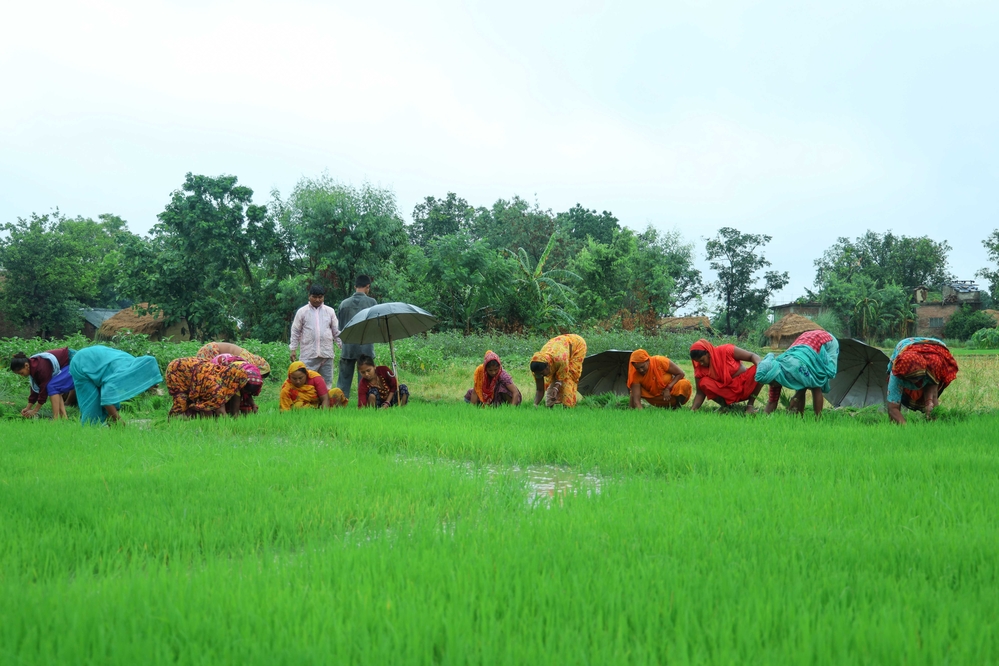
Some farmers have completed planting without any fertilizer, while in other places planting has been halted. Farmers are increasingly worried that not being able to apply fertilizer on time will reduce yields. The government, however, continues to claim every year, “We will not let there be a fertilizer shortage.”
Sushil Adhikari of Beldi, Chandrapur-6, Rautahat, says that planting without fertilizer results in poor seedlings and lower yields. “Fertilizer is needed at the time of planting. But this time, even after searching in more than a dozen places, I couldn’t get any. What am I supposed to do now?” he said.
Adhikari is searching for DAP fertilizer to plant six kattha of land. On Thursday, he called the cooperative and pleaded for five kilos of fertilizer. But after failing to get any, he was left disappointed. The paddy seeds are ready, and the field is prepared for planting. “This is not just a problem this year,” he said, “I have been facing this fate every year. If this is the situation for those with small plots, imagine what it’s like for those with more land.”
According to farmers in Rautahat, cooperatives have been avoiding responsibility, citing insufficient fertilizer supply, and farmers are forced to return empty-handed from cooperatives every day. They are worried that not being able to apply fertilizer on time will reduce yields. “You can’t get a single grain of fertilizer at our own country’s cooperatives, and you can’t get it from India either,” said Sahadev Chaudhary of Vijaypur. “Friends haven’t gone to India after hearing that fertilizer sales are strictly controlled there.”
According to farmers, the SSB has not allowed fertilizer to be brought in for several days. The Agriculture Inputs Company in Chandranigahpur has announced plans to distribute 3,584 sacks of DAP from old stock. However, this is very little compared to the district’s needs. Every year, Rautahat requires more than 50,000 sacks of DAP.
Govinda Ghimire, Information Officer at the Agriculture Inputs Company, said the problem is due to a lack of fertilizer supply from outside. “Fertilizer might arrive around Shrawan. It’s not available as per demand,” he said. “We are distributing from old stock. Due to the war (in West Asia), no additional fertilizer has arrived.” According to him, there are 17,480 sacks of urea in stock.
According to Jitendra Chaudhary, Ward Chair of Chandrapur-8, there are seven thousand farmers in the ward. So far, the Agriculture Inputs Company has distributed only 49 sacks of DAP. “How can we distribute 49 sacks of DAP to so many farmers?” he said. “Ordinary people are suffering.”
During the planting season, farmers in Jhapa, Morang, Sunsari, and other districts of Koshi Province are also troubled by the shortage of chemical fertilizer. Most farmers are forced to plant without fertilizer. Khadga Narayan Sardar of Gramthan-3, Morang, complained that he could not get fertilizer this time. “Farming is going on, but there is no fertilizer,” he lamented. “Those with connections are getting fertilizer, but for farmers like us, it’s one problem after another.” Sitaram Koirala, a farmer from Budhiganga-1, Morang, has a similar story. “DAP should be applied before planting paddy,” he said. “But since I couldn’t get fertilizer, I had to plant without it.”
According to Kamal Pokharel, Acting Provincial Manager at the provincial office of Agriculture Inputs Company Limited, supply has been lower than expected, so demand has not been met. Due to insufficient fertilizer, only limited quantities are being distributed through cooperatives. According to him, there is currently a shortage of DAP, which is essential for planting, while urea has already been distributed.
Urea is applied about 22 days after planting paddy. According to the company, five consignments of DAP have arrived at Kolkata port. Of these, about 150,000 metric tons of DAP are being prepared for import into Nepal. However, due to time required for transportation, customs clearance, and distribution, farmers will not get immediate relief.
According to the company, about 20.6 percent of the available fertilizer is allocated for Koshi Province and Siraha and Saptari in Madhesh. Based on local demand, branches recommend distribution through cooperatives and registered vendors. In Morang alone, about 5,500 metric tons of DAP are needed for the paddy season. So far, about 400 metric tons have been distributed, and 60 tons are in the process of being sold. This is very little compared to the need, so farmers have not been able to get enough fertilizer.
In West Nawalparasi, fertilizer shortages during the planting season are no longer a new issue for farmers. After the formation of a new party-led government, farmers had hoped to get fertilizer on time. Fertilizer supply was also a major issue during the elections. But this year, the same fate as last year has repeated.
Kamlesh Yadav of Pratappur said he ran to the cooperative for two or three days to get fertilizer for planting paddy. “But I couldn’t get fertilizer from the cooperative,” he said. “After learning that Indian security personnel have tightened controls, I was disappointed. Fertilizer is not available in the country, and it’s not easy to bring it from India either.”
Until last year, Indian security personnel used to allow fertilizer to be purchased and brought in. “This time, controls are much stricter,” Yadav said. “Even if you manage to secretly bring fertilizer up to the Nepali border from India, Nepali security personnel do not stop you.” He said he tried to bring fertilizer from India but was unsuccessful. “It seems there is a shortage of fertilizer even in India,” he said. According to farmers, a 45-kilo sack of fertilizer in the Indian market costs between 700 and 1,000 Indian rupees.
In the district, Agriculture Inputs Company Limited has been distributing fertilizer through 77 cooperatives. But due to insufficient supply, even cooperatives are having trouble distributing it. According to branch manager Tara Prasad Khanal of the Agriculture Inputs Company, 500 metric tons of urea and 200 metric tons of DAP were recently sent to cooperatives just for paddy planting. In the district, paddy is cultivated on 20,480 hectares, and the demand is for 18,000 metric tons of urea and 12,000 metric tons of DAP.
Shiv Ratan Kewat of Jalaraiya, Kapilvastu-9, could not get DAP fertilizer in time to sow 20 kilos of Sawa Mansuli paddy seed. “When I couldn’t stand it, I bought DAP from the market at double the price and sowed the paddy seed,” he said. “But since the fertilizer was not good, the seeds did not sprout well.” Raju Pandey of Yashodhara also sowed 40 kilos of Sawa Mansuli paddy seed. Even after using fertilizer brought from the Indian market, the seeds did not germinate properly. “The fertilizer was of poor quality,” he said. “I am preparing to plant 30 kattha of land, but I am stressed because I can’t get DAP and urea fertilizer in Nepal.”
Farmers say that since good yields are not possible without chemical fertilizer, they are compelled to bring fertilizer from India if necessary. “It’s not as easy as before to bring fertilizer from India,” he said. “Indian security personnel have tightened controls, and prices in their markets are double.” Farmers are worried that if the smuggled fertilizer is of poor quality, their investment will be wasted.
In Kapilvastu, the Agriculture Inputs Company distributes fertilizer from Taulihawa and Bahadurganj, and Salt Trading Company from Krishnanagar. The district needs 16,000 metric tons of urea and 14,000 metric tons of DAP annually. However, no DAP has arrived since Mangsir. Vishnu Bhandari, manager of the Taulihawa branch of the Agriculture Inputs Company, said, “We have not been able to provide enough urea and DAP, and have had to distribute it as if scattering grains.” There are 169 metric tons of DAP and 130 metric tons of urea in stock in Taulihawa, and 418 metric tons of urea and 196 metric tons of DAP in Bahadurganj. Of the district’s 83,000 hectares of arable land, 81,576 hectares are under cultivation. Paddy is grown on 65,852 hectares, with a productivity of 4.2 metric tons per hectare.
Farmers in Bardiya are also facing problems due to lack of fertilizer during planting. As Asar draws to a close, they are bringing fertilizer from Indian border markets at high prices. Although Agriculture Inputs Company and Salt Trading Company are supplying fertilizer through cooperatives, supply has not met demand. Dhiraj Raidas of Gulariya-9 said he has not been able to plant yet. “Even after relying on the cooperative for fertilizer, I couldn’t get any,” he said. “I had to bring fertilizer from the Indian market.”
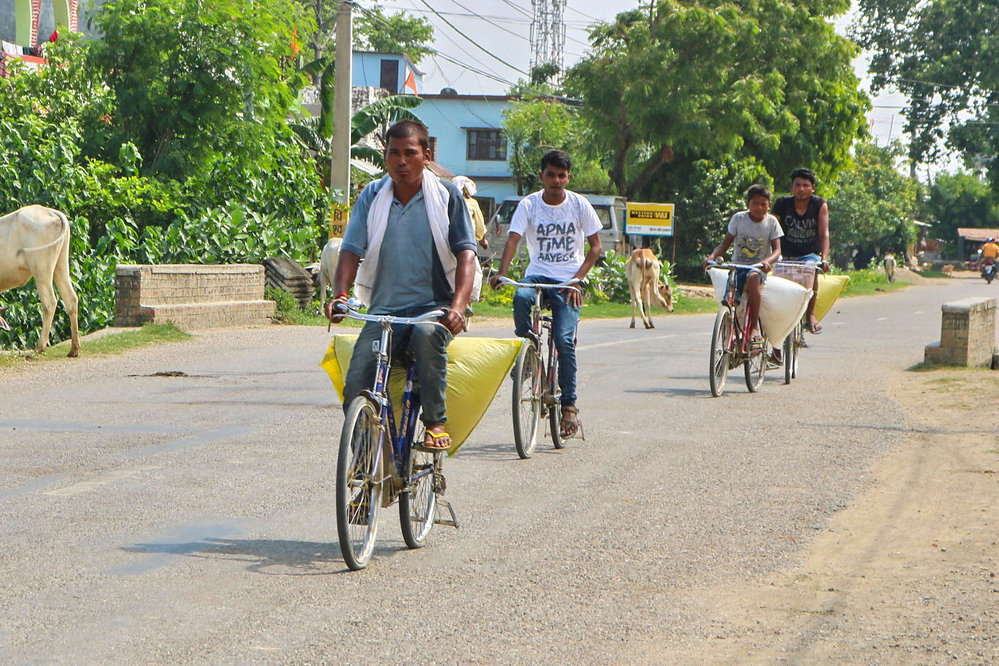
According to Manoj Lodha of Gulariya-8, even when bringing a single sack of fertilizer, Indian security personnel harass them. Assistant Chief District Officer Ashok Kumar Bhandari said there is no restriction on fertilizer brought in small quantities. According to him, the Armed Police Force deployed for border security also does not stop farmers from bringing fertilizer. Armed Police Superintendent Dinesh Kumar Mahat said that genuine farmers have no problem bringing a sack of fertilizer.
Bardiya district requires 10,000 metric tons of urea and 5,000 metric tons of DAP. Dinesh Khanal, chief of the Agriculture Inputs Company, said they have not been able to supply fertilizer as per demand. Paddy is cultivated on 50,200 hectares in the district. Although about 50 percent of planting is complete, the shortage of chemical fertilizer persists. According to him, farmers have planted without fertilizer.
Planting Without Fertilizer
Asar Badayak of Hattibojha, Belauri-6, Kanchanpur, needed five sacks of DAP for planting. This time, after failing to get fertilizer, he planted without it. Now, even though it is time to apply urea to the paddy, there is no sign of getting any. Although some DAP was sold through the village cooperative, one sack was divided among two or three people. “There is a lot of farming, what can you do with 15–20 kilos of fertilizer?” Badayak said. “And even that was only sold after planting was over.”
Farmers here have also not been able to bring fertilizer from India this time. They say that since quotas have been set in India, only a certain amount is being sold. “There is a severe shortage of fertilizer now, and they are not allowing it to be brought from India either,” said farmer Rewati Raman Ghimire of Punarbas Municipality-4. “We planted without DAP, and now we can’t get urea either.”
According to Ghimire, 25 sacks of urea arrived in Punarbas Municipality on Wednesday. Even though farmers lined up from 4 a.m., police had to be deployed because sales could not proceed due to the crowd. “This time, it’s not easy to buy fertilizer in India either,” said Ghimire, who is also a ward member. “If fertilizer were easily available in India as before, there would not be a shortage here, but now we hear there is a shortage in India itself.”
Agriculture Inputs Company Limited has sold only half as much fertilizer in Kanchanpur this season compared to last year. “This time, not enough fertilizer arrived,” said Hemraj Joshi, chief of the Agriculture Inputs Company in Mahendranagar. “It is said that even from India, only small amounts have come.” According to him, since Baisakh, 600 metric tons of DAP and 1,500 metric tons of urea have been sold. In the same period last year, 1,200 metric tons of DAP and 2,000 metric tons of urea were sold.
Fertilizer Needed in Asar, Arrives in Shrawan
Panchakaji Shrestha, president of the National Farmers Federation, said that even though they warned the government in advance, the fertilizer shortage has occurred again this year as in previous years. He told Kantipur, “A new government with young leadership, new energy, new enthusiasm—I thought they would listen this time. But they have also let us down.”
He said they had urged the government as early as last Jestha to take necessary steps to prevent a fertilizer shortage this year. “We need fertilizer in Asar, but the government says it will arrive in Shrawan. The government did not take farmers’ problems seriously,” he said.
Ram Krishna Shrestha, Joint Secretary and Head of the Agriculture Development Division at the Ministry of Agriculture, said that by the 24th of Asar, the government had already supplied 558,900 metric tons. According to him, 512,500 metric tons have already been distributed to farmers. Even now, there are 98,000 metric tons of fertilizer in stock at the warehouses of Agriculture Inputs Company Limited and Salt Trading Corporation.
When asked why fertilizer is sitting in government warehouses while farmers are desperately searching for it, Joint Secretary Shrestha said, “This is the amount that has already been allocated to local levels but not yet collected by cooperatives. The fertilizer is at the district distribution branches of the Agriculture Inputs Company. Since the cooperatives with quotas have not yet collected it, it appears as stock. The cooperatives have been a bit slow to collect, but they are doing so.” He also said that recently, 60,000 to 70,000 sacks of chemical fertilizer are being taken daily from the company’s procurement offices.
According to government data, about 1.1 to 1.2 million tons of chemical fertilizer are needed annually for all crops. In previous years, the government provided around 500,000 metric tons of chemical fertilizer as a subsidy. This year, the Ministry of Agriculture estimates that more than 550,000 metric tons will be distributed by Asar. In addition to subsidized DAP, potash, and urea, other fertilizers are also imported and sold by the private sector.
For the paddy season, 80,000 metric tons of DAP and 60,000 metric tons of urea are on the way and will enter Nepal from the first week of Shrawan, according to Joint Secretary Shrestha. “Thirty thousand metric tons of DAP have already arrived in Visakhapatnam. An additional 130,000 metric tons of fertilizer are being shipped from Oman, Qatar, and Vietnam,” he said. He also said that reminders have been sent for the supply of 95,000 metric tons of fertilizer already contracted.
For the current fiscal year 2082/83, Rs 28.82 billion has been allocated for the purchase of subsidized fertilizer. According to the ministry, tenders have been issued for the import of 491,000 metric tons of fertilizer so far.
The Ministry of Agriculture has made it mandatory for cooperatives to enter details of the fertilizer they receive and to whom they sell it into an integrated information system to ensure transparency in fertilizer distribution. There is also a provision for the public to view the stock of subsidized fertilizer sold by dealers and the details of farmers who receive fertilizer. There are also grievance officers at the federal ministry and “focal persons” at the provincial ministries to hear fertilizer-related complaints.
According to the Subsidized Fertilizer Distribution Management Procedure, 2082, fertilizer reaches farmers through various stages. The Ministry of Agriculture determines the annual provincial quota for fertilizer by the end of Jestha based on recommendations from the provincial ministries. Based on the recommendations and needs of the provincial ministries, quotas are set for local levels. Then, local governments distribute quotas to cooperatives. Accordingly, fertilizer is distributed to farmers through nearly 14,000 cooperatives across the country.
Fertilizer in Warehouses, But Farmers Don’t Get It
Chandrika Prasad Sah of Bahudarmai-1, Parsa, went to the regional office of the Agriculture Inputs Company in Birgunj on Thursday in search of urea. He has already planted paddy on three out of his six bighas. Although it is time to apply urea to the planted fields, he is worried that his crops will be ruined due to lack of fertilizer. Like him, many farmers are running to the regional offices of the Agriculture Inputs Company and Salt Trading Company.
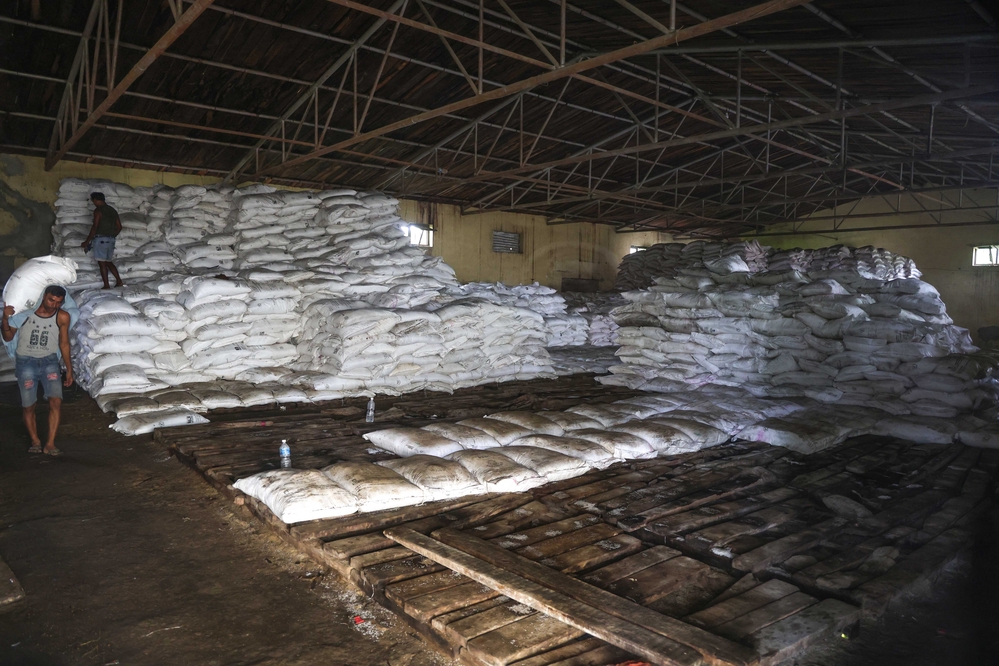
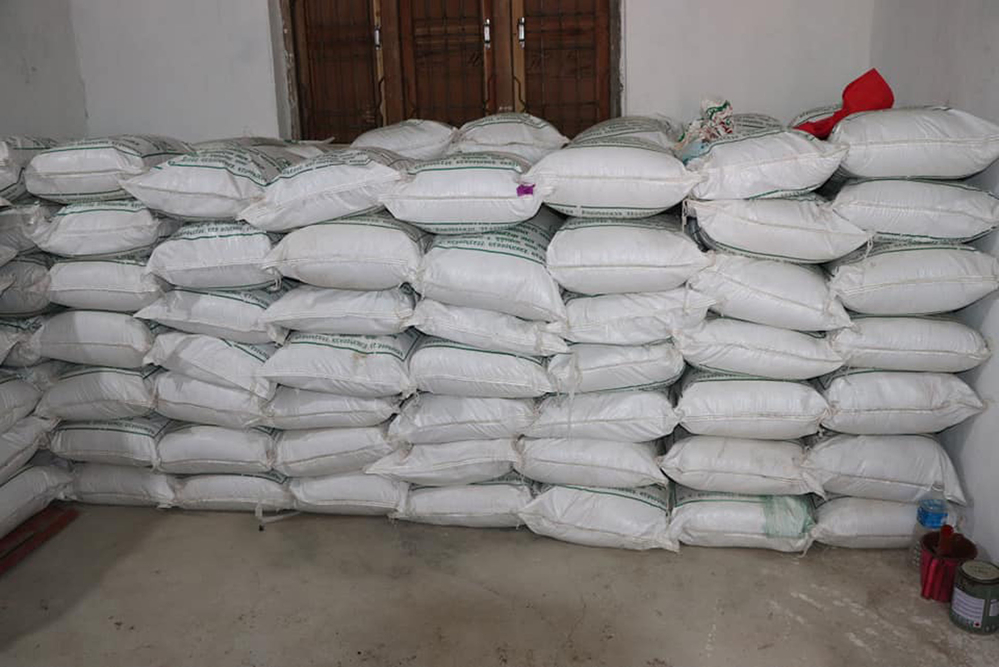
According to Durga Prasad Pandey, regional chief of the Agriculture Inputs Company, although quotas for urea and DAP have been set recently, most cooperatives in the province have not shown interest in collecting fertilizer. As a result, the company currently has large stocks of urea, DAP, and potash. According to him, for the eight districts of Madhesh Province, there are 19,228 tons of urea, 9,688 tons of DAP, and 4,953 tons of potash in stock. “We are calling cooperatives to come and collect fertilizer,” he said, “but there is no interest from their side.”
He said that many cooperatives in Parsa do not want to collect their quota of fertilizer. Since the company distributes only through cooperatives, fertilizer does not reach farmers until cooperatives collect it. Cooperative managers say that since quotas are limited, they would have to distribute fertilizer as if scattering grains, so they are reluctant to collect it. The chair of one cooperative in Bahudarmai said the problem was due to quotas being set late. “Moreover, the small amount of fertilizer cannot meet farmers’ needs,” he said. “In such a difficult situation, how can we take a small amount of fertilizer and risk it?”
According to Amoz Lamichhane, head of the regional office of Salt Trading, there are 1,568 tons of urea in stock, but no DAP.