The state has lost at least five and a half billion rupees in the last five years due to the government's failure to mount a strong defense against construction companies in arbitration disputes.
We use Google Cloud Translation Services. Google requires we provide the following disclaimer relating to use of this service:
This service may contain translations powered by Google. Google disclaims all warranties related to the translations, expressed or implied, including any warranties of accuracy, reliability, and any implied warranties of merchantability, fitness for a particular purpose, and noninfringement.
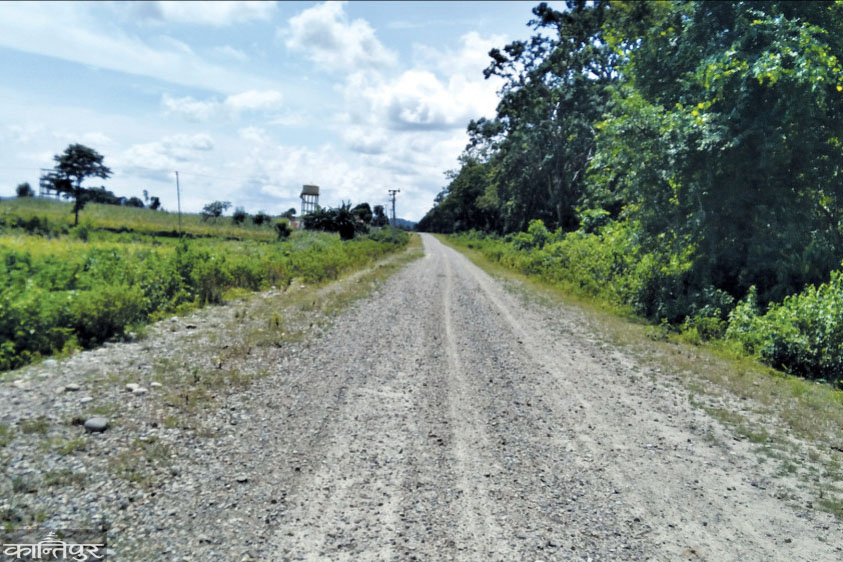
Two years ago, the construction company Sharma/Bikoi/Surya JV claimed Rs 1.444 billion in arbitration against the Road Department. In some construction-related disputes, the amount claimed was about Rs 100 million more than the contract price of the entire project.
The contractor of the Keshaliya-Chimadi-Laukahi Road Improvement Project in Sunsari had made such a claim, citing unexpected costs of soil excavation and losses incurred due to trucks being parked due to failure to remove electricity poles on time.
The dispute was resolved by the 'Nepal Arbitration Council'. The arbitration tribunal decided that the Road Department should pay about 20 percent of the claimed amount, or Rs 288.5 million, to the Sharma/Bikoi/Surya JV. According to the council's records, Rs 57.6 million was only for interest.
An analysis of the Auditor General's annual reports and the details of dispute resolution by the Nepal Arbitration Council shows that construction contractors, suppliers, and consultants have claimed about 14 billion rupees from the state in the last five years and have decided to pay about 5.5 billion rupees more.
In about 85 percent of the 89 disputes in the last two years, the contractor company has been awarded full or partial compensation for their claims through arbitration. The Auditor General has pointed out the government's weak defense as one of the reasons behind the large number of contractors winning the cases. According to the latest report, in only 27 of the 160 disputes, the government agency had filed a formal counterclaim on its behalf.
Auditor General Toyam Raya told Kantipur about the report's findings, "Government agencies are very likely to file counterclaims."
In about 85 percent of the 89 disputes in the last 2 years, the contractor company has been awarded full or partial compensation for their claims through arbitration. The Accountant General wrote in the report, ‘[The government body] was found to have failed to respond effectively, in some cases even failed to respond, and failed to present evidence and documents to the satisfaction of the arbitrator. As a result, decisions that should have been in favor of the government body have been in favor of the construction business.’
Former Secretary General of the Council, Senior Advocate Baburam Dahal, says that he has found very few examples of government bodies filing ‘counter-claims’ and that this is their ‘big weakness’. ‘They do not have a mechanism to work on it. The employees do not work hard. There is also no expertise in this matter,’ he said. ‘There is a law that allows the recovery of the remaining amount of work if someone does not complete the contract.’ However, they [government bodies] never make a claim and the mediator cannot fill it .’
Arbitration is an alternative mechanism to resolve commercial and contractual disputes quickly and efficiently outside the formal court system .
Its main legal basis in Nepal is the 'Arbitration Act, 2055' . The Public Procurement Act and Regulations have made provisions for resolving disputes between government bodies and contractors during the implementation of contracts and if they are not resolved by mutual agreement through arbitration .
Due to the speedy resolution of disputes, binding decisions, and confidentiality, mediation has developed as an alternative mechanism for resolving commercial disputes around the world . Based on the same international practice and domestic laws, construction entrepreneurs do not take their disputes to regular courts but rather submit their claims to independent and non-governmental organizations such as the 'Nepal Arbitration Council' . In which, unlike regular court hearings, all details of claims, counterclaims and disputes remain confidential. A limited number of selected arbitrators resolve them through closed-door discussions. Statistics show that construction entrepreneurs are taking advantage of the weak defense of the government in such discussions and are receiving payments worth crores of rupees.
In 133 out of 160 public procurement arbitration disputes in 5 years, the government did not counterclaim.
In 84 percent of the 89 disputes in the last two years, the contractor company received full or partial payment of its claims. That is, 4 out of every 5 companies that want to resolve disputes through arbitration receive payment according to some claim.
The first and biggest dispute of the contractor company Sharma/Bikoi/Surya JV of the Keshaliya-Chimadi-Laukahi Road Improvement Project was related to the availability of soil.
The contract for the project stated that the construction company itself would have to arrange for the soil to fill the road. However, shortly after the construction started, the contractor claimed that the government had not provided a free place to extract soil nearby and had to purchase the soil.
The government's defense during the resolution of this dispute was very weak. Government officials were unable to firmly present the legal condition that the contractor company should procure construction materials itself to the arbitrator. Finally, the arbitrator ruled in favor of the construction business.
Arbitration claims have increased by about five times in the last four years. While there were claims of 1.22 billion in 2077/78, such claims had increased to about 6 billion by 2080/81. Another dispute in the same project was related to 110 electricity poles. The contractor company had said that the poles were not removed on time, so large vehicles and equipment could not be used on the road adequately.
The arbitration tribunal decided that the government and the contractor should share the ‘idle equipment cost’ 50-50 percent in the contractor company’s claim and ordered the department to pay the company Rs 46 million and Rs 84 million in interest. But the Auditor General’s report comments – ‘The cost of the alleged loss is not based on objective measurement, but on estimates.’
When examining the council’s data, it is seen that arbitration claims have increased by about five times in the last four years. In the financial year 2077/78, there were claims of Rs 1.22 billion, but by 2080/81, such claims had increased to about Rs 6 billion. However, the government does not counterclaim in the same way. Such a contradiction is most clearly seen in 2078/79. Of the disputes resolved by the council alone in that year, while the contractor companies claimed more than Rs 2.5 billion against the government, the government counterclaimed only Rs 10 million, which is 0.4 percent.
Keshaliya-Chimadi-Laukahi is not an isolated example. Looking at the five-year data of the Nepal Arbitration Council, it is seen that both the number and amount of such disputes are increasing rapidly.
Although the claims of the contractor company have increased by 4.5 times in the last 4 years, the government's counterclaims have only been made occasionally.
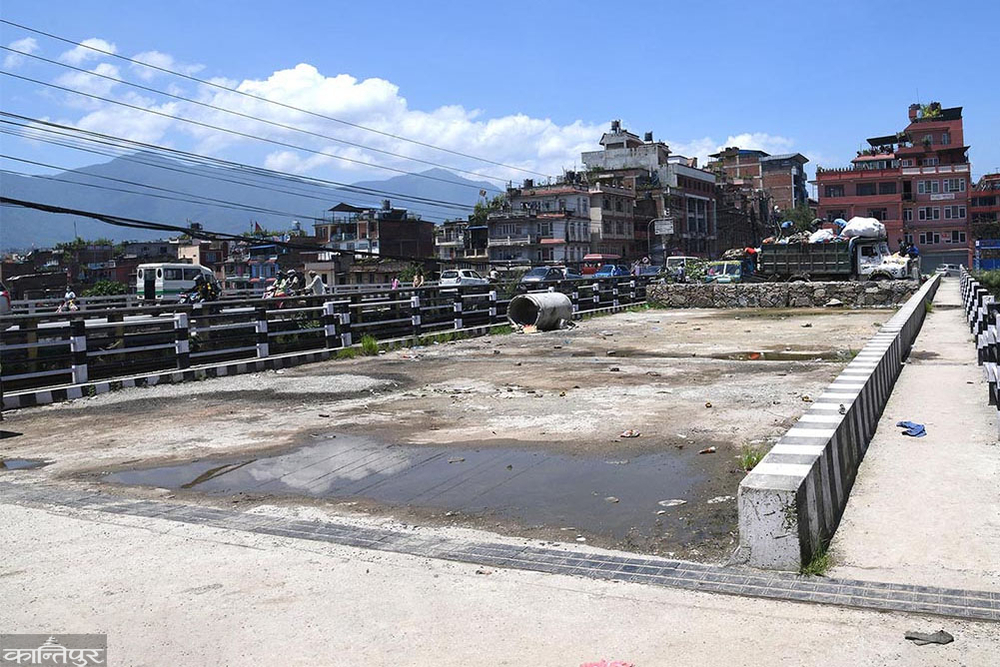
When examining the arbitrator's decisions, they also appear to be contradictory. For example, in the previous fiscal year, the arbitrator ordered the payment of Rs 16.6 million as claimed by the contractor company that the contract work for the construction of the Teku Bridge under the Sustainable Urban Transport Project of the Road Department had been reduced, resulting in a loss in overhead and profit.
The work had to be done by experts. In disputes of the same nature, there has been a settlement somewhere, and nowhere else. That matter should be standardized a little. - Toyam Raya , Auditor General However, the arbitrator decided not to accept the company's claim of Rs 13.8 million claimed by the contractor company for the loss caused by the reduction in work on the Birgunj-Thori road improvement project under the Road Department's Postal Highway on the basis that the construction contractor had accepted the variation order.
In another claim of a similar nature, the arbitrator rejected it, saying that 'it is impossible to predict that there will be profits in the business' and '15 percent of the lost profit was claimed based on estimates without documents'. The Auditor General has commented on decisions of this nature as 'the arbitrator decided to pay the claim based on estimates without objective evidence of losses or overheads incurred'. The Auditor General has commented that different decisions in disputes of the same nature create a ‘lack of expected uniformity and credibility’ in the arbitration system.
In the legal system adopted by Nepal, decisions made by regular courts become precedents for subsequent disputes. The court must follow the basis taken in previous decisions in similar disputes in subsequent decisions. If it is not possible to follow it, it should be written that it will adopt a new basis from now on, stating the theoretical reasons for changing it by sitting with a bench of more judges than before, and then follow those new grounds. However, there is no compulsion to accept such previous decisions or precedents for arbitration. As a result, even in disputes of the same nature, different decisions are made - as in the case of Teku Bridge and Birgunj-Thori Road.
Auditor General Toyam Raya says that uniformity is required in the decisions of arbitrators and that standard criteria should be made for that. ‘Experts had to do the work. A mechanism was also needed to evaluate it,’ he said, ‘consistency was also needed in the decision. In disputes of the same nature, there is a decision somewhere, and somewhere there is not. That matter needs to be standardized a little.’
One reason for such a problem is related to the way in which people are appointed as arbitrators. According to the law, the two parties to the dispute select one independent arbitrator each, and the two arbitrators selected in this way together select a third arbitrator. This group decides the dispute. Whoever is selected, after taking the oath, it is believed that they will make an independent decision, not the party that selected them.
The problem is arising because government bodies are choosing arbitrators based on kinship or other relationships rather than ability. The government’s own people are trying to corrupt the decision-making body.- Matrika Niraula , independent arbitrator and senior advocate Independent arbitrator, senior advocate Matrika Niraula said that the problem is arising because government agencies base their selection of arbitrators on kinship or other relationships rather than ability. ‘What a waste,’ he said, ‘The government is reluctant to select the right person in the appointment of arbitrators. The government does not need good people. The government’s own people are trying to corrupt the decision-making body.’
Former Secretary General of the Council Dahal also says that there is a problem in the process of selecting arbitrators by government bodies. ‘When making appointments, they [government bodies] do it from sources, from hearsay,’ he said, ‘They appoint whoever has gone there and done well, whoever has a kinship, whoever is flattering, they appoint them.’ Now no one goes there to do business with a fast person. And they don't even appoint a fast person. What kind of award [decision] will such a person give?'
According to the statistics of the Nepal Arbitration Council, the top 6 companies that have collected the most money in the last 2 years are as follows:
//
When examining recent decisions, it seems that the arbitrator has also awarded some unsuccessful contractors. An example is the Sikta Irrigation Project. Under the project, an agreement was signed with the 'Coastal Pappu JV' company on 12 Ashad 2073 to complete the reconstruction and expansion of the main canal in the Duduwa irrigation system within about two and a half years. However, the company was not found at the work site until Mangsir. Despite reaching an agreement in the tripartite meeting, the work did not progress. On 25 Ashad 2074, the company itself admitted its mistake and submitted an apology. The government terminated the contract of Coastal Pappu JV after it failed to complete the project despite repeated extensions. According to the Public Procurement Act, if a contractor fails to complete the project, their security deposit is forfeited and compensation for the remaining work is recovered from the contractor. After the contract was terminated, the company was blacklisted for three years according to the Public Procurement Act. The same company, which had been blacklisted and had already admitted that it had not completed the project, went to the arbitrator in 2080 Jestha claiming Rs. 333.9 million. Sikta filed a counterclaim of Rs. 1.147.6 billion for the cost of continuing to operate the project, payment of the first bill, and consultant fees. Such a counterclaim, It is one of the few government agencies that does not file counterclaims, which accounts for more than 40 percent of the total counterclaims of about two and a half billion rupees made by the government in 27 projects in five years.
However, in 2081 Jestha, a majority of the members of the arbitration tribunal (with one dissenting vote) ruled that the irrigation project's claim was not sufficient and that the contractor company should receive more than 150 million rupees. About a month after the original decision, it revised its previous decision and ordered the company to pay an additional amount of more than 10 million rupees. The Arbitration Act allows only typing or mathematical errors to be corrected in the revised decision, and the main substance of the decision cannot be changed.
According to Raju Acharya, director of the Sikta Irrigation Project, the project then challenged the arbitration decision in the High Court. A bench of high court judges Lal Bahadur Kunwar and Shyam Kumar Bhattarai overturned the revised decision in Chaitra 2081 and ordered the arbitration tribunal to decide again. ‘Even then, the arbitrator ruled in favor of the company.’ Project Chief Acharya said.
The council’s documents show that Coastal Pappu JV took home an award of Rs 165 million from a project it could not complete.
//
The Auditor General, in his report, said that some arbitration decisions were ‘not seen as fair and prudent’ and suggested setting up a body to regulate such decisions through amendments to the law. He also suggested institutionalizing the practice of counterclaims and setting clear criteria for the appointment of arbitrators.
Gandhi Pandit, Secretary of the Nepal Arbitration Council, says that in some cases, there is a tendency to not file ‘counterclaims’ or reduce them even in collusion between contracting companies and government officials. Since the mediator cannot give a decision in a way that will win them in the absence of a claim from the government, he says that the first responsibility to prevent misuse of government funds lies with the contracting agency.
‘Sometimes, it has been heard that such decisions have been made in collusion between both parties and the mediator. All this is a product of yesterday’s distortions,’ he said, ‘We are serious about ensuring that this does not happen again.’ The Arbitration Act has been amended to allow for corruption cases to be filed if there is any tampering with the decision. That will also help reduce distortions.’