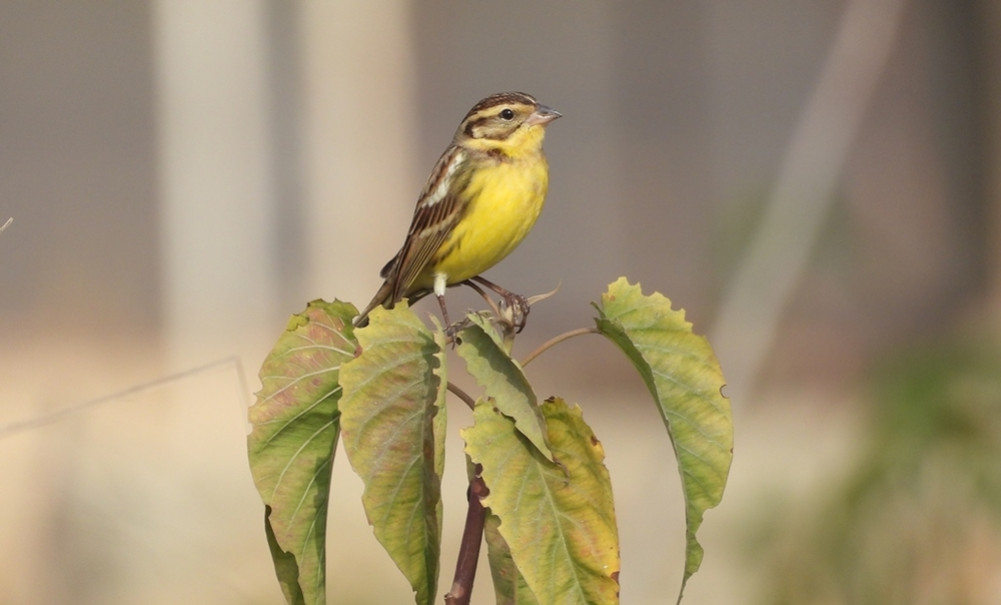
The number of the common jay, considered a friend of farmers, is rapidly declining in Nepal. A census conducted at 20 locations in 12 districts of Nepal found 2,530 of the bird.
We use Google Cloud Translation Services. Google requires we provide the following disclaimer relating to use of this service:
This service may contain translations powered by Google. Google disclaims all warranties related to the translations, expressed or implied, including any warranties of accuracy, reliability, and any implied warranties of merchantability, fitness for a particular purpose, and noninfringement.
The bird, known as the Yellow-breasted Bunting in English, got its Nepali name ‘Bagale Bagedi’ because it is seen in flocks of hundreds. In the last decade, the number of this bird has decreased so much that it has suddenly reached a high-risk status. How many of this bird, which looks like a sparrow and has a yellow chest and brown wings with white stripes, is there in Nepal now?
Nepalese ornithologists have calculated its number. Krishna Prasad Bhusal, a researcher of the Bagale Bagedi, informed that 2,530 of these birds were found in a census conducted in 20 places in 12 districts of Nepal. The first ‘Bagale Bagedi’ census was conducted in Nepal from February 11 to March 11 in coordination with Bird Conservation Nepal (BCN).
This bird comes to Nepal and other countries in winter. At other times, it migrates to Finland, Siberia, Kazakhstan, Mongolia and the northern regions of China and breeds there. In winter, it reaches Nepal, India, Myanmar, Thailand and Cambodia in search of food and shelter. Bhusal said that the ‘Bagale Bagedi’ was counted during the winter in these countries.
In which the highest number of 126,076 Bagale Bagedi was found in Thailand. BCN has stated that this number was found in a census conducted in 6 places in Thailand. Similarly, 49,086 ‘Bagale Bagedi’ were found in a census conducted in three places in Myanmar. In Nepal, Thailand, Myanmar and Cambodia alone, 187,310 Bagale Bagedi were found. ‘Earlier, this bird was found in large numbers.’ Therefore, it was seen in normal conditions. The number of this bird has now decreased by 90 percent from the previous one,' said Bhusal. After the sudden decrease in the number, the International Union for Conservation of Nature (IUCN) has decided to put this bird on the list of critically endangered and protect it,' said Bhusal.
This bird lives in wetlands and sugarcane fields. There was a time when the custom of selling and eating burnt bagedi in markets along the highways of Nepal's Terai was very common. Bhusal says that its number has decreased rapidly in Nepal due to this custom. 'It was a custom to catch it in sugarcane fields by throwing nets and feeding it to other birds as bagedi. Its number has decreased due to such hunting,' said Bhusal. He says that if meat is stopped, its number will increase.
This bird lives in wetlands and sugarcane fields and goes to graze in farmlands. Its diet consists of grains and small insects. Bhusal says that this bird is a friend of farmers because it eats insects that damage agriculture. But he said that killing and eating it has caused harm. ‘On the other hand, chemical fertilizers and pesticides in the fields must have also affected this bird,’ said Bhusal.
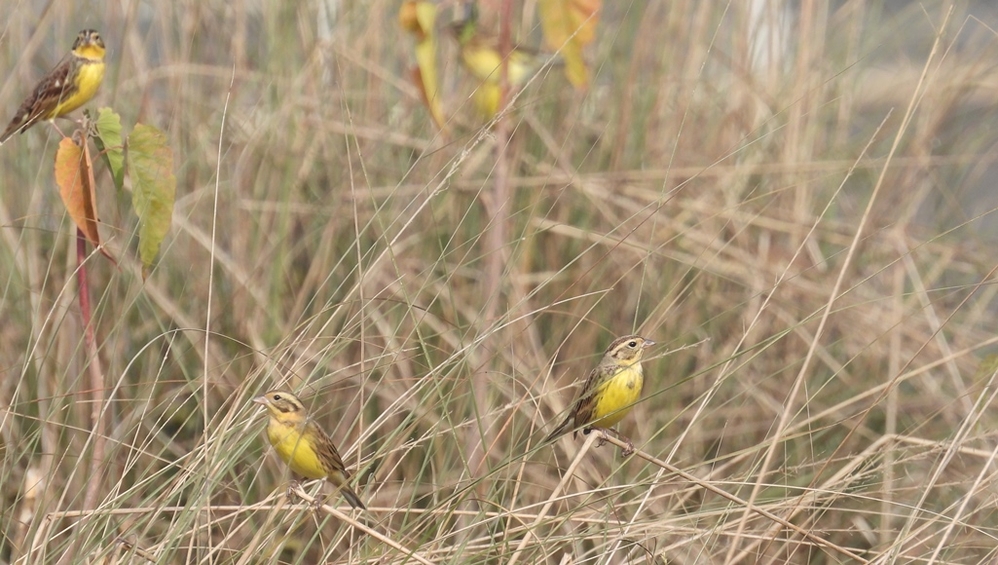
Bhusal said that protecting wetlands and reducing the use of chemical fertilizers and pesticides in farming would be good for the Bagedi. Doing so would have an impact on the overall environment and would be good for not only the Bagedi but also people and all other living beings, he said. In Nepal, the largest number of Bagedi was found in Divyanagar Phaant in Chitwan and Mudhavan in Sunsari. Bhusal said that it was also found in abundance in Bhagalapur grassland in Saptari. ‘Tourists are also interested in seeing birds that are becoming rare and need to be protected.’ This bird also becomes a good basis for tourism,’ said Bhusal. Bhusal said that this census has confirmed that Nepal is an important wintering ground for the Bagale Bagedi. ‘This successful nationwide survey has established collaboration between researchers, conservation organizations and local residents. Regular monitoring and community-based conservation campaigns are necessary to protect the remaining Bagale Bagedi in the country,’ said Kiran Gosai, Senior Research Officer of BCN.
Gosai says that this census has initiated a strong relationship between organizations and conservationists active in the conservation of Bagale Bagedi in Nepal, Thailand, Myanmar and Cambodia. He said that the first census has laid many foundations for learning and that a strong international network can be built for the study and conservation of this bird in the coming days.