The heart-wrenching cold has confined everyone to their homes. Working people are struggling to survive the cold. The cold has affected both urban and rural areas.
We use Google Cloud Translation Services. Google requires we provide the following disclaimer relating to use of this service:
This service may contain translations powered by Google. Google disclaims all warranties related to the translations, expressed or implied, including any warranties of accuracy, reliability, and any implied warranties of merchantability, fitness for a particular purpose, and noninfringement.
As soon as the monsoon started, the sun stopped shining in the Terai as fog and mist began to cover it. As the cold wave started moving along with the fog, normal life from the east to the west of the Terai has been affected.
The heart-wrenching cold has confined everyone to their homes. Workers are struggling to get through the cold. The cold has affected everything from cities to rural areas.
The sun has not been visible in Bardiya for a week due to thick fog. The common people are shivering with cold after the sun has not set. The life of a poor family who earns their living by working as daily wage earners has become difficult after the sudden increase in cold. The family of Babulal Dhobi of a squatter village in Tapara, Gulariya Municipality-8 is suffering from the cold. The family, who earn their living by washing clothes, is worried that they will go hungry after the sun has not set since Poush 1.
Due to lack of income, there is a shortage of ration water in the kitchen. Babulal used to drive a cart from village to village and iron clothes to make food for the evening and morning. She said that she has been forced to stay at home due to the cold for the past few days.
Prema Dhobi of Gulariya-8 is also suffering like Babulal. ‘We don’t have the skills to do other work,’ she said. ‘There is no ration at home on days when we don’t get work to wash clothes.’
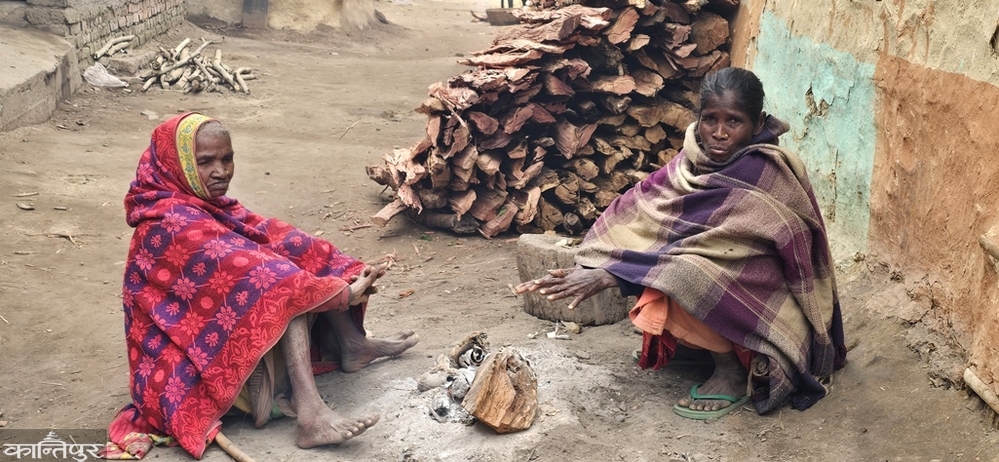
She said that she cooks food only in the evenings because there is no food. If there is any left, her children eat it in the morning. She is with her husband, two sons and a daughter. Koili Lodh, 62, of Gulariya-8, who has turned to fire as the cold worsens, said. ‘I don’t have money to buy thick and warm clothes,’ she said. ‘I can’t even buy firewood. I make fire by burning leaves to protect myself from the cold.’
Mukund Aryal, a senior administrative officer of Gulariya Municipality, who is distributing information on how to protect myself from the cold, said. He said that preparations are being made to distribute firewood in the first phase. Chief District Officer Gogan Bahadur Hamal said that a circular has been issued to all 8 municipalities of the district to distribute firewood to heat the fire as the winter increases.
As the cold increases in Banke, a 'cold wave emergency plan' has been implemented. Chief District Officer Dil Kumar Tamang informed that such a plan has been implemented to protect the general public from the cold wave. He said that it has been decided to identify vulnerable families, senior citizens, children, pregnant women and new mothers who may be at risk and help them. It is predicted that 180,000 general public will be affected by the cold wave in Banke this year.
Information Officer of the District Disaster Management Committee Rupan Gyawali said that rural residents will be affected the most than urban residents. According to the forecast, 8,524 families in Nepalgunj, 4,138 in Kohalpur Municipality, 3,193 in Khajura Rural Municipality, and 3,889 in Janaki Rural Municipality will be affected by the cold wave.
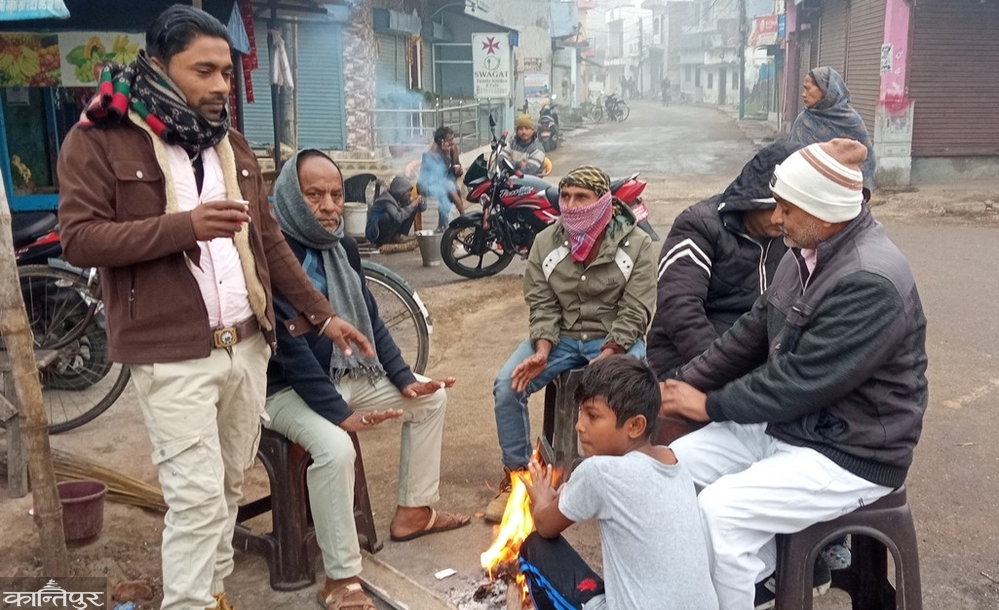
The cold wave has made life difficult in Kapilvastu and has also affected the daily lives of the common people. There has been no sunshine since Friday. The cold has increased day and night with thick fog. The common people are forced to stay indoors due to the cold wave. The attendance of service recipients in government offices has thinned out. Fewer people are seen walking.
The common people are finding relief by lighting fires in the squares. The number of people who are also using fires and heaters at home has increased. Children and the elderly have been affected by the increasing cold. The minimum temperature on Sunday was 11 degrees Celsius and the maximum temperature was 14 degrees Celsius, said Ramu Regmi of the Department of Hydrology and Meteorology in Ramnagar.
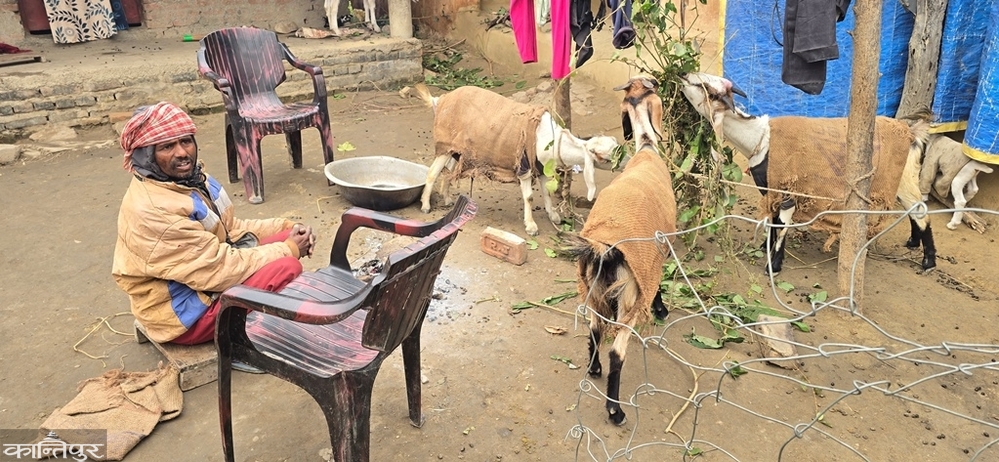
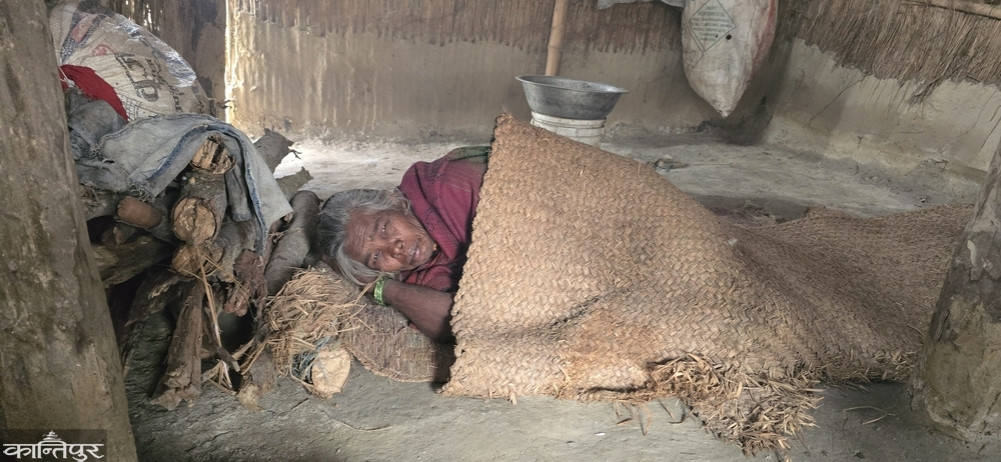
It is bitterly cold in Madhesh Province. After going about 6 kilometers southeast from the East-West Highway, you will come to Chandrapur-9 Chetnagar village in Rautahat. There is a small hut at the end of the village. Inside the hut, 60-year-old Devratiya Devi Majhi (Musaharni) was sleeping on a straw mat. She had spread straw/sacks on the ground. She could not get up until 11 am on Sunday due to the cold. She has three sons. The eldest is Bhagirat, Maila is Ramkrishna and the youngest is Jagarit Musahar. They have left their mother and gone elsewhere. Devratiya is like a deserted village, said a neighbor, Bir Bahadur Shrestha. ‘The cold wave has hit. There is nothing to cover her in the cold,’ he said, ‘She spends the night wearing a straw blanket. It is a disaster.’
Devratiya’s husband, Lalgobinda Musahar, died 10 years ago. Not only him, but most of the Musahars of Chetnagar are finding life difficult due to the increasing cold. The elderly and children of the settlement are affected. The cold wave that has increased for two days and the cold wave has affected the districts of Madhesh including Rautahat.
The cold wave has affected the poor settlements as well as the pregnant women, the elderly, and the poor families the most. As the cold has increased, most of the residents are burning dhunis in the village to keep warm. There is little movement of people in the market and rural areas. The cold is more severe in the Dalit settlements of Dumaria, Chetnagar, Santapur in Rautahat, Jugauliya, Katahariya, Ishanath, Gaur, Samanpur in Gujar, and other areas.
Air service affected
Air service in the Terai districts has been affected after thick fog began to form for a week. Regular flights/landings have not been possible at the Gautam Buddha International Airport in Bhairahawa due to the weather not clearing. Visibility is low in the morning. Landings are made only when there is some improvement in the afternoon.
According to Gautam Buddha International Airport Information Officer Binod Singh Rawat, at least 1,000 meters of visibility is required to take off from Bhairahawa. Visibility of 1,08 meters is required for landing. Flights from the Nepalgunj airport in Banke to the hilly districts have been affected due to the adverse weather. More than 25 flights are operated daily from Nepalgunj to Jumla, Humla, Dolpa, Mugu, Bajura and Bajhang as well as Kathmandu and Pokhara.
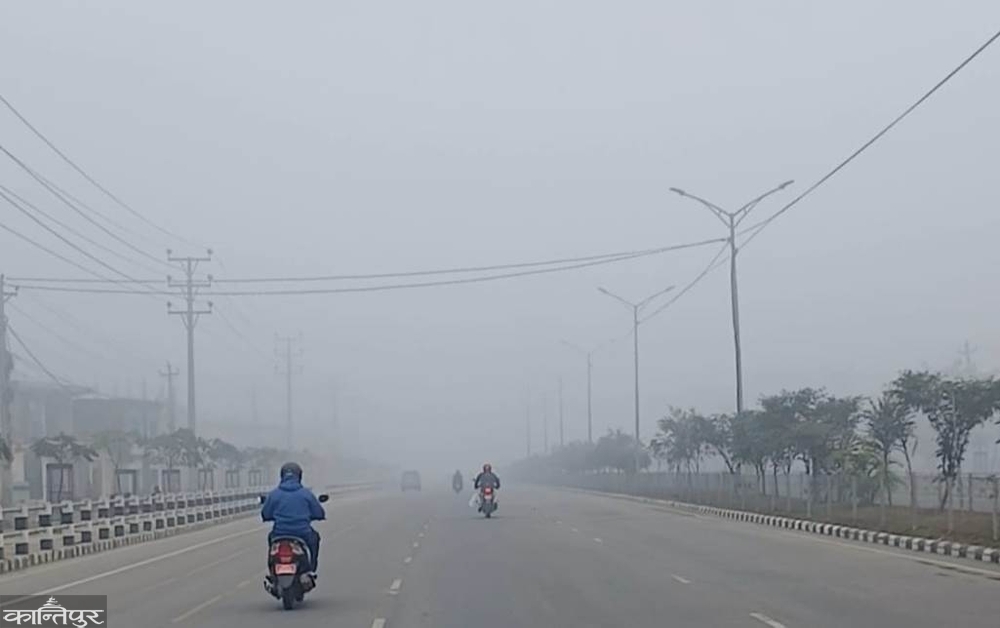
Cold weather is affecting life in Kailali and Kanchanpur in the far west, and air traffic is being disrupted. Flights from Dhangadhi Airport are also affected. Morning flights are being affected here. All flights were canceled on Friday. ‘Due to thick fog, all flights on Friday were canceled, and flights on other days are not being operated on time,’ said Bal Kumar Singh, chief of Dhangadhi Airport. ‘There were six flights from Dhangadhi to Kathmandu daily.’ Akhilesh Chaurasia, a metrologist at the regional office of the Department of Hydrology and Meteorology, said that the minimum temperature in Dhangadhi was 9 and the maximum was 15 degrees Celsius.
(from Bardiya Ramprasad Chauhan , from Banke Rupa Gahatraj , from Kapilvastu Manoj Poudel , from Rautahat Shiv Puri and from Dhangadhi Arjun Shah )