The bill registered in Parliament for the regulation of social networks has been shelved and a notice has been issued for listing based on the guidelines prepared by the Ministry of Communication. Instead of 'regulating' by making laws through the Parliament, the government seems to be leading to 'control' based on guidelines.
We use Google Cloud Translation Services. Google requires we provide the following disclaimer relating to use of this service:
This service may contain translations powered by Google. Google disclaims all warranties related to the translations, expressed or implied, including any warranties of accuracy, reliability, and any implied warranties of merchantability, fitness for a particular purpose, and noninfringement.
The government has moved to deactivate the social media platform as the listing has not been done. Citing the decision of the Council of Ministers and the Ministry of Communication and Information Technology, the Telecommunication Authority has written to Internet Service Providers on Thursday to deactivate 26 platforms. Nepal Telecom has already said that social media platforms that are not listed have been closed. Ncell has also issued a notice and informed that such platforms will not operate.
Cabinet decisions and communications
network receives a complaint about publication or transmission of content that violates the government's condition,
...
Instead of regulating by making laws, social networks are being criticized from all sides for hastily closing down the guidelines. Leaders of political parties, rights activists, internet users and others are posting on social media condemning the government's decision. Some have also commented on it by linking it with the order issued by the then King Gyanendra Shah on 19th January 2061 to control the internet, mobile phones and media.
The government has issued notices asking platforms to be listed five times since it issued a social media directory in November 2080. The last time a notice was issued on 12 August with a time limit of 7 days. During this period, major platforms such as Meta (parent company of Facebook, Messenger, WhatsApp, Instagram), Alphabet (YouTube), X (Twitter), LinkedIn were not contacted for the listing process. After the government moved forward with the process of shutting down the platform, it is said that the representative of Meta has inquired with the communication expert of the Ministry of Communication on WhatsApp.
in Q&A Social networks like Tiktok, Viber, Witk, Nimbus and pop-ups have already been listed. Telegram and Global Value have also submitted applications to the ministry for listing. An official of the Ministry of Communication said that social media platforms that have not been contacted for listing by the last deadline set for Wednesday will be deactivated across the country.
22 organizations advocating for digital rights issued a joint statement strongly condemning the government's decision. "Steps have been taken through an administrative decision ignoring the ongoing parliamentary process regarding the social media bill, the serious impact on the jurisdiction of the parliament, civil rights and freedom," the statement said.
Digital Freedom Coalition, Internet Governance Institute, Digital Rights Nepal, Freedom Forum Nepal, Media Action Nepal, Internet Society Nepal Chapter, Antenna Foundation Nepal, Digital Media Foundation, Youth IGF Nepal, Forum for Digital Equality, Child Safenet etc. Social media is an important platform for citizens to express their opinions, communicate with each other, participate in public debates and hold the government accountable.
Digital rights activist and advocate Santosh Sigdel reacted to the government's hasty decision to shut down social networks without evaluating the impact on civil liberties. The order of the Supreme Court to shut down social networks has also been misinterpreted. The government has shown impatience in not implementing some judgments and mandates for decades," he said. "This decision taken by the government based on the guidelines that the law-making process should be completed according to the Supreme Court's order and the suggestions of experts is wrong.
Constitutionalist Bipin Adhikari has supported the government's decision. "The Nepal government's decision to exercise digital autonomy shows its efforts towards accountability, economic supervision and regulation," he wrote in X, "in the present time when big and global technology companies do not respect local regulations, they must follow the law just like us." "The Supreme Court itself has given a directive order in the name of the Government of Nepal to compulsorily list online and social media platforms of domestic and foreign origin with the relevant agencies before operation," he said, "it has been decided to disable those that do not come to be listed."
According to Minister Gurung, the government has not been able to 'moderate' or 'filter' harmful content such as 'hate speech', 'fake news', 'deepfake' and 'cyberbullying' posted on social media because they are not listed. He argues that this has led to an increase in cyber crimes and has also disrupted social and religious harmony. Prime Minister KP Sharma Oli's political advisor Bishnu Rimal has mentioned on Facebook that the Supreme Court has ordered a ban on appointing contact points, self-regulation and resident complaints hearing officers in Nepal until the company is listed.
On Thursday, Maoist Chief Whip Hitraj Pandey announced in the Parliament that the country will be in chaos when the social media is closed and he will counter it. But the Maoist-led government had drafted a bill and guidelines on social media. When Maoist leader Pushpa Kamal Dahal was the Prime Minister, Tiktok was banned because it spread chaos in the society. The bill on social media has been submitted to the National Assembly and is under theoretical discussion.
In November 2080, with the release of social media guidelines, the Asia Internet Coalition (AIC), a representative organization of social media platforms, expressed concern about it and said it was unreasonable and against international standards. In a letter sent by the AIC to the then Prime Minister Pushpa Kamal Dahal, Communications Secretary Krishna Bahadur Raut and the then Chairman of Nepal Telecommunication Authority Purushottam Khanal along with the then Minister of Communications Rekha Sharma, it was mentioned that the listing arrangement would discourage foreign direct investment.
What is the decision of the Supreme Court taken by the government to close social networks?
Last May, during a virtual conversation with the representatives of the Ministry including Communications Secretary Radhika Aryal, META's Public Policy Manager and Liaison Officer for the Asia Pacific Region Rujan Sarwar expressed his intention that they would not be forced to accept the guidelines. An officer who participated in the meeting said that there is no law on social media regulation in Nepal and it is not appropriate for the government to emphasize content filtering based on guidelines. According to section (8) of the
directive, the 'content' cannot be removed within 24 hours as directed by the government, Meta's official said. The unlisted social media platform has not released any official opinion on the government's latest policy.
RSVP has responded that the decision to close the social media is wrong even though there is no disagreement on the regulation. Some social media users have commented that the decision to close the social media platform, which has already come under the tax regime and is in touch with the government, is questionable. Experts in the field of technology have said that since the applications and other platforms created and run in Nepal are based on various social media platforms, there will be difficulties in their operations due to the government's move. They cite the example of unauthorized VPN use increasing by 3,000 percent when social networks were shut down in Indonesia.
President of Internet Service Provider Association of Nepal (ISP) Sudhir Parajuli, the umbrella organization of internet service providers, said that if the use of VPN increases, the overall quality of internet service in Nepal will deteriorate. "Since the main traffic comes from Facebook and YouTube, if we close it at once, our server will be loaded. Our technical capacity is also burdened," he said. "From tomorrow, the Internet cannot be used at all." According to
Parajuli, Nepal currently imports 2.5 TBPS international bandwidth and manages 10 TBPS bandwidth locally. But with the increase in the use of technologies like VPN, Open DNS, the consumption of international bandwidth also increases. "The infrastructure that can manage it is not ready," he said, "therefore, Internet congestion (pressure) increases and the quality deteriorates." When Facebook is closed, Kantipur's website becomes slow.'

Those who want to be listed should disclose the company name, address, company registration number, permanent account number, name of the chief executive officer, contact number, name and number of the contact person, name and number of the officer who hears the complaint, details of the company directors. The company's charter, regulations, registration certificate, tax payment certificate, official representative's passport, privacy policy, information security policy, complaint hearing procedure and other details must be submitted.
Legal experts say- 'Government misinterpreted the order of the Supreme Court'
Legal experts have commented that the government's decision to deactivate unlisted social media platforms in Nepal is motivated by the intention to stop criticism. They have said that the government is going to ban the social network by misinterpreting the order given by the Supreme Court to register and regulate the social network by making a law.
Senior advocate Shambhu Thapa commented that it is serious to shut down social networks based on a single guideline. This is not just a matter of tax or registration. Deprivation of fundamental rights cannot be seen only in connection with registration. Action should be taken if someone has earned income without registration. Be it national or international," he said, "Social media is the right of people to know, it is also the right to be well informed. It cannot be banned.'
Senior advocate Thapa argues that shutting down social media platforms linked to human development and intelligence should be considered as an action that adversely affects the development of a civilized society. The Supreme Court said rule of law. This does not necessarily require a law. Some things should be followed automatically,' he says, 'This applies to all the government or citizens.' Everyone has opposition. Ban cannot be imposed on the grounds of spreading rumours," he said. "The ruler should rule by making the people angry. Criticism is true. Not to ban.'
The government issued guidelines on social media in December 2080. Since then, the government had issued notices for listing five times. After the deadline specified in the latest notification expired on Wednesday, the government has moved to close unlisted social media platforms.

Senior advocate Madhav Basnet has a slightly different opinion. He says that regulation should be made by law, if there is no law, the government can block social media on matters of national interest. Advocate Semant Dahal says that social networks such as Facebook and Instagram are also platforms for expressing freedom of expression and cannot be deactivated or banned without law. The Constitution says to impose or regulate mental restrictions on thought and expression. But for this, a law should be made," he says. "Only Parliament can make a law. It is abuse of constitutional rights to control without enacting a law.
Senior Advocate Narayan Ghimire asserted that issues related to freedom of expression guaranteed by the constitution cannot be prevented by directives or guidelines. "Even in terms of international human rights, civil rights and fundamental rights, the decision to block or disable social networks does not seem reasonable," he said, "such actions can only be done within the scope of federal laws and the constitution."
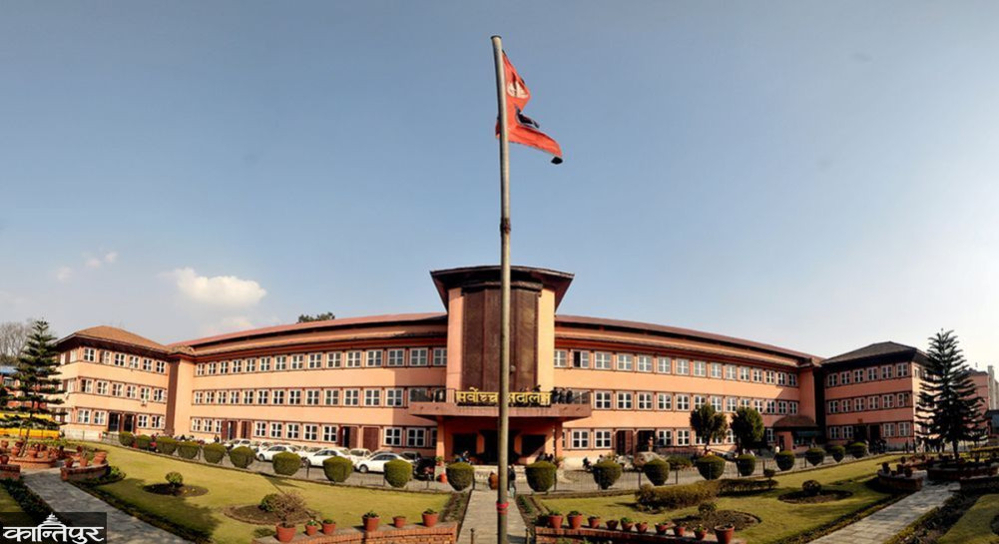
The government has made the decision of the Supreme Court on October 13 last year to close unlisted social networks as the main basis. In the contempt of court case against 'Sidhakura.com', a full bench of nine judges, including the then Chief Justice Vishwambhar Prasad Shrestha, issued an order in the name of the government to allow the social network to be used only after registration, the full text of which was made public on July 30.
'Online and social media platforms should be registered with the authorities before operation and the necessary legal arrangements should be made so that they can be regulated by the regulatory bodies including the Press Council,' the full text of the judgment says, 'To develop the capacity of the Press Council and to protect and promote press freedom in a more advanced manner, to take necessary actions for policy, legal and structural reforms in the press sector.'
Social media ban: 'Content creator' worried, who said what ?
It is mentioned in the order of the Supreme Court that it is the responsibility of the state to control false information such as 'misinformation', 'disinformation', and 'mal information' just as it is necessary for the state to protect the right to freedom of expression and communication. It is said in the full text, "Since the flow of wrong information is unfair and inappropriate, it is desirable that such action be discouraged."
There is also an order of the Supreme Court to discourage the misuse of social media by hiding one's real identity under a pseudonym/fictitious name. This order was given by the then Chief Justice Shrestha along with judges Prakashman Singh Raut, Sapna Pradhan Malla, Prakash Kumar Dhungana, Hariprasad Phuyal, Nahkul Subedi, Vinod Sharma, Mahesh Sharma Paudel and Balkrishna Dhakal.
Supreme Court Justice Tek Prasad Dhungana and Shantisingh Thapa's joint bench has also issued an order on Wednesday to ban foreign broadcasters including OTT apps without permission. The government, which has been delaying the implementation of orders/decisions issued by the Supreme Court on other public issues, has taken immediate action in relation to social media.