'Lobbying' of chief secretaries and secretaries continues to remove from the bill the provision of not being able to take appointments in constitutional, political and diplomatic positions for two years after resignation or retirement.
We use Google Cloud Translation Services. Google requires we provide the following disclaimer relating to use of this service:
This service may contain translations powered by Google. Google disclaims all warranties related to the translations, expressed or implied, including any warranties of accuracy, reliability, and any implied warranties of merchantability, fitness for a particular purpose, and noninfringement.
Even if the employee resigns before going on mandatory leave, they will not be able to get appointed to another public post immediately. In the Federal Civil Service Bill, the State Order and Good Governance Committee under the House of Representatives has provided for a two-year 'cooling-off period' so that employees who resign will not be appointed to constitutional, political and diplomatic positions.
The report of the bill submitted to the Parliament by the Parliamentary Committee has opened the way to apply the system of 'cooling-off period' to those working in the police, armed police, army, health, universities, government institutions, etc. Chief Secretary, Secretaries are going to implement it in all sectors after intense 'lobbying' that 'cooling-off period' should not be kept only for civil service.
While the bill was being discussed in the committee, Chief Secretary Ek Narayan Aryal, Secretary General of the Federal Parliament Padma Prasad Pandey, Secretary to the Government of Nepal, high-ranking staff of the Supreme Court, and secretaries of the Parliament Secretariat "lobbied" to remove the provision of "cooling-off period". Article 82 of the
bill has provisions related to 'cooling-off period'. It is said that, "Civil servants or other government employees who have resigned or retired cannot be appointed to any constitutional or government position until two years have passed since the date of their retirement."
There is a trend among civil servants to increase their pension and take another appointment by resigning from the post of chief secretary, secretary and joint secretary shortly before the mandatory retirement. High-ranking employees have been criticized for colluding with the political leadership and taking appointments as constitutional commission officers, ambassadors and other political positions while still in office. During the discussion in the
committee, the parliamentarians demanded a 'cooling-off period' saying that only the retired chief secretary and secretary were appointed to the constitutional commission, ambassador and some political positions. According to the demands of the parliamentarians, the provision of a two-year 'cooling-off period' has been placed in the bill.
According to the members of the State Arrangements Committee, the Chief Secretary, the Secretary General of the Parliament, the secretaries of the government are still pressing to remove the provision of 'cooling-off period'.
"Even after the report reached the Parliament, we have found that Prime Minister KP Sharma Oli, Congress President Sher Bahadur Deuba, various ministers, political party-affiliated staff organizations are being pressured to remove the cooling-off period," said an MP. MPs outside the State Arrangements Committee have informed that Krishnahari Pushkar, secretary of the Ministry of Labour, Employment and Social Security, made phone calls and messages.
A team of secretaries went to Prime Minister Oli and Congress President Deuba demanding removal of the 'cooling-off period'. They also met the Speaker and the Speaker of the National Assembly.
Chief Secretary Aryal, General Secretary Pandey along with secretaries Ramkumar Shrestha, Fanindra Gautam, Govind Karki, Udayraj Sapkota, Deepkumar Kharal, Krishnahari Pushkar, Radhika Aryal, Mahadev Panth, Madhusudan Burlakoti, Sobhakant Paudel, Kedarnath Sharma, Sudarshan Khadka also met Speaker Devraj Ghimire and National Assembly Speaker Narayan Dahal. He asked them to play a role in removing the 'cooling-off period'.
Chief Secretary Aryal is trying to extend his tenure and appointment to the office of the Constitutional Commission so that the Civil Bill does not become an obstacle, he says. Pandey, the general secretary of Parliament, is trying to become a judge of the Supreme Court. After meeting the Prime Minister, Congress President, Speaker and Speaker of the National Assembly, Law Ministry Secretary Udayaraj Sapkota publicly expressed his displeasure. About to retire, he is lobbying to become a High Court or Supreme Court judge. Secretary Pushkar said he wants to be appointed to the constitutional body.
According to the Chairman of the State Arrangements Committee, Ramhari Khatiwada, in the bill, the tenure of the secretary has been reduced from 5 years to 4 years, while the tenure of the chief secretary has been reduced to 2 years from the current 3 years. The current chief secretary and secretaries are pressing not to reduce the tenure.
The chief secretary and secretaries are also objecting to the implementation method of raising the current retirement age from 58 to 60 years. They are pushing to introduce age limit from 58 to 60 years at once. By doing so, the tenure of the chief secretaries and secretaries who are currently in office will be increased. The Parliamentary Committee, as stated by the Chief Secretary and Secretaries, has made a middle-of-the-road arrangement, different from that suggested by the Public Service Commission.
The Public Service Commission suggested that the first 6 months, then 1 year and then 6 months should be applied. The committee has arranged that the compulsory retirement age of civil servants in the financial year in which this Act comes into force will be 58 years, in the next financial year it will be 59 years and from the third financial year onwards it will be 60 years old. The Public Service Commission had given a written suggestion to the committee saying that adopting such a method would have a big impact on the number of new advertisements.
The Chairman and members of the State Arrangements Committee are interested in how the Civil Bill will progress through the Parliament amidst intense pressure from the Chief Secretary, the General Secretary of the Parliament and the Secretaries. In the daily agenda of the recent meeting of the House of Representatives, it has been mentioned that the chairman of the committee will submit the report of this bill. But the parliament meeting could not be held as the opposition parties are blocking the parliament demanding an investigation into the visit visa case.
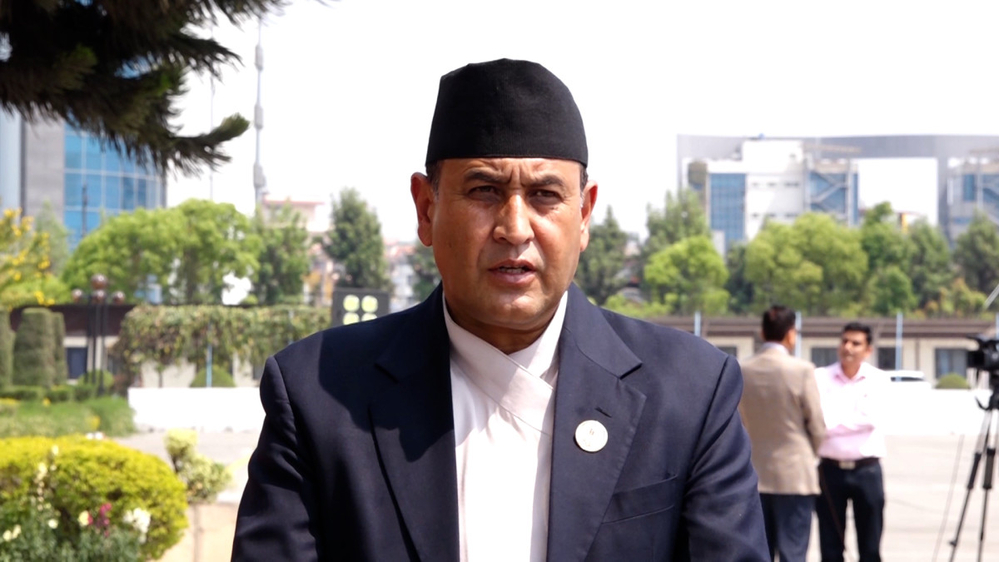 Ramhari Khatiwada, Chairman, State Order and Good Governance Committee
What stage is the Federal Civil Bill in the parliamentary process now?
We have discussed with experts, constitutional commissions, public service commission several times and passed the bill unanimously by the committee and sent the bill to the parliament.
What is the interest of the Chief Secretary, the General Secretary of the Parliament and other employees in the 'cooling-off period'?
Even today, the most interest is in the 'cooling period'. They are saying - if possible, remove it and submit it to the parliament. They have worked for the nation for 30-35 years, we are asking them to freshen up for two years and join the national service. But they have to be deprived forever. Regarding the 'cooling-off period', we have not only said civil service, we have included other government services as well. There is a tendency to appoint the secretary and chief secretary the day before the
in the constitutional body. Due to this, there may be a case against himself in the place where he is appointed. A 'cooling-off period' is going to be arranged so that people should not go to such places and do things that conflict with their interests. The employee also argues that the age of retirement is 60 years and after 2 years of cooling, they cannot work. Nowadays, a person becomes a secretary at the age of 48. 52-54 years when going on retirement. Even with a 2 year cooling off period, age will kill it. It was found that the idea that this law should be made in order to benefit only them has been developed in the leadership of the employees.
Will there be amendments before the report is submitted to the House of Representatives?
The government can accept some things in the parliament. It is not possible for me to amend anything, even if the Prime Minister, the party president says, no amendment is possible now.

