We use Google Cloud Translation Services. Google requires we provide the following disclaimer relating to use of this service:
This service may contain translations powered by Google. Google disclaims all warranties related to the translations, expressed or implied, including any warranties of accuracy, reliability, and any implied warranties of merchantability, fitness for a particular purpose, and noninfringement.
Challenging the unanimous decision made by the State Order and Good Governance Committee of the Parliament to keep a 'cooling period' in the Civil Service Bill, the Chief Secretary to the Government and the Secretary General of the Parliament have protested.
A group of secretaries led by Chief Secretary Ek Narayan Aryal and General Secretary Padma Prasad Pandey, who is considered to be the backbone of the parliamentary decision-making process, met Speaker Devraj Ghimire and National Assembly Speaker Narayan Dahal on Thursday and pressured them to remove the 'cooling period'. The chief secretary and secretaries who have been in charge of the administration mechanism have left the office and started lobbying after their retirement.
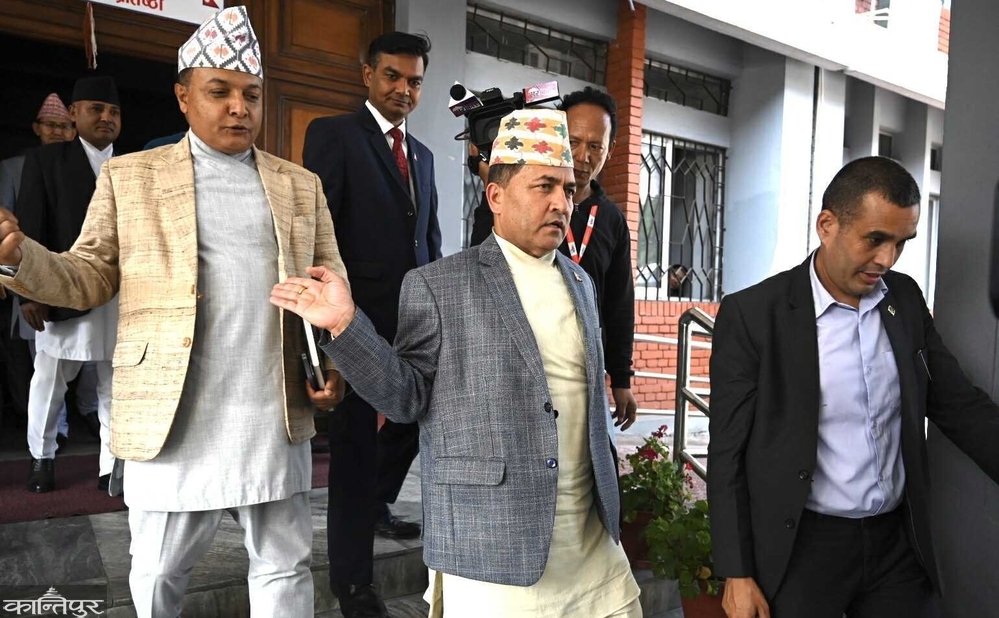
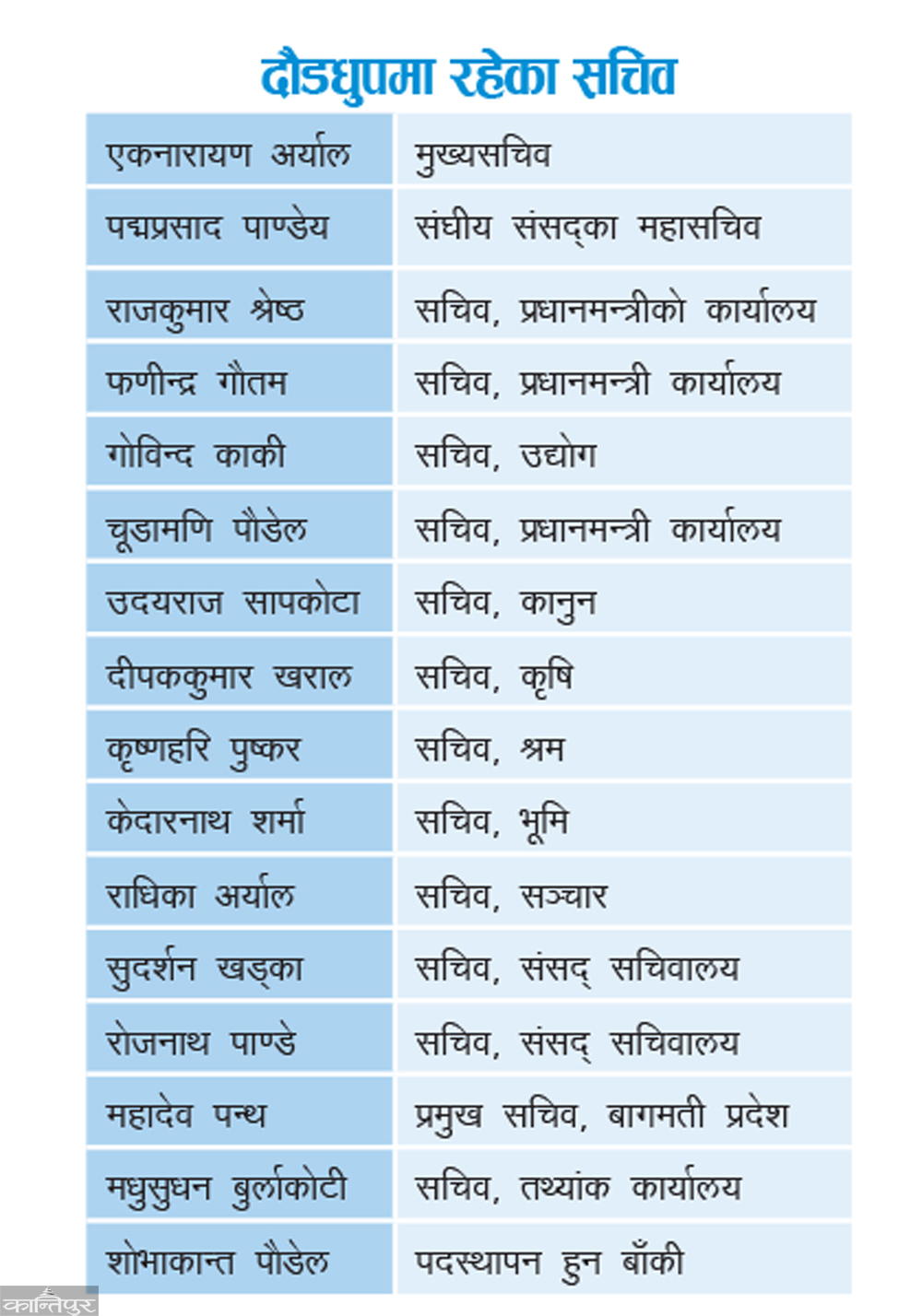
Chief Secretary Aryal, General Secretary Pandey along with secretaries Ram Kumar Shrestha, Fanindra Gautam, Govind Karki, Udayraj Sapkota, Deepkumar Kharal, Krishnahari Pushkar, Radhika Aryal, Mahadev Panth, Madhusudan Burlakoti, Sobhakant Paudel, Kedarnath Sharma, Sudarshan Khadka reached the office of Speaker Ghimire and National Assembly Speaker during office hours on Thursday.
A few days ago, they met Prime Minister KP Sharma Oli, Congress President Sherhadur Deuba and leaders of major parties and committee chairmen and threatened to 'non-cooperate' if the provisions proposed in the bill were not removed.
Speaker Ghimire has informed the secretaries that the bill that has been decided by the committee cannot be reversed, according to a source in the Speaker's Secretariat. "I will tell your words to the chairman of the committee, I will also convey your message, but the bill will go to the House, it will be discussed, and then the government will join in improving it," said an employee of the secretariat, quoting Ghimire's statement.
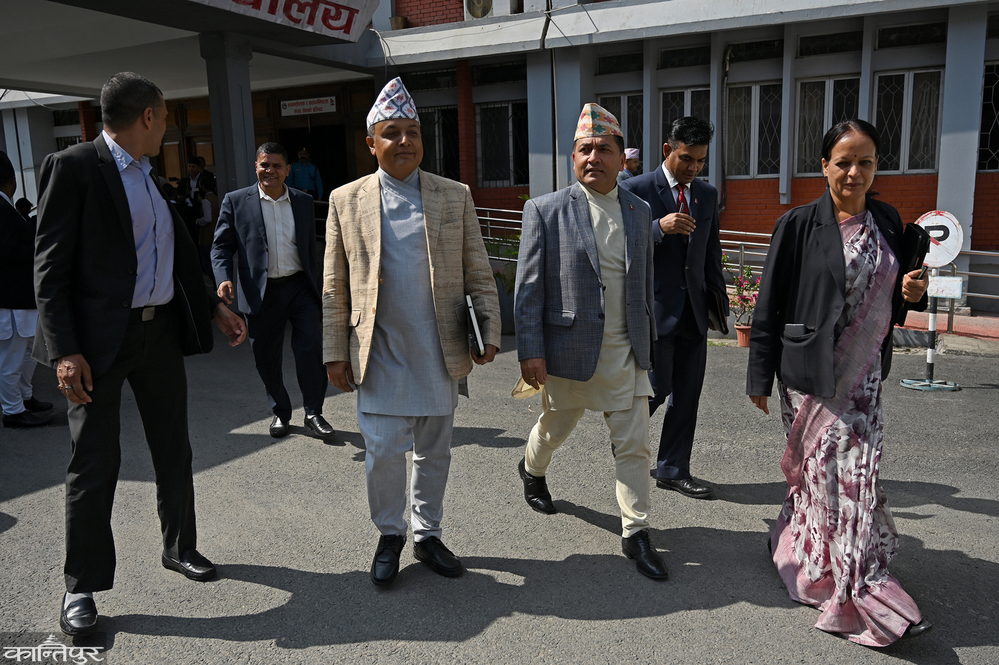
A team of secretaries entered the Speaker's office at 1:06 p.m. After that, he went to meet the President of the National Assembly, Dahal. When journalists were taking photos and videos of him walking in the National Assembly Secretariat premises, the General Secretary of the Parliament Pandey covered his mouth with a file, while other secretaries also entered shyly. There they met the President of the National Assembly after waiting for 1 hour. Secretariat sources say that Secretary Pushkar also expressed his opinion in the discussion with the Speaker of the National Assembly which lasted for about 20 minutes.
One of the participants said that he claimed that keeping the 'cooling period' would violate the constitution. "It is not possible to make laws by amending the constitution, either the constitution itself should be amended. We are not guided by the civil law after retirement, the laws related to constitutional appointments are separate," one participant said, quoting the statement of Secretary Pushkar. Initiatives should be taken to remove this.'
After leaving the meeting with the Speaker of the National Assembly, General Secretary Pandey said that the decision of the State Arrangements Committee to have a 'cooling period' provision in the Civil Bill would be 'unconstitutional'. "The constitution itself has said which officials or what kind of qualified persons should be appointed to the constitutional bodies. The Civil Service Act cannot cover the employees who have been discharged from the civil service. It is fine if the cooling period is to be kept, there is no opposition from the employees," he said. And Ramhari Khatiwada, chairman of the Good Governance Committee, has objected. Stating that the interests of civil service office assistants to the chief secretary cannot be fulfilled, he suggested not to express whether the provision in the law is constitutional or unconstitutional.
"It is not theirs or mine to see whether this bill is constitutional or unconstitutional. There is a different body for that. If the political leadership tries to do the civil service, where will the constitution with the federalism that we envisage go?" By resigning in order to be appointed the next day, there have been many cases of taking advantage of the conflict of interest by establishing an unnecessary 'nexus' with the political leadership.' According to the unanimous decision of the
committee, Khatiwada will send the report to the House. Objecting to the argument of the secretaries that the 'cooling period' is unconstitutional, he says, 'How can we write that a person who has entered the civil service will remain in the post for life?' Paudel had argued that when a 'cooling period' is imposed, the former administrator cannot be employed even when there is an epidemic crisis in the country. "If there is a disaster immediately after keeping the cooling period of 2 years, there is no situation where the experts and specialists can be put in an epidemic, this is a serious matter," said Paudel.
Poudel, who was recently promoted to secretary, has not even been appointed, but he is walking with a group of leaders who are going to the door of the leaders' homes with worries about his post-retirement job.
Chief Secretary Aryal and Parliament General Secretary Pandey, who are leading the race, have been heavily criticized on social media for going beyond their official responsibilities. The Chief Secretary is the Chief Administrative Advisor to the Prime Minister. The Chief Secretary, who is in the role of setting the agenda of the Council of Ministers to implementation, leads more than 30 branches and divisions under the Prime Minister and the Council of Ministers. From the Prime Minister's Secretariat, coordination between ministries, departments and various agencies of the state, policy implementation and administrative reform are his main responsibilities.
On the one hand, the government stands on the challenging foundation of maintaining good governance by controlling corruption, while on the other hand, Chief Secretary Aryal is in the leadership of the challenging role of streamlining the increasingly difficult administrative problems faced by the common people and the crippling public service. However, he is worried about the secure appointment after his retirement in December, rather than the work that will show results in the direction of administrative reforms. Leaders of political parties, civil society and leaders are strongly protesting on social media about the rush to remove the 'cooling period'.
Parliamentary Committees are considered to be part of Parliament. According to experts, the government cannot be challenged by the secretary and even the general secretary of the parliament regarding the decision-making process of the parliamentary committee. The Secretary General cannot morally criticize the decision-making process of the parliamentary committee . In parliamentary practice, the Secretary-General has no right to reject, stop or change the decision of the Parliament. If there is any legal or procedural ambiguity in a decision, he can only give suggestions to the chairman of the concerned committee or the committee.
"There is a trend of lobbying around the world so that one's point of view is implemented, in democratic countries there are lobbying groups, but such lobbying should be done before the decision-making process, not after the decision has been made," says Rajendra Phuyal, former secretary of the National Assembly, "There is no point in lobbying after the decision has been made."
has done According to senior advocate Tikaram Bhattarai, the Election Commission and the Abuse of Authority Investigation Commission are no different from the club of ex-administrators.
Chief Secretary and Secretaries, who are about to retire in the near future, are focused on the officials of the Constitutional Commission who are going to be vacant now and in the near future. If the 'cooling period' as passed by the committee is applied, they will not get any appointment for two years. After that, since the chances of getting an appointment are low, the secretaries have tried to remove the 'cooling period' in order to get an appointment when the relationship with the political leadership and power are at a peak.
After the last political change of 062/063, 9 people have become chief secretaries. With one exception, all chief secretaries have been appointed to important posts. "Many posts in the constitutional bodies are going to be vacant in the near future, and in view of that, the chief secretaries and secretaries are engaged in lobbying not to keep this system," says a Congress leader.
There are 12 posts vacant in the Constitutional Commission including 6 heads. It has been more than a month since the Chief Commissioner of the Election Commission became vacant. The chairman post is vacant in the National Natural Resources and Finance, Tharu, Madhesi, Muslim and National Inclusion Commission. The National Inclusion Commission currently has two members. Along with the chairman, two other member positions are vacant. One/one member post is vacant in Election Commission, Women Commission, Natural Resources and Finance Commission and Muslim Commission.
The posts of four judges are vacant in the Supreme Court. Dozens of judges are yet to be appointed in the high and district courts. On the other hand, the Supreme Court is going to give a decision on the appointment dispute of 52 officials of the constitutional body on May 28.
Now the eyes of the chief secretaries are focused on the vacant and upcoming positions of the three constitutional officers. According to Parliament Secretariat sources, Parliament Secretary General Pandey, who has been involved in the controversy of obtaining dual citizenship by changing his date of birth, has his sights set on becoming a judge of the Supreme Court. Pandey, who is working as a deputy attorney general as a secretary in the Attorney General's office, is now focused on entering the Supreme Court, and the discussion is going on within the parliamentary secretariat. "If the bill is passed, the door will be closed for two years, so they are lobbying to remove the cooling period," says an employee of the secretariat.
Sapkota, the secretary of the Ministry of Law, Justice and Parliamentary Affairs, is also among those who are strongly dissatisfied with the 'cooling period'. Sources claim that he is also thinking of becoming a High Court or Supreme Court judge after retirement. Pandey, who became the secretary of the House of Representatives and then the general secretary, is also engaged in lobbying to become a judge of the Supreme Court as he does not have a pension.
The amendment proposal that he registered in some Nepal Act Amendment Bills against the parliamentary practice by influencing the parliamentarians so that he and others would get pension was failed. There is talk that he is looking for a new appointment as he will not get a pension even after the tenure of the Secretary General is over.