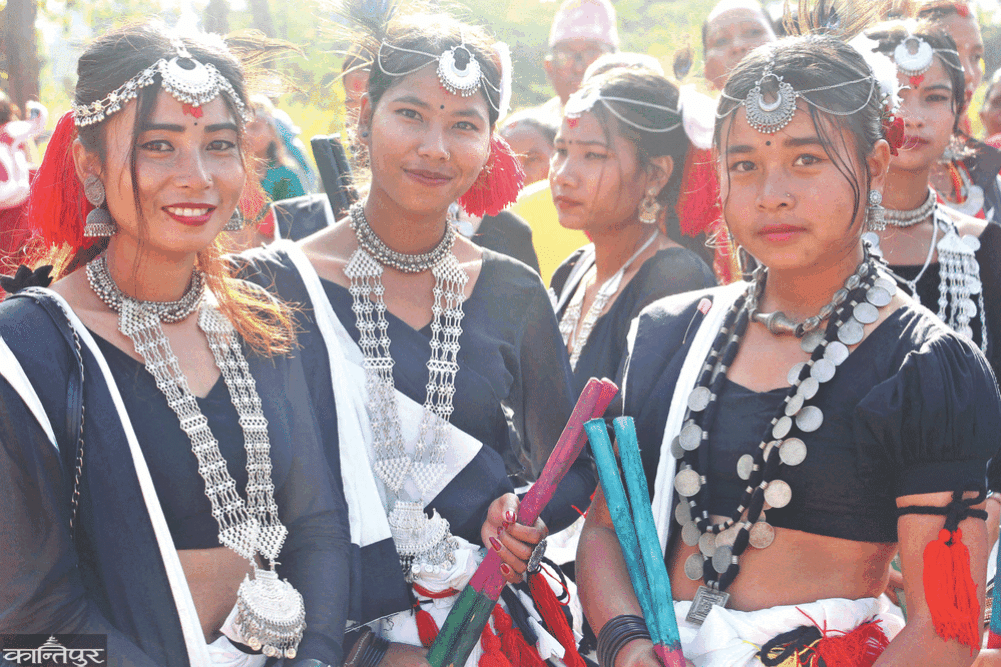
On the day of Maghi, it is customary to go to the river to bathe in the morning, and after returning, touch the water mixed with rice, dal and salt.
We use Google Cloud Translation Services. Google requires we provide the following disclaimer relating to use of this service:
This service may contain translations powered by Google. Google disclaims all warranties related to the translations, expressed or implied, including any warranties of accuracy, reliability, and any implied warranties of merchantability, fitness for a particular purpose, and noninfringement.
The Tharu community celebrated Maghi as New Year on Tuesday. Generally, it is customary to celebrate Maghi on the last three days of Pus and five days of Magha. The Tharu community has a tradition of jita mara (cutting bangur), chanting bhajankirtan (Dhamar) and eating various dishes from the early morning of Pus Masanta. This year has also been celebrated as Tharu Samvat 2648.
Tharu music is playing in Maghi Mela held in Rajapur, Basgarhi and other places of Bardia. Tharuni, a girl from Bardiya Gulria-12, said, "Earlier, Madal was played in the village during Maghi, now it is celebrated by playing DJs." For the new year, leaders (mahatwa) including badghar, chowkidar, volunteers are selected in the village. Before the government abolished the Kamaiya system on July 2, 2057, girls in Maghi were allowed to keep Kamlari, Bukreni and Kamaiya with the moneylenders.
'We are saving the importance and originality of Maghi,' said Chandra Prasad Chaudhary, the district president of Mahatwa Sangh, 'the new generation has not been able to learn all our traditions and customs.' There is a tradition of killing bangur, chicken and cutting meat, digging yam and ganji on the third day. On the fourth day, Magha 1, i.e. the day of Maghi, bathing, Tikatala with elders, dancing and singing are done and on the last day they go to their sisters' houses to give alms. At the end, it is customary to conclude with a collective feast (Nachnauri) from the danced money.
It is customary to get up early in the morning to bathe in the river, and after bathing, touch the Nisrau mixed with rice, dal and salt,' said President Chandra Prasad, 'then it is customary to go to the house of the village dignitaries and apply Tikatala on the morning after Maghi There is a custom to honor the sisters by keeping food. In the house of Vinod Tharu of Baijnath-7 Titihiria in Banke, the maghi is different. "The village has become magical at the moment, relatives and friends who are far away have gathered, the excitement of the magic is different," he said.
In Razhena in Kohalpur of Banke and Titihiria in Baijnath, which are dominated by the Tharu community, Maghi is currently in full swing. Ghusri of Razhena village is busy preparing Tharu Maghi. They had been preparing for Maghi since a week ago. Ghusri said that on Tuesday evening, everyone goes to Tharu village leader Mahatwa's house with liquor and vegetables.
Chairman Chandra Prasad said that it is customary to eat the food collected in the Mahatwa's house together, select a new Mahatwa and plan for the new year. On the day of Maghi, dancing begins in the evening of Mahatwa's house and goes to every house to dance.
Tharu folk singer Bejlal Chaudhary said that song and dance are very important in Maghi. Along with songs related to receiving blessings from ancestors, stories of the Tharu community are also told through songs. The song sung on the occasion of Maghi is called Maghauta Geet. Tharu Kalyankarini Assembly Chairman Ashok Chaudhary said that at this time, preparations for the marriage of children who have reached the age are also being made.
The Tharu settlements of western Nepal are buzzing at the moment. Maghauta, the biggest festival of the Tharu community, resonates with traditions, folk culture, Maghauta dances and folk music. The Tharu community believes that bathing in the river on the day of Magh Sankranti brings merit. Before bathing, money is offered to the water deity. "We got up early and took a bath in the Khutia river," said Ram Bahadur Chaudhary of Jonapur in Kailali, "Now we spend the whole day receiving blessings from the dignitaries and visiting relatives and friends."
In food, the Soukhin Tharu community has pork/buck meat and dhikri as a must in the family during the Maghi festival. Dhikri is prepared by kneading the rice flour and making different shapes.
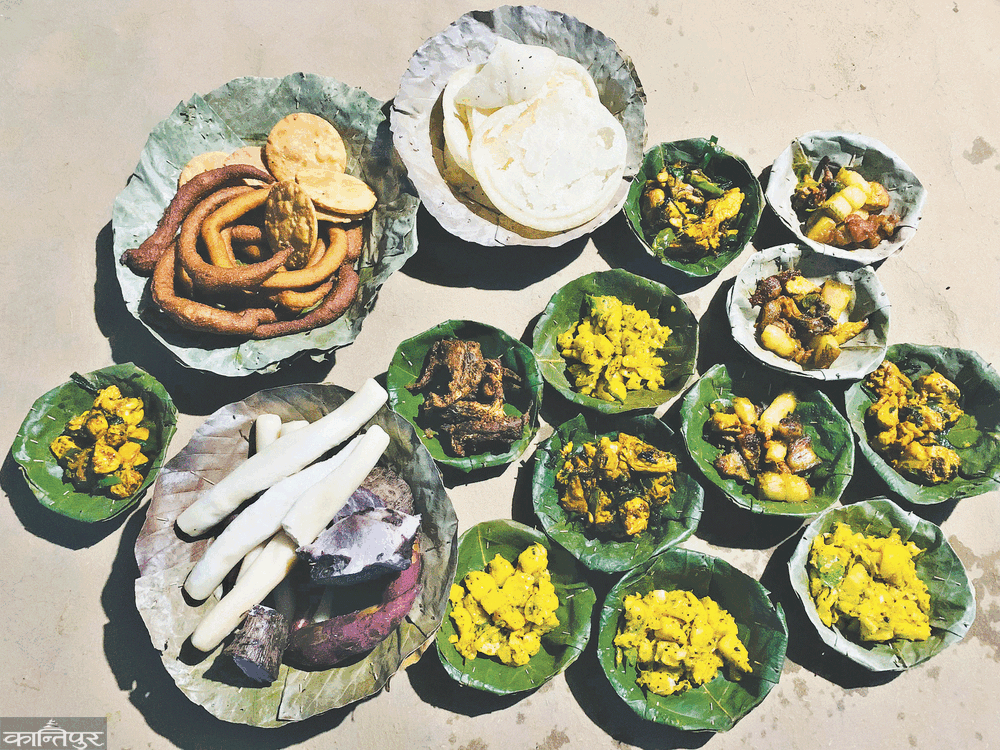
The local Tharu residents say that there are many dishes of chicken and Khasi meat, jand, egg liquor, Mauwa liquor, Gangta meat, pigeon, batai, rat meat, Tharu potato, potato chutney, Timur chutney. In Maghi, men and women of the Tharu community dress up in traditional clothes and dance dances such as Hurdungwa, Maghauta, Jhumra.
Tharu leader Dil Bahadur Chaudhary says that the Maghi festival is very important because it inspires harmony, brotherhood and collective spirit to the Tharu community. This community has a tradition of extending new relationships by holding a wedding ceremony in the month of January.