As it is said in Nepali society, the owl (latokosero) is not stupid. Not even ominous. The owl is a farmer's friend, eating insects, grasshoppers and mice in the crops. A group of owls is called 'Parliament' because they are intelligent. Raju Acharya from Pokhara has been active for over a decade and a half to change the misconceptions about Latokosero. That's why he got a new name - 'Owl Sir'.
We use Google Cloud Translation Services. Google requires we provide the following disclaimer relating to use of this service:
This service may contain translations powered by Google. Google disclaims all warranties related to the translations, expressed or implied, including any warranties of accuracy, reliability, and any implied warranties of merchantability, fitness for a particular purpose, and noninfringement.
People who are called ignorant, slow to understand or lazy are compared to Latokosero in Nepal and are said, 'How like an owl?' The superstition of being lazy is disappearing. Raju Acharya of Pokhara, who has been active for a decade and a half to change this understanding of Latokosero, got the name - 'Ullu Sir'.
Latokosero or owl is not stupid as it is said in Nepali society, but scientists consider it as an intelligent creature. Not inauspicious, it has become a friend of the farmer by eating insects, grasshoppers, and rats in the crops. In Greek mythology, the owl is a symbol of the goddess of wisdom. Because they are intelligent, the group of owls is called 'Parliament' (legislature). Acharya, who understood this while studying in the UK, has been active in owl conservation ever since he returned to Nepal as a representative of the World Latocosero Fund in 2008.
After completing SLC, he taught in schools as a science teacher for 6 months and in 2046, he passed the certificate level from the Institute of Forestry Studies in Pokhara. After that, he worked as a ranger in the district forest office of Dolakha for one year. At that time, the forest department used to recruit rangers on contract basis. He took the public service exam in the then Midwestern region, but his name did not come out. Returned and worked in the Annapurna Conservation Area Project (ACAP).
After spending 11 years at the ECAP, he thought of continuing with formal studies. Graduated from Skim College, Kathmandu with Bachelors and Masters in Environmental Management. Chir Kalij in graduation, Himalayan vulture and human relationship in post graduation. In 2006, he moved to Germany for postgraduate studies in forestry. Moved from Germany to UK and completed another master's degree in Agroforestry in 2008.
While in the UK, he found that there was no work in Nepal for latocosero conservation. Then he came to Nepal as a volunteer of the World Latocosero Foundation. Since then, he has been active in Latocosero conservation for 16 years. 'I wanted to do something different,' he said, 'while realizing that latocosero is poached in Nepal, but there is no initiative to protect it, I felt that it should be preserved.' Worked as a forester. Conducted research on human-wildlife conflict. In 2005, he founded the Friends of Nature organization along with conservationists Rajesh Acharya, Yadav Ghimire, Ram Lama and others. After coming to Nepal, he traveled from Mustang to Humla to investigate Latocosero. He started gathering information about Latokosero by visiting and studying villages.
He also became a client to learn about Latocosero's illegal trade and poaching network. He remembers having to act as a smuggler and broker. At that time, he found out that there was illegal trade of latocosero from Nepal to China, India, Vietnam, Thailand, and Malaysia in Middle East Asia. "There is a myth that cancer can be cured if you eat Latocosero meat soup, also known as Hapsilo, Huchil or Hudrung," he said, "This is not proven anywhere." It's like eating chicken soup.'
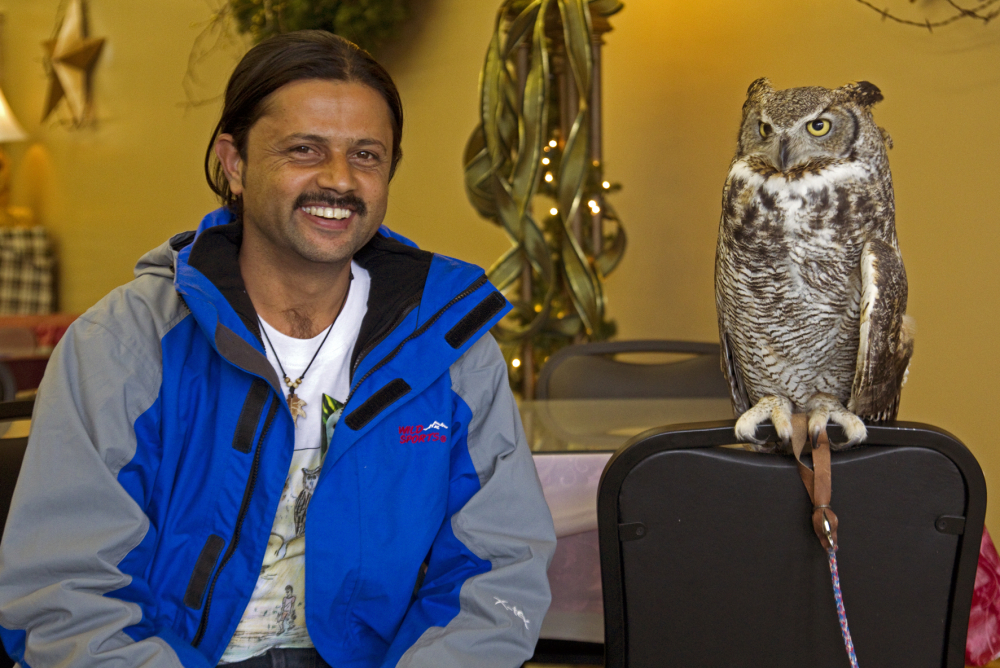 In Mustang, he placed a dead latocosero at the door of the house. He did the task of reminding those who keep Latocosero illegally at home, asking them to leave, and if they don't agree to leave, take action through the forest office. After discussing his experience, 99 percent of the Latocosero raised in this way would leave. He himself has rescued more than 150 Latocosero.
For the Latocosero and Huchil conservation campaign, he made and distributed leaflets about Latocosero and Huchil. He also gave knowledge to many. Conducted a campaign among students to raise awareness of conservation at the school level. In 2011, he was invited to the World Latocosero Festival held in the US after seeing his work on latocosero conservation in a short period of time. There the International Latocosero Center awarded him with the Special Achievement Award.
He is the first person in Asia to be awarded by the organization for his work in Latocosero conservation. Since 2012, he started organizing Latokosero and Huchil festivals in Nepal. The 11th edition of the festival, which was started from Dhading by Friends of Nature, an organization of which he is the executive director, has been completed. During the festival, he got the name 'Ullu Sir' from the local residents in Amaltari, Nawalparasi.
There are 23 species of Latocosera in Nepal. Among them, there are 8 endangered species in Nepal. The globally endangered Latocosero does not exist in Nepal. He has found Latocosero from the plains to the mountains at a height of 5,200 meters above sea level. He has been put in danger many times while protecting wildlife. Survived many times from the mouth of death. I was trapped in the snow for five days while searching for a forest clearing in Humla. I fell from Bhir when I was looking for Chir Kalij in Mustang,' says Raju, 'I was reprimanded by the villagers in Sikles when I broke the trap set for leopards.'
Raju has directly informed more than 60 thousand people about the importance of Latocosero and has published 5 books on Latocosero. He is also the editor of Latocosero digital magazine 'Hapsilo'. He has published more than 125 articles on nature. He has visited 68 districts of Nepal and inspired thousands of students to protect Latokosero. Nepal's biggest conservation campaign Nepal Latokosero and Huchil Utsav has been running under his leadership for 11 years.
Apart from Latokosero, he has also worked on wolf, wild chaunri, snow leopard, snow leopard, forest dog, small carnivores, vultures, and Kalij conservation. His interests are in the areas of human-wildlife conflict, biodiversity documentation, forest carbon, community-based nature conservation, green schools. He is interested in doing innovative work leading the research and conservation of areas and species that other researchers have not reached. He has worked in areas from Humla in the west to Sankhuwasabha in the east.
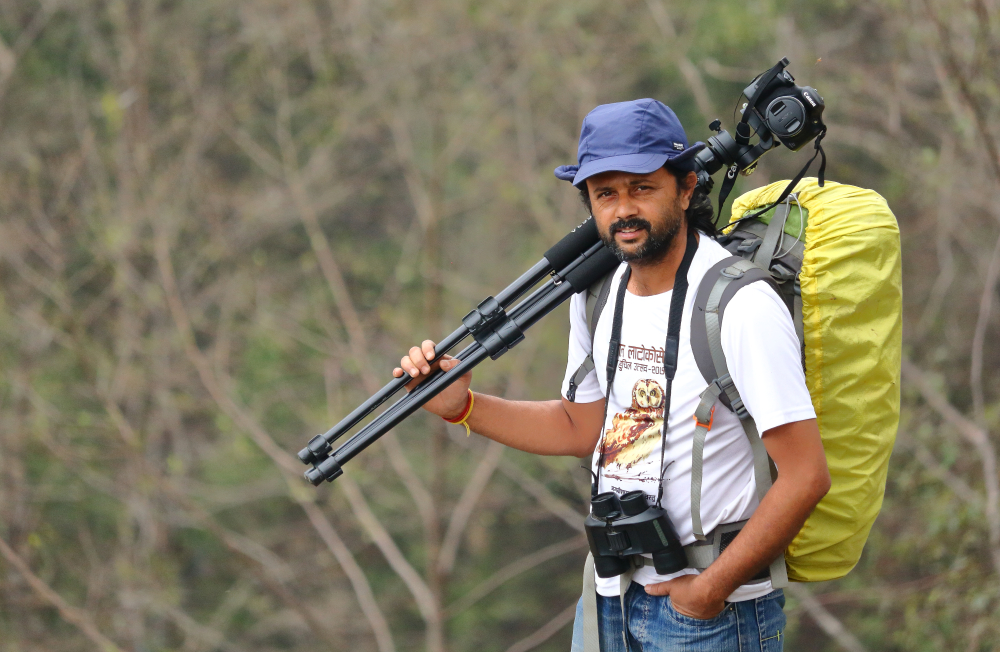 On his own initiative through 'Friends of Nature', the government prepared the Latokosero Conservation Action Plan in 2020. The action plan addresses threats to owls from poaching, illegal trade and habitat loss. The Whitley Fund for Nature, an organization based in the UK, has awarded him with the famous Whitley Award for his past contributions to Latocosero conservation. He has received an award worth 50,000 pounds for the Latocosero Conservation Project in Gandaki Province. Britain's Princess Anne presented the award at an event held in London on May 20.
Previously, zoologist Hemsagar Baral in 2005, Sonam Tasi Lama in 2022 in red panda conservation and Tulsilakshmi Suwal in 2023 for working in salak conservation have received this award. Acharya has scored a 'hat trick' for Nepal by receiving this award, which is considered as the Oscar of the green sector. The amount will be spent on the works specified by the 10-year Latokosero conservation action plan created by the Nepal government.
Owls prefer to live in tree trunks. Cutting down old trees damages owl habitat. Hunting with slingshots in villages is also a threat to owls. One third of the Gandaki region is covered by forest. Acharya's project aims to achieve success in owl conservation by leveraging active community participation. He said that under the project, there is a program to discourage owl hunting students from using slingshots by making slingshot prohibited areas at five locations, and creating 100 conservation camps to raise awareness among students and the general public.
'Owl ambassadors' will be trained to protect trees and install artificial nests. The project aims to reduce negative perceptions of owls. Under the project, training programs will be conducted to increase the capacity of regulatory agencies, policy makers and owl ambassadors to reduce owl hunting and trade. Raju says, "The work done through this award will play an important role in balancing nature."

