We use Google Cloud Translation Services. Google requires we provide the following disclaimer relating to use of this service:
This service may contain translations powered by Google. Google disclaims all warranties related to the translations, expressed or implied, including any warranties of accuracy, reliability, and any implied warranties of merchantability, fitness for a particular purpose, and noninfringement.
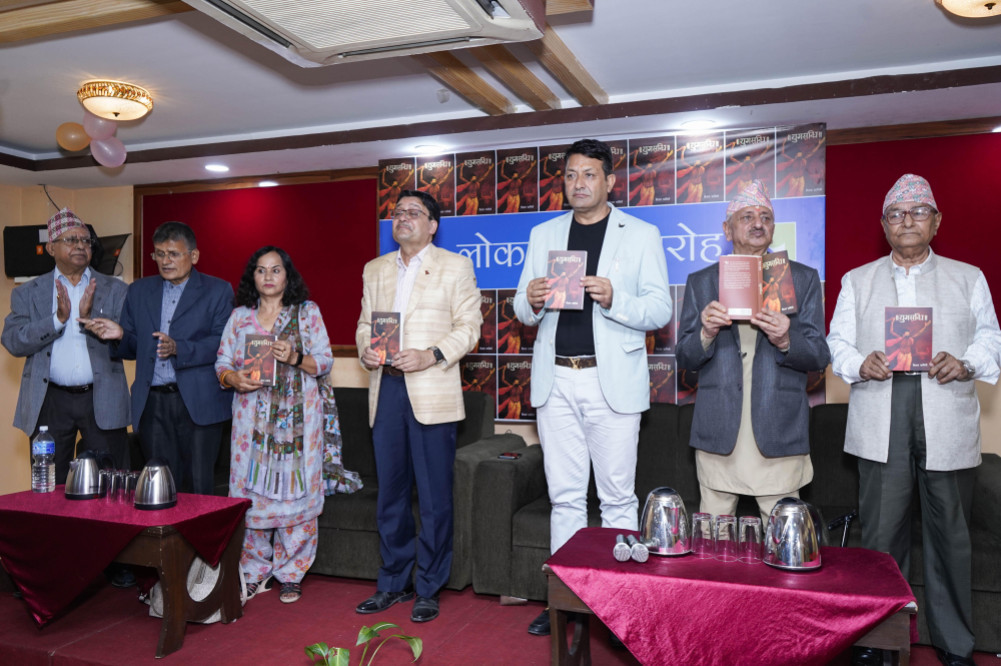
The novel 'Yugasandhi', based on the ideological conflict of the Vedic period between sage Vashishta and Vishwamitra, has been released in Kathmandu on Tuesday. Written by Vijay Chalise, the novel deals with conflict between Arya and non-Arya caste and culture, women and men and blood purity and blood transfusion advocates.
In these contexts, the story progresses with the conflict between Rishi Vishwamitra and Rishi Vashishta. In the novel, the author puts forward the argument that peace can be maintained in the Himalayan region only through the coordination of Brahmashakti and Rajashakti, equality between men and women, and coordination between Arya and Anarya.
Critic Gopi Mainali commented that 'Yugasandhi' broke the classical law of mythological narrative writing and said that 'the novel is not only a story of victory but also a story of defeat'. Mainali argued that the novel showed caste and class discrimination in ancient times.
Another critic, Gyanu Pandey, said that Chalise's novel has the ability to raise many serious questions and imagination in the reader's mind. "It seems that the novel has been able to see the story of the Vedic period from the gender concept," he said.
Rishiram Pokharel, who was the first scholar on Vedas from Nepal, praised Chalise by writing 'Yug Sandhi' and praised Nepali literature when very few books were written on Vedic subjects. Speaking at the release ceremony, author Chalise said that he prepared the novel based on the conclusions drawn by studying the conflicts of the Vedic period. The novel has been brought to the market by Pradak Publications.