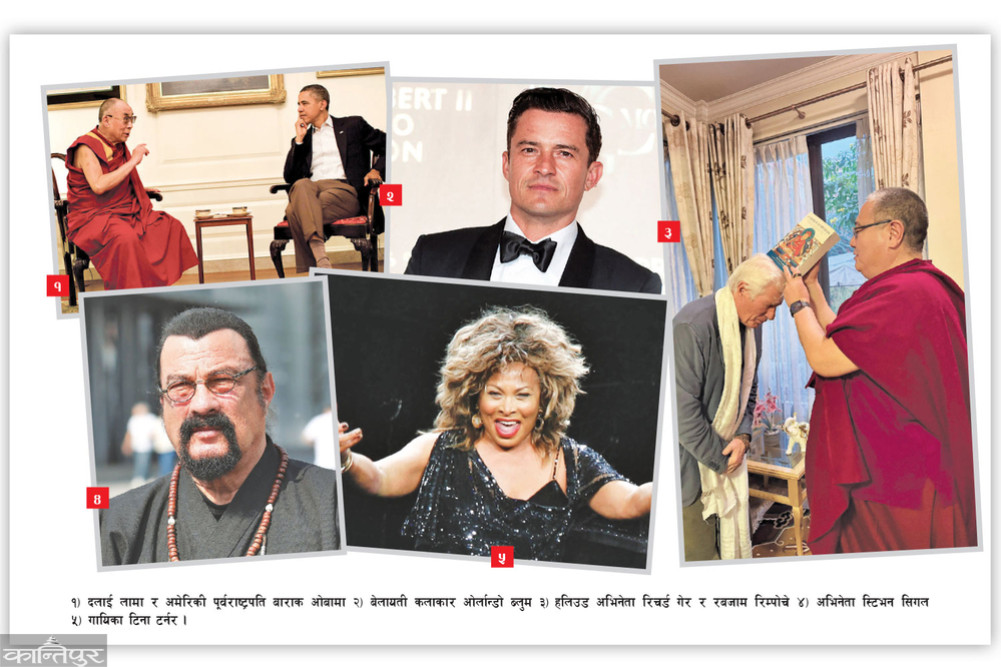
In the West, aspects of Buddhism, including meditation and mindfulness, are beginning to be embraced by the US military, large companies in Silicon Valley, businesses around the world, and the general public. In this way, Buddhism is spreading not as a religion but as a lifestyle and culture.
We use Google Cloud Translation Services. Google requires we provide the following disclaimer relating to use of this service:
This service may contain translations powered by Google. Google disclaims all warranties related to the translations, expressed or implied, including any warranties of accuracy, reliability, and any implied warranties of merchantability, fitness for a particular purpose, and noninfringement.
बुद्ध दर्शन आजको जटिल, तीव्र र अस्थिर विश्वमा झन् प्रासंगिक हुँदै गएको छ । प्रविधिको तीव्र विकास, उपभोक्तावाद, मानसिक तनाव, युद्ध, वातावरणीय संकट र मानवीय मूल्यहरूको ह्रासबीच बुद्धका शिक्षाहरूले आजको मानवतालाई दिशानिर्देश गर्ने क्षमता राख्छन् । आजको सन्दर्भमा बुद्धको महिमाबारे कोसेलीले तयार पारेकाे विशेष प्याकेज।
Apple founder Steve Jobs, who arrived in India in 1974 in search of a guru at the age of about 19, returned to the US after 7 months with a bald head and ochre-colored bangles. Jobs, who mainly visited Hindu religious sites during his stay in India, turned to Zen meditation after returning to California in the company of Japanese Zen guru Kobun Otogawa.
After that, Jobs, who became a lifelong fan of Zen meditation, also incorporated Zen meditation into some of Apple's products and company management. Jobs' biographer Walter Isaacson has mentioned that Zen meditation is also reflected in the interior design of the iPod and the Apple Store. Jobs had started practicing meditation at the Apple office since 1999. Walter believes that Jobs adopted the aesthetics of meditation more than its religious and moral aspects.
‘Inspired by Zen Buddhism, he made Apple’s products very simple, minimalist and informal,’ Lama Suryadas, known as the American Lama, wrote in a blog published in HuffPost, ‘He adopted an engineering style at Apple, in which unnecessary things were removed and simplicity was prioritized in design. According to Jobs, meditation helped him understand the depths of his mind and concentrate.’
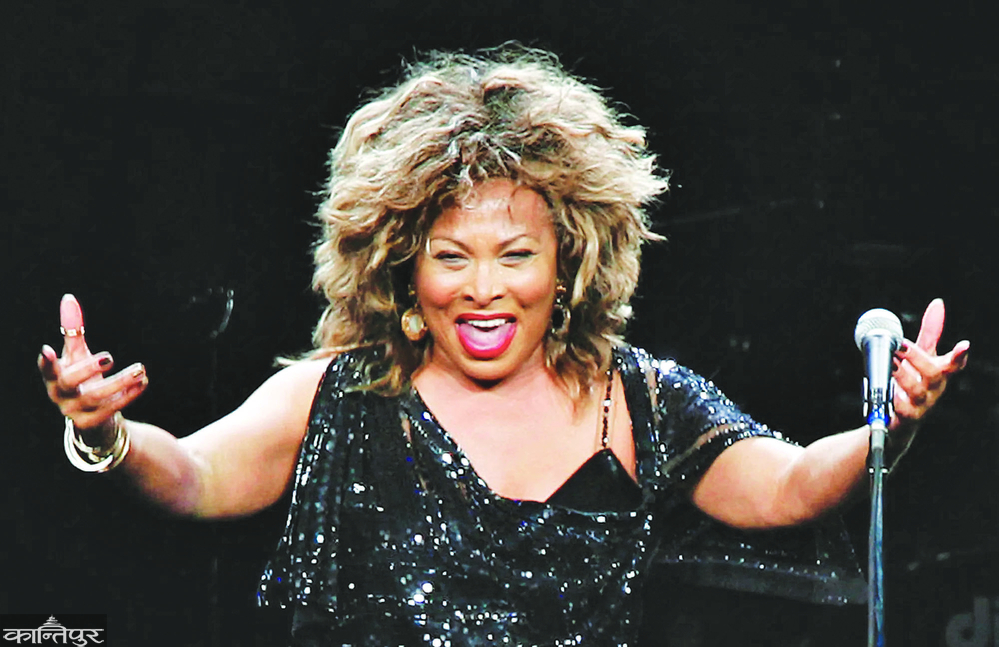
 There are many people born in Western countries who practice Eastern Buddhism in a religious or ideological form. Tina Turner, the singer of famous songs such as the jingle ‘Simply the Best’, which was once used by Radio Kantipur, learned the intellectual religious practice in 1973. She fully embraced it before her death in 2023. Tina used to publicly say that Buddhism played a huge role in saving her life. She also wrote a book titled ‘Happiness Becomes You’ in 2020 about the importance of Buddhist philosophy.
Tina’s Buddhist practice focused more on chanting, meditation and other daily practices. Canadian-born famous songwriter Leonard Cohen, on the other hand, was fully committed to it after learning Zen meditation in Los Angeles. He was initiated by Japanese guru Kyozen Roshi and retired from his profession in 1994 at the age of 60 and went to the San Gabriel Mountains to become a full-fledged monk. He took his Buddhist name ‘Jikan’. He remained in meditation as a monk until his guru’s death in 2014.
Filmmaker Annal Campbell has written a memoir for the BBC about his unforgettable meeting and interview with Cohen at the Mount Baldy Zen Center in California. Cohen, who identifies himself as a Jew who practices Zen, is clearly attracted to the Zen Buddhist tradition in his poems, songs, and public statements.
In recent years, many meditation and yoga practices, including Vipassana, Anapanasati, Metta, Samatha, and others, which are integral parts of Buddhism, have been increasingly used in secular and commercial ways around the world. Strangely, while the number of Buddhist followers in the world has decreased by 2 percent in the last decade, Buddhist practices such as meditation and breathing techniques have become increasingly used as commodities in capitalist society. American professor and author Ronald E. Purser has been expressing critical views on this issue.
 In his book ‘McMindfulness’, Purser, a professor at San Francisco State University, discusses how practices such as ‘mindfulness’ and Vipassana, which are derived from intellectual concepts, have begun to be used for completely opposite purposes. Purser believes that Western societies and Silicon Valley have adopted the Buddha's solution to the suffering and pain of everyday life as a formula for productivity, employee productivity, and business success.
Despite such criticism, since World War II, writers, artists, leaders, and celebrities outside of traditional Asian centers have increasingly practiced Buddhism, or some aspect of it, in part or in full. However, according to a 2025 report by the Pew Research Center, the number of Buddhists worldwide has fallen from about 499 million in 2010 to about 487 million in 2020. The report states that this number has decreased because countries such as China, Japan, and Thailand have a majority of Buddhists and their populations are growing rapidly.
In Western countries, the Pew Research Center's data shows that the "religiously unaffiliated" population is growing. Although many people in the US and Australia practice Buddhist practices such as meditation or mindfulness, they are more likely to classify themselves as ‘religiously unaffiliated’ or ‘non’ than as members of any particular religion.
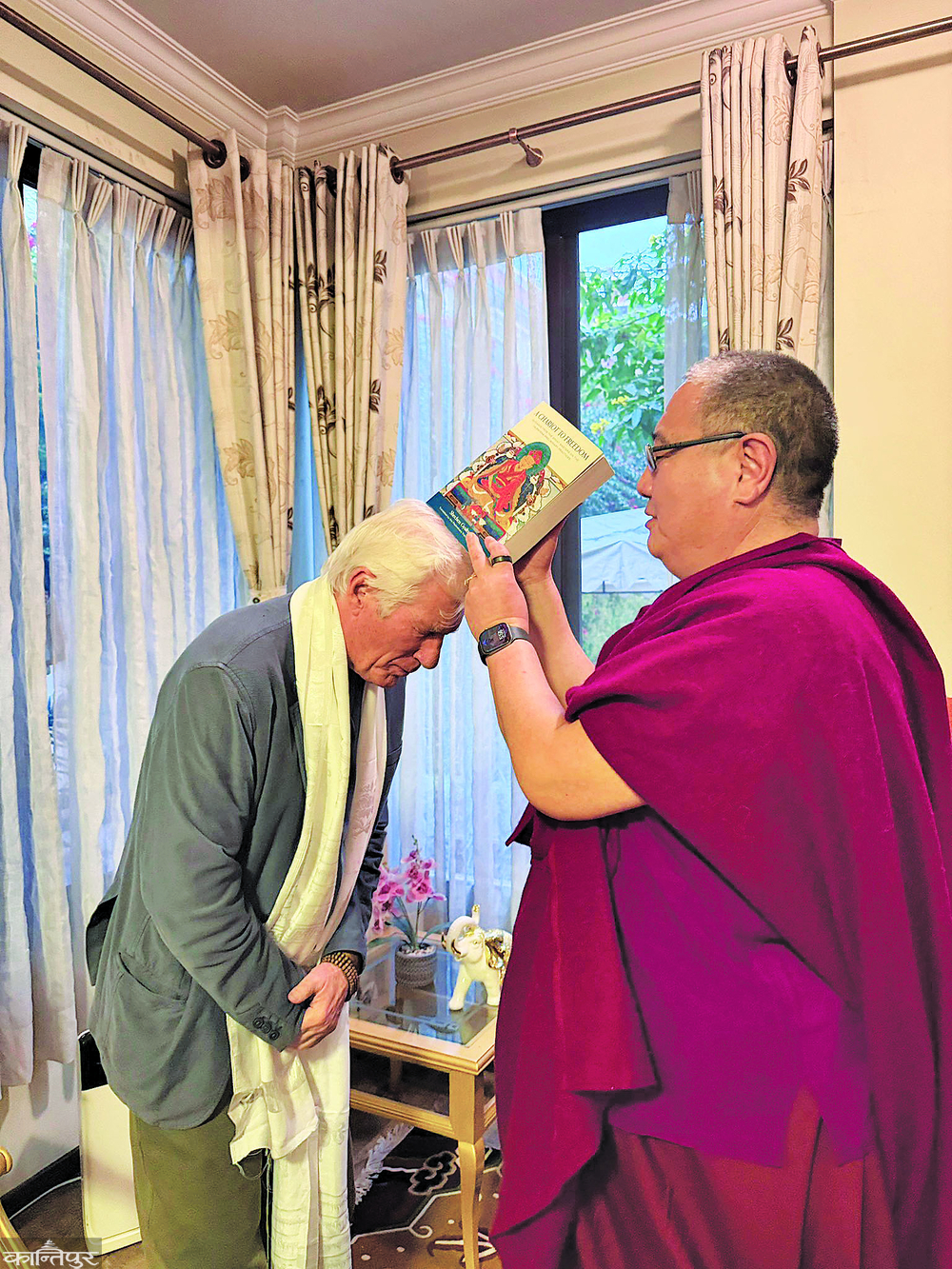
 Hollywood actor Richard Gere is a famous person who, although not a full-fledged Buddhist, has traveled to India and Nepal to follow Buddhist religious beliefs and practices. He says that he was influenced by reading Zen Buddhist texts for six years as a young man. During that time, he visited Pokhara, Nepal, and met Tibetan refugees. There are constant reports of Gere visiting Dharamsala, India. Due to his attraction to Buddhism, Gere has become a friend of the Dalai Lama.
In 1993, during the Oscars, Gere even became controversial by raising his voice about Tibetan refugees and the human rights situation in Tibet. He still believes in Buddhism. He is also the founder of Tibet House America. In 2024, he co-produced the documentary Wisdom of Happiness with the Dalai Lama. Last March, Gerle visited Nepal during a Buddhist pilgrimage and paid homage to the late Lama Zopa Rinpoche at Kapan Monastery.
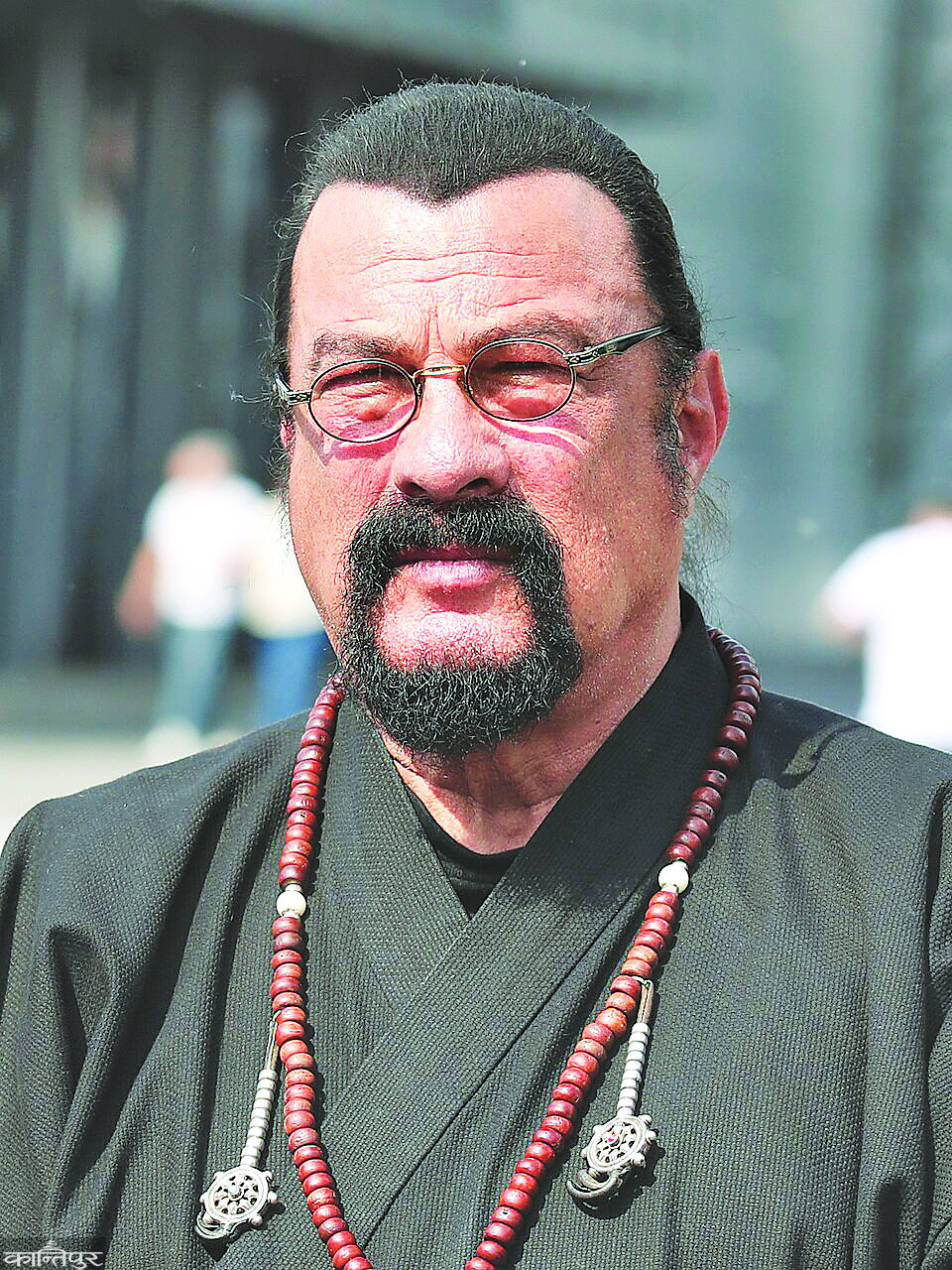
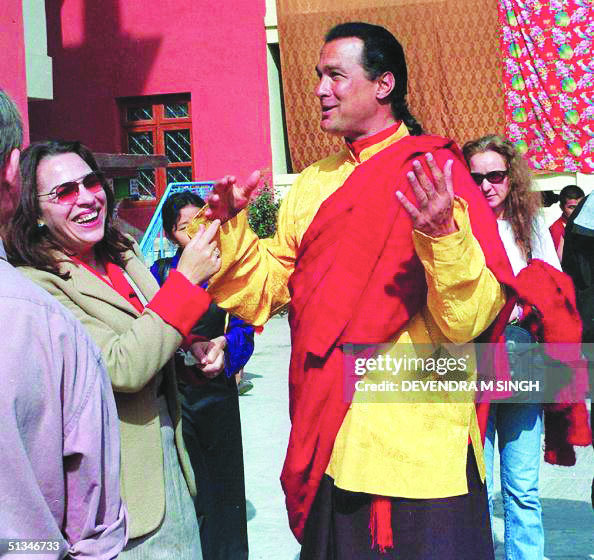
The connection between Hollywood celebrities and Buddhist practice is believed to be growing after actor Steven Seagal was recognized as a ‘tulku’ by Penor Rimpoche, head of the Palyu Ling School, in 1997. Rimpoche had declared Seagal to be the reincarnation of the famous 17th-century Tibetan scholar and guru Chungdrag Dorje, and had issued a statement that he had been identified through a test of spiritual qualities and traditional methods.
The announcement of the tulku recognition, made in front of about 1,500 people at the Namdroling Monastery in southern India, divided the Buddhist world. Since then, Sigal, who has adopted Buddhist style in his attire, has been following Tibetan Buddhist traditions. Since 2016, he has also become a citizen of the United States and Russia and has been living there. According to news reports, Sigal, who arrived at the Shenchen Monastery in Kathmandu in 2004, has visited Nepal and India at various times and helped preserve the Buddhist heritage there. A photo taken by Devendra M. Singh for APF when Sigal came to Buddhism to participate in the consecration ceremony of Ugen Tenzin Jigme Lundrup can still be found on the Internet.
 There are also many people who believe in the teachings of Gautama Buddha and its various aspects. Comedian and actress Goldie Hawn, who describes herself as a follower of ‘Jew-Bu’, i.e. a mix of Judaism and Buddhism, has founded an organization called Mindupi, which teaches mindfulness in countries like the United States, Canada, and the United Kingdom. Similarly, British actor Orlando Bloom, who starred in popular movies like ‘Pirates of the Caribbean’, says he has been following Nichiren Buddhism since he was 16.
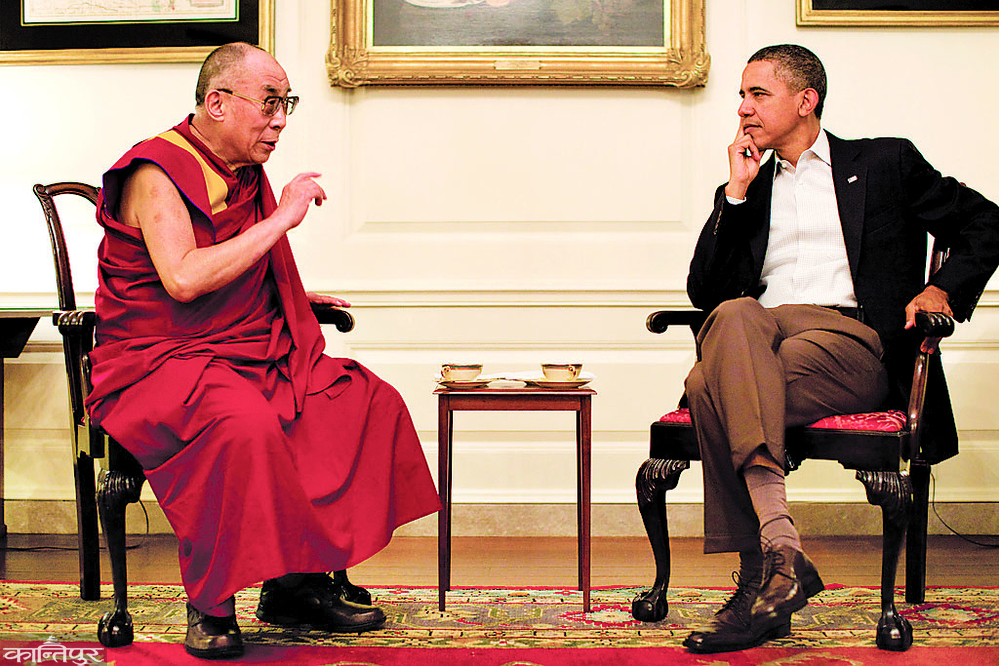
Tiger Woods, one of the world’s most successful golfers, is also considered a follower of the faith after learning the practice of Buddhism from his Thai mother. Yuval Noah Harari, a widely read author in Nepal, is a follower of various Buddhist practices such as Vipassana. Former US President Barack Obama, who sometimes carries a small statue of Buddha, has publicly stated that he is an admirer of some aspects of Buddhism. He has met the Tibetan spiritual leader, the Dalai Lama, several times.
Bollywood actors Ayushmann Khurrana, actresses Tisca Chopra, Hansika Motwani and Danny Denzongpa have said that they have partially assimilated some aspects of Buddhist philosophy. Aamir Khan even came to Nepal to practice Vipassana but returned without completing it.
Meta founder Mark Zuckerberg's wife, Priscilla Chan, is also a declared follower of Buddhism. In the West, the meditation, awareness and other aspects of Buddhism are being embraced by the US military, large companies in Silicon Valley, business establishments around the world, and the general public. In this way, Buddhism is spreading not as a religion but as a lifestyle and culture. In this way, Buddhism is spreading not as a religion but as a lifestyle 'pop culture'. – With the help of the agency