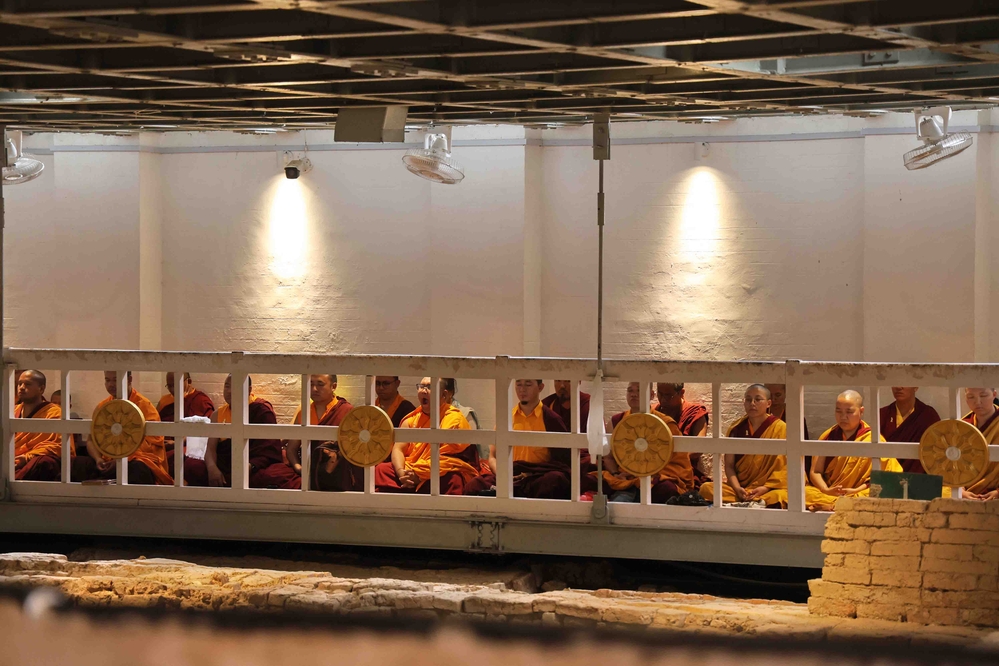
Buddhist diplomacy has provided Nepal with the opportunity to play a meaningful role in multilateral and regional forums, not just limited to bilateral relations.
We use Google Cloud Translation Services. Google requires we provide the following disclaimer relating to use of this service:
This service may contain translations powered by Google. Google disclaims all warranties related to the translations, expressed or implied, including any warranties of accuracy, reliability, and any implied warranties of merchantability, fitness for a particular purpose, and noninfringement.
बुद्ध दर्शन आजको जटिल, तीव्र र अस्थिर विश्वमा झन् प्रासंगिक हुँदै गएको छ । प्रविधिको तीव्र विकास, उपभोक्तावाद, मानसिक तनाव, युद्ध, वातावरणीय संकट र मानवीय मूल्यहरूको ह्रासबीच बुद्धका शिक्षाहरूले आजको मानवतालाई दिशानिर्देश गर्ने क्षमता राख्छन् । आजको सन्दर्भमा बुद्धको महिमाबारे कोसेलीले तयार पारेकाे विशेष प्याकेज।
Buddhist diplomacy is the diplomatic practice of strengthening international relations by using Buddhist philosophy, cultural heritage, and religious symbols as a means of ‘soft power’. This approach is based on the core teachings of Buddha such as non-violence, compassion, tolerance, and peaceful coexistence. Its main objective is to increase harmony and trust between countries through moral influence and cultural attraction, without resorting to military force or economic pressure. In today’s world filled with conflict, polarization, and power competition, countries like India, China, Japan, Sri Lanka, and Thailand are expanding their diplomatic outreach through Buddhist heritage and pilgrimage tourism.
Nepal’s position in this regard is very unique. Nepal is the birthplace of Gautam Buddha. Lumbini is one of the four holy pilgrimage sites of Buddhism, with which Buddhists around the world have a deep emotional connection.
Nepal does not have a large military or economic power, but being the birthplace of Buddha is one of Nepal’s strongest international identities. The presence of monasteries from more than 30 countries in the monastic area of Lumbini has made this place an informal multilateral diplomatic platform. Thus, Buddhist diplomacy has become the most original and sustainable means for Nepal to influence the international community without physical power.
Buddhist diplomacy in relations with neighboring friendly countries
Buddhist diplomacy has provided Nepal with the opportunity to play a meaningful role in multilateral and regional forums, not just bilateral relations. Buddhist diplomacy has been playing an important role in Nepal's relations with both neighboring powers, India and China, although the nature and history of relations with both are different. The foundation of Buddhist relations with India is very deep.
If Buddha was born in Lumbini, then Bodh Gaya, where he attained enlightenment, Sarnath, where he gave his first sermon, and Kushinagar, where he attained Mahaparinirvana, are all in India. In this way, the entire life journey of the Buddha is connected in both countries, which has bound them with a single spiritual thread. Due to this common heritage, even in the face of some differences and disputes over time, the common spirit of Buddhism has kept the dialogue between the two countries alive.
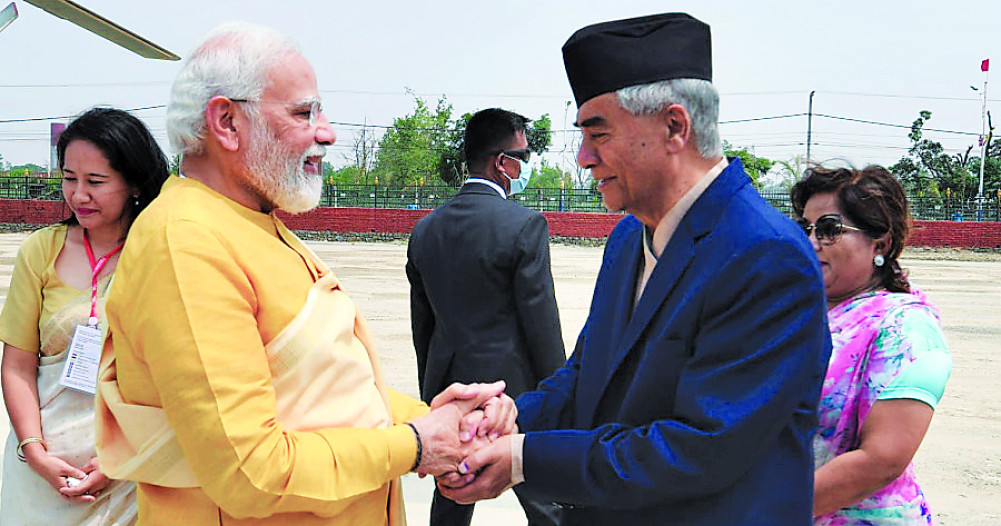
Practically, during the visit of Indian Prime Minister Narendra Modi to Lumbini on Buddha Purnima in 2022, several agreements were signed related to religious tourism, infrastructure and public relations. India has already built an eco-friendly ‘India International Center for Buddhist Culture and Heritage’ in Lumbini. The educational collaboration between Lumbini Buddhist University and the Indian Council for Cultural Relations (ICCR) and the efforts to connect Lumbini, Bodh Gaya, Sarnath and Kushinagar into a single Buddhist circuit are deepening the people-to-people relations between the two countries.
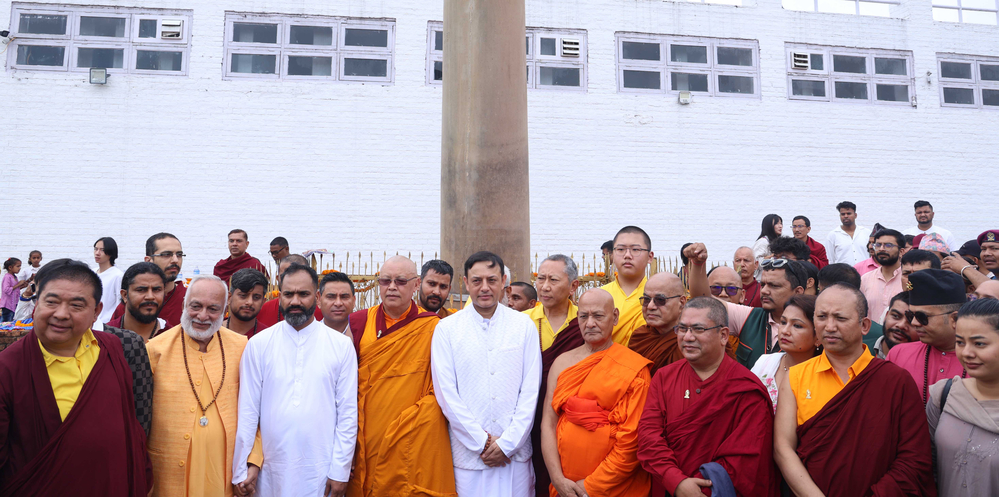
Since most countries in South and Southeast Asia are associated with Buddhist civilization or its influence, Buddhism seems to have become a common cultural identity for Nepal. Buddhist relations with China are also more than 1500 years old. In the fifth century, the Nepali monk Buddhabhadra reached China and translated Buddhist scriptures into Chinese. Buddhism was established in Tibet in the 7th century after Princess Bhrikuti married King Srongchung Gampo of Tibet. In the 13th century, Nepali artist Araniko built a white stupa in Beijing and spread the Buddhist message through architecture. In modern times, China is using this legacy as a form of ‘soft power’ and is investing in the construction of Buddhist monasteries, meditation centers, and infrastructure in Lumbini.
Nepali students have been given the opportunity to study Buddhism in China through the Fa Hian and Xuanzang scholarships. China also seems to have a strategic objective of expanding trans-Himalayan connectivity by linking Buddhist diplomacy with the ‘Belt and Road Initiative (BRI)’.
In this way, both neighboring powers are advancing Buddhist diplomacy according to their own strategies. This is both an opportunity and a challenge for Nepal. Buddhist diplomacy is providing tangible benefits in tourism, education and infrastructure and is balancing relations with both powers. It is equally important to be vigilant that a holy site like Lumbini does not become an arena of competition between great powers. Buddhist diplomacy at the multilateral level Buddhist diplomacy has provided Nepal with an opportunity to play a meaningful role in multilateral and regional forums, not just in bilateral relations. Since most countries in South and Southeast Asia are associated with Buddhist civilization or its influence, Buddhism seems to have become a common cultural identity for Nepal. Regional mechanisms such as BIMSTEC and SAARC, of which Nepal is a member, have often not made the expected progress due to political differences and structural weaknesses. In such a situation, Buddhist diplomacy is helping to build trust through ‘Track-2’ dialogue and cultural cooperation, which is different from formal diplomacy. Buddhist values such as non-violence, tolerance and dialogue seem to be an alternative basis for conflict resolution and cooperation in these regional forums.
In recent years, the concept of developing Lumbini not only as a religious pilgrimage site but also as a center for world peace and diplomatic dialogue has begun to gain traction.
The international Buddhist conferences and dialogue programs organized by Nepal in Lumbini and Kathmandu in recent years are noteworthy in this regard. Diplomats, scholars, monks and religious leaders from various Asian countries have been participating in these programs. The programs have been discussing contemporary global issues such as conflict resolution, peacebuilding, sustainable development and environmental ethics. The concept of coexistence with nature and compassionate development based on Buddhist philosophy is becoming a topic of discussion at the international level, especially in the context of environmental crises and climate change. Nepal, as the birthplace of Buddha, can provide moral leadership in such debates. If Buddhist diplomacy can be linked to state policy in a more systematic way, Nepal has the potential to play a larger role in multilateral diplomacy than its size.
Lumbini as a center of world peace and diplomacy
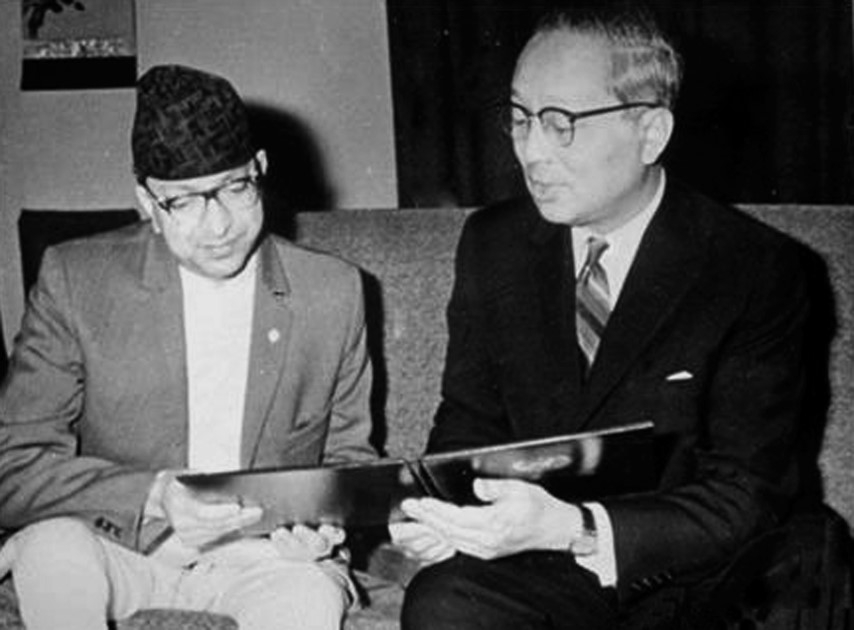
Announcements issued from international seminars, conferences and dialogue programs being organized in Lumbini include proposals for conflict mediation based on Buddhist philosophy, mindfulness and meditation training for diplomats, and the establishment of international-level Buddhist peace institutions. In this context, if the concept of ‘diplomat retreat’, peace dialogue and training programs based on Buddhist ethics are implemented in Lumbini, it seems likely to become a center for producing peace and dialogue for world diplomacy. In recent years, the concept of developing Lumbini not just as a religious pilgrimage site, but as a center of world peace and diplomatic dialogue has begun to gain traction. Lumbini, listed on the UNESCO World Heritage List, receives millions of foreign pilgrims every year. Efforts to transform this moral significance into an institutional diplomatic role are intensifying.
It is necessary to make a concrete contribution to the peace efforts being made at the global level by conducting high-level studies and research in Buddhist diplomacy, including peace studies, conflict management, sustainable development. By conducting short programs based on meditation and Buddhist philosophy for foreign diplomats and researchers, Lumbini can be transformed into a vibrant center of world peace and ‘soft power’ diplomacy, not just a ‘symbolic pilgrimage site’.
Challenges and strategic limitations
Although Buddhist diplomacy has potential, there are some serious challenges in its effective use. First, Lumbini’s infrastructure, management and long-term planning appear incomplete due to limited state investment and lack of institutional coordination. Quality transportation, housing, and digital infrastructure are still not sufficient to continue holding international conferences and diplomatic events.
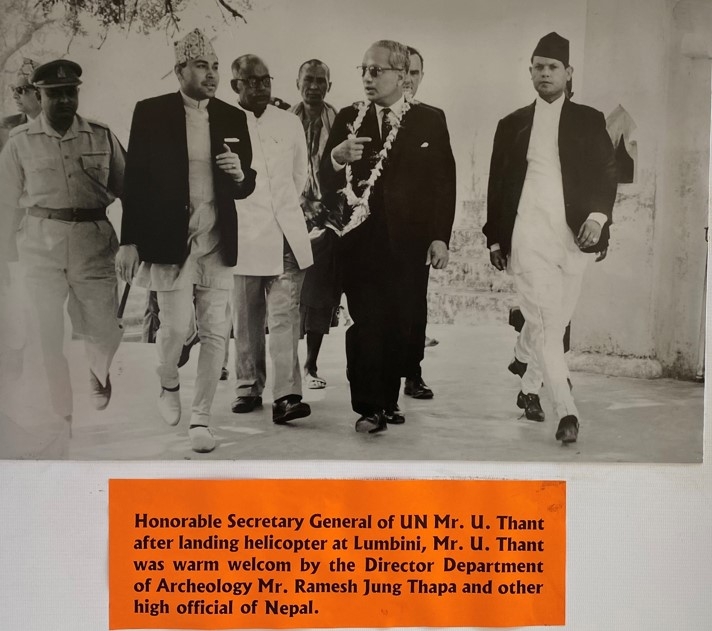
Lumbini, a UNESCO World Heritage Site, attracts millions of foreign pilgrims every year. Efforts to transform this moral significance into an institutional diplomatic role are intensifying.
Second, if major powers try to use Buddhist heritage as a means of expanding their regional influence, a sacred site like Lumbini risks becoming a symbol of power competition. If Nepal fails to maintain a clear policy and diplomatic balance, Buddhist diplomacy may be limited to the agenda of external powers. According to scholars and policy analysts, the root cause of all these challenges is the lack of a unified national strategy. Unless Buddhist diplomacy is coordinated with tourism, education, culture, and foreign policy, Nepal risks losing control over its most valuable cultural heritage.
Buddhist diplomacy is not just a matter of cultural pride for Nepal, but an effective instrument of foreign policy with strategic importance. For Nepal, which has limited military and economic capabilities, being the birthplace of Buddha is the strongest international identity and civilizational capital. This capital keeps relations with neighboring powers like India and China alive on cultural and moral grounds even during times of political tension and provides additional options for maintaining geopolitical balance.
In addition, it is equally important to be vigilant so that Nepal's original cultural heritage does not become a tool of competition between great powers. If carried out in a planned manner, this diplomacy based on the peaceful teachings of Buddha is not only a past glory for Nepal but also a gateway to the future possibilities of the 21st century. It also positions Nepal as a moral voice for peacebuilding and sustainable development in multilateral forums. But to realize this potential, it is indispensable to coordinate Buddhist diplomacy with tourism, education, culture and foreign policy and tie it into a clear national strategy.