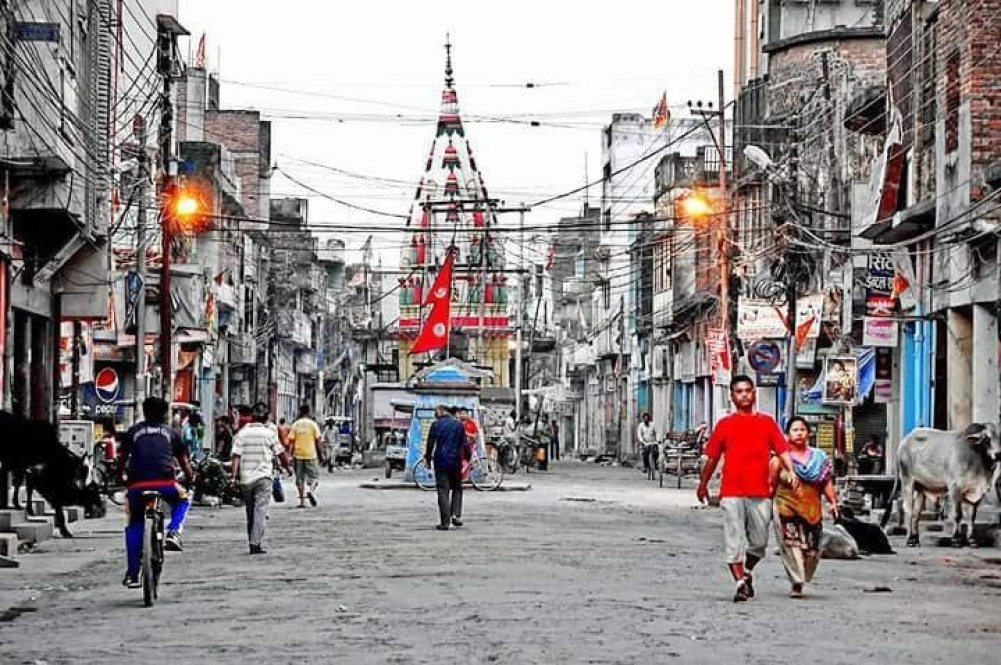
Tribhuvan Chowk represents tradition, history, and public consciousness. Dhamboji Chowk signals modernity, development, and the future.
We use Google Cloud Translation Services. Google requires we provide the following disclaimer relating to use of this service:
This service may contain translations powered by Google. Google disclaims all warranties related to the translations, expressed or implied, including any warranties of accuracy, reliability, and any implied warranties of merchantability, fitness for a particular purpose, and noninfringement.
The two important squares that are considered the heart of Nepalgunj city are Tribhuvan Chowk and Dhamboji Chowk. Both of these squares are not just a junction of transportation - they are also the heartbeat of social, economic and cultural life. The hustle and bustle here, the movement of people, the excitement of shops and the pace of time have always kept these places alive.
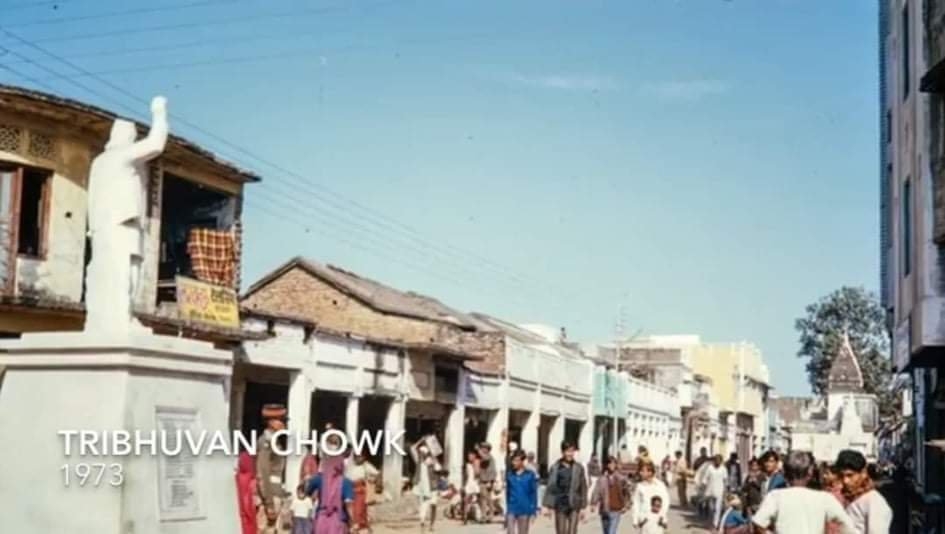
Tribhuvan Chowk, which is often known as the 'central point' of Nepalgunj, is the junction of history and the present. When Nepalgunj city was built, this square was called 'Naka Chowk'. At that time, there was a four-story house in the middle of the square, on the upper floor of which the customs contractor used to collect customs duties on imports and exports. That is why it was named 'Naka Chowk'.
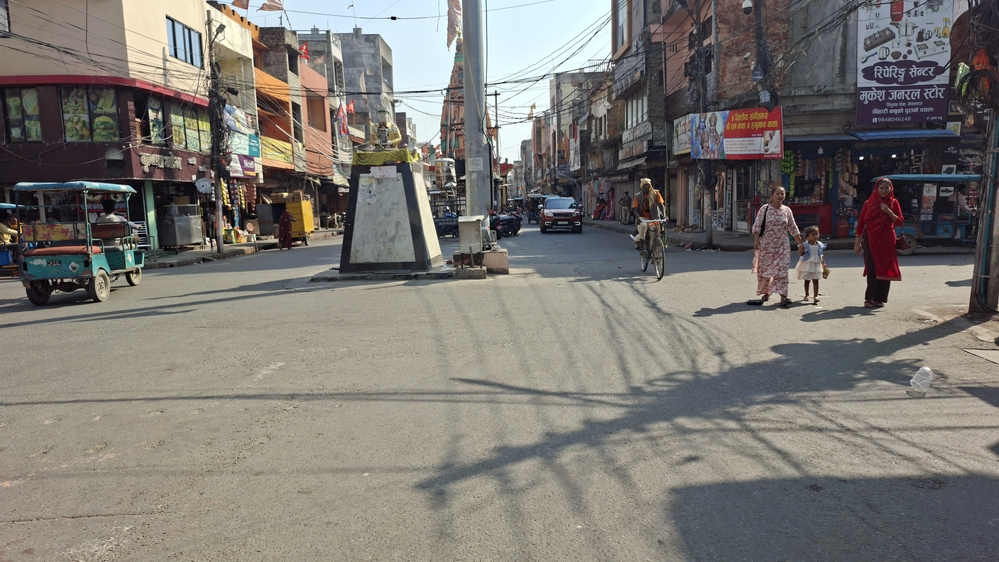
After the house collapsed in the 1990 earthquake, the then Badahakim Tarksha Bikram Rana erected a statue of Juddhashamsher Rana at that place. After that, it was called ‘Juddha Chowk’. After the Nagar Panchayat demolished the statue of Juddhashamsher in 2015 and built a traffic post there, it was simply called ‘Chowk Bazaar’. And, later, after the statue of the former King of Nepal, Tribhuvan Bir Bikram Shah, was erected, it was named ‘Tribhuvan Chowk’. King Tribhuvan, who played an important role in Nepal’s democratic movement, was named Tribhuvan Chowk because it has a statue of him.
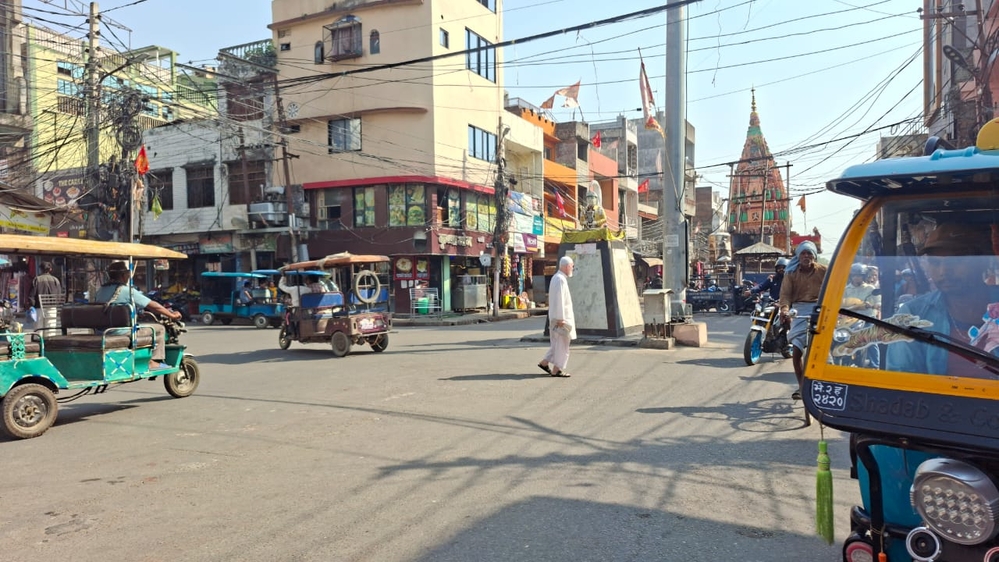
Standing in this chowk, you can feel the smell of history. Since the roads spread all around connect different parts of the city, there is always a rush of vehicles here. From morning to evening, commercial activity here is very busy - clothing stores, electronics, food and small businesses have made this area lively.
Tribhuvan Chowk is not only a commercial center, but also a major place for social gatherings. People come here to meet, chat and exchange stories of daily life. This place is also considered very sensitive and important from a political point of view. Various movements, rallies and meetings have started from here. It has become a symbol of the city's consciousness and people's movement.
000
On the other hand, Dhamboji Chowk is also an equally important and busy area. This chowk was built with the expansion of Nepalgunj. This chowk has special importance as it is the postal highway to Gulariya to the west, the Ratna Highway to Surkhet to the north and the road to India to the south. It is a place that carries the signs of modernity and development. There are large commercial buildings, banks and financial institutions and various service centers here. Dhamboji Chowk seems to attract the younger generation in particular - cafes, restaurants and modern shops have made it a meeting place for the new generation.
Dhamboji Chowk is characterized by its systematic structure and expansion. The road structure, traffic management, new buildings and high-quality hotels and restaurants here have made this chowk systematic and attractive. This chowk is an indicator of the city's economic development, where new investments and businesses are flourishing. The daily economic transactions here are strengthening the overall economy of Nepalgunj.
The relationship between these two chowks is also interesting. Tribhuvan Chowk represents tradition, history and public awareness, while Dhamboji Chowk indicates modernity, development and the future. Both chowks complement each other - one holds the roots of the city, while the other is leading it towards the future.
These squares are also important from a cultural point of view. During festivals, special decorations are made here, and the markets become even more bustling. During festivals like Dashain, Tihar, and Holi, these places look brighter and more colorful. The enthusiasm, joy, and togetherness of the people are clearly visible here.
Tribhuvan Chowk and Dhamboji Chowk are the heartbeat of Nepalgunj. The imagination of the city is incomplete without these places. The life, pace, and diversity here identify Nepalgunj as a living, dynamic, and developed city. Despite changes over time, the importance of these squares will never diminish. This is where the story of the city begins and here a new story is born.