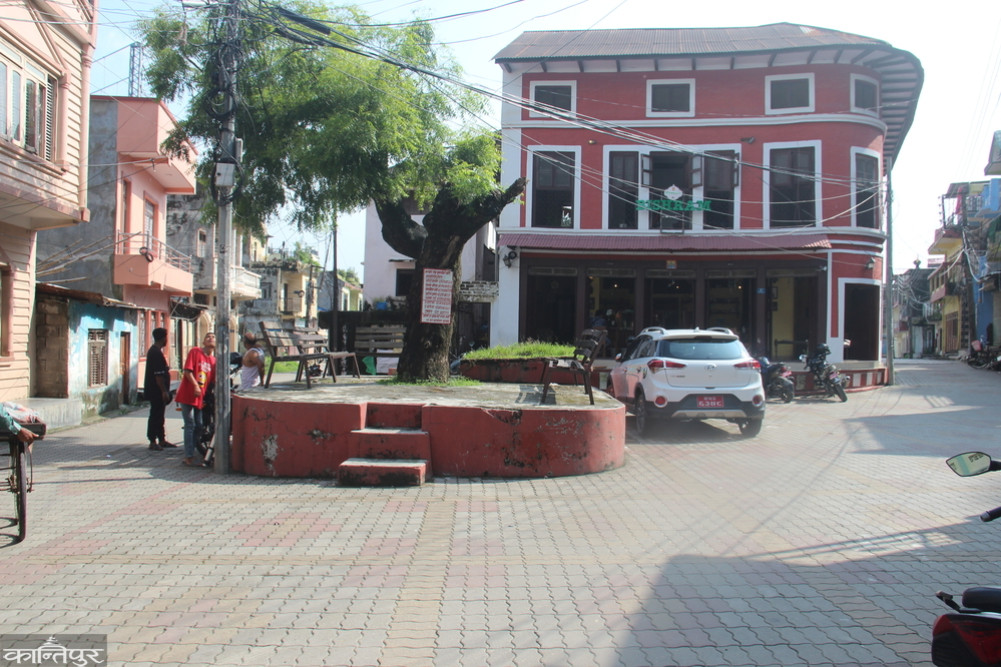
The new generation is forgetting the old Batauli and Khasyauli, Traffic Chowk, Milan Chowk, and the intersections, and is growing brightly at Buddha and Devkota Chowk in Bhairahawa.
We use Google Cloud Translation Services. Google requires we provide the following disclaimer relating to use of this service:
This service may contain translations powered by Google. Google disclaims all warranties related to the translations, expressed or implied, including any warranties of accuracy, reliability, and any implied warranties of merchantability, fitness for a particular purpose, and noninfringement.
The present-day Traffic Chowk and Milan Chowk of Butwal are similar in name to the Kadam Chowk and Nim Chowk of old Batauli. In 1762/63 B.S., Palpali King Mani Mukund Sen brought the Kasaudhans from Kashmir who were going to trade and settled them in the Kadam Chowk of Batauli. The Batauli trade that those Kasaudhans started in Kadam Chowk is continuously expanding by adding more chowks in various places in Butwal. The Kadam Chowk and Nim Chowk, which carry history, are now in decline. The Traffic Chowk, Milan Chowk, which was expanded later, is becoming more and more vibrant, reaching Buddha and Devkota Chowk of Bhairahawa.
Indian traders of the Kasaudhan clan used to build huts in the two chowks of old Batauli and buy ghee, ginger, turmeric, herbs, yam, sugarcane, millet, corn, as well as marijuana and hashish from the mountains. Instead, they sold salt, sugar, and raw cloth. According to old traders and experts in Batauli, there was a rush in Batauli during the months of Mangsir, Poush, Magh, and Falgun. Since the heat starts from Falgun, people from the hills were afraid to go down to the Terai, saying that they would get 'aul' in Madhesh. The heat that started in Chaitra lasted until Jestha. Farming had to be done in the hills during Asar, Shrawan, Bhadau, and Asoj. The river would rise and it would be difficult to walk.
According to 87-year-old Sitaram Gautam, who has been living in the old Batauli Kadam Chowk for eight generations, his ancestor Chandrashamsher brought him from Deukhuri in Dang to make a 'Lalmohariya' and perform Jajmani (worship) at his home. It was the custom for kings to give land to their associates and worshippers and affix a red seal. The Sitarams' courtship continues even today in Batauli and Butwal.
According to Babu Churamani..................., when they came, there were only 4/5 houses from Kadam Chowk to Nim Chowk. Now both the chowks are full of houses. The Neem tree is still there in Nim Chowk. People who came from the mountains to buy salt and oil used to spend the night under the trees in the same Nim and Kadam Chowk. They used to burn neem leaves to keep away mosquitoes in the summer.
They used to set up huts in these two chowks and trade in gold and salt from Lhasa to ghee and herbs from the mountains. People coming from Palpa, Syangja, Gulmi, and Parbat used to descend to Kadam Chowk via the hills of Nuwakot. The ghee brought in tin containers from the mountains was bought by the Kasaudhans and Marwaris who set up huts. Two mana of ghee was available for dry money. Up to 10 mana of ghee was brought in a tin. Up to 150 people used to trade ghee in a day at Nim Chowk and Kadam Chowk. ‘That is why Nim Chowk and Kadam Chowk are the main history of Batauli,’ says Sitaram, ‘The current generation has forgotten all these, and only remembers Butwal’s traffic and Milan Chowk.’ He suggests that the municipality should take the initiative to preserve the identity and history of old Batauli.
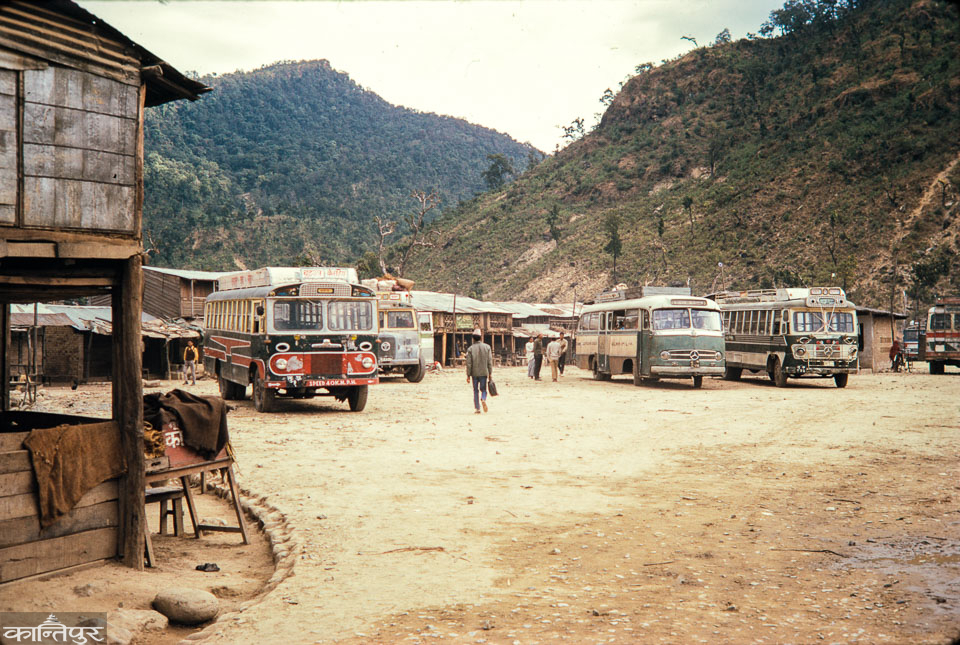
According to historian and former deputy chief of Butwal Sub-metropolitan City Bimal Bahadur Shakya, Batauli was different until 150 years ago. There were crowds of people coming from the mountains to buy salt and oil. The banks of Tinau, ‘Khasyuli’, were deserted. After the river stopped flowing, it became a bog. The track of the Butwal-Palpa road was opened in 2020. In 2022, the Butwal-Narayangadh and Butwal-Kohalpur roads were constructed. Soon after, the construction of the Siddhartha Highway and the East-West Highway began. Houses started being built around the road towards Khasyuli. Land started being bought. Batauli was narrow. Instead, traders started choosing the wider place Khasyuli.
In 2028 BS, the then Butwal Khasyuli Nagar Panchayat was shifted from Batauli to Khasyuli. Khasyuli started to flourish due to the road and local body offices, while Batauli dried up. Khasyuli started to be called Butwal. After that, Butwal became the commercial center of the country. Vehicles going to Palpa, Nepalgunj, Kathmandu and Sunauli started leaving from the center of Butwal. After the construction of the road, the number of vehicles increased. Around 2032, a bus park was built to the northeast of the current traffic intersection. That is why, since vehicles from all directions would leave from the same place and those arriving would stop there, that place started to be called traffic intersection.
Traffic intersection was in the center until 20 years ago due to adequate vehicle facilities, a meeting point for political parties, a large crowd of people for businessmen, and a hall for moviegoers. Now its appearance has changed somewhat. Now, traffic intersection is also popular among the young generation for its tea and coffee corner in the evening.
Naresh Pandey, who runs a tea shop and restaurant near traffic intersection, said that traffic intersection is popular for the new generation as a meeting point for tea and coffee. ‘As we heard, it also has an old history,’ he said, ‘in recent years, we opened a tea shop as it became a center of choice for the young generation.’ He said that this chowk is also getting priority due to the ‘cooker coffee’ brewed on a cart near the Siddhartha Highway at the traffic intersection in the evening.
Milan Chowk became after the traffic intersection. After that, Butwal Bazaar, which developed through the intersection, is now connected to Devkota Chowk in Bhairahawa via Manigram Chowk in Tilottama Municipality. According to 76-year-old former deputy chief Bimal Bahadur Shakya, after 2036 BS, there was a steady stream of people migrating from the hills to Butwal. As the number of people coming to Butwal for business and a happy life increased, Butwal grew rapidly. Settlements increased towards the traffic intersection and Butwal Technical Institute (BTI) area. Markets and markets started operating. Gradually, the settlement expanded to Nepalgunj Road, Hospital Line, Milan Chowk, and Chauraha.
By 2046 BS, the settlement had developed to Sukkanagar, Deepnagar, Devinagar, and Kalikanagar. After the people's movement of 2062/63, the settlement had reached Bhairahawa via Yogikuti, Janakinagar, Shankarnagar, Manigram, and Bhalwari. Discussions are currently underway to connect Butwal, Tilottama, and Siddharth Nagar in Bhairahawa, where settlement is developing rapidly, to form a metropolis.
00
Photo caption:
1. Neem tree at Neem Chowk in the middle of Old Batauli of Butwal Sub-metropolitan City-2. Kadam Chowk is 100 meters north of the 150-year-old Neem Chowk. Photo: Ghanshyam Gautam/Kantipur
2. Traffic Chowk in Butwal. This Chowk is famous for its convenience of vehicles as well as cooker coffee and tea shops. Photo: Ghanshyam Gautam/Kantipur