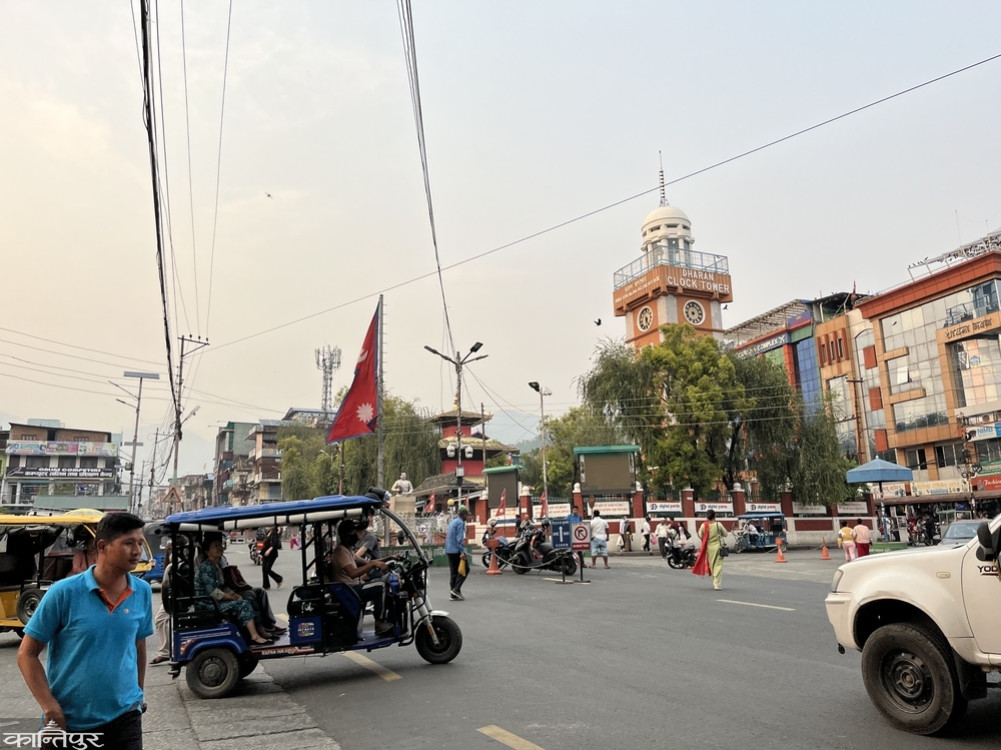
Bhanu Chowk is not just a square. It is the heartbeat of Dharan. Where time passes, people flow, and stories are born. Standing in the middle of this square is the clock tower, a powerful symbol of Dharan's identity.
We use Google Cloud Translation Services. Google requires we provide the following disclaimer relating to use of this service:
This service may contain translations powered by Google. Google disclaims all warranties related to the translations, expressed or implied, including any warranties of accuracy, reliability, and any implied warranties of merchantability, fitness for a particular purpose, and noninfringement.
Known as the beautiful city of eastern Nepal, Dharan is a vibrant city nestled at the confluence of the hills and the Terai. No map, statistics or government documents are enough to understand any city closely. To feel the city up close, you have to stand in its squares. And, in the case of Dharan, Bhanu Chowk is one such place where the city starts speaking for itself when you stand there.
Bhanu Chowk is not just a square. It is the heartbeat of Dharan. Where time passes, people flow and stories are born. Although the clock tower standing in the middle of this square looks like a simple structure from the outside, it is actually a powerful symbol of Dharan's identity. When standing next to the clock tower, travelers not only feel the time but also the meaning of their journey. Some are moving towards a new destination from here, while others are returning with old memories.
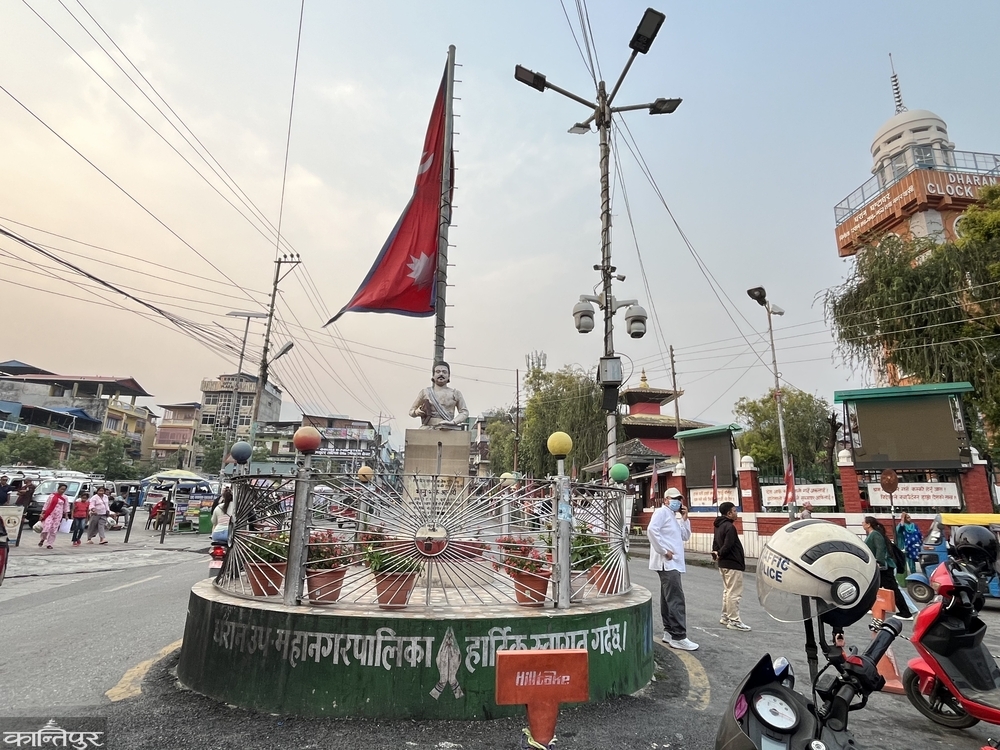
Bhanu Chowk, the main market of Dharan, is not only the backbone of the economy but also a ‘transition point’ for most travelers reaching Dharan. For those heading towards the eastern hills, the ascent begins from here, while for those descending from the hills, this chowk serves as the gateway to the Terai. It is the first meeting place not only for the residents of Dharan, but also for travelers coming from outside.
Bhanu Chowk is also a center of public opinion. Not only politicians, but also ordinary citizens make their views, demands and dissatisfaction public here. This chowk is not only a place for exchanging information but also a common platform to raise their voices against injustice.
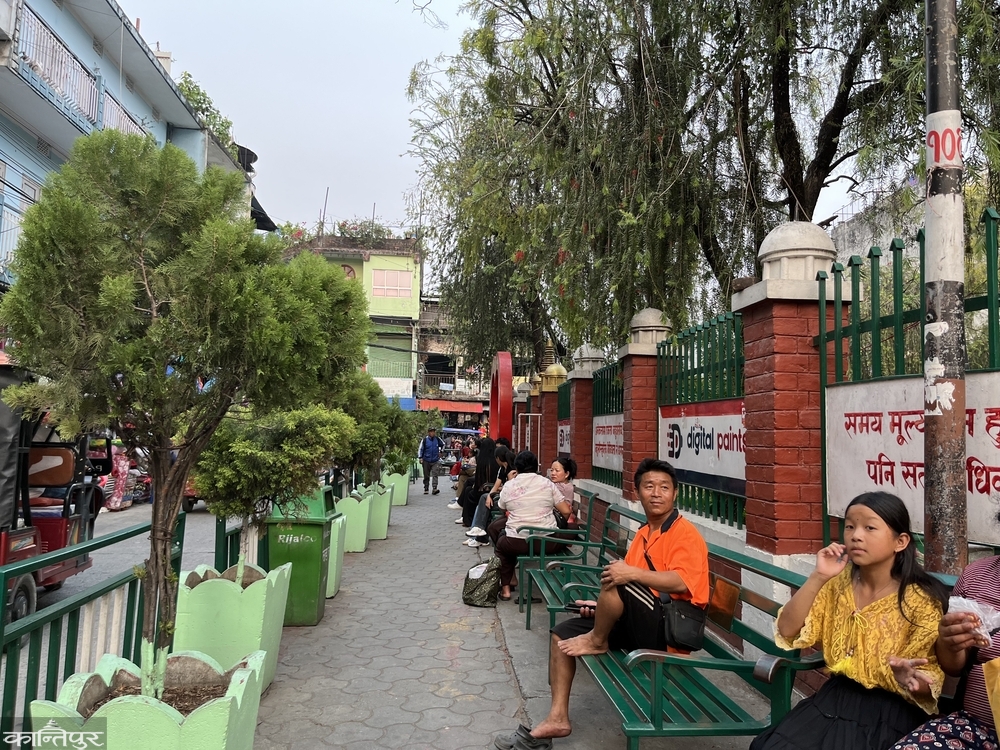
There is heavy movement of people here from morning to evening. From small cart shops to modern showrooms, all types of commercial activities are operating here. With clothes, electronics, daily necessities, hotels and restaurants all available in one place, this chowk has become the first choice of local and foreign customers. For traders, this place is a center of opportunity, while for consumers, it has become a center of convenience and diversity.
‘When you live here, you know the news of the whole country,’ says 65-year-old local Khagendra Bhandari. Every morning, he stops at Bhanu Chowk while taking a morning walk and starts his day with a sip of tea there. He says, ‘Before the digital era, people used to gather here in the morning,’ he recalls, ‘From a venue for newspaper connoisseurs to read daily newspapers while having tea, Bhanu Chowk was the main chowk for chatting and meeting.’
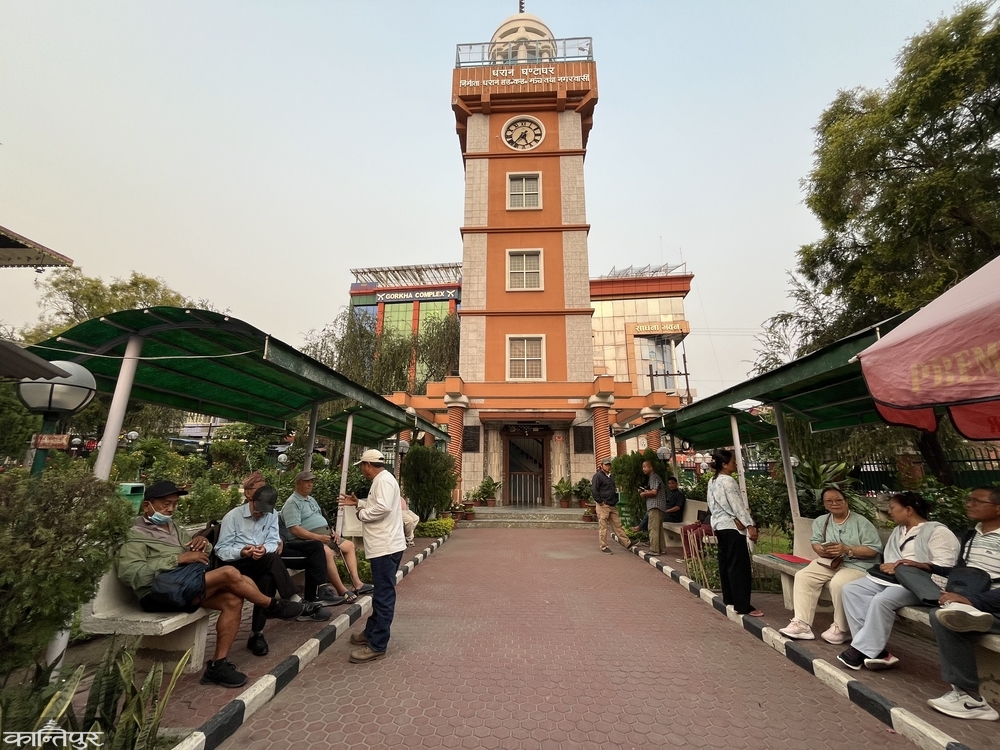
As the afternoon progresses, the chowk changes its appearance. Business activity intensifies. The hustle and bustle of tourists visiting the clock tower, the crowd of customers in the shops, the rush of vehicles, the people sleeping heavily in the square there, and the rush of people walking in a hurry, all combine to make Bhanu Chowk a busy scene.
But after dusk, Bhanu Chowk is transformed again. The city looks more lively in the light of the lights. After dusk, the night market begins. The stalls placed in the Bhanu Chowk premises, where delicious street food and clothing shops are available at cheap prices, are crowded with people.
The biggest feature of Bhanu Chowk is its inclusive character. People from all classes are found here. Not only tourists who come to visit here, but also people struggling to make ends meet. One of them is Meena Pariyar. Her daily life is spent sewing clothes. She says, ‘I live here all day, earning my living here.’ For her, this square is not just a place to work, but also a basis for living.
Dharan gained rapid development after the establishment of the British Gurkha Recruitment Center in 2010. After that, the population increased here, trade flourished, and infrastructure development accelerated.
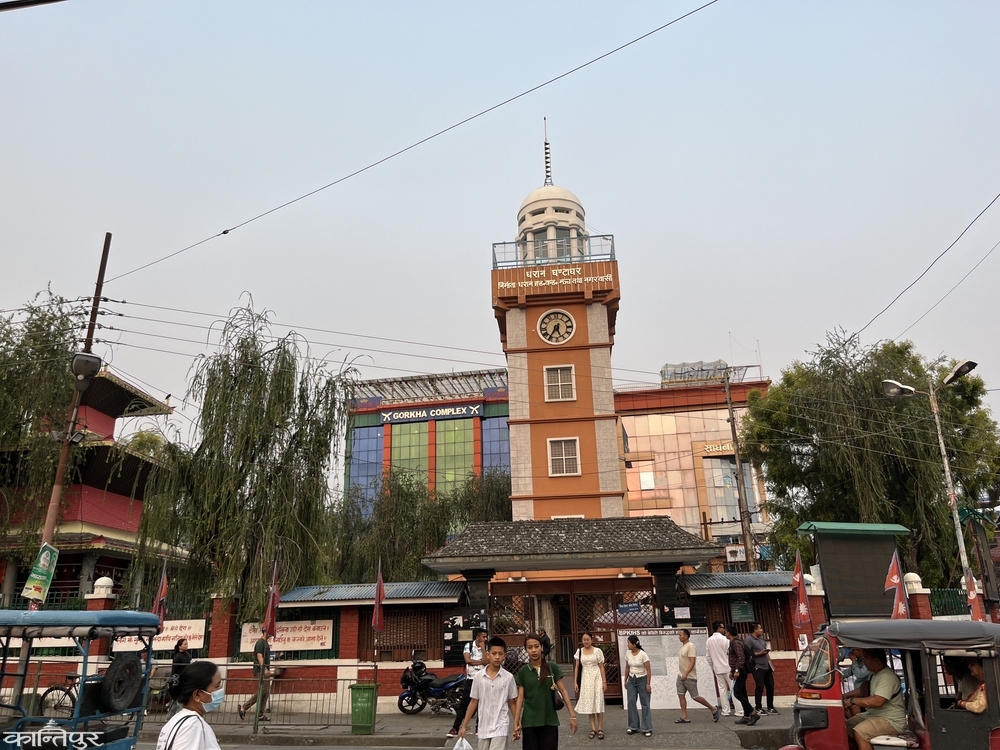
During this change, Bhanu Chowk developed as the center of the city. Where trade, transportation, and social life were concentrated in one place. The square is named in honor of Bhanubhakta Acharya, the first poet of Nepali literature, who has also given this place a cultural identity.
The five-story, 76.5-foot-tall clock tower, designed after the clock tower in Hong Kong, is not just a government project. It is a structure built with the investment of Dharan immigrants and Dharan residents living in Hong Kong and Macau. It has been officially opened to tourists since 20 Poush 2062. And today, Bhanu Chowk has become the main attraction.
Local Anuj Bhujel said that more than 5,000 tourists visit here every day. He said that there is a record of 28,000 tourists visiting the clock tower in a day. The ticket to enter the clock tower is 20 rupees per person and 30 rupees to climb the clock tower. An earthquake memorial has been built in the clock tower premises in memory of those who lost their lives in the earthquake of 5 Bhadra 2045. The earthquake caused great loss of life and property across the country. At that time, 116 people in the Dharan city area died. 1,500 people were injured. An earthquake memorial has been built in their memory.