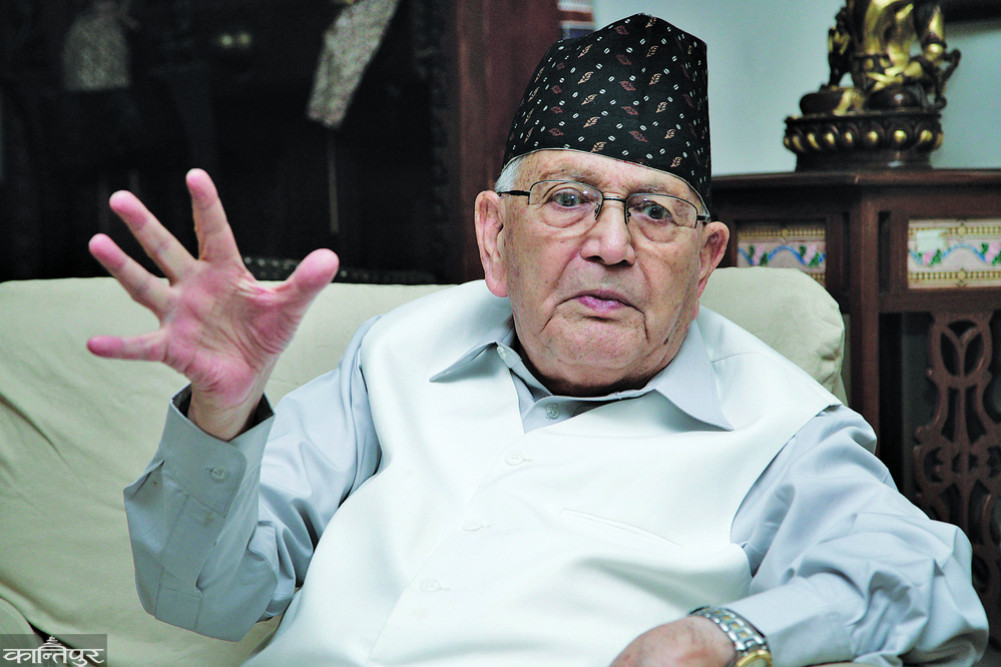
While in the prime minister's chair, Thapa had a habit of seeking the informal prior consent of the palace for every decision and, in Singha Durbar, showing that the Narayanhiti palace had no role in those decisions. Other prime ministers would say, 'Does the palace accept it or not?' But Thapa would never point to the palace.
We use Google Cloud Translation Services. Google requires we provide the following disclaimer relating to use of this service:
This service may contain translations powered by Google. Google disclaims all warranties related to the translations, expressed or implied, including any warranties of accuracy, reliability, and any implied warranties of merchantability, fitness for a particular purpose, and noninfringement.
इतिहासकै शक्तिशाली जनमतसहित वालेन्द्र शाह प्रधानमन्त्री बनेको तीन साता पुगेको छ । प्रधानमन्त्रीका रूपमा उनको भूमिका कस्तो रहनेछ ? उनलाई इतिहासले कसरी सम्झिन्छ ? अहिल्यै आकलन गर्नु हतारो हुनेछ । नेपालको राजनीतिक इतिहासमा ४० जना प्रधानमन्त्री भइसकेका छन् । तीमध्ये कतिपयलाई निरन्तर सम्झना गरिन्छ । कतिपय भने गुमनाम जस्तै छन्, औपचारिक सन्दर्भभन्दा बाहेक चर्चा गरिँदैनन् । ‘कोसेली’ ले केही प्रधानमन्त्रीको कार्यकाल सम्झना गरेको छ । ‘कान्तिपुर’ को सम्पादकीय समूहले पदमा रहँदा निर्वाह गरेको भूमिका र सार्वजनिक विमर्शमा नाम आइरहने १२ पात्र छनोट गरेको छ । उनीहरूको पदावधिको चर्चा गर्दा नेपालको मूलभूत शासकीय प्रवृत्ति उजागर हुनेछ भन्ने हाम्रो विश्वास छ ।
Surya Bahadur Thapa is a character who has been in the Prime Minister's chair during the Panchayat period and the parliamentary period, even during the direct rule of King Gyanendra Shah.
The then King Mahendra Shah dissolved the parliament on 1 Poush 2017, overthrew the elected government, and took power 12 days later, announcing the Council of Ministers. Surya Bahadur Thapa's name was registered as the fourth-ranking minister in that Council of Ministers. Thapa was after Dr. Tulsi Giri, Bishwabandhu Thapa, and Hrishikesh Shah in the ranking of ministers. Thapa, who rose to become a minister in this way, served as the Vice-Chairman of the Council of Ministers and the Chairman of the Council of Ministers, and served as the Prime Minister's chair 6 times. Thapa succeeded in making the government prosperous.
In the early days of the Panchayat, Dr. Giri, Bishwabandhu Thapa and Surya Bahadur Thapa are the ones who baked the bread of the non-party Panchayat system in the 'three-legged Odan' of King Mahendra.
King Mahendra himself was the Chairman of the Council of Ministers while laying the foundation of the Panchayat system. But on 20 Chaitra 2019, he stepped down as the Chairman of the Council of Ministers and Giri took over, while Surya Bahadur Thapa became the Vice-Chairman. Bishwabandhu Thapa became the Chairman of the National Panchayat.
King Mahendra and Dr. A 'political difference of opinion' emerged between King Mahendra and Dr. Giri. Then on 12 Magh 2021, Dr. Giri resigned from the position of Vice-Chairman of the Council of Ministers. Then, Surya Bahadur got that chair. When he was 37 years old.
After the two characters of the initial triangular power of the Panchayat period left, Surya Bahadur became the lone perpetrator. But the court was 'grooming' Kirtinidhi Bista as his competitor.
The first amendment to the Panchayat constitution was made on 14 Magh 2023. At the same time, the post of 'Chairman of the Council of Ministers' was abolished from the constitution, and the post of Prime Minister was retained. With the amendment to the constitution, Thapa automatically became the Prime Minister, and Bista became the Deputy Prime Minister.
Thapa's relationship with the court and his ability to 'manipulate' with the increase and decrease of political power became the formula for success in reaching and holding the 'Prime Minister's chair'. He did not hesitate to pay any price to reach and maintain power, even forming his own strong faction within the Panchayat.
The initiators of the Panchayat, Vishwabandhu Thapa and Dr. Giri, did not know the court and did not understand the court's tactics. But Thapa, who understood power and politics, had the strategic knowledge of how to avoid courtiers. In those days, those who did not understand the 'technical aspects' were unlikely to remain in office.
Thapa had moved to Kathmandu from Dhankuta to study as a child, and due to his relationship, he was able to stay in the court of Juddhashamsher's son Dhruvshamsher. In other words, he got the opportunity to understand and see the powerful Rana rulers and the court at a young age.
Thapa used to know who to treat and how to treat. He also had the ability to 'manipulate' the government. Sometimes he could use money and sometimes double-meaning language to keep the situation under control. He had the ability to change with the 'political wave', he did not have the inertia like the other five leaders. That is why those who knew him closely used to call him a 'principled' person.
In the early days, he sent his fellow travelers Vishwabandhu and Dr. Giri to jail, to keep them away from the palace. On 30 Baisakh 2024, he arrested Vishwabandhu at midnight under the 'Public Safety Act', that too while King Mahendra was on a foreign tour. On the other hand, Dr. Giri was arrested in Janakpur in the first week of Baisakh 2025 and imprisoned in Mahottari jail. With this, Suryabahadu Thapa sent a message, 'No one remains a friend forever in politics.'
While the initial phase was going well, King Mahendra asked Thapa in Chaitra 2025, without any specific reason, 'Will you step down as Prime Minister?'. With the king's order, he announced his resignation through Radio Nepal, on 20 Chaitra 2025. After resigning, he remained the 'do-it-yourself' Prime Minister for five days. That chair went to Kirtinidhi Bista.
In fact, King Mahendra had shown a written evaluation shortly before resigning. In Thapa's own words, 'In the evaluation written in English, Surya Bahadur Thapa is a supporter of the monarchy, while Kirtinidhi Bista is a democrat.' That is, Surya Bahadur was a royalist, Kirtinidhi Bista a democrat.'
In fact, King Mahendra loved Thapa very much. King Mahendra arranged for his house in Kathmandu. At that time, the King had provided five hundred thousand rupees to help him with the construction of the house and land.
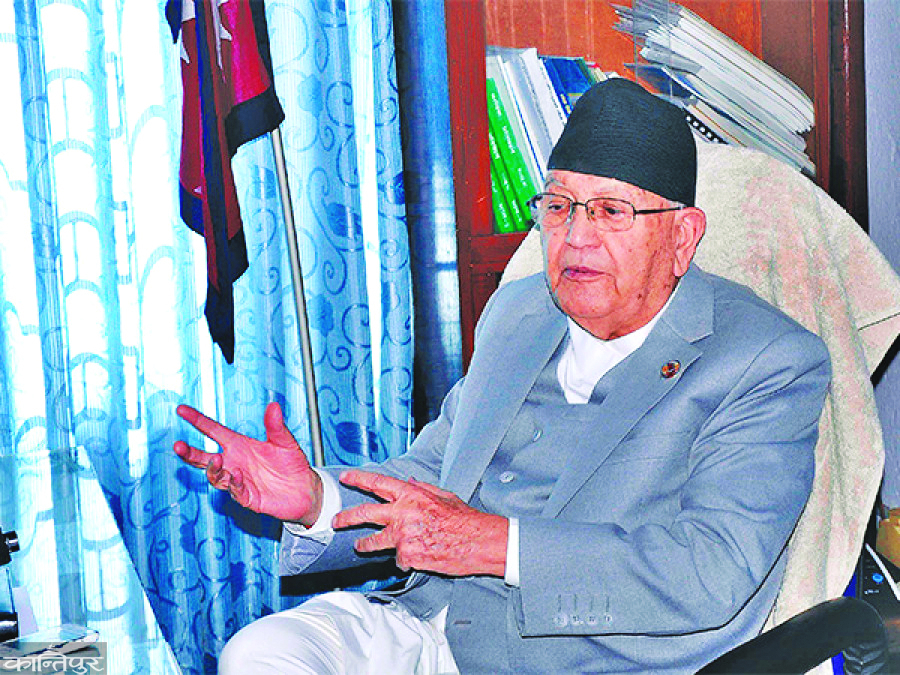 Thapa believed that the role of the 'liberal faction' that had grown up within the panchayat was responsible for the King's removal of him from the Prime Ministership. The Panchayats were not digesting the role he played in freeing Congress leaders BP Koirala-Ganeshaman Singh, who have been in jail for eight years. He concluded that he was removed after creating an atmosphere that the Panchayats would rebel while Thapa remained in office.
There are those who say that Bista was promoted by pushing Thapa aside to 'settle diplomatic relations' with the neighbors. Because China was irritated with the 'Ramailo Mela Scandal' that occurred in Asad 2024. There are also those who say that Bista was considered close to China, and that he was made the Prime Minister.
When Thapa reached the end of the Prime Minister's chair, he started advocating the 'liberal trend' within the Panchayat. Of course, Thapa's early politics began with the Congress. But he did not stay in the Congress for long.
On the other hand, Dr. Giri was such a character, who, whether in office or not, indulged in the 'liberal trend'. To this extent, Dr. Giri was even called the 'mother of the Panchayati system'.
Distance from King Birendra and 'dual rule'
After Thapa was thrown out of office as Prime Minister, he was gradually becoming a 'rebellious character of the Panchayati system'. When King Mahendra passed away, his son Birendra did not have Thapa's 'snowflake'.
As soon as the new King Birendra came to power, Thapa made 13 demands to the government on 31 Baisakh 2029, which included demands such as prohibiting the employees of the Royal Palace and Singha Durbar from getting involved in politics and immediately ending the dual rule.
With the arrival of the new king, a 'powerful bureaucracy' was established in the Narayanhiti Palace, and those employees began to rule the Singha Durbar. Thapa did not like the court secretary and the liberal panchayats. Analyzing the same scene, Thapa used the term ‘dual rule.’ That term was very popular in the thirties.
Even when Thapa tried to meet the new king, he was stopped. After that, Thapa gradually became a political corner meeting not only for the demand but also against the ruling system. On 29th Shrawan 2029, he held a political meeting in Itumbahal, where he said, ‘The country is in a state of crisis.’ The lack of a government responsible for the people is the root cause of this situation.’
Thapa’s speech was not considered ‘legitimate’ for the panchayat system. That night, those who spoke at the meeting, including him, were arrested, when Bista was the Prime Minister. Thapa was arrested on Bista’s orders on charges of raising questions against the system. He spent 14 months in jail. He even went on a hunger strike to death in prison.
Bista had told this columnist on 2 Bhadra 2070, ‘I am not like Surya Bahadur Thapa, I am only interested in the positions and status given by the court. The king also gave me positions, Dr. Giri was also appointed by the king, and Surya Bahadur Thapa too. If there is a multi-party system, then it is said that the people did it. Not by the mandate of the people, we are under the king’s favor. How can you say that the king did it even when you see it? How can you say that it was under my power?’
Thapa’s turmoil outside power continued. But he did not get a position. When the crisis against the Panchayat system arose with the movement of 2035-036, the court needed a person to resolve the crisis. Birendra found his own father's diary, where it was written, 'If the court system is in trouble, use Surya Bahadur Thapa.'
To avert the crisis, King Birendra not only announced a referendum but also made Thapa the Prime Minister on 10 Jestha 2036, forcing Kirtinidhi Bista to resign. Thapa returned to the Prime Minister's chair after 11 years.
The court would make an 'internal assessment' of the characters to be used, from politicians to administrators to yogis. A personal file would be created in the court. He would not hesitate to use himself in the court, from the Yogi to the Yogi. Former Chief Secretary Rewatiraman Khanal, who had a great influence in the court, had made the court's 'personal assessment' list public through a memoir after the end of the monarchy. It was written about Thapa, 'He understands the court, is skilled, and is also clever in his own matters.'
Thapa had returned to the Prime Minister's chair as a 'character from the history of economics'. He left the Panchayat victorious in the referendum. He left no stone unturned to win the 'reformed Panchayat' by waging a nationwide jihad against multi-party politics, and four lakh more votes were cast in favor of the Panchayat than the multi-party politics.
At that time, the forest was finished, and the melody of 'Green Forest is the Wealth of Nepal' became melodious. The Ministry of Commerce was opened to businessmen in the name of election donations. From snake skins to peacock feathers, they were smuggled. The game of budget manipulation was played for the elections. Unable to bear that game, the then Finance Secretary Devendra Raj Pandey left. Thapa was accused of making the Panchayat system victorious by grossly misusing the state machinery.
The image of the 'new Jung Bahadur'
After winning the Panchayat, Thapa's 'high-high' was inevitable for some time . People started saying within the Panchayat that 'if we are allowed to move forward at this pace, Surya Bahadur will become Jung Bahadur .'
Thapa had said, 'The court felt that my influence had reached the people . It started to appear in the pages of the newspapers – the new Jung Bahadur has emerged, Surya Bahadur . By showing such scenes, he has also adorned the king . What has happened to the king is that there is some doubt as to whether this Surya Bahadur is working with other ideas .'
In that background, in Asad 2040, a game of no-confidence motion was played against Thapa, with the court weaving a web against him . The king wanted Thapa to resign along with the motion . However, Thapa took a stand, ‘I don’t want to run away from Jaskela since I entered the Prime Minister’s chair through the main door.’ King Birendra did not understand ‘Jaskela’, which had to be translated as ‘back-door’.
What was his motivation after the Narayanhiti palace was attacked? On 27 Asad 2040, he defended the accusations against him against the no-confidence motion. When the word ‘Bharadar’ was introduced to indicate that the palace was attacked against him, the same ‘Bharadari group’ later turned into an ‘underground gang’.
In fact, in Thapa’s case, the analysis used to be that he is a person who is adept at ‘confronting’, ‘taking revenge’ and ‘changing the guard’ in politics.
The ‘underground gang’ that Thapa mentioned was aimed at the courtiers and the players of the power they protected. But he did not reveal the names of the gang members. This columnist had asked the same former Prime Minister Thapa on 22 Shrawan 2070, ‘Who were the members of the underground gang?’
Thapa’s reply was, ‘Look, everyone knew who and where the characters in the Kathmandu valley, like a bowl, were operating from, how they were benefiting from. The characters of the gang kept changing. A ‘system’ of the underground gang had been formed.’
Thapa, an expert in using the bureaucracy, used the bureaucracy well when he was in the Prime Minister’s chair. He would get information from the whereabouts of employees to their relatives. Thapa would listen to their words well to get close to the employees. If he had to talk to a high-level employee about something ‘confidential’, he would call them at 5 in the morning. When they arrived in the morning, Thapa would still be studying the file.
He would take a ‘briefing’ with the secretaries of the ministry. He would read every proposal presented to the Council of Ministers word for word. Thapa’s ‘preparation’ was intensive. Instead, ministers would attend the Council of Ministers without studying the proposal. Some ministers would even open the ‘unread’ files in front of the Chief Secretary in the Council of Ministers meeting, which were files sent for in-depth study.
Most of the Council of Ministers meetings were held at the Prime Minister’s residence in Baluwatar, while Thapa held them at a formal venue inside the Singha Durbar. In the words of the former Panchas, he would make it seem like ‘he was doing something even though he was not doing anything.’ In other words, the gesture of the ‘man of action’ became his governing habit.
Former administrators say that Thapa was made by work. नत्र त्यत्रो बुद्धि भएका हृषिकेश शाह प्रारम्भमै ढले । डा. गिरी ज्यादै विलासी–अल्छी भएकै कुर्सीमा टिकेनन्, नत्र त्यति ‘सार्प’ बुद्धि भएका डा. गिरीजस्ता मानिस ज्यादै कम मानिस हुन्छन् । तिनीहरू उँभो नलाग्नुमा अल्छी र सौखिन हुनु हो ।
पञ्चायतको खरो आलोचक बन्ने क्रमसँगै त्यो व्यवस्थाको उत्तरार्द्धताका थापा ‘उदारवादी धार’ को नेता कहलिन पुगे । पञ्चहरूकै टिप्पणी हुन्थ्यो– ‘पदमा रहेको सूर्यबहादुरभन्दा पद बाहिरको सूर्यबहादुर खतरनाक हुन्छ ।’
अनि अर्को, थापा शक्तिशाली मानिस पट्याउन माहिर थिए । जब राजा महेन्द्र २०१३ मा पूर्वी नेपालको भ्रमण गर्दै धनकुटा पुगेका थिए । थापाले काठमाडौंबाटै मानिस लगी आकर्षक स्वागतद्वार–मञ्च बनाएका थिए । त्यतिमात्र होइन कि ‘डमरु’ (बाघको बच्चा) उपहार दिँदै राजासँग परिचय गर्ने अवसर मिलाएका थिए । त्यही ‘परिचय’सँगै दरबारसँग निकटता बढाउँदै १ पुस २०१७ को राजा महेन्द्रको भाषणको ‘मस्यौदा’ कोर्न पुगे । सँगै शासकीय यात्रामा हिँडेका थिए ।
२०३६ मा प्रयोग गरेजसरी नै राजा वीरेन्द्रले चैत २०४६ मा जनआन्दोलन उत्कर्षमा पुग्नै लाग्दा पनि थापालाई प्रयोग गर्न खोजेका थिए । जब राजा वीरेन्द्रलाई प्रधानमन्त्री मरीचमान सिंहबाट काम हुँदैन भन्ने लाग्यो, तब पूर्वप्रधानमन्त्री र राष्ट्रिय पञ्चायतका पूर्वअध्यक्षको भेला गराए ।
त्यहाँ थापालाई प्रधानमन्त्री बन्न निर्देशन दिए । तर थापाले ‘समय घर्किसकेको’ ठान्दै आफू बाहिरै रहेर सहयोग गर्ने जवाफ दिए । अर्थात् ‘आपत्शास्त्रका पात्र’ थापा त्यतिखेर प्रयोग हुन चाहेनन् । केही दिनपछि ‘दलमाथिको प्रतिबन्ध’ हटाउँदै बहुदलीय व्यवस्था लागू गर्न राजा वीरेन्द्र बाध्य भए ।
 बहुदलीयकालमा फेरि प्रधानमन्त्री
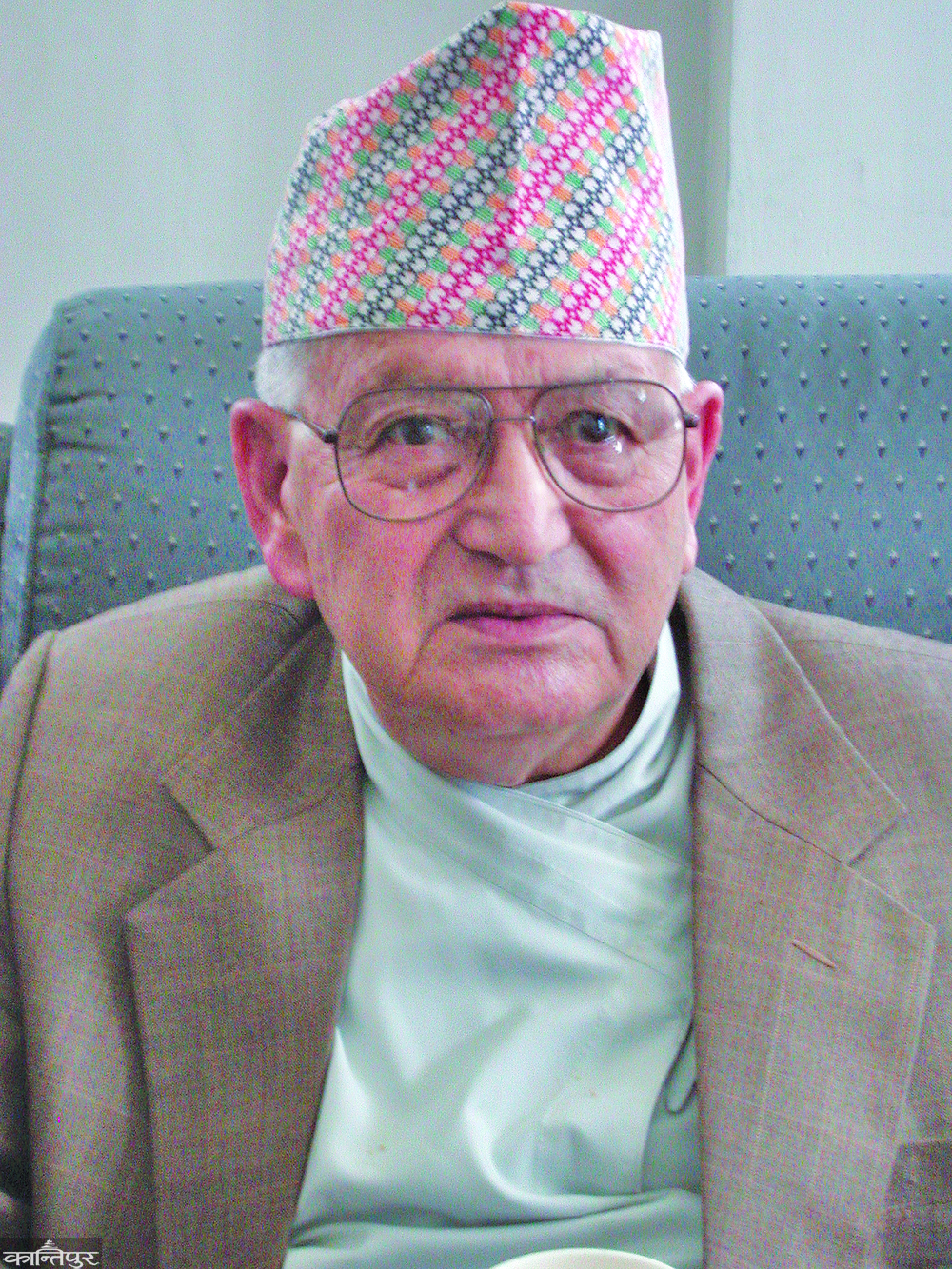
थापा पञ्चायतमा मात्र होइन, बहुदलीयकालमा असोज २०५४ मा छोटो समयका लागि भए पनि प्रधानमन्त्री भए । उनले आफूलाई १४ वर्षअघि प्रधानमन्त्रीबाट हटाउन ‘अभियान’ चलाउने पशुपतिशमशेर जबरा र प्रकाशचन्द्र लोहनी प्रयोग गर्दै ‘पुराना शत्रु’ लोकन्द्रबहादुर चन्दलाई पाखा लगाउँदै प्रधानमन्त्री बने, कांग्रेसलाई पछि लगाउँदै ।
जेठ २०५८ मा राजा वीरेन्द्रको वंशनाश भयो । जेठ २०५९ मा शेरबहादुर देउवालाई प्रयोग गर्दै प्रतिनिधिसभा विघटन गराएसँगै राजा ज्ञानेन्द्र शक्तिशाली भए । उनी राजनीतिक दलहरूलाई पाखा लगाउँदै पुराना पञ्चहरू प्रयोगको मोहमा लहसिए, सुशासनकै नारा दिँदै । राजा ज्ञानेन्द्र मनोनीत प्रधानमन्त्री–मन्त्री बनाउँदै गए, २५ असोज २०५९ मा लोकेन्द्रबहादुर चन्दलाई प्रधानमन्त्री बनाए ।
चन्दबाट चाहना पूरा नभएपछि २८ जेठ २०६० मा थापालाई प्रधानमन्त्री नियुक्ति गरे । संसदीय व्यवस्थालाई धरापमा पार्दै अनुकूल यात्रामा हिँडेका तत्कालीन राजा ज्ञानेन्द्रले चुनाव गराउन नसक्ने स्थिति देखेपछि दरबारकै मूल्यांकनअनुरूप ‘आपत्शास्त्रका पात्र’ थापा प्रयोग भएका थिए, जतिखेर उनी ७६ वर्षे वृद्ध उमेरमा थिए ।
तर जब थापाले संवैधानिक परिषद्बाट सिफारिस गराउँदै संवैधानिक निकायमा नियुक्तिको सिफारिस गरे । उनको सिफारिसलाई महिनौंसम्म कार्यान्वयन नगरी दरबारले थन्कायो । त्यसपछि असन्तुष्टि बढ्यो । त्यसो त, ती नियुक्तिमा सिफारिसपूर्व नै उनले राजासँग व्यापक परामर्श गरेका थिए । ‘गो अहेड’ आदेश पाएसँगै संवैधानिक परिषद्बाट सिफारिस गराएका थिए ।
प्रधानमन्त्रीको कुर्सीमा रहँदा थापाको बानी थियो– हरेक निर्णयमा दरबारको अनौपचारिक पूर्वसहमति लिने अनि सिंहदरबारमा चाहिँ ती निर्णयमा नारायणहिटी दरबारको कुनै भूमिका नरहेको देखाउने । अरू प्रधानमन्त्री भन्ने गर्थे, ‘दरबारले मान्छ कि मान्दैन ?’ तर थापा दरबारतिर कहिल्यै संकेत गर्दैनथे ।
दरबारले आफ्ना सिफारिस कार्यान्वयन नगर्ने, दुःख दिने चालबाजी बुझेपछि वैशाख २०६१ मा थापाले राजीनामा दिए ।
धेरैले चाहिँ भारतसँग राजा ज्ञानेन्द्रको ‘कुरा बिग्रिएकाले’ थापालाई ‘सुधार’ का निम्ति प्रयोग गर्न चाहेको रूपमा अर्थ्याउँछन् । नेपालको शासकीय राजनीतिमा थापालाई भारत नजिक र कीर्तिनिधि विष्टलाई चीन नजिकका नेताका रूपमा अर्थ्याइने पुरानै कथा थियो ।
थापा गणतन्त्रकालमा पनि सक्रिय मात्र रहेनन् कि, २०७० मा ज्येष्ठ सदस्यका हैसियतमा नवनिर्वाचित संविधानसभा सदस्यहरूलाई शपथ खुवाउन भ्याए । त्यसो त, थापा २०१५ सालमा पनि ‘सल्लाहकारसभा’का निर्वाचित अध्यक्ष थिए ।
अर्थात्, सल्लाहकारसभाको अध्यक्षबाट राजनीतिक यात्रा सुरु गरेका थापा संविधानसभासम्म आइपुगे । राजनीतिक वृत्त र परिदृश्यमा थापा ६० वर्षसम्म अनवरत सक्रिय रहे । वैशाख २०७२ मा ८८ वर्षको उमेरमा निधन हुँदै गर्दा पनि थापा संविधानसभा सदस्य थिए । अर्थात्, उनी सदाबहार शक्तिका खेलाडी बने, प्रधानमन्त्रीका कुर्सीमा हुँदा या नहुँदा ।