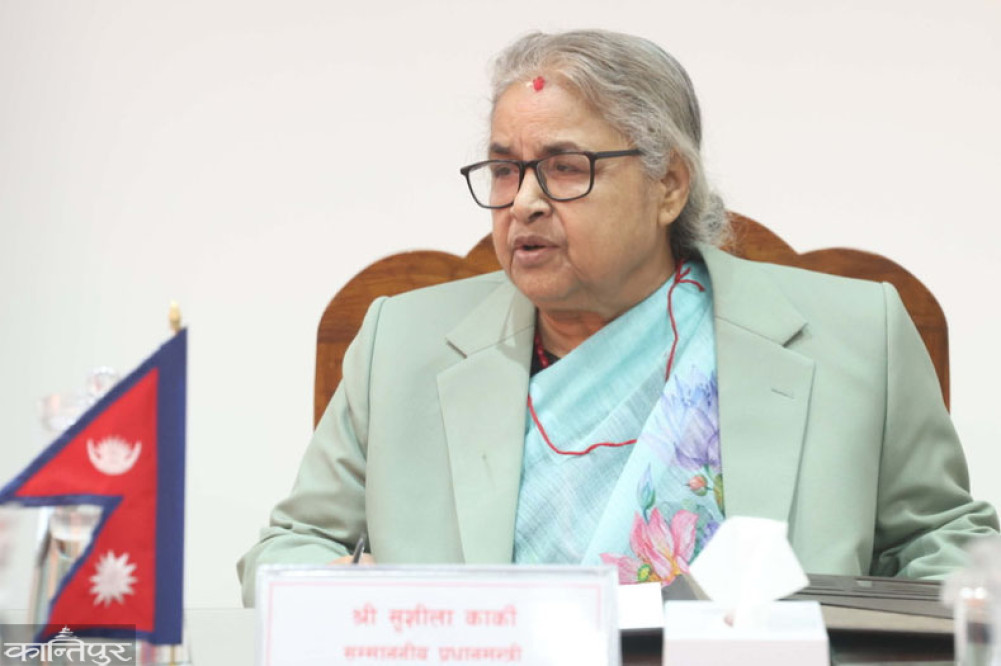
Sushila Karki, who played the role of a 'firefighter' while the country was burning, extinguished the fire and saved the system. But just as she was supposed to clear away the smoke and ashes and lay the foundation for a new and clean Nepal, she ended up drowning in the old and murky waters of traditional politics.
We use Google Cloud Translation Services. Google requires we provide the following disclaimer relating to use of this service:
This service may contain translations powered by Google. Google disclaims all warranties related to the translations, expressed or implied, including any warranties of accuracy, reliability, and any implied warranties of merchantability, fitness for a particular purpose, and noninfringement.
इतिहासकै शक्तिशाली जनमतसहित वालेन्द्र शाह प्रधानमन्त्री बनेको तीन साता पुगेको छ । प्रधानमन्त्रीका रूपमा उनको भूमिका कस्तो रहनेछ ? उनलाई इतिहासले कसरी सम्झिन्छ ? अहिल्यै आकलन गर्नु हतारो हुनेछ । नेपालको राजनीतिक इतिहासमा ४० जना प्रधानमन्त्री भइसकेका छन् । तीमध्ये कतिपयलाई निरन्तर सम्झना गरिन्छ । कतिपय भने गुमनाम जस्तै छन्, औपचारिक सन्दर्भभन्दा बाहेक चर्चा गरिँदैनन् । ‘कोसेली’ ले केही प्रधानमन्त्रीको कार्यकाल सम्झना गरेको छ । ‘कान्तिपुर’ को सम्पादकीय समूहले पदमा रहँदा निर्वाह गरेको भूमिका र सार्वजनिक विमर्शमा नाम आइरहने १२ पात्र छनोट गरेको छ । उनीहरूको पदावधिको चर्चा गर्दा नेपालको मूलभूत शासकीय प्रवृत्ति उजागर हुनेछ भन्ने हाम्रो विश्वास छ ।
Former Chief Justice Sushila Karki assumed the responsibility of the country's Chief Executive (Prime Minister) amidst an extraordinary, shocking and unusual situation rarely seen in Nepal's political history. The storm that followed the 'Gen-G' movement that took to the streets against extreme disillusionment with political parties, rampant corruption and the arbitrary nature of the state suddenly brought the country to the brink of statelessness.
Sushila Karki, who entered Singha Durbar with the responsibility of returning the constitution and system to 'leak' in such a complex and sensitive transitional period, ended her six-month tenure as a mixture of success and controversy. On the one hand, she successfully conducted the elections, saving the country from a constitutional vacuum, on the other hand, she could not remain different in the matter of good governance and transparency.
000
The Gen-G movement of 23-24 Bhadau toppled the powerful government led by the then Prime Minister KP Sharma Oli, the Prime Minister resigned, and the Parliament was dissolved. This awkward situation led the country to a dangerous turn of serious political leadershiplessness and constitutional vacuum. Finally, with the facilitation and consultation of the Nepali Army, President Ram Chandra Poudel took a bold step. Relying on the provision in Article 61 (4) of the Constitution that ‘the main duty of the President shall be to uphold and protect the Constitution’, President Poudel appointed Sushila Karki as the Prime Minister of the interim government at 11:30 pm on 27 Bhadau.
Karki, who had established a strong image in Nepal’s judicial history by becoming the first female Chief Justice, had the historic good fortune of becoming the country’s first female Prime Minister at that very sensitive and critical moment. She is probably the only special person in Nepal to rise from the highest position in the judiciary to the highest position in the executive.
The three days before Karki became Prime Minister were very exciting and ups and downs. The agitating ‘Gen-G’ was in no position to accept any leader from the traditional political party. They initially wanted an interim government to be formed under the leadership of the then Mayor of Kathmandu Metropolitan City, Balendra Shah. At that time, the ‘Hashtag Now or Never’ campaign went viral on social media, saying that Balendra should be made Prime Minister. However, Shah was not ready to take over the leadership of the Prime Minister only through a mandate from the streets without being elected.
After Balendra refused to take over the leadership, the agitating youth held a virtual discussion on the ‘gaming and chatting’ platform ‘Discord’ throughout the day on 25 Bhadra. A person with an impeccable image was sought to run the country, maintain peace and security, and hold elections. Finally, Gen-G reached an agreement in the name of Karki, who had taken tough steps against corruption while in the judiciary. Based on the same mandate of the youth, Karki took over the command of Singha Durbar on 27 Bhadra.
Karki, who took over the leadership of the executive during the transitional period, was under heavy public expectations. The Gen-G youth, who had come after shedding blood on the streets, had high expectations from her. Their one-point demand was - 'End of corruption and complete good governance.'
Addressing the demands of the seemingly leaderless but technologically connected Gen-G groups and networks by integrating them was a very challenging task in itself. However, Prime Minister Karki succeeded in this task by showing diplomatic ingenuity. On 25 Mangsir, exactly three months after the formation of the government, a 10-point agreement was reached between Prime Minister Karki and representatives of the Gen-G group.
The agreement gave formal recognition to the youth movement by the state. The state expressed its commitment to declare 45 of the 76 youth who lost their lives in the incidents of 23 and 24 Bhadra as 'national martyrs', bear all the medical expenses of the injured, provide appropriate relief to the families of the deceased, and form a high-level commission to conduct an impartial investigation into the incident.
Raksha Bam, a leader of the Gen-G movement, recalls that Prime Minister Karki was very flexible and positive in his agreement with Yuva. 'He would tell us directly that whatever you bring, I will sign it,' says Bam. 'Even though the process through the secretary of the government of Nepal was long and complicated, he listened to us. We did not have to compromise much on the points of good governance and justice that we had put forward.'
 The main mandate of the Karki-led government was to hold elections for a new mandate to revive the dissolved parliament. On the day he took oath as Prime Minister, President Poudel announced the election of the House of Representatives for 21 Falgun on his mandate. However, when he assumed the responsibility of the Prime Minister, many political analysts and 'intellectual circles' had expressed doubts. Their analysis was, 'There will be no elections at the appointed time, now the country will be under the control of the army or a non-political government for a long time like Bangladesh. The country has now been pushed into a deep crisis.'
There were solid reasons behind such a disappointing analysis. The main reason was the intense anger and non-cooperation of the established political parties. Especially, taking the CPN-UML, which was leading the government before Karki came to power, to the elections was a challenge like 'chewing on an iron jaw'. UML Chairman KP Sharma Oli himself had called that interim government 'unconstitutional' and 'puppet'. Oli had made very unnatural and strong comments in public regarding Karki's appointment.
Balancing the ‘tush’ of the parties on one side and the aggressive aspirations of the agitating youth on the other – it was a test for Karki to hold the elections on time by striking a balance between these two extremist trends.
However, Prime Minister Karki proved all doubts and pessimistic analyses wrong. She successfully conducted the elections to the House of Representatives on the scheduled date, i.e. on 21 Falgun. Her greatest victory was to hold the elections peacefully, overcoming the administration devastated by the destruction, the collapsed economy and the extreme dissatisfaction of the parties.
This election changed the political map of the country. The National Independent Party (RSVP) became the first party to win the most seats in the election. After that, Sushila Karki left Singha Durbar on 13 Chaitra, handing over the responsibility of the Prime Minister to senior RSVP leader Balendra Shah.
000
Karki's diplomatic skills and stance are commendable, says Gen-G leader Bam. 'He was a very diplomatic and balanced person. I found his diplomatic style of getting everyone to agree and reach an agreement very powerful,' says Bam. 'His working style was such that he would not leave anyone without a job. Because of that firm nature, he made the elections successful on time and brought the country through the crisis.'
Gen-G leader and central member of the Rashtriya Swayamsevak Sangh (RSS) Pradeep Gyawali also argues that the Karki government has been successful. 'I consider Sushila Karki's tenure as objectively successful. In the challenging political situation following the 23-24 Bhadau uprising, she made the trust placed in her by our generation worthwhile through firmness, impartiality and protection of institutional dignity,' Gyawali said.
000
Another positive aspect of the six-month government led by Karki is its proactivity during natural disasters. The role played by the government in the unexpected and devastating floods and landslides that hit eastern and central Nepal in October was highly appreciated by the public. While previous governments tended to remain silent spectators even after disasters struck, the Karki government took very effective initiatives in disseminating flood warnings.
However, Karki's six-month government seriously failed on the issue of good governance. Although he succeeded in bringing a completely 'derailed' constitutional process back to normal, Prime Minister Karki's six-month tenure could not remain free from controversy in terms of good governance, transparency and decision-making. Having established himself as a fearless justice in the past while in the judiciary, he could not address the main demands of 'Gen-G' to maintain good governance and end corruption during his tenure after entering Baluwatar. Some controversial decisions and appointments have put a black mark on his golden image.
She, who had won widespread praise for holding the elections on time, was criticized for her decisions on the eve of her departure. In a cabinet meeting held on 1 Chaitra, she recommended her own cabinet minister, Home Minister Om Prakash Aryal, for a position of national assembly. However, the President blocked that recommendation. It was a serious error in political ethics to recommend herself or a member of her own cabinet to a position of profit.
Not only that, in the same meeting, she nominated her own chief personal secretary, Adarsh Kumar Shrestha, to a prestigious position like the chairman of the National Nature Conservation Trust. Karki, who was receiving praise for these conflicting decisions, suddenly faced severe criticism from the public.
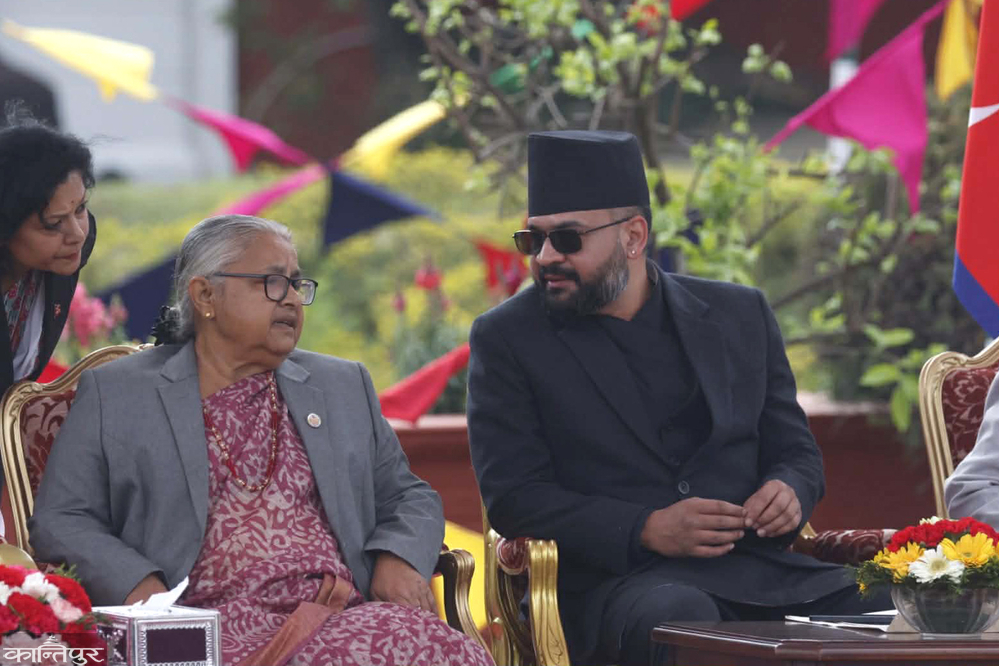 The Prime Minister's Secretariat became the center of even more controversy. Personal secretary Shrestha abused his power and got his own wife a lucrative appointment as a joint secretary. When Karki failed to stop this, he was accused of being caught in the trap of nepotism and favoritism. After this arbitrary decision, young advisors Gyawali and Aakriti Ghimire, who were working in the secretariat at that time, resigned from their posts expressing dissatisfaction.
‘We believed that we should stand by our principles of rebellion even on issues related to appointments raised within the secretariat. We publicly raised questions about Shrestha giving priority to people close to him and giving appointments to the secretariat,’ Gyawali, who resigned, told ‘Kantipur’, ‘That is why we had to separate from the secretariat.’ It may not make much sense whether we are in the secretariat or not, but the issue of good governance we raise in such a difficult situation will definitely make a difference in the long run.’
Karki’s series of controversies did not stop there. The government was heavily criticized by civil society for withdrawing the serious criminal charges related to the much-discussed 'egg smuggling' through the Attorney General and protecting international traffickers. It is considered mysterious that such a serious crime was acquitted during Karki's tenure, who is considered a champion of justice.
In addition, serious allegations were made against her that the government did not take any concrete steps towards making public the report of the inquiry commission formed into the killings and repression during the Bhadau movement and implementing its recommendations.
'He did many things he said he would do.' However, some things were beyond his scope of work, so he could not do them,' says Bam, 'He successfully conducted the election, but if that investigation report had been formally made public and the culprits brought to justice, his tenure would have been even more excellent and historic.'
Another Gen-G leader Arnab Chaudhary also says that he is very disappointed that the Karki-led government, instead of laying the foundation for good governance, has continued traditional nepotism and failed to make the report public on time. 'Honorable Prime Minister Sushila Karki has completed the main task with which she came. She brought the constitution into line,' says Chaudhary, 'But, the appointments made during her tenure have continued nepotism and favoritism.' If the report of the inquiry commission prepared under his direction had been made public during his tenure, a new practice of ending impunity in Nepal could have begun, which did not happen.
In addition, serious questions have been raised about the good governance aspect of his tenure, as legal immunity was granted to those involved in arson and vandalism incidents during the movement, the Prime Minister and ministers who advocated transparency did not disclose their assets, and the government remained silent on some financial irregularities.
When the country was burning, 'firefighter' Sushila Karki put out the fire and saved the system. However, just as she was supposed to clear the smoke and ashes and lay a new and clean foundation, she ended up plunging into the old and murky waters of traditional politics. History will remember Karki as a successful 'crisis solver'. However, the controversial Prime Minister will continue to be evaluated for failing to realize the dream of 'Gen-G' to fully establish good governance.