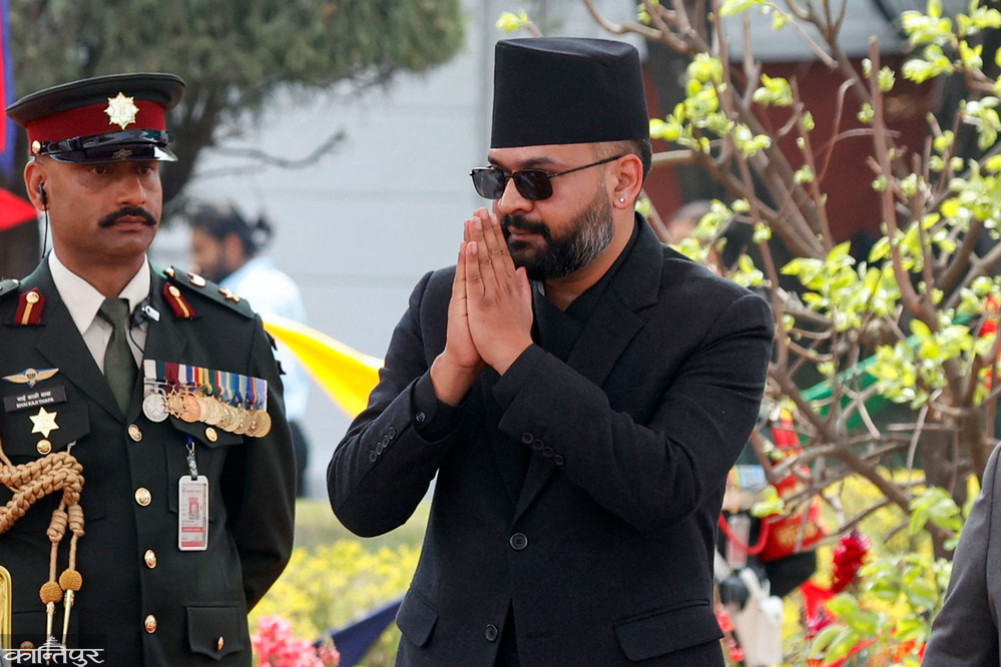
In the past, Balendra Shah had directly called the leader a 'thief' in a rap titled 'Balidan' and accused him of looting the country. He had even written a status on social media saying 'New, old, all are thieves'. In such a situation, what kind of Prime Minister will he present himself as? Only the future will tell.
We use Google Cloud Translation Services. Google requires we provide the following disclaimer relating to use of this service:
This service may contain translations powered by Google. Google disclaims all warranties related to the translations, expressed or implied, including any warranties of accuracy, reliability, and any implied warranties of merchantability, fitness for a particular purpose, and noninfringement.
इतिहासकै शक्तिशाली जनमतसहित वालेन्द्र शाह प्रधानमन्त्री बनेको तीन साता पुगेको छ । प्रधानमन्त्रीका रूपमा उनको भूमिका कस्तो रहनेछ ? उनलाई इतिहासले कसरी सम्झिन्छ ? अहिल्यै आकलन गर्नु हतारो हुनेछ । नेपालको राजनीतिक इतिहासमा ४० जना प्रधानमन्त्री भइसकेका छन् । तीमध्ये कतिपयलाई निरन्तर सम्झना गरिन्छ । कतिपय भने गुमनाम जस्तै छन्, औपचारिक सन्दर्भभन्दा बाहेक चर्चा गरिँदैनन् । ‘कोसेली’ ले केही प्रधानमन्त्रीको कार्यकाल सम्झना गरेको छ । ‘कान्तिपुर’ को सम्पादकीय समूहले पदमा रहँदा निर्वाह गरेको भूमिका र सार्वजनिक विमर्शमा नाम आइरहने १२ पात्र छनोट गरेको छ । उनीहरूको पदावधिको चर्चा गर्दा नेपालको मूलभूत शासकीय प्रवृत्ति उजागर हुनेछ भन्ने हाम्रो विश्वास छ ।
Many people have the opinion that Balendra Shah, who did not speak at all in the first parliament session after being elected as the Prime Minister, is not very interested in dialogue. He is trying to create the image of an ‘action-oriented’ prime minister. Even before becoming the prime minister, he did not give long speeches and discussions like other leaders.
He did not give any interviews to any media outlets during the election campaign, but spoke for a total of 27 minutes while touring the country from Koshi to the Far West. That too, in complete contrast to the traditional style. Balendra did not make any big promises or political jargon, but spoke about the local agenda.
Prime Minister Balendra, who did not speak in parliament, is having a series of conversations with MPs, Chief Ministers and other leaders representing various provinces at the ‘Office of the Prime Minister and Council of Ministers’ in Singha Durbar. Through such meetings, Balendra is trying to send a message that he listens to everyone.
He continues to keep a brief conversation with everyone, listening to the problems and agenda of his area. Bagmati Province Chief Minister Indra Bahadur Baniya, who returned from meeting Balendra last Thursday, says, ‘Others said that they do not open their glasses, and after opening their glasses, it was a very long three-hour conversation. What was heard was not seen, what was seen was discussed in a very cordial atmosphere.’
Saying that the conversation with Balendra was simple and easy, he said, ‘We talked about cooperation, coordination and coexistence between the three levels of government.’ We also discussed the problems of the province targeting this financial year.’ After listening to the Chief Minister, Prime Minister Balendra said, ‘We will immediately start working through a common mechanism to solve every difficulty between the Union and the provinces, loosening the policy knots.’
Before that, the Prime Minister had held separate discussions with the proportional representation and the MPs of each province. Jhapa MP Shambhu Prasad Dhakal, who is also the leader of the Rastriya Swatantra Party (RSWP), says, ‘He listened to everyone about the immediate problems in his area and expressed his commitment to addressing them.’
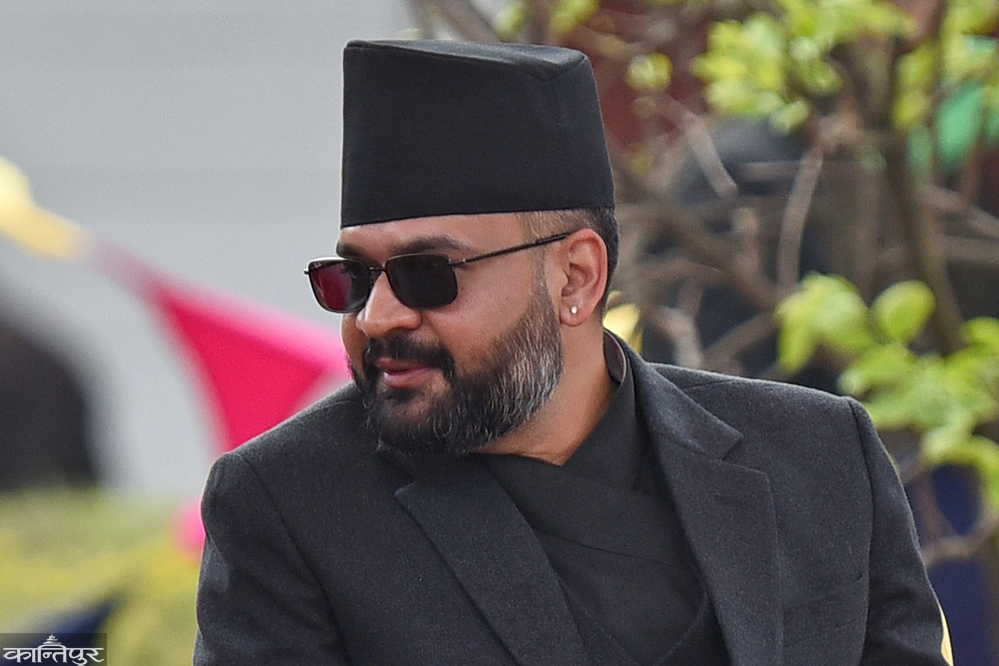 In the past, prime ministers used to rule from the government residence in Baluwatar. They would also hold party meetings there, and the cabinet meetings would be held there. However, Balendra is ruling from the Prime Minister’s Office in Singha Durbar. Although earlier prime ministers used to be busy with inaugurations and meeting cadres from the beginning, this has not been the case with Balendra. Almost a month after becoming Prime Minister, Balendra has only attended a program to confer ‘commissioner’ posts on officer cadet training at the Military Training Academy in Kharipati, Bhaktapur. After reaching Kharipati, he awarded the best officers and cadets with khukuri and cane.
In the past, prime ministers used to meet ambassadors of various countries alone, most of which did not even include a representative of the Ministry of Foreign Affairs. There is a history of even the head of the foreign intelligence agency 'RAW' reaching the Prime Minister's official residence in Baluwatar at night. However, Balendra has met all the ambassadors in Kathmandu collectively, on 25 Chaitra. Foreign Minister Shishir Khanal was also present at that meeting.
Balendra has also made a separate agenda to work on in 100 days. He has also made an 18-point national commitment letter, including the good issues in the manifestos of other parties. In the pledge letter, he wrote, 'I will prepare a national commitment by synthesizing the manifestos, pledges and implementable issues included in the pledges of all political parties participating in the elections and establish common ownership of the government in it.' In the process, he brought this commitment by including the election promises of the Rashtriya Swayamsevak Sangh (RSS), Congress, UML, NCP, Shram Sankrit (Labour and Culture) and RPP.
‘The way he is communicating with the MPs and Chief Ministers of each region along with his national commitment, it seems that he is working in such a way that no one thinks of this government as a government of only one party,’ says MP Dhakal. Even in a brief speech given during the election campaign, he had said that if they won, ‘Congress will also build a road for walking, UML will also build a road for walking.’
Before the 2079 BS local level elections, he had prioritized giving interviews to the media for publicity. His public statements also helped in his victory. At that time, along with traditional ones, he had prioritized new media for publicity.
However, in the elections held on 21 Falgun under different circumstances after the Gen-G movement, he did not take the policy of talking to the media like before. He quietly reached Jhapa Constituency No. 5 and challenged former Prime Minister KP Sharma Oli. In the constituency where he was elected 5 times, Oli was defeated by 49,614 votes. While UML Chairman Oli got 18,734 votes, Balendra got 68,348 votes.
He entered the National Independent Party (RSWP) and entered the election with himself as the prime ministerial candidate and Rabi Lamichhane as the party president. After this collaboration between Rabi and Balen, the RSWP won about a two-thirds majority. He became the prime minister on 13 Chaitra immediately after being elected as the leader of the parliamentary party.
The first cabinet meeting itself decided to implement the report of the Gauri Bahadur Karki-led commission formed to investigate the 23 and 24 Bhadra protests. Balendra had also pressed for action against those who had repressed the 23 Bhadra protests even when the government was led by Sushila Karki.
He even called the state's repression of the movement 'terrorism' at that time. On the morning of 14 Chaitra, former Prime Minister Oli and his government's Home Minister Ramesh Lekhak were arrested. However, they were released from custody 13 days later after a court order. Since then, Balendra has been trying to send a message of zero tolerance for good governance. He has even formed a commission to investigate the assets of leaders and ministers who have held public positions since 2046.
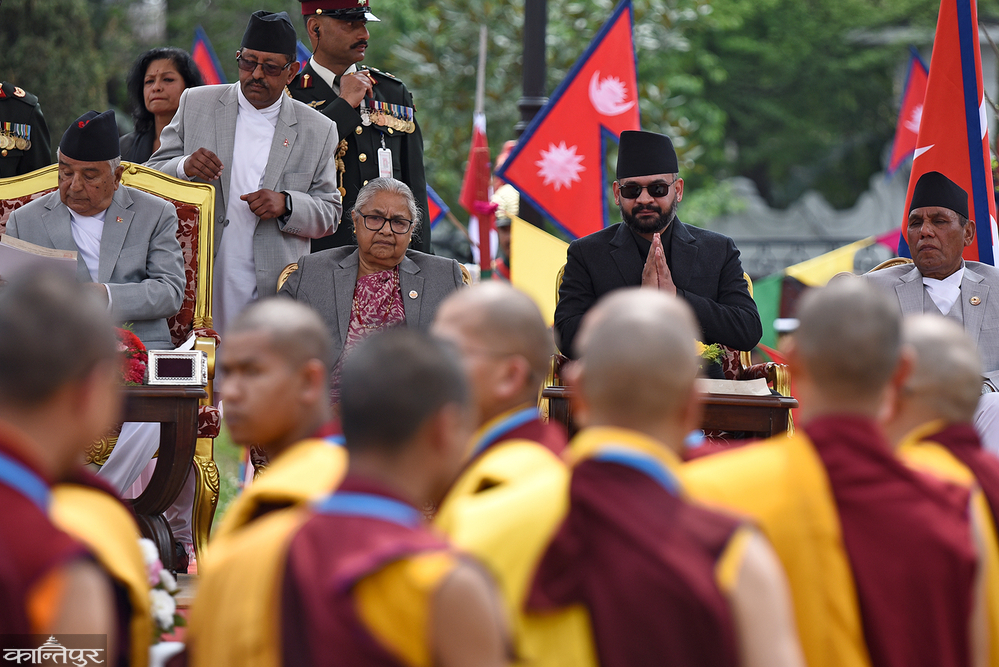 However, Balendra seems harsh on the issue of transparency. Journalists have been restricted from entering the Office of the Prime Minister and Council of Ministers. One day, media persons even expressed symbolic protest by clapping outside the office. Even Balendra's chosen Home Minister Sudhan Gurung seems to be rude to the media. Before entering politics, the Balendra-led government arrested Mohan Pokharel, a young man from Panchthar, for a video he made on social media, including songs like 'Malai Boln De Sarkar'. However, after criticism, the police released him to his family the next day.
On Thursday evening, Home Minister Sudhan Gurung, while talking to media persons at Singha Durbar, expressed the view that the media should be regulated. 'Even if you file a complaint, there is a penalty of only 10,000, so we have to think about how to improve it,' he said, 'Ba.. should we add two 0s after it?'
Balendra is known in the world of rap from 'Raw Barge' started by rapper Yama Buddha. He had been continuing rap along with engineering. However, when he worked on reconstruction work after the earthquake in 2072 BS, he realized the weaknesses in the country's governance structure. Then he started saying that educated youth like him should come forward for the development of the country.
‘The work I did in Panchkhal, Kavre during the earthquake was also my master’s thesis. At that time, I got the opportunity to study who did a good job and who did not do a good job in municipalities across the country,’ he had said. After that, he had made up his mind to work as the mayor of Kathmandu Metropolitan City. That is why he did not vote in the first local level election held in 2074 BS after the promulgation of the constitution. He wrote on Facebook on 21 Baisakh 2074 BS that he did not see any worthy candidate to vote for, ‘I will vote next time and I will vote for myself, I know how to develop the country.’
He had said that he ‘knows how to build the country’ as he was pursuing a bachelor’s degree in civil engineering and a master’s degree in structural engineering. Later, in the 2079 BS election, he was elected mayor of Kathmandu Metropolitan City as an independent candidate. After becoming mayor, he initially did not plan to enter parliamentary politics. However, amid the constant obstruction of the work of the metropolis by the then Prime Minister KP Sharma Oli and the different situation created after the Gen-G movement, he decided to join the Rashtriya Swayamsevak Sangh (RSS).
In the past, in a rap titled ‘Balidan’ he had written, he had directly accused the leader of looting the country by calling him a ‘thief’. He had once written a status on social media saying, ‘New and old, all are thieves.’ In such a situation, only the future will tell what kind of Prime Minister he will portray himself as.
However, reviewing the work done by Balendra for a month, leader Milan Pandey, who is also the former president of the Bibeksheel Sajha Party, says, ‘So far, it seems that he has tried to strengthen the structure more than the party or any team. The work done till date is of a kind that inspires hope.’