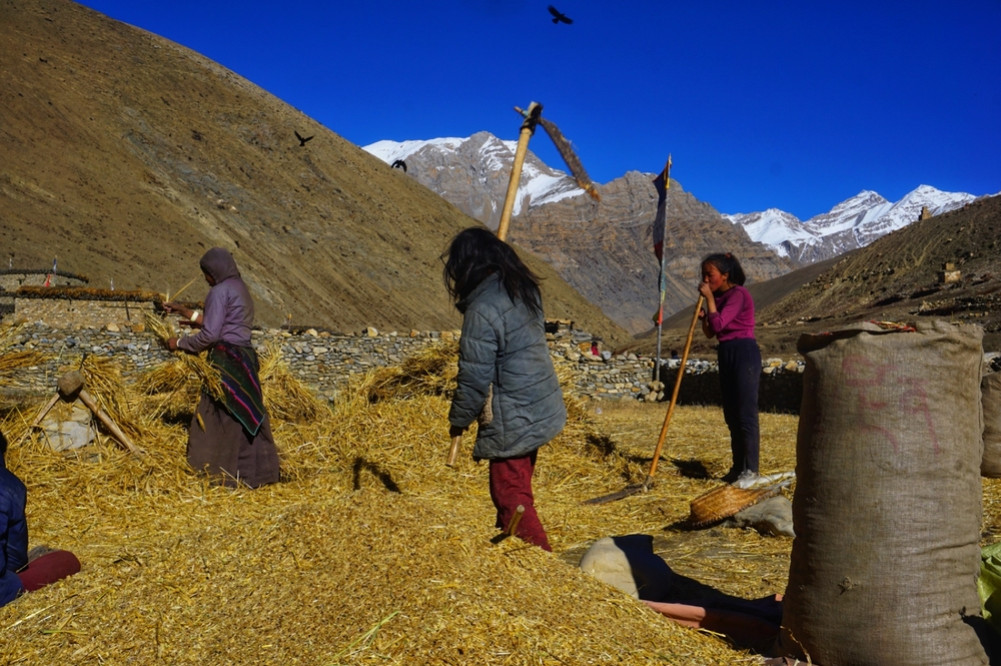
Of the 58 tribal groups in Nepal, 18 live in the Himalayan districts, all of which travel from Kathmandu to India to escape the cold for three to four months of the winter.
We use Google Cloud Translation Services. Google requires we provide the following disclaimer relating to use of this service:
This service may contain translations powered by Google. Google disclaims all warranties related to the translations, expressed or implied, including any warranties of accuracy, reliability, and any implied warranties of merchantability, fitness for a particular purpose, and noninfringement.
Looking back from prehistory to the present, it is clear that migration or relocation has been an important survival strategy for humans in challenging environmental conditions. For people living in the Himalayan region of Nepal, migration or relocation during the winter months is a survival strategy.
Even today, the practice of storing spring crops in autumn and migrating to warmer regions has become an integral part of the culture of the people of the Himalayan region. For them, this is not only a temporary migration, but also a food security strategy.
Due to the short agricultural cycle, limited arable land, once-a-year agricultural system, and low agricultural production, the people of the Himalayan region do not have enough produce to feed themselves throughout the year. That is why winter migration is an important livelihood strategy for the people of the Himalayan region to save their limited production and family. This is an ancestral strategy to survive in the environment of geographical difficulties and seasonal adversity.
Out of the 58 tribal groups listed in the Academy of Indigenous and Tribal Affairs in Nepal, 18 groups live in the Himalayan districts. All these tribal groups have a habit of traveling from Kathmandu to other hilly and Terai cities, including India, for three to four months of the winter to escape the cold. Although this practice has changed over time, it is still prevalent in the Dho-Tarap Valley of Upper Dolpa.
The residents of the three villages of Dho, Tokyu and Lang within this valley migrate to areas where it is less cold in winter. This attempt to observe the traditional lifestyle practices of Tarap-Pa can be a window into understanding the short-term migrations of our Himalayan region – stories, traditions, practices and lifestyles.
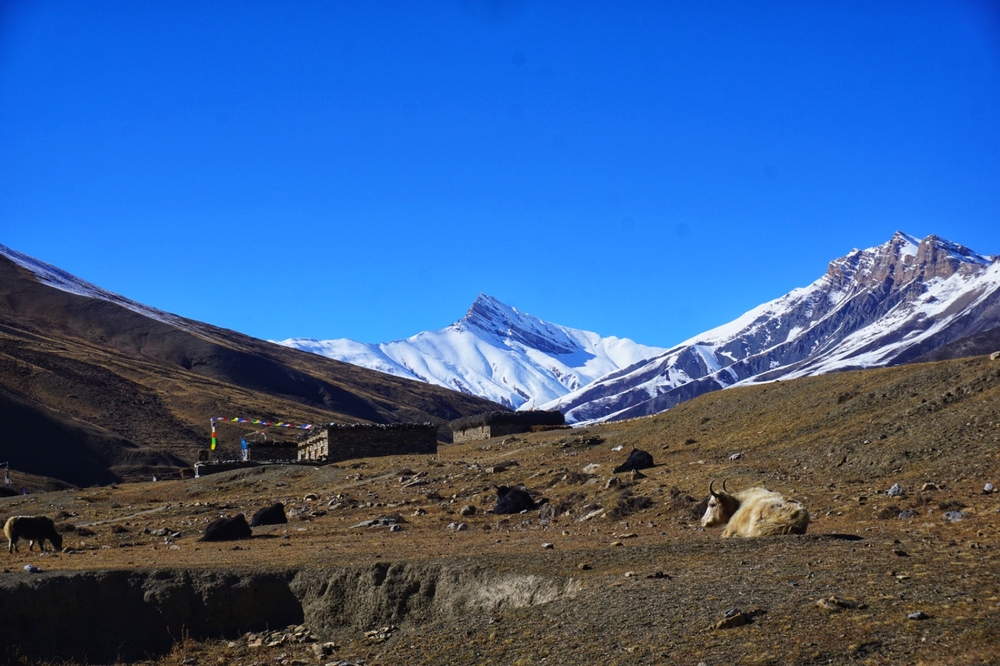
According to the 2078 BS census, the Dho-Tarap Valley has a total population of 1,034, including 463 males and 571 females. The residents of these villages are collectively called Tarap-Pa. Agriculture, animal husbandry and trade are the mainstays of the livelihood of the people of Dho-Tarap Valley. Located at an altitude of about 4,000 meters above sea level, the cold climate in this valley has limited intensive land use for farming. Due to adverse weather conditions, farming in this valley starts from April and ends in September. Barley and potatoes are the main crops here. Barley is not only the oldest crop here, but also the main food.
According to anthropologist Zest and colleagues, potatoes entered this valley only in 1962, which had already entered other Himalayan regions. In this valley too, the residents of Lang village brought potato seeds from Lower Dolpa and cultivated them for the first time. The residents of Tokyu and Dho villages started cultivating potatoes only later.
The practice of exchanging seeds of grain crops among people is widespread in this valley. This social practice has not only helped them survive in their difficult geographical environment and lack of markets, but has also taught them. However, now tunnel vegetable farming has also started to some extent in the village.
The people of the valley keep domestic animals like yaks, Himalayan Lulu cows, Jyopa, goats, sheep, horses etc. for their livelihood. In Tarap-Pa, the milk, meat, ghee, curd and wool of these domestic animals are the main sources of livelihood. Sheep and goat manure is used in the fields while cow dung is used as an energy source for cooking at home. However, the perception of Tarap-Pa towards animal husbandry has changed in the last three decades or more. Till the 1990s, the economic status of the people of this valley was measured by the number of sheep and goats. However, as children and youth leave permanently for Kathmandu, India and other countries in search of education and employment, animal husbandry has changed drastically. With this, economic status has come out of the control of livestock.
Trade is another important source of livelihood for the Tarap-Pa. Situated in a different ecological environment between the hilly regions of Nepal to the south and west and Tibet to the north, the Dho-Tarap have been trading salt and grain with other neighboring communities for generations.
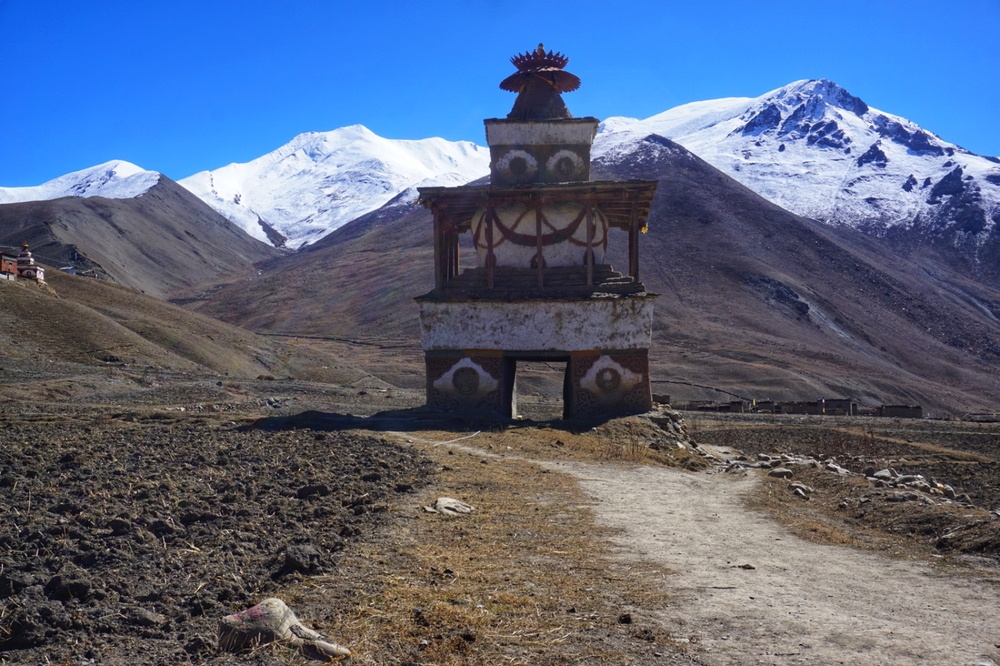
Lacking roads, motorized transport, telecommunications or warehouses, the traders of this region have developed a strong economy, albeit at a reduced cost of doing business. According to Swiss anthropologist Hana Rauber, it was connected to the North-Western State Railway of India in 1930. As the region began to connect to the Nepali border, the salt-grain trade system gradually weakened and finally ceased completely in the late 1950s when Tibet came under Chinese rule. This severely affected the barter economy here.
Before the beginning of the 21st century, Nepal's Himalayan herb Yarchagumbu had not entered the world market. However, this does not mean that Yarchagumbu is a new commodity for the Tarap-Pa. The Amchis have traditionally used it as a medicine. With the entry of Yarchagumbu into the world market, a new dimension has been added to the livelihood of the Tarap-Pa, which has also increased their standard of living economically. It has emerged as a new economic opportunity. However, with climate change and its overexploitation, the availability of Yarchagumbu is gradually decreasing. Therefore, the future of the local economy, which is dependent on Yarchagumbu, has been challenged.
With Yarchagumbu entering the world market, the migration pattern of the Tarap-Pa has changed. Until Yarchagumbu entered the international market, the Tarap-Pa used to go to the Kaike settlement in search of work in the winter. Currently, there is a decrease in the number of people migrating to this valley. They live in the villages even in winter. Since there is no agricultural work during that time, people go to monasteries and worship.
There was a time when the Dho-Tarap Valley was far from the infrastructure of development. However, in recent years, this valley has also gradually started connecting with the infrastructure of development. Through road network and telecommunications, this valley is connected to other Himalayan valleys, neighboring China and neighboring countries. This valley is connected to various valleys of Upper Dolpa, Mustang and Tibet. This has brought ease of access to goods for them. However, the road network is not easy due to snowfall in winter.
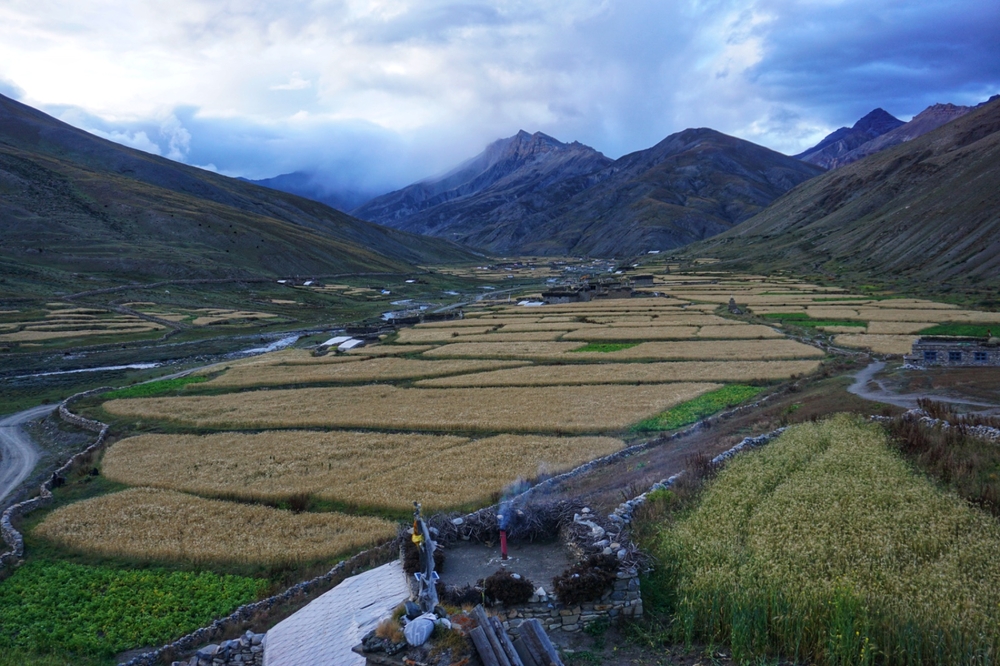
Since it is in the lap of the Himalayas, there is availability of clean drinking water for every household. The villages of this valley are still not connected to the national electricity transmission line. Therefore, solar lights have become the main source of light for here. However, this is not within the reach of all households.
There is a Crystal Mountain School in this village that provides education up to the secondary level. This school is supported by a French non-governmental organization called Action Dolpo. The school's teaching hours are from Baisakh to 15 Mangsir. Since the school is closed from Poush to Chait, educational activities remain at zero. However, if the weather is favorable, local teachers and teachers continue teaching. Therefore, the educational activities here in winter are dependent on the weather conditions. Some families send their sons to study Buddhist philosophy and religion in Indian monasteries in winter. Therefore, children and youth have adopted and assimilated Buddhist religious values.
In winter, the presence of government services and police administration in the Dho-Tarap Valley is very minimal or non-existent. There is no need for police administration as disputes and conflicts that still occur at the local level are resolved by local social organizations. With the local level elections and the selection of local people's representatives, the role and responsibility of people's representatives in resolving disputes and conflicts at the local level has increased.
(This article was prepared with the assistance of Yojan Basnet, who spent time in the Dho-Tarap Valley from April to September 2022 for study)