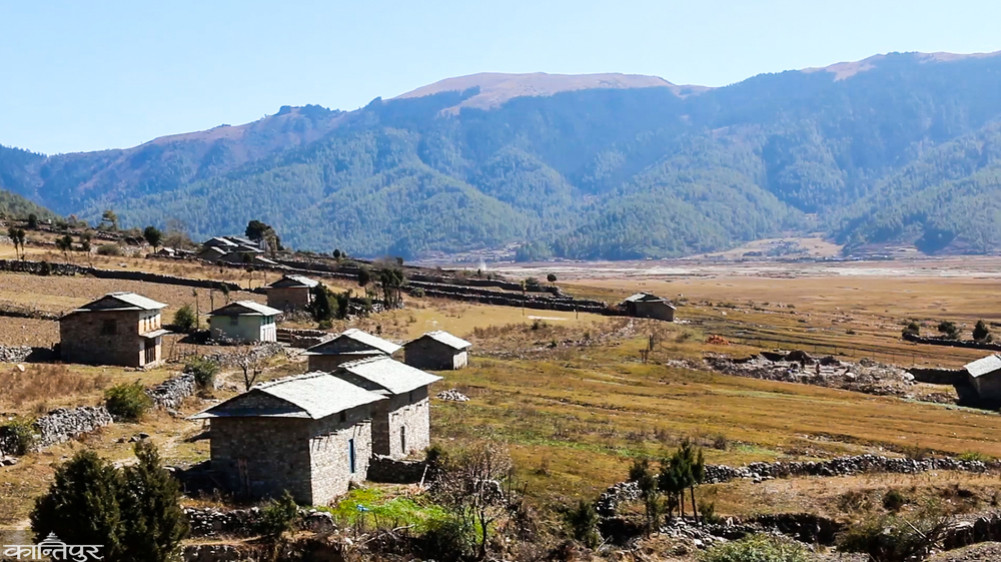
The pastures and pastures here are almost deserted now that the herders have moved down from the mountainous and high-altitude regions of the Uttar Ganga. However, during the rainy season, the footprints of the animals and the signs of the stables can be clearly seen.
We use Google Cloud Translation Services. Google requires we provide the following disclaimer relating to use of this service:
This service may contain translations powered by Google. Google disclaims all warranties related to the translations, expressed or implied, including any warranties of accuracy, reliability, and any implied warranties of merchantability, fitness for a particular purpose, and noninfringement.
The high plateaus of Rukum East, which are bustling with activity during the monsoon season, are currently deserted. The pastures here look barren due to the thick frost and occasional snow during the cold season. However, during the monsoon season, the footprints of livestock and the marks of cowsheds can be clearly seen.
Especially the mountainous and high hilly areas under Putha Uttarganga Rural Municipality are deserted at the moment . The only reason for this is that the shepherds who enjoy here have come down to the valleys after the cold weather. And those who come to enjoy themselves have also not come up here due to the cold weather. Local shepherds from settlements such as Taksera, Hukam, Ranma, Maikot and Pelma in the rural municipality go up to Patan, where they can get rain during the rainy season .
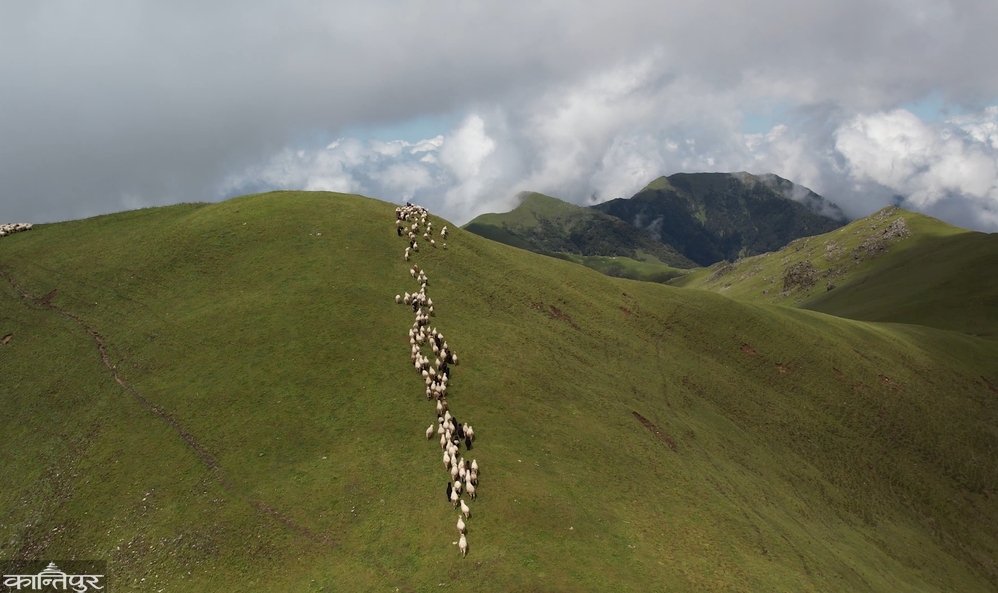
According to Jhalman Budha Magar, a local farmer from Hukam, they go up to find pastures (pastures for sheep) for six months of the year (from Falgun to Bhadau). 'We have more than a hundred sheep from one family . In a herd, we keep 1,500 to 2,000 sheep and 4-5 families take turns sitting in the sheepfold and looking after the sheep . This reduces the workload and makes it easier to eat and live in the shed,' he adds, 'After reaching the lake, we stay in one shed for about a month, and after the grazing there is over, we move to another place and graze the sheep.'
Most of the farmers in this region have the same journey from the lake to the valley. They climb up to Patan in the rainy season and descend to the valley in search of pasture to escape the cold in the winter.
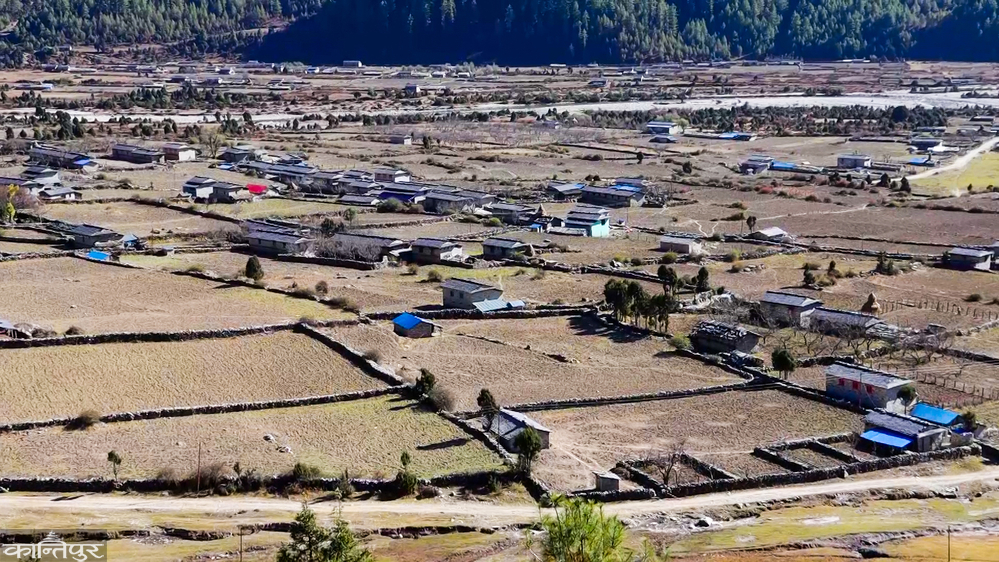
A farmer from Taksera, Kar Bahadur Budha, tells us that the shepherds reach the hills around Dang in search of pasture in the winter. He says that they descend from the lake near Dhorpatan in the first week of Asoj and enjoy the festival for a few days before traveling to the valley. 'We have been traveling since the end of Kartik in search of pasture. We have reached Thabang now, having walked with the flock of sheep. In the next few days, we will reach the hills near Musikot in Rukum West,” said Kar Bahadur, who was on a journey to the valley. “We will stay in the Parila hills in Rukum West until Falgun and then slowly ascend towards the lake.”
The Dhorpatan Valley in Baglung is also almost deserted at this time. Here too, there is sporadic activity from Falgun-Chait to the end of Bhadra after the herdsmen ascend. In comparison, this region is now considered deserted. Since there is no grazing during the dry season in winter and the cold also increases rapidly, farmers descend to the valley with their livestock for about 6 months.
The herdsmen of villages such as Bobang, Adhikarichaur, Gadikhola in Dhorpatan Municipality of Baglung say that Patan will be ascended only after winter. However, the number of people permanently residing in Dhorpatan has been increasing every year for almost a decade, says local hotelier Jeevan Pun. ‘About 10 years ago, Dhorpatan was deserted. The villagers used to keep watchmen in the villages and go down to the valley. But now, they have stopped keeping watchmen. Because some family lives in all the villages here for the whole year. That is why there is normal activity,’ he adds, ‘In the Dhorpatan area, which used to have 2500 to 3000 households during the monsoon, there are probably only 200 households at the moment. And it seems deserted.’
Due to the dry and cold weather, the number of people visiting Dhorpatan is also very low at the moment. However, expressing hope that it will snow as soon as it rains, businessman Pun is confident that people will come to visit.
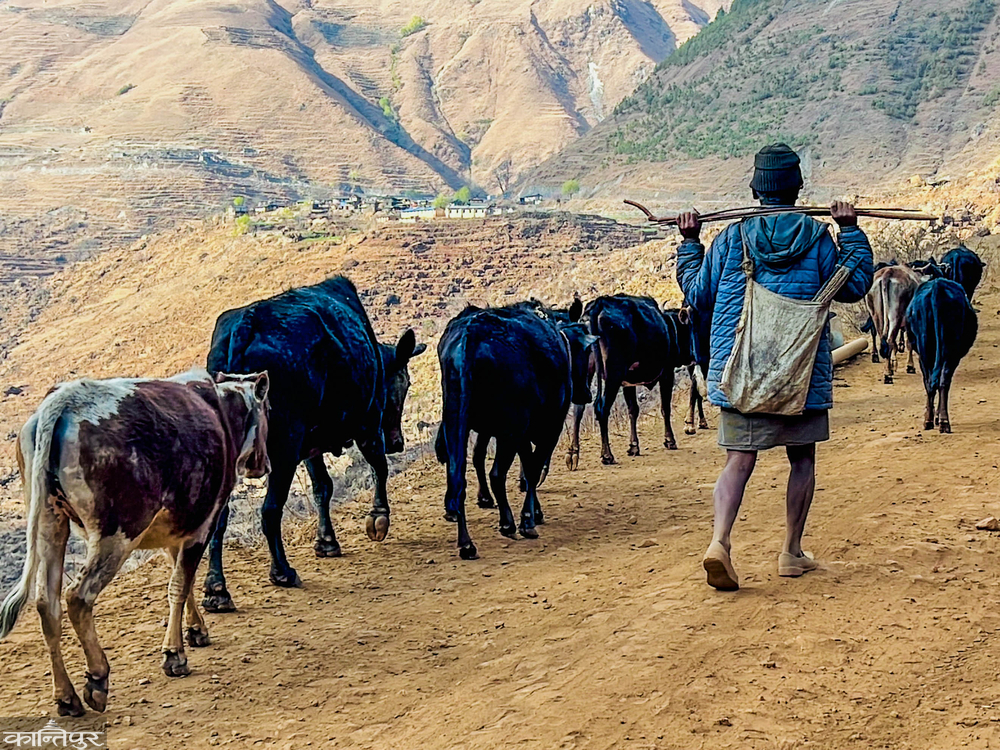
Dhorpatan, which gets sun-kissed around 7 am, gets hot all day long and gets colder after the sun sets around 5 pm. Local Dilli Bhandari said that he started living here because it was a hassle to go to the valley. ‘But most of the houses here are closed. We are just scattered people. Those who come to the valley arrive by Falgun-Chait and then it becomes fun,’ he said.
This kind of seasonal migration is a compulsion for the farmers of this region. They say that they do all this because they have to raise livestock and earn income from it to run their families. Dilmaya Budha, a farmer from Maikot, said that it was not easy to leave her children in the village and wander around the pastures of the valley. She, who is currently in the village (Maikot), says, ‘We carry everything we need to eat, drink, wear and sleep.’ We eat what we have, we enjoy it . Our protection is God .’
Even though the basic infrastructure of development has reached the valley where we live now, she also told the compelling story of having to live with sheep and goats in the same shed in Lekali Patan, ‘Where is the lake, where is the valley – there is no comparison I don't think it's comparable.'
A sheep/goat raised in this area is sold for 15 to 30 thousand rupees. The rest of the farmers who raise cows and buffaloes earn their income by selling ghee. The income from this helps cover the expenses of the family, says Pantharam Bik, a farmer from Baglung Bobang. 'We travel 3 days from here to Thankur Patan in Rukum during the rainy season. We collect ghee from buffalo milk and sell it. We sell ghee worth 50 to 100,000 in a season,' he said. Kar Bahadur from Taksera says, 'Sheep are not sold like before, but even if they are, there are many who try to bargain a lot and buy them at a cheap price. Earlier, even the wool of sheep was sold. Now that too has stopped happening. That's why it's not easy to earn.'
The shepherd farmers of Rukum East, who have left their original homes and wandered around Lekali Patan and Kharka, have their farming in the village. They say that those who stay at home mainly grow crops such as potatoes, fenugreek, maize, millet according to the season and take care of them, while those who stay in Lek take care of the livestock. They say that while they are in Lek, they make a living from the flour and rice they bring from the valley.
Meanwhile, in Dhorpatan, there is also farming mainly of potatoes, fenugreek, wheat and barley. By the time this farming that they have just shown on their small land is introduced, the farmers who have come down to the valley can move up here. And, before that, the farming work in the valley is also completed.
Gore Bhandari, a local of Dhorpatan, said that traditional foods are produced here, but rice has to be imported as the rice culture has increased. He also said that farmers who migrate from here take all their livestock with them and lock their houses. Bhandari says that the tradition of migrating in this way has been going on for centuries. ‘This is not a current practice. Our ancestors also made their living in this way. Instead, it is decreasing now.’
There are no government facilities in the sheep grazing areas. They make a living by carrying their own food. However, in Dhorpatan, infrastructure including schools, health posts and electricity have been built in the past few years. For this reason, the number of permanent residents in this place is increasing every year.