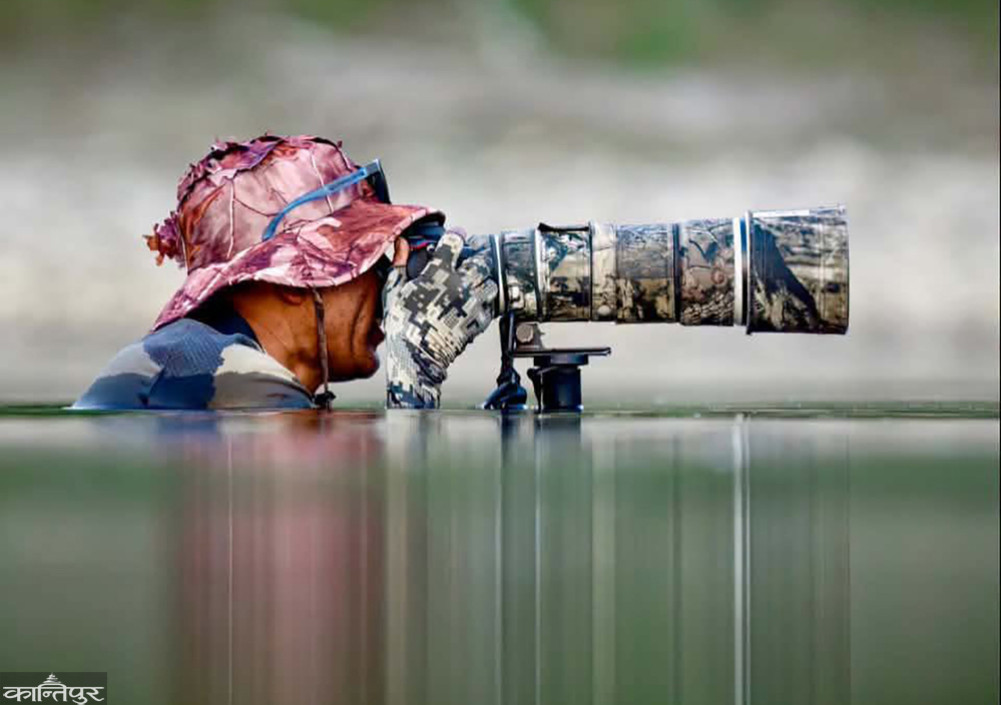
After serving 26 years in the Nepal Army and retiring as a colonel, Sudip KC has been active as a wildlife photographer for the past seven years. He has captured outstanding photographs of many rare birds and animals in Nepal as well as abroad.
We use Google Cloud Translation Services. Google requires we provide the following disclaimer relating to use of this service:
This service may contain translations powered by Google. Google disclaims all warranties related to the translations, expressed or implied, including any warranties of accuracy, reliability, and any implied warranties of merchantability, fitness for a particular purpose, and noninfringement.
He has an incredible aim. He never misses his target. The skills he has honed through dedication, struggle, and hard work have sharpened him. Not only Nepalis, but foreigners also praise his exceptional abilities. That is why some foreigners come to Nepal to learn the art of photography from him. The only difference is that, in the past, he used to hit targets with an SLR rifle to accomplish his tasks; now, he achieves outstanding results by aiming with a DSLR camera. He is wildlife photographer Sudeep KC (58).
After serving for 26 years in the Nepal Army and retiring as a colonel, KC, who initially worked in battalions and companies deployed for park security, became a conservationist. He is now contributing to conservation by capturing excellent images of birds and wildlife. These days, he is renowned as a wildlife photographer specializing in birds and animals.
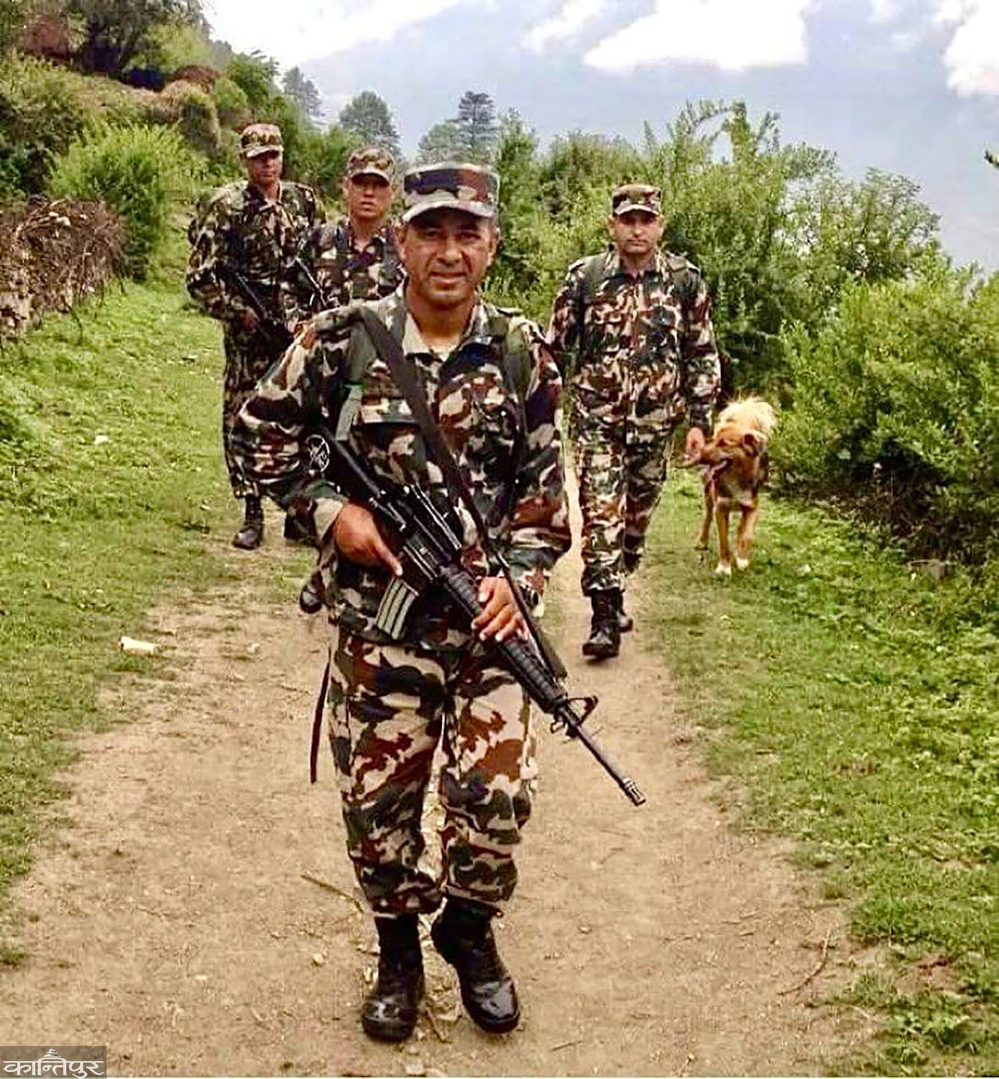
KC, who lives in Basundhara, Tokha Municipality–5, Kathmandu, has been immersed in this field for seven years. He has the ability to take good photos in any situation and under any lighting conditions. Not only that, he is skilled at creating the perfect conditions himself, adjusting the framing, and capturing images with equally sharpness and depth of field.
Since 2019, when he started wildlife photography, he has photographed 595 species of birds found in Nepal. Having seen more than 630 species, he says, “But due to time, circumstances, and situations, I couldn’t photograph all the birds I have seen.” So far, 903 species of birds have been recorded in Nepal.
He has not only traveled within Nepal in pursuit of birds. He has also gone to Malaysia, Singapore, and Thailand to photograph birds. He says he has photographed 378 species of birds in those three countries, some of which are not found in Nepal.
He has accumulated many interesting experiences while photographing birds. He has also endured many hassles and hardships. Recalling his experience photographing the Himalayan Monal, he said, “I was extremely happy when I finally managed to photograph the Monal after so much effort and struggle.”
Indeed, other wildlife photographers like him are also eager to photograph the stunningly beautiful Monal. To capture this joy, he had been tracking the Monal for a long time.
He succeeded in photographing the Monal at an altitude of 2,006 meters in Shivapuri–Nagarjun National Park. He claims to be the first wildlife photographer to photograph the Monal in the Kathmandu Valley. “I had been walking in the jungle for almost four hours, exhausted and worn out. I was thinking of turning back in disappointment. Suddenly, when I saw it in front of me, I was elated,” he said, recalling that day. “Even though others with me saw it, they couldn’t take a photo.”
From the Terai to the Himalayas for Photos
Sudeep’s passion for photography is such that he spends three to four months a year traveling from the Terai to the Himalayas. In his free time, he roams the ponds, hills, and forests of the Kathmandu Valley. His family is equally supportive in helping him quench his “thirst for photos.”
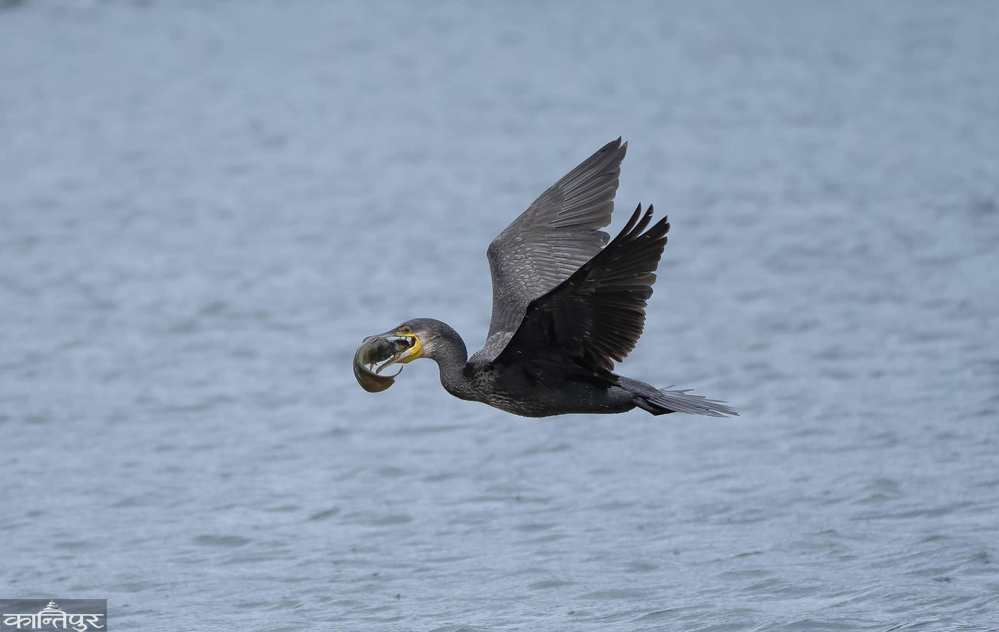
He has captured images of birds found from the Terai to the Himalayas. He has photographed birds found in grasslands, fields, agricultural lands, summer and winter visitors, and forested areas. He has also captured amazing shots of the Spiny Babbler, found only in Nepal, and the stunning Mandarin Duck, which occasionally visits Nepal.
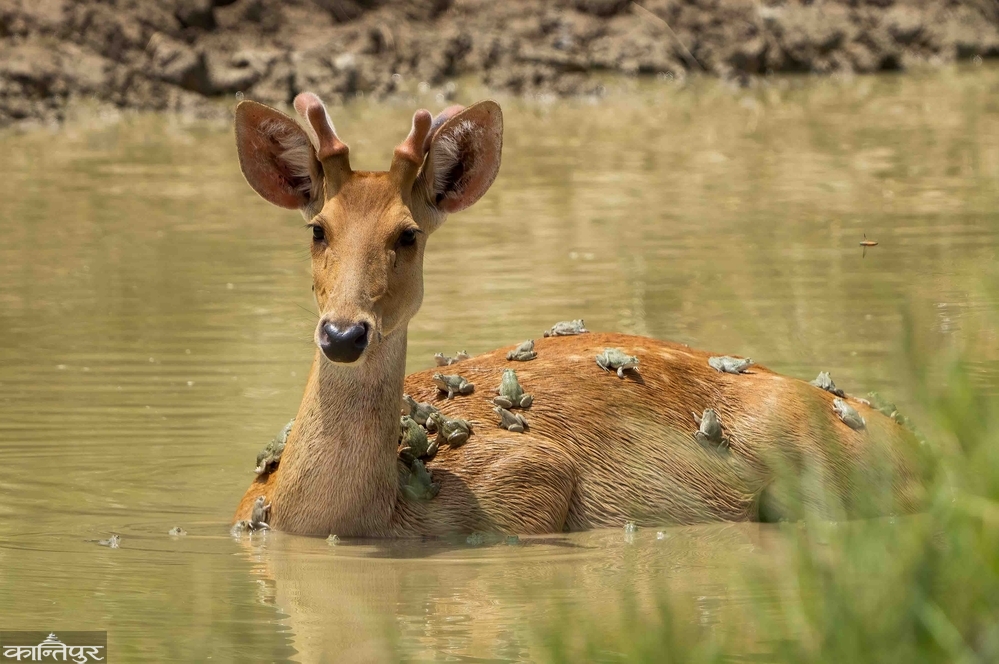
Along with birds, he has also taken excellent photos of 25 species of wildlife. He has captured striking images of tigers, bears, leopards, rhinos, elephants, deer, wild boar, otters, blackbucks, and four-horned antelope. He has also taken equally good photos of otters, dolphins, and pythons.
Since he started photography, he says he has seen 12 tigers. He has also taken excellent photographs of most of the tigers he has seen. “I enjoy photographing tiger habitats,” he said. “They are rarely seen. But I have also taken good photos of tiger habitats. You have to give time and put in effort. When you see a tiger at that moment, it’s very exciting.”
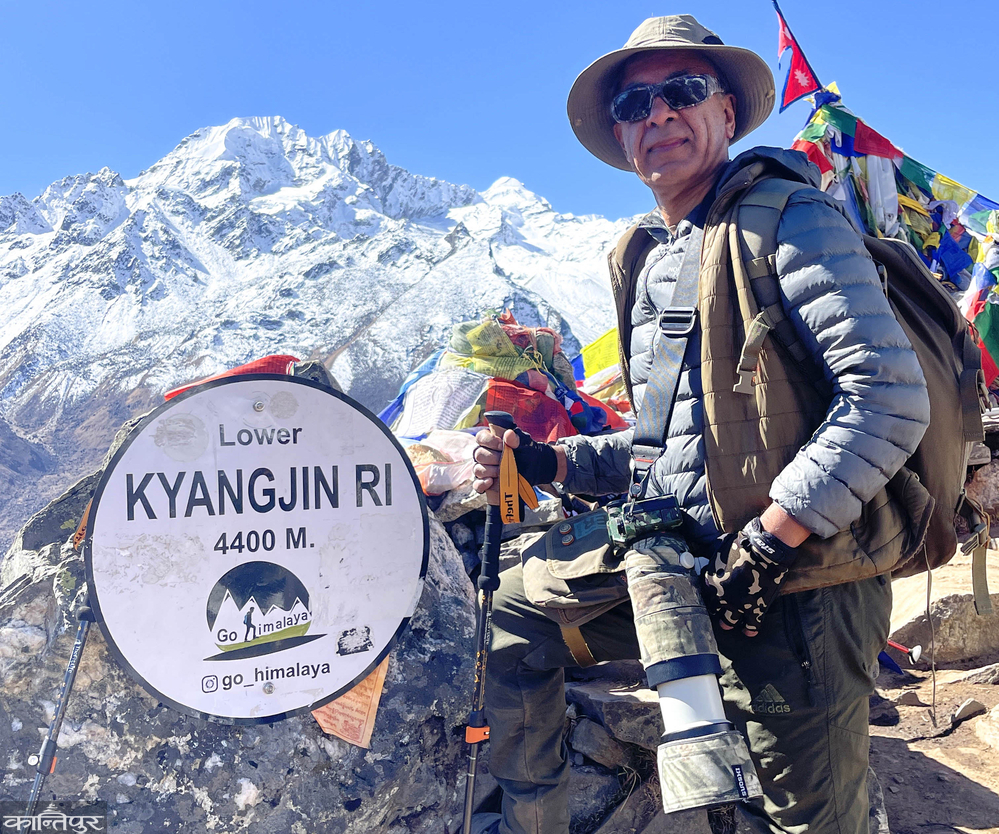
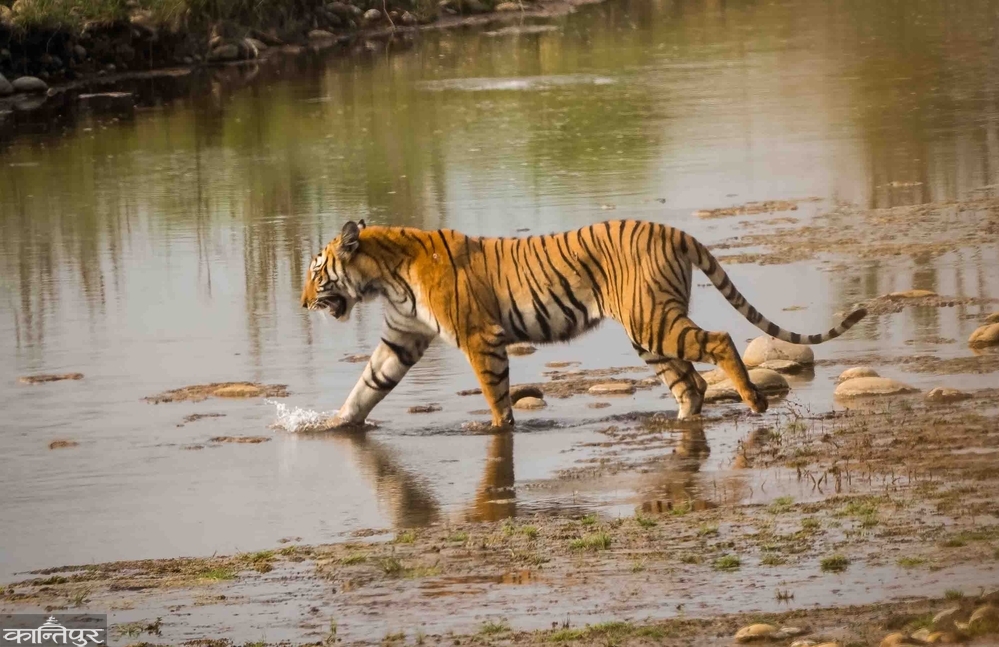
He said it was thrilling to track tigers and photograph them inside Bardiya National Park for four days. While crossing a river at Tinkune in Bardiya, he also managed to capture a stunning photo of a tiger.
He says his close encounter with a tiger in Bardiya still gives him chills. “While on an all-day jungle walk with ornithologist Ram Shahi, a tiger suddenly appeared just 3–4 meters ahead of us in an open area,” he said. “We were startled. Instead of taking photos, we ran for safety.” Later, when he saw the same adult tiger again two hours later, he remembers his body was still trembling.
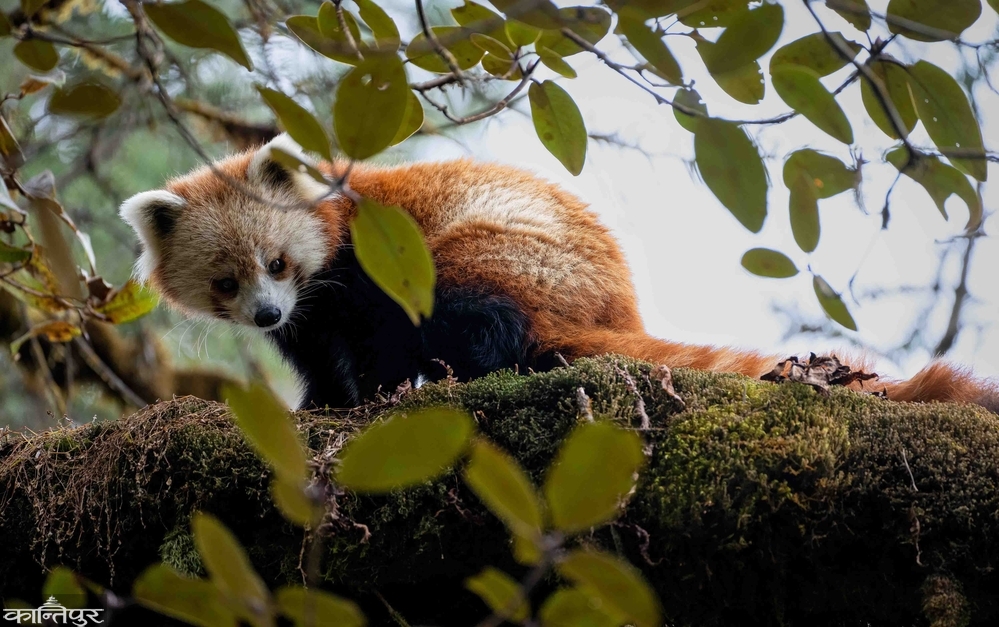
He still vividly remembers the moment in Sukevar, Chitwan, when he had a head-on encounter with a rhino and had to climb a tree to escape. He says his struggle to photograph a red panda was the most difficult and memorable so far. He managed to photograph a red panda after waiting for three days in the snow-covered forest at Nangin Got in Langtang National Park.
He has learned that photographing birds and wildlife requires a lot of patience and skill. “Every second’s movement is important,” he said. “You have to wait patiently like a herder. You must be able to catch the perfect movement. Photos taken from a different angle and with a unique charm are equally captivating.” To take photos, he has traveled to more than 40 districts, from the flat plains of the Terai to the upper Himalayas of Dolpa.
He Even Teaches Foreigners
Attracted by the wildlife photos he shares on social media, many foreign wildlife photographers seek him out and come to Nepal. “Just two months ago, four Japanese came,” he said. “I took them to photograph Nepal’s beautiful birds and wildlife.”
After establishing himself as an outstanding wildlife photographer through his photography skills, he has been selected as the Nepal Country Representative for the Asian Wildlife Photography Club (AWPC) for the past two years. Through this club, wildlife photographers from Singapore, Malaysia, India, and Sri Lanka come to Nepal every year.
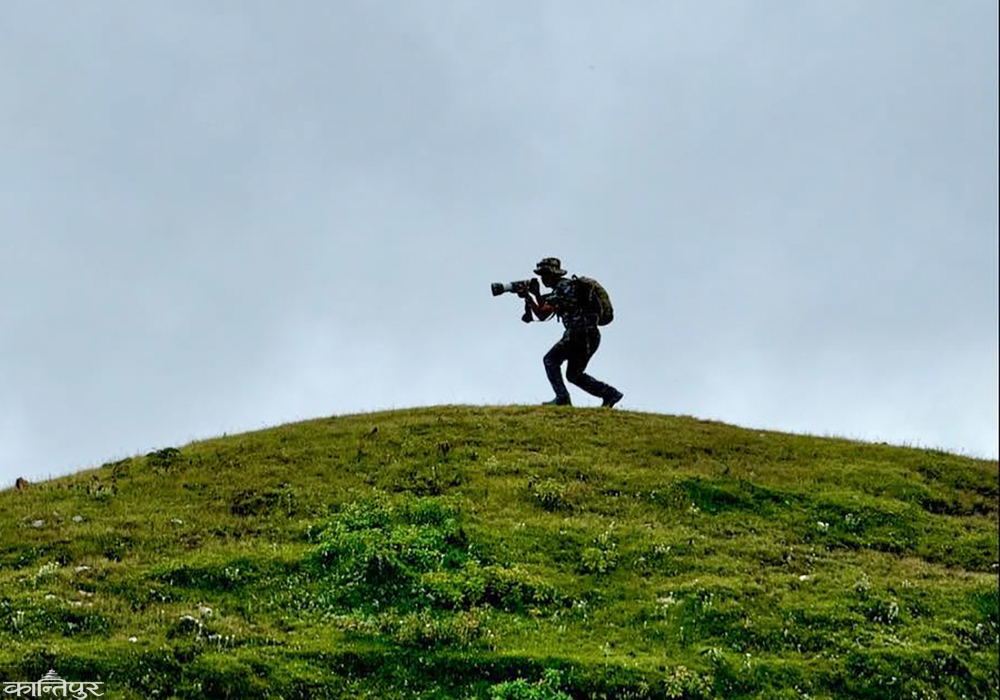
He leads teams, taking them to places like Chitwan, Bardiya, and the Kathmandu Valley to photograph birds and wildlife. “Wildlife photographers who come from abroad take great photos here,” he said. “This helps promote Nepal’s tourism abroad.” Photographers who return from here exhibit their best photos taken in Nepal in their home countries. After seeing the beautiful and attractive photos, other wildlife photographers there also become eager to visit Nepal, he says.
The beautiful photos of birds and wildlife he has taken have been published in calendars, brochures, and books by organizations such as the National Trust for Nature Conservation, Bird Conservation Nepal, and the Nepal Tourism Board. Many of his photos have also been published in foreign magazines, journals, calendars, and books. “This has made a significant contribution to promoting Nepal’s tourism in those countries,” he said. “Nepal has an abundance of birds and wildlife that can attract tourists. The world’s most affluent tourists are eager to see wildlife. I am doing photography to attract them and make Nepal a destination for ecotourism.”
He says the basic principles of handling a gun and a camera are similar. He explains that the fieldcraft used by the army and that used by wildlife photographers are the same. “You have to aim with one eye. Hold your breath and stay still. You must hit the target without moving. When using a gun, we use camouflage and concealment so the enemy doesn’t notice. When taking photos, you have to wear camouflage clothing so birds and wildlife don’t notice and aren’t disturbed. When you pull the trigger of a gun, a bullet is fired; when you press the camera’s trigger, a photo is taken,” he said.
Awarded for His Photos
Along with excellent bird photos, he has also captured outstanding images of daily life, art and culture, tourism, landscapes, and agriculture. He has photographed the Himalayas smiling, and mesmerizing scenes of natural beauty and grandeur. He has also won prizes in various photo competitions.
He won first prize and a cash award of 50,000 rupees in the national photo competition in the non-military category organized by the Nepal Army in 2082 BS. Three years ago, he also won second prize in a photo competition organized by Kia Motors.
He began his service as a second lieutenant in 2047 BS, with his first posting at Chitwan National Park. Gradually, as he worked in the park, his interest in birds, wildlife, and nature grew. As he frequently encountered birds and wildlife in the park, regularly met nature guides, and increased his contact and coordination with forest/park staff, his attraction to birds and wildlife deepened.
He says that while patrolling the park, seeing birds and wildlife, being deployed in anti-poaching operations, and engaging in conservation work, he developed a subtle love for nature, forests, birds, and wildlife.
In 2048 BS, he was actively involved in the translocation of rhinos from Chitwan to Bardiya. At that time, four rhinos were moved. “I was interested in watching and understanding birds even before joining the army. But after joining, my interest grew even more. During my job, I had to travel all over Chitwan National Park. I had to patrol. This brought me even closer to nature. At that time, I didn’t have a camera. I used to patrol with binoculars and a bird book, identifying birds and wildlife, which made me a bird lover,” he says.
After two years in Chitwan, he was transferred to Kathmandu. After that, he worked for more than 12 years at the Royal Palace. He served as a close security officer for the king and members of the royal family. When members of the royal family visited Bardiya and Chitwan, he would accompany them. In some cases, he even served as a guide. He says this also inspired him to develop a closer affinity for birds, wildlife, and the environment.
After the Royal Palace massacre, he was transferred to Bardiya National Park in 2058 BS. There, he worked for two years as a company commander (major) of the army deployed for park security. “The Maoist conflict was at its peak in Bardiya at that time,” he said. “The role was different from that of soldiers stationed in city barracks. I had to protect myself, safeguard weapons, and also protect wildlife, which increased my love and attachment to wildlife.”
Recalling the major battles in Karnali and Rammapur, he says he barely survived at that time.
Along with Bardiya and Chitwan, he also commanded and worked at Shey-Phoksundo and Rara National Parks and Parsa Wildlife Reserve (later National Park). In his 26 years of service, he spent more than 14 years in parks, buffer zones, and protected areas. “Because of my interest in birds and nature, I started to enjoy my work and do it well,” he said. “After that, headquarters also trusted me. That’s why they started sending me to command parks. By focusing on that, I was able to do even better work with my skills, abilities, and hard work.”
He says watching birds brings him joy. “When you go to the forest, you get fresh oxygen. Your stress decreases. The delightful sounds of birds and wildlife are exhilarating,” he says. “Photographing birds and wildlife is a kind of meditation. That’s why I spend a lot of time enjoying the forest and nature.”
Even while serving in the army, his focus was on conservation. He led major campaigns to control illegal poaching of wildlife. He conducted a large-scale campaign to collect illegal muzzle-loading guns from the area around Barahatal Rural Municipality in northern Bardiya, Surkhet.
After the area was declared a buffer zone, the army company deployed for park security and the park office jointly conducted a campaign to collect illegal weapons in 2068/69 BS to control increasing poaching. At that time, 242 muzzle-loading guns were collected. In 2072 BS, during an army health camp in Upper Dolpa, he recalls that, after receiving information from locals, they seized snow leopard skins that had been illegally hidden in homes.
State-of-the-Art Gadgets
He started photography with a Canon 6D Mark II. For two years, he used a 150–600mm zoom lens on the 6D to take photos. But when he was not satisfied with the images, he consulted with foreign friends. They advised him to use a Sony camera.
Now, for action shots and sharp images, he uses Sony’s state-of-the-art Alpha 1 camera. He has invested about 900,000 rupees in the camera alone and about 350,000 rupees in a 100–400mm zoom lens to set up his gear. Although he also has a 200–600mm zoom lens, he prefers to use the 100–400mm lens more.
Photos courtesy: Sudeep KC