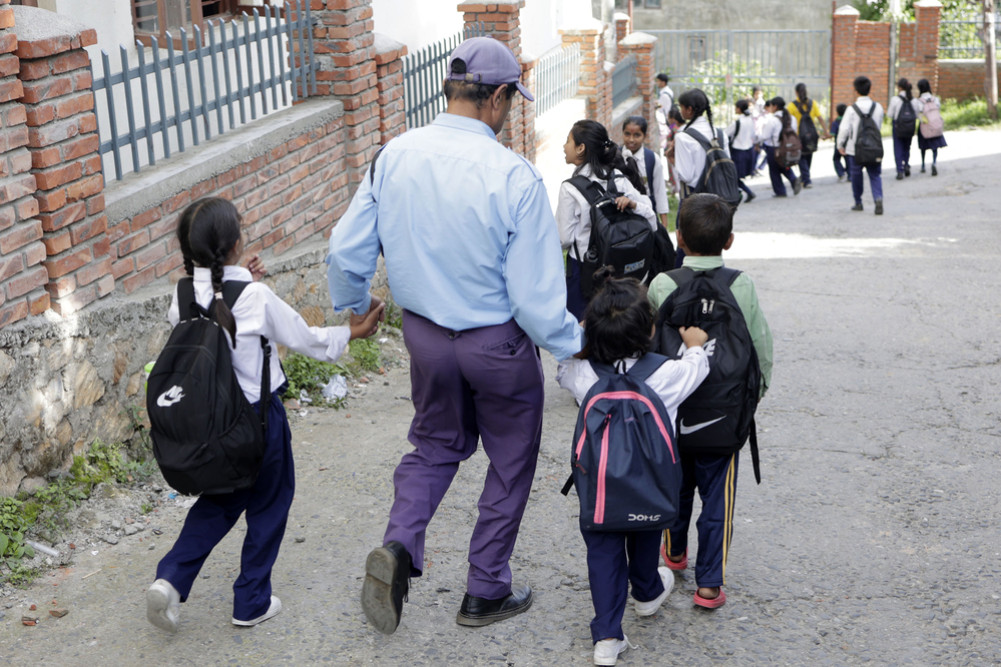
After flooding entered the holding center in Kirtipur on 27 Asar, 77 people were relocated to the holding center in Khuripati, Bhaktapur, and 60 people to the holding center in Bode. Their children are compelled to travel up to 15 kilometers to attend schools located in Balkhu, Bhimsenththan, and other places.
We use Google Cloud Translation Services. Google requires we provide the following disclaimer relating to use of this service:
This service may contain translations powered by Google. Google disclaims all warranties related to the translations, expressed or implied, including any warranties of accuracy, reliability, and any implied warranties of merchantability, fitness for a particular purpose, and noninfringement.
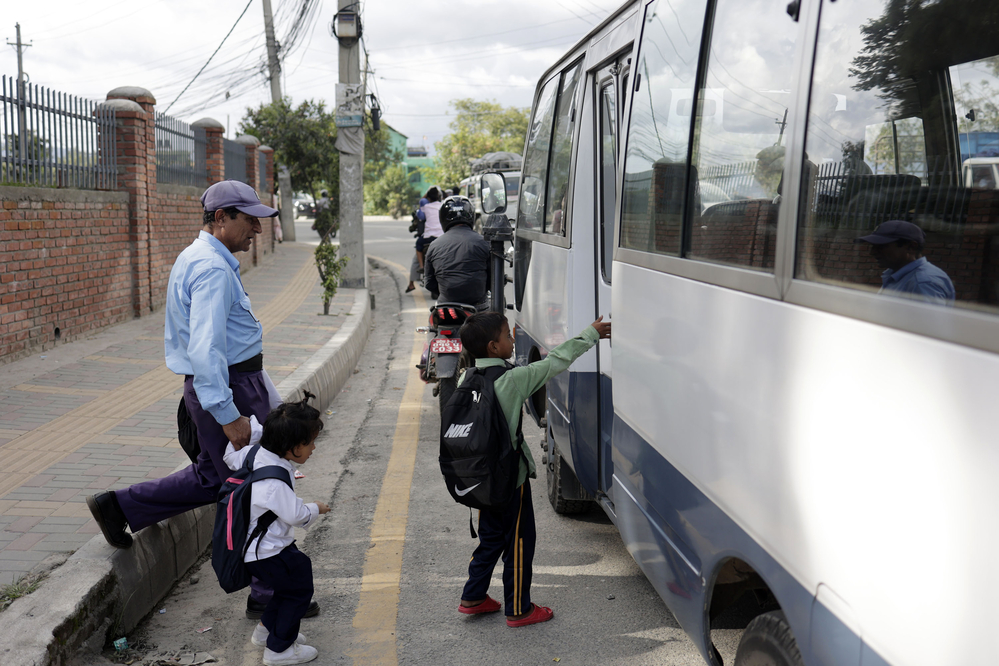
At the holding center located at the Bhode Agricultural Training Center in Bhaktapur, 15 children get ready early in the morning to go to school. After having breakfast, a government vehicle arrives by 8 a.m. to take them to school. However, the schools they need to attend are not nearby.
Poonam Devi Paswan’s youngest son, 7-year-old Aryan, studies at Janavikas Secondary School in Balkhu. The distance from Bhode to there is more than 15 kilometers. “It takes about one and a half to two hours to get there by vehicle. By the time he returns in the evening, he’s exhausted,” said Poonam Devi. Her other son, 12-year-old Shyam, along with two other children, study at Paropakar Adarsha Secondary School in Bhimsensthan. It also takes about one and a half hours to reach there by vehicle.
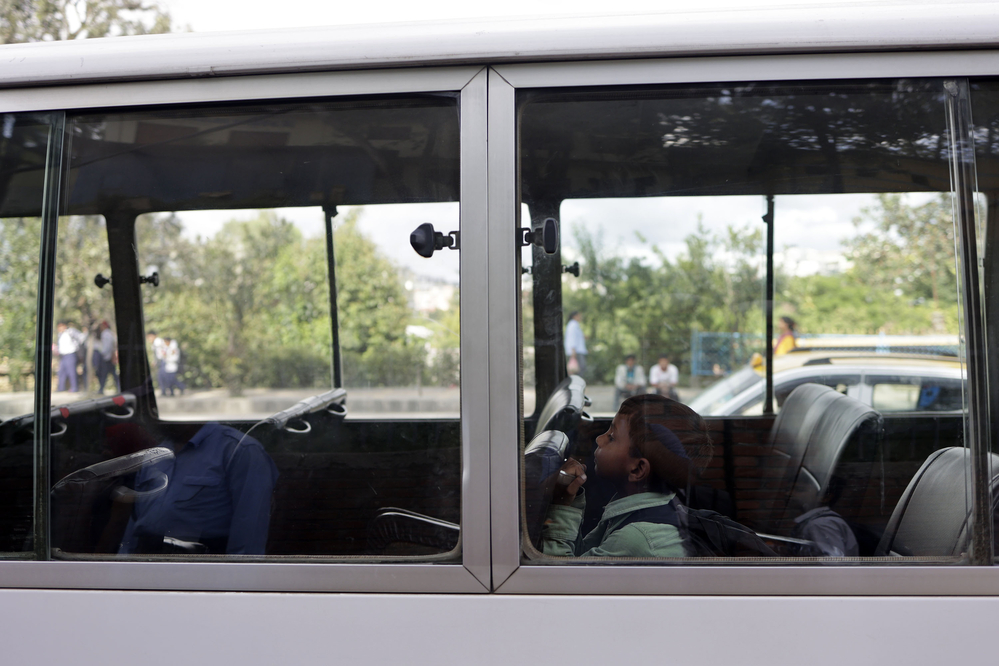
Until 27 Asar, Poonam Devi’s family was at the Radhaswami Satsang Holding Center in Kirtipur. Until then, Shyam and the other three children used to walk to and from Paropakar Adarsha Secondary School. It took them more than an hour just to get there on foot. Although Kathmandu Metropolitan City, in coordination with PABSON, had enrolled them in that school with residential facilities, they received neither accommodation nor transportation. On 27 Asar, after the holding center was flooded, 77 people were relocated to Kharipati in Bhaktapur and 60 to the holding center in Bhode.
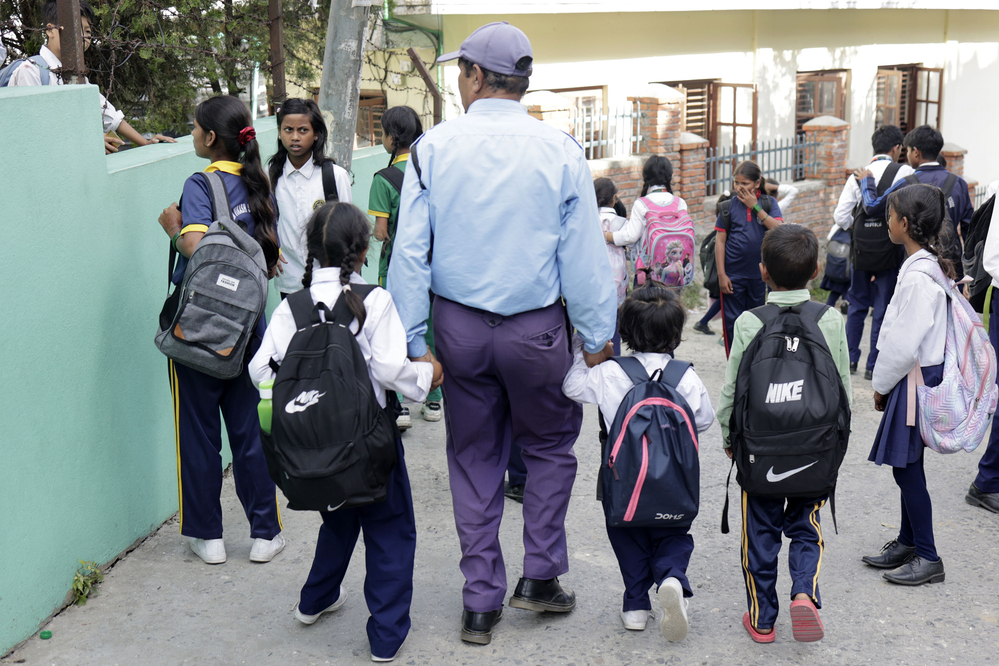
On 28 Asar, Home Minister Sudhan Gurung, along with six other ministers, visited Kharipati to meet the displaced squatters. While assuring them, Minister Gurung said the government would arrange vehicles for the children to go to school. Accordingly, the government has now arranged vehicles for the children at the holding centers in Kharipati and Bhode. However, since it takes a long time for them to commute to school by vehicle, another hardship has been added. The children at the Ichangu Narayan Holding Center in Nagarjun, however, were deprived of school for two weeks. Although the environment for them to attend school was created from Tuesday, they still have to walk half an hour to get there.
Poonam Devi says that when the children leave the Bhode holding center at 8 a.m., they go on just two glasses of milk. “At school, they are only given a snack in the afternoon, not a meal. They spend the whole day hungry and only get one meal in the evening. Sometimes my sons complain that they are hungry and it’s hard,” she says.
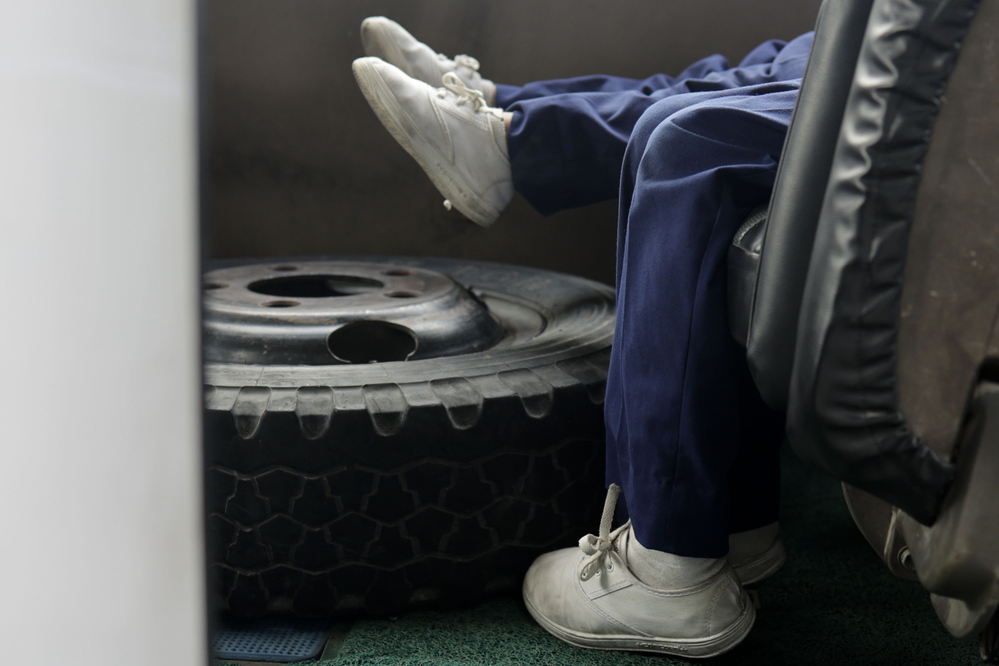
There are 15 students at the Kharipati holding center. The grandchildren of Menuka Gurung, who is staying in Kharipati, study at Guhyeshwari Secondary School in Gairigaun. Menuka says she worries because they have to go to school by vehicle for an hour in the morning on just a light snack. Like Poonam Devi’s family, Menuka’s family was also relocated to Kharipati after 27 Asar. Before that, her grandchildren used to walk from Kirtipur to Balkhu and then take a vehicle from Balkhu to attend that school.
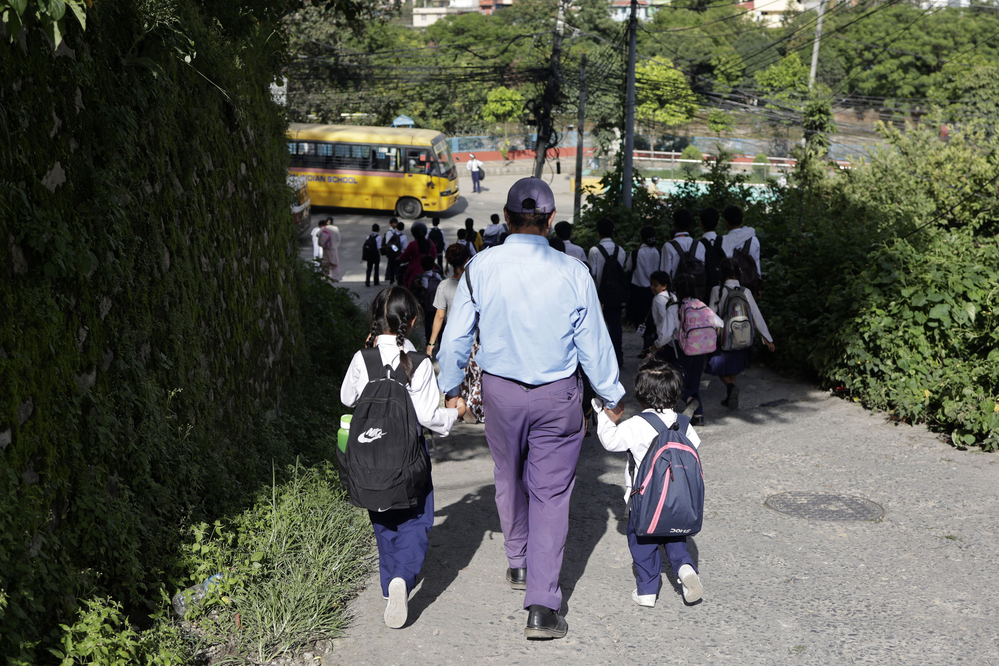
“After they started living at the Kirtipur holding center, they were placed at the nearby Janavikas Secondary School. But they ran away from that school and went to Guhyeshwari Secondary School. Since they had always studied there, they refused to go to another school. They used to take public transport from Balkhu to their old school,” says Menuka.
After coming to Kharipati, the government arranged transportation for them. From there, they go to school by vehicle. Although she feels relieved that the children are picked up and dropped off, Menuka is troubled that the children do not get to eat on time or rest properly.
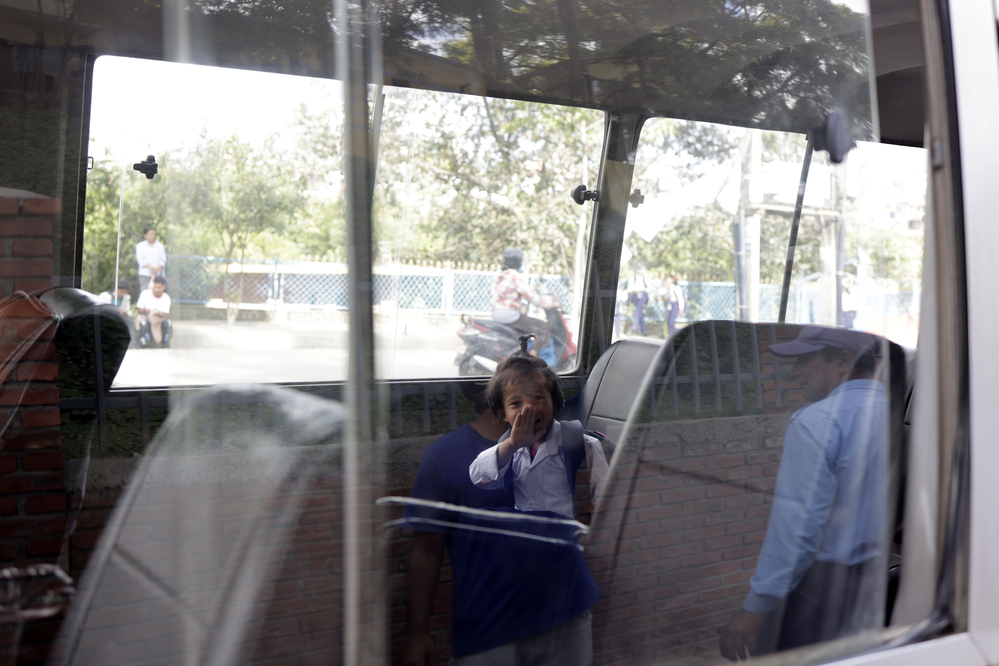
From the Kharipati and Bhode holding centers, 30 children go to school. They study at Janavikas Secondary School in Balkhu, Paropakar Adarsha Secondary School in Bhimsensthan, Guhyeshwari Secondary School in Gairigaun, Sirjanshil Secondary School in Babarmahal, Madan Bhandari Memorial College in Bijulibazar, Guhyeshwari Secondary School in Thapathali, Columbus School in New Baneshwar, Bishwadev Multipurpose Campus in Tripureshwar, Bishwo Niketan Secondary School, and NASA School in Tinkune. Due to the long distances and frequent traffic jams, none of the schools the children attend are less than an hour away.
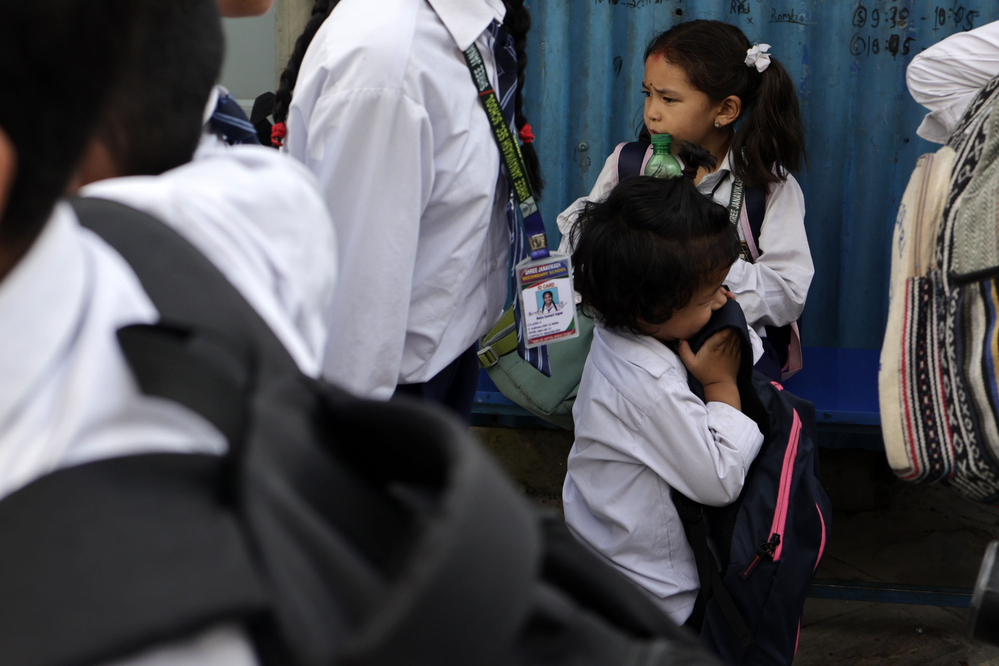
According to bus driver Gangalal Shrestha, who takes the children to and from school, it takes more than two hours to reach the school in Balkhu by vehicle. “If we leave at 7:30, it’s always 9:30 by the time we get there. On top of that, sometimes we’re late because the children aren’t ready on time,” he told Kantipur.
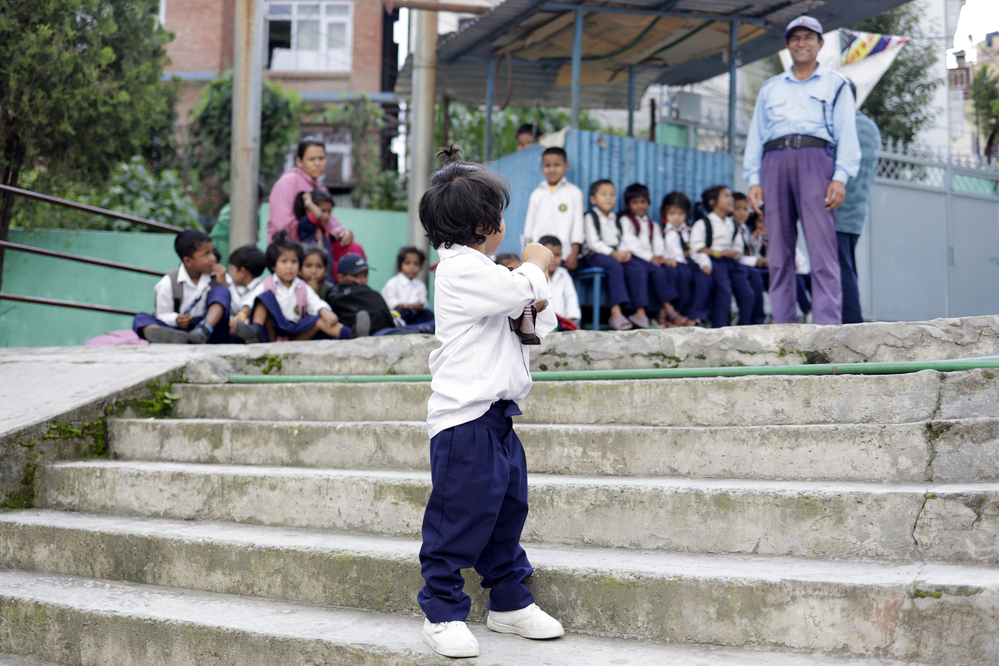
Fifteen children of displaced squatters from Ichangu Narayan have started going to Baljyoti Higher Secondary School in Nagarjun-1 from Tuesday. According to Apsara Malik, who is staying at the holding center, the children from Ichangu Narayan were deprived of school for nearly two weeks. “Previously, our children studied at a school near Kharipati. They had to walk there, too,” she said. “We were relocated to Ichangu Narayan two weeks ago. After coming here, the children’s studies stopped. No one listened, no matter how many times we asked.” From Tuesday, they have sent the children to Balbikas Secondary School in Raniban. Apsara’s son is in grade one and her daughter is in nursery. “We have to walk half an hour from here. They don’t even have uniforms. It’s really difficult here,” Apsara said.
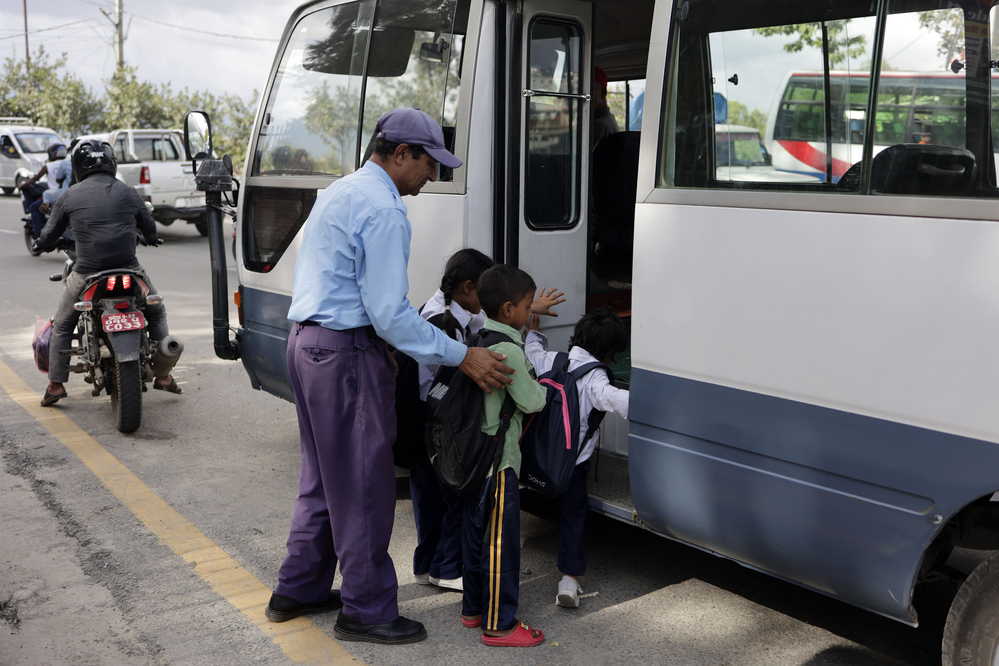
According to sociologist Khagendra Bista of the Bagmati Civilization Integrated Development Committee, vehicles have been arranged in Kharipati and Bhode. “For school, the Ministry of Education, and for those going to work, the Ministry of Labor, have coordinated to arrange vehicles,” Bista said. Regarding the compulsion to send children to distant schools, he said, “We had said we would arrange for the children to study at the nearest school to where they were staying. But they insisted that the children continue at the schools they had been attending. Accordingly, we arranged transportation.”
Bista acknowledged that the children’s studies in Ichangu Narayan were interrupted for two weeks. “Their studies were interrupted in between. We have now coordinated with the nearest local school to arrange for their education,” he said. Education expert Vidyanath Koirala says that the situation where children from holding centers have to travel one and a half to two hours by vehicle to get to school affects their time and health. He emphasizes that arrangements should be made for them to study at private or government schools near the holding centers through mutual coordination.
“For children at the holding centers, traveling one and a half to two hours by vehicle is a major hardship. To spare children from the ordeal of long journeys, it would be best for municipalities and school operators to coordinate and create an environment for them to study at schools near the holding centers,” he says.