An American company is exploring ways to send a humanoid robot made in China to climb Mount Everest, but the work is uncertain due to a lack of legislation.
We use Google Cloud Translation Services. Google requires we provide the following disclaimer relating to use of this service:
This service may contain translations powered by Google. Google disclaims all warranties related to the translations, expressed or implied, including any warranties of accuracy, reliability, and any implied warranties of merchantability, fitness for a particular purpose, and noninfringement.
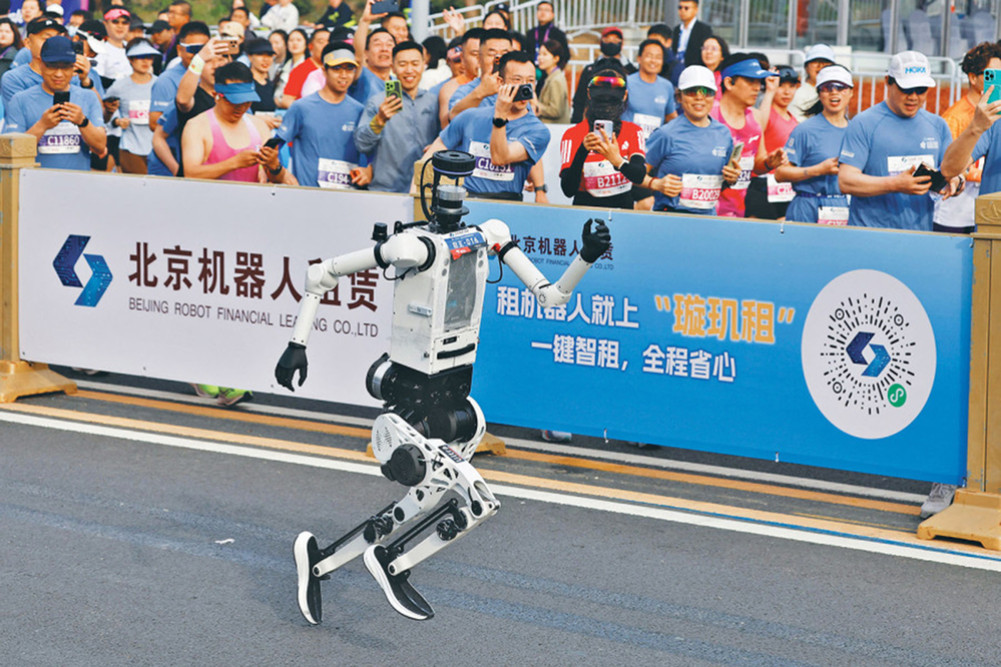
Dozens of Chinese-made humanoid robots dazzled spectators at a half marathon in Beijing last month. The robots demonstrated remarkable advances in athletic ability and autonomous navigation that experts say are rapidly changing the future of robotics.
One of the robots could take on an even tougher challenge: climbing the world's highest peak, Mount Everest. More than 100 robot teams took part in the half marathon in Beijing on April 19. Some of the robots completed the 21-kilometer distance faster than professional athletes. The winning humanoid robot, developed by Chinese smartphone company Honor, finished the race in 50 minutes 26 seconds. That time was faster than the human winner and just a few minutes shy of the current half marathon world record of 57 minutes 20 seconds set by Ugandan runner Jacob Kiplimo in Lisbon on March 8.
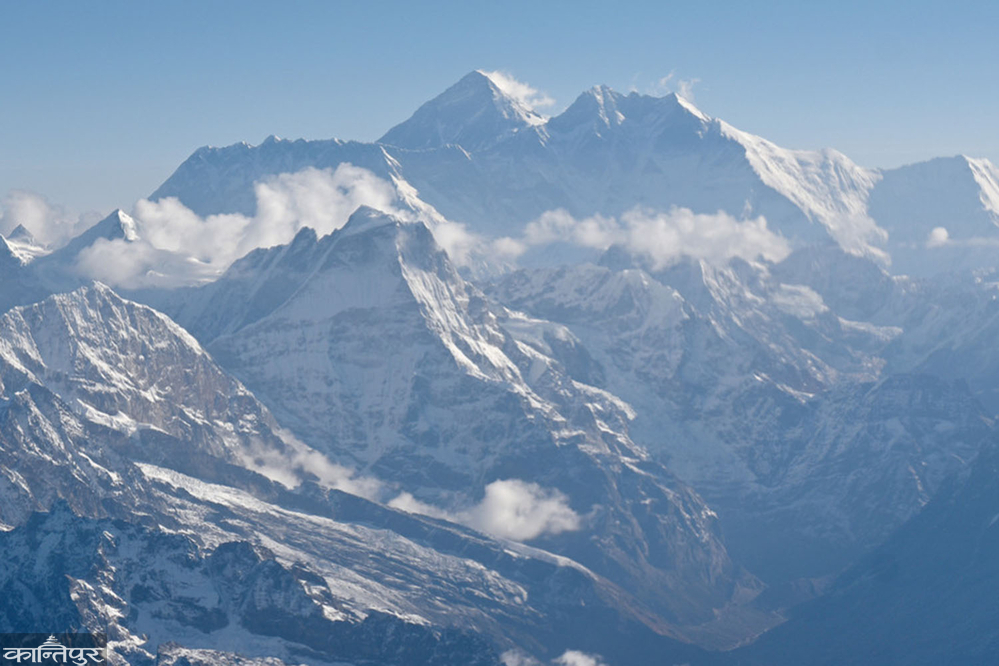
Inspired by this progress, the US-based non-profit Geologic Dome, in collaboration with Nepal-based Fortin Peaks Expeditions Pvt. Ltd., has proposed using a humanoid robot on Mount Everest during this year's spring climbing season.
The project has been named
Pemba
. The aim of the project is to test whether the robot can help with waste collection, glacier monitoring and other risky mountaineering tasks in the future. There are still tons of garbage piled up on Mount Everest. According to documents obtained by the Kathmandu Post, the group has sought permission from the Nepal government to operate the Unitry G-1 humanoid robot in the Everest region as part of a 52-day research expedition.
However, the proposal has faced a hurdle: Nepal currently has no legal framework to regulate non-human climbers on Mount Everest.
'As soon as we received the proposal, we sought the opinion of the Ministry of Tourism,' said Himal Gautam, Director of the Department of Tourism. 'The ministry has directed us to prepare a draft including its concerns, fee structure and other aspects. Permission will be granted after the basic guidelines are implemented.'
As the process of formulating regulations is ongoing, there is little chance of the project moving forward in this year's spring climbing season, which ends on May 29. The organizers now hope to conduct a trial campaign in autumn or winter.
Prajwal Acharya, manager of Fortin Peaks Expeditions, said that the plan has been put on hold until the government prepares separate regulations for non-human climbing on Everest.
'However, if everything goes according to plan, the trial can be held in autumn (Asoj-Kartik)', said Acharya.
Everest Climb: Record in Permission, Team and Income
This agile humanoid robot, manufactured by Hangzhou-based robotics company Unitry, is designed for research, artificial intelligence development and consumer use. It is priced at around 2.5 to 2.5 million Nepalese rupees.
The robot, which is about 4.33 feet tall, has joints that can move from 23 to 43 degrees, enabling it to perform agile movements such as dancing, walking and flipping.
According to the proposed expedition, team members will disassemble the robot and carry it along the Everest climbing route, reassembling it at various camps and testing it. It will be tested from Everest Base Camp at 5,364 meters to Camp 4 at 7,920 meters. At each location, the robot will be operated within a radius of 100 to 200 meters from the base station for 20 to 40 minutes under supervision.
50 years of women on Everest: Where did the journey that started with 10 percent go?
According to the project document, no two-legged ground robots have been operated in the mountainous region above 5,000 meters.
The findings are expected to be published as an open-access standard for the global robotics community.
The proposal also mentions plans for the robot to use its three-fingered mechanical hand to collect waste from various camps. Each arm can carry a weight of two to three kilograms.
According to the organizers, these demonstrations will support Nepal’s Clean Mountain Strategy 2025-2029.
Pablo Berlanga Boemare, CEO of Geologic Dome, told the Kathmandu Post in an email that the organization wants to bring the robot to Nepal and potentially use it in the mountainous region.
“We feel we have reached a historic moment in raising awareness about the growth of such machines in everyday life,” he said. “We brought the robot to Nepal, did some tests around Kathmandu, and were thinking of taking it to the Sagarmatha National Park. We discussed it with the government for two months and based on the feedback we received, it seemed better to wait a year because Nepal currently does not have a legal framework for robotics.”
He said that the decision to wait was made to move forward with the process because some laws need to be passed by parliament. "There were some laws that needed to be passed by parliament, so we decided to respect that and move forward with the process," he said. "Our goal is to introduce new technologies to indigenous communities around beautiful national parks around the world and teach them the skills to use them, so that they can protect their land." The
campaign also plans to collect climate and glacier data by placing small sensor packages at different altitudes. However, operating a humanoid robot in the 'death zone' of Everest is a very complex engineering challenge. According to the
proposal, lithium-ion batteries can lose 50 to 80 percent of their capacity at temperatures below minus 20 degrees Celsius. The team plans to solve this problem by using a special thermal battery casing, a quickly replaceable heated battery pack and an insulated system.
The proposal notes that ordinary lubricants freeze in extreme cold and thermal contraction can cause micro-gears to become unbalanced. To solve this, the team plans to use aerospace-grade fluorine-containing lubricants used in Mars rovers and spacecraft.
According to the developers, the Unitry G-1 was tested in the cold weather of China's Altai region last February, where it completed more than 130,000 steps in temperatures of minus 47.4 degrees Celsius.
'No two-legged robot has ever walked on the rocky, icy terrain of Mount Everest,' the proposal says.
To overcome this challenge, the team is working with researchers affiliated with Google DeepMind to develop a reinforcement learning-based mobility system that can adapt to unstable terrain in real time. The proposal also discusses the effects of reduced air density at high altitudes. At 8,000 meters, air density drops to about 43 percent of sea level, which significantly reduces the cooling capacity of the onboard computer. The team says it has developed a two-zone thermal system that separates the heated battery compartment and the naturally cooled electronics, allowing the processor to use the surrounding extreme cold as a natural heat sink. Communication is another challenge. Since there is no mobile network above Everest Base Camp, the project plans to use Starlink terminals at the base camp and rely on fully automated onboard systems at higher altitudes. The proposal says the technology could help Nepal solve long-term challenges such as monitoring crevasses in the Khumbu Icefall, collecting debris, search and rescue missions, and monitoring glaciers in the future.
After the climb is complete, Geologic Dome will hand over all equipment, including the robot, batteries, charging infrastructure and thermal protection system, to a local partner organization in the Khumbu region.
The organization has also committed to training Nepali researchers and technicians to continue operating the robot in the upcoming climbing season.
The expedition is expected to produce a full-length documentary for international screening, which could establish Nepal as an emerging testing ground for extreme environment robotics research.
If approved, the project would not only be the first time a humanoid robot has been deployed on Mount Everest, but also the first time Nepal has formally acknowledged the possibility of non-human climbers on the world's highest peak.