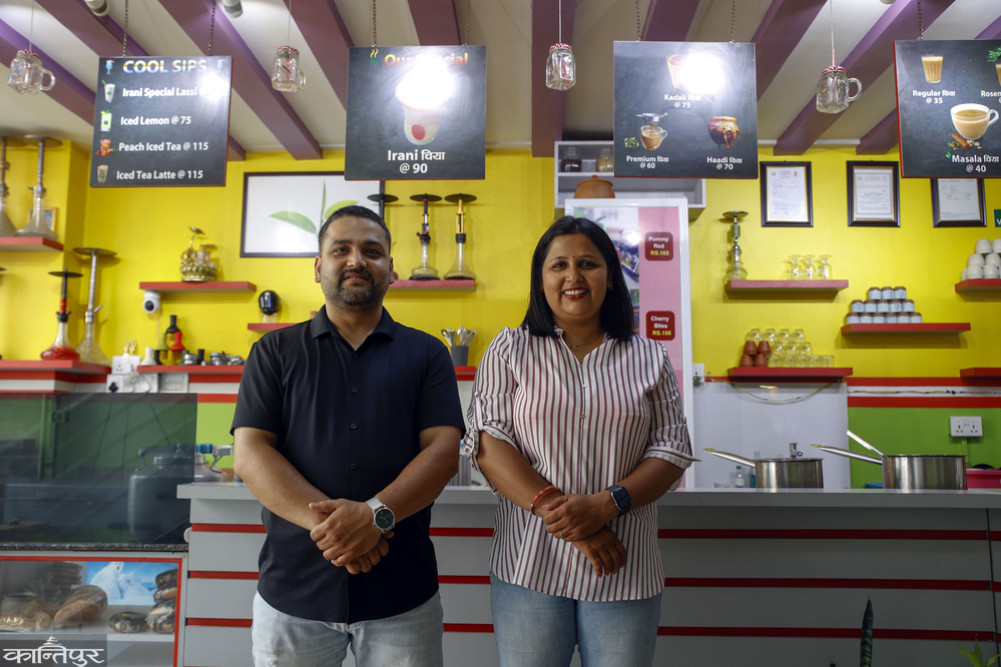
Saroj-Babita, who started an Iranian tea shop called 'Hyderbadi Dum Chia' in India four years ago, are now selling tea from 15 outlets.
We use Google Cloud Translation Services. Google requires we provide the following disclaimer relating to use of this service:
This service may contain translations powered by Google. Google disclaims all warranties related to the translations, expressed or implied, including any warranties of accuracy, reliability, and any implied warranties of merchantability, fitness for a particular purpose, and noninfringement.
After reaching the tea shop, everyone asks one thing - what kind of tea to have? Black tea or milk tea? In addition to this, many new flavors and tastes have been added to the tea menu by the new tea stalls that have opened in the city. But today we are taking you to an Iranian tea shop.
Let's go to Irani Tea in Suvidha Nagar.
Its brother-in-law is 37-year-old Saroj Paudel, native of Kavre. It has been exactly 4 years since he opened this shop . In 2015, he completed his Masters in Culinary Arts in South Korea. After completing his studies, he worked in a restaurant there. And returned to Nepal in 2018. After returning, he worked as a teacher in college for some time . He was busy in college till 3 o'clock. But then he wondered what to do with his free time. Thinking about what to do in this free time, he decided to open a tea shop.
He used to work in India before going to Korea. While there, he heard about Iranian tea. He said that Irani tea is also called Hyderabadi Dum tea in India and said that he opened Irani tea remembering the same old taste.
He opened a tea shop in Narephant, Kathmandu with an investment of 2.5 lakhs. At first, he doubted whether people would like the new taste and style of tea. He said, 'A few days after starting the shop, I even invited the pedestrians walking on the road to taste the tea.' His wife Babita also supported Saroj in his new business. Babita, who works in a bank, left her job for a tea shop. In the early days, there were responses to the extent that he quit his job at the bank and came to pay rent at a tea shop. How many people have said that the rent of 12,000 shutters can be paid by selling tea? After digesting all these things, Saroj and Babita continued to improve the taste of tea. Saroj, who said he was working part-time, instead left his teaching profession and started working full-time at the tea shop.
Gradually, the number of tea connoisseurs increased . Saroj recalled the initial days and said, 'It was difficult when I had to work from 5 am to 9/10 pm. But there was no sorrow in the matter of money.' The number of tea connoisseurs increased so much that Saroj couldn't resist opening another branch. Within 8 months, he opened another outlet in Narephant.
Tea shop is also what? They started praising him slowly. And some new investors came to ask him for a franchise. Then Saroj and Babita started training the franchise buyers. He said, 'We have trained to have the same taste in all outlets.' 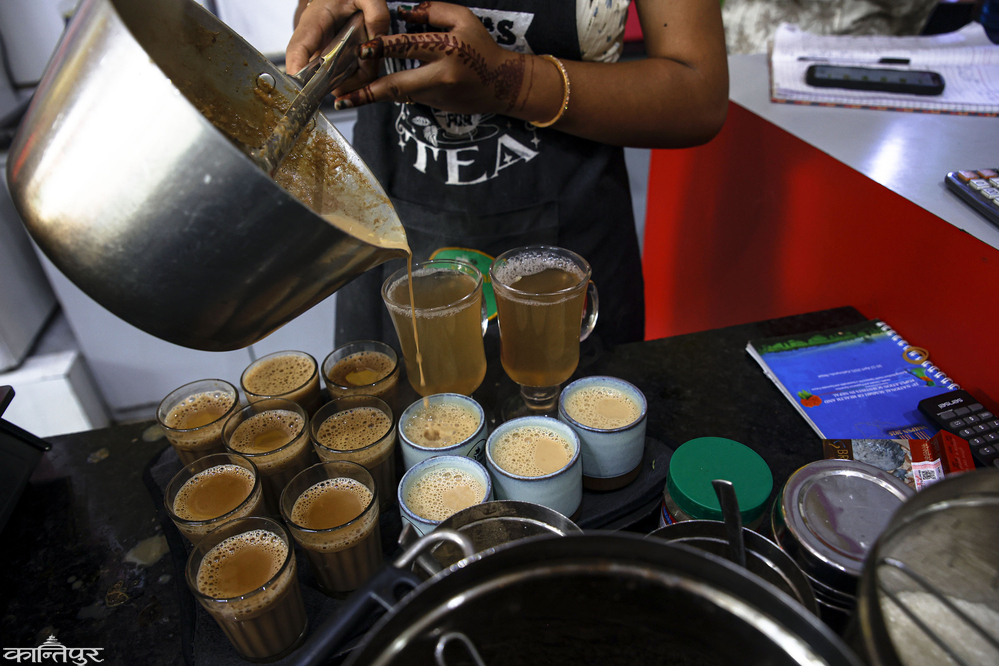
In Suvidha Nagar and in Koteshwar, Saroj has his own investment Iranian tea . Other 15 locations have franchises. Milk and spices prepared from the central kitchen located at Jedibhuti go to all the outlets . He said, "It takes 5 to 6 hours to prepare milk for tea." If we cook 130 liters of milk at once, it becomes 70 liters when boiled. After cooling down and freezing, it is sent to all franchises.'
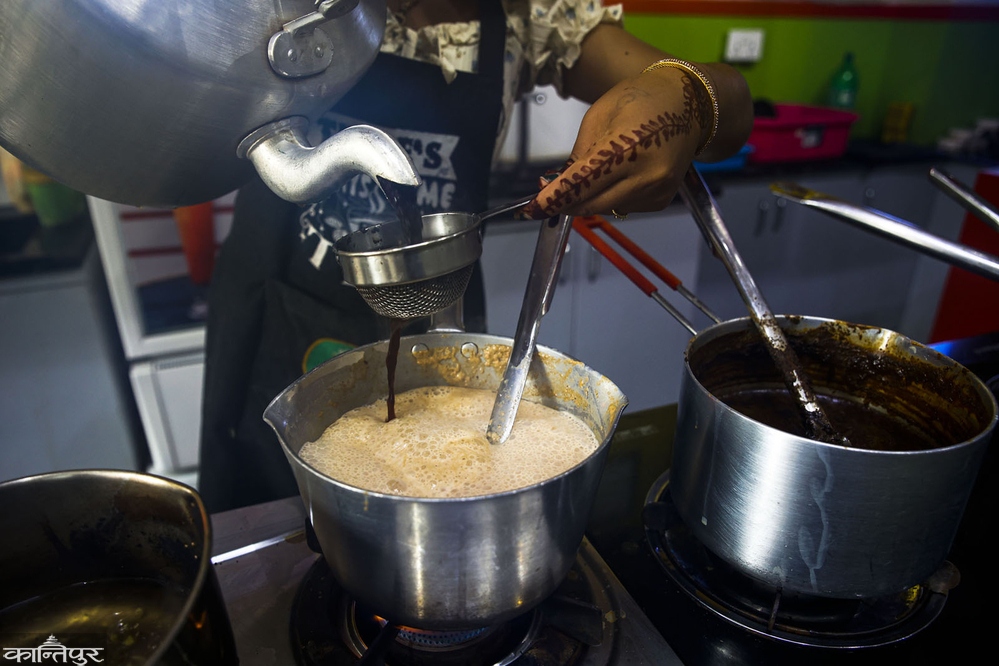
How different is it from the tea we eat every day? Saroj explained, "When cooking Iranian tea, the milk should be cooked for a long time". If there is 50 liters of milk, it becomes 25 liters when cooked. Tea leaves should be boiled in a separate pot. The tea cooked in this way is very thick, you don't even need to use sugar, because the milk has been cooked a lot, it is so smooth.'
Saroj, who is selling Iranian tea at 90 rupees per cup, said that there are many types of Iranian tea. He said, 'We have followed the recipe of how Iranians used to cook tea in the 1950s to 60s. There are many varieties now, but we have followed the old style. 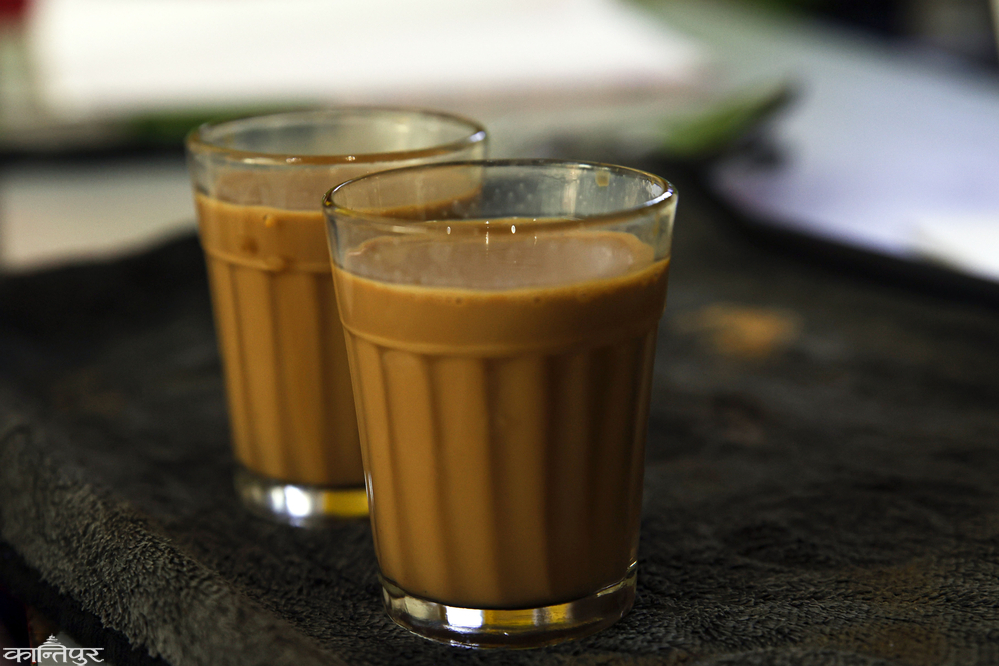
According to him, spice tea is the choice of many people after Iranian tea. He said that 15 types of spices prepared by himself will be added to the masala tea which costs 40 rupees. Many people also prefer strong tea that costs 75 rupees per cup. Saroj, who is selling 12 flavors of tea like handi tea, premium tea, regular tea, rosemary tea, said that there is a special craze for Iranian tea.
Saroj is happy to see the business that he started with a small investment expand and become the choice of more and more taste connoisseurs. He said with a bright face, 'If you know what you have the ability to do, you can earn money in Nepal.'