According to the activists in this field, it is an achievement for the gender and sexual minority community to start opening up about their identity and issues at a young age.
We use Google Cloud Translation Services. Google requires we provide the following disclaimer relating to use of this service:
This service may contain translations powered by Google. Google disclaims all warranties related to the translations, expressed or implied, including any warranties of accuracy, reliability, and any implied warranties of merchantability, fitness for a particular purpose, and noninfringement.
People from gender and sexual minority communities say that social media has helped them to bring their issues to the society. They say that the recent increasing use of social media has made it easier for them to explain their identity and issue to the society.
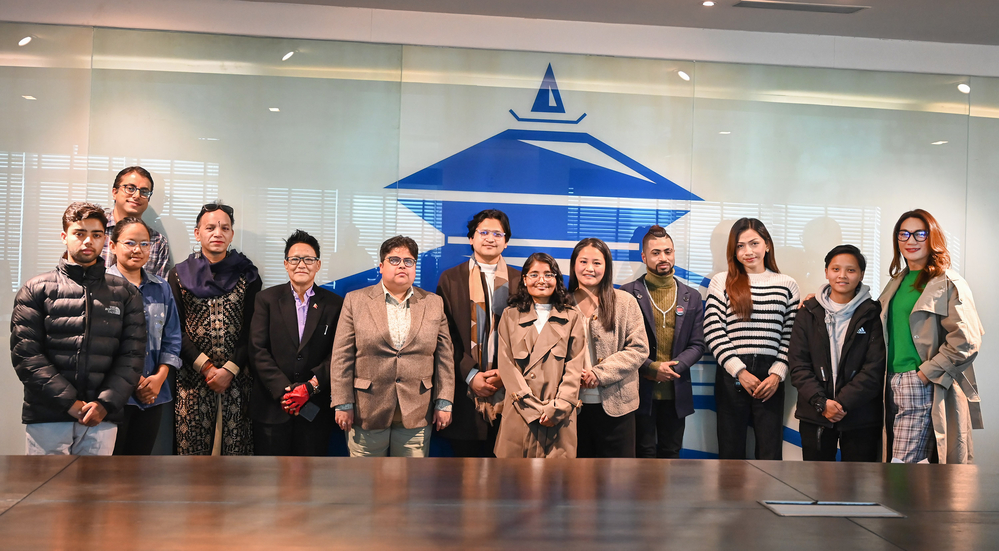
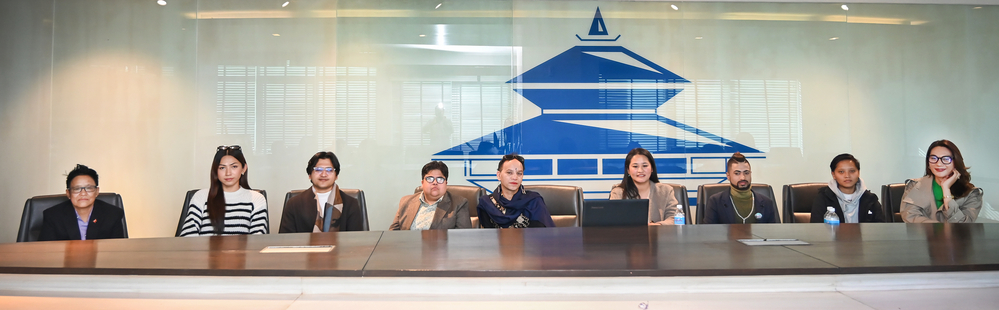
In a roundtable organized by The Kathmandu Post, a co-publication of Kantipur Media Group, about the voice, presence, rights and proper representation of gender and sexual minority communities in the mass media, they said that the acceptance of their community has increased from the household to the society.
Badri Pun, president of Inclusive Forum Nepal, said that although there are only a limited number of people who have to protest for the rights of their communities, the presence is increasing due to social media. Pun, who has been working for the gender and sexual minority community for the past 20 years, said that the situation has recently become open about his identity. "When the sexual and sexual minorities had to protest, only 4/5 people were visible before, now the number has increased, there is a state of coming out with pride, there is an atmosphere of opening up about what you are, all this is because of social media," he said. They say that it is easy to get a job because of
social media. Nirwan Shrestha, a senior volunteer of Samarpan Sanbhajan Samaj Nepal, said that they have helped a lot to get a job because of social media. Shrestha, who is also a male gay activist, said that his acceptance in family and society has increased due to social media. "Social media platforms have made it easy for us to come out openly and get jobs, acceptance within the family has also increased," he said. Virat Vijay Ojha, a queer activist, said that
has become an environment for his community to come forward openly. "After the pride parades of a few years ago, young people are coming out with pride," he said, "even I was not able to open up at the age of 14/15, now they can come out openly." He commented that the implementation process is uncomfortable. They said that even the national census did not cover all the people of the community from basic needs like reproductive health and education provided by the constitution itself. They say that although there is a provision in the Supreme Court that same-sex marriage can be registered, it is still legally temporary. People from gender and sexual minority communities also say that despite the court's decision, it is difficult to implement it because the employees of the ward, municipality and district courts are not knowledgeable.
Saying that there is no need for a separate law for same-sex marriage, Blue Diamond Society program officer Peter Rai said that the existing law should be made gender and sexual minority-friendly. "There is no need for a separate law for same-sex marriage, our problems will be solved if the existing law is made gender and sexual minority friendly," she said.
Anmol Rai, a member of the Federation of Sexual and Gender Minorities, Nepal, said that the implementation of laws related to citizenship, marriage etc. is weak. Rai, who is also the winner of Miss Pink Nepal, 2024, said that they are not able to easily enjoy the basic needs such as health, education, reproduction as provided by the constitution. "Same-sex marriages and citizenships have been arranged, but they have not been implemented," she said. He complained that drugs and services used in hormone replacement therapy are not available and even if they are available, they are expensive.
According to the National Census 2078, only 0.01 percent of the total population are gender and sexual minorities. They say that this figure should be more. Chhesang Ghising, program officer of Queer Youth Group, argues that when the neighborhood is counted in the census, gender and sexual minority people are left out. "The people who come to take the census are the neighbors, but they don't ask how things are," she added, "They do what they see and do according to what they see." For example, if I was a daughter before, they would write and go.'
Ghising argues that due to various processes and problems, real data could not be obtained. The chairman of Inclusive Forum Nepal complained that even though the government considers the population below 5 percent as a minority, they did not get any reservation. Communities under 5 percent are kept in the minority, there is a system of reservation for other minority communities. But there is no reservation for gender and sexual minorities," he said.
A member of Rainbow Disability Nepal and a blind woman Pratsika Chapagai said that along with the gender and sexual minority community, there is no accurate data of the disabled within the community. "There are many people with disabilities among sexual and sexual minorities, there is no data on them," she said He understands that it has become a little easier than before. Vimala Gurung, program officer of Mitini Nepal, said that Nepal is the second country in South Asia that accepts gender and sexual minorities. She said that many legal arrangements are being made from citizenship to temporary marriage registration.
They complained that even in the media, news about gender and sexual minority communities, who have not been able to fully exercise their constitutional rights, is only for fun. Ojha, who is also a writer and researcher, said that in order to write news about the community of gender and sexual minorities, all media houses should have a representative of that community. "We had to keep people from the community as freelancers if not full-time employees," he said It is still difficult for people from the community to come out, recalls Honey Maharjan, secretary of Saparang Dhanban Samaj Nepal and transsexual activist. She said that it was easy for her to open in Kirtipur within the valley because of the Blue Diamond Society. Maharjan also ran for the post of mayor in Kirtipur municipality in the local by-elections 2081. She said that she even ran for the election saying that it would be easier if the community was represented at the law-making level. She said, "I am happy to see that a candidate for the post of mayor in Kirtipur municipality from a sexual and sexual minority community has come to Google."

