Sasikala's face lit up the day her son brought his spouse home. The 'partner' was Peter Mill, a British citizen. When the mother saw not the daughter-in-law, but her husband with her son, she was sure.
We use Google Cloud Translation Services. Google requires we provide the following disclaimer relating to use of this service:
This service may contain translations powered by Google. Google disclaims all warranties related to the translations, expressed or implied, including any warranties of accuracy, reliability, and any implied warranties of merchantability, fitness for a particular purpose, and noninfringement.
Mother Sasikala Pant's eyes did not open that day. She cried non-stop for a long time. Why did mother cry? Sunil Babu Pant thinks, 'Perhaps the son will have to suffer!' The mother started teasing him without speaking. Sunil Babu speculates, "Maybe the society will push the son away and push him away." Despite being reminded by the family, the mother's tears did not stop.
Where was Sunilbabu's mind to make his mother cry? He didn't want to see his mother's eyes filled with tears! However, the dream woven for his son suddenly came to an end. All the longings for his son were suddenly shattered. The mother's desire was to bring her daughter-in-law into the house with her young son. And to see the grandchildren.'
Every now and then she would say, 'I have to get married now.' Not only the mother, but also the family and relatives had the same wish. That was the society's will, not Sunil Babu's. He wanted to tell one thing, one thing from his heart. He wanted to explain his point. But he thought, 'how to say? How to explain?
Around 2001, Sunil Babu founded 'Neel Heera Samaj', an organization fighting for the rights of gender and sexual minorities. He was doing various campaigns to strengthen the sexual minorities. One day, instilling confidence in his friends, he said, "Your photo and name are confidential, tell your story." He called a journalist for an interview. However, the friends who were prepared to speak suddenly disappeared. Sunilbabu had to fight. The issue of sexual minorities was to be established. The journalist said, 'Then you give it.' Sunil Babu understood that no one else would come until he said so himself. And gave an interview.
The interview given in the English magazine was read by limited people. Especially in the 'intellectual circle', his gender identity came to be known. Could not reach the village. Then another interview was published in Kantipur Weekly. He revealed his identity and said, 'I am a gay man.' He put an end to long years of moaning and groaning in one word. The news spread from town to village. Didi shuddered after reading the newspaper. She read to her parents at home. The boy was worried for a while. later considered normal. The mother's tears did not stop flowing. Relatives came. Reconciled. And said, 'If you get married, it will be fine.' Sunil, who had fought for the identity of gender minorities, was no longer afraid. He reminded them at home and said, 'From now on, don't come with the matter of marriage.'
Sasikala's face was lit up that day. The day his son Sunil brought his spouse home. Sunil's 'partner' was British citizen Peter Mill. He used to work in the British project. "When I came out, I met Peter. We started living together in the Kathmandu house,'' he says. A mother wants a life partner with her son, not a daughter-in-law. Then she was convinced. Baama, who was sitting with his son, became more happy to be with Peter. Mom and Dad learned a lot from Peter. And Peter from Baama. They shared each other's culture, shared love. They also closely understood the identity of gender and sexual minorities. When Peter was not well, not only Sunilbabu but also Baa was hurt. They also rejoiced in the smiling face. In fact, Ba Ama started to love Peter as much as Sunil.
Sunil was born in 029 in Gaikhur, Gorkha. Ba Ramji Pant was a school teacher. Mother Sasikala's daily life was spent walking up and down the village. When daughter after daughter was born, Sasikala faced pressure from family and society to have a son. Due to that pressure, Dai and Sunilbabu were born after three sisters. Sunil grew up in everyone's love. Sasikala left no stone unturned in bringing up her children. Mother's bare heels, chapped hands and a heavy head. Even later, Sunil kept seeing this. "It seems, mother never lived for herself," recalls Sunil.
Sunil also remembers his mother's pain for him. Once he fell down and came back with injuries on his body. Mother was shocked to see that. She started crying. "Even our small injuries hurt our mother a lot," he says. Growing up, Sunil used to follow his mother even later. When mother went somewhere, she had to go with her. He had a tendency to cry and snort when he couldn't go. Once my mother and father finished work and started walking to Kathmandu. Sunilbabu cried and said, 'I will also go with you.' Baama tried to persuade him. He didn't agree. On the contrary, he snorted and said, 'I will lose you if you don't go.'
time is not always the same. What does mother know? At that time, the son who wears Ghurki will grow up one day. Where do you go for your career? Years are lost. And sends letters wrapped in paper. A mother's eyes wait for months to feel her son in the letter. By the way, Sunil turns to the crying boy who is waiting for his mother's way. Once the mother passed away. He was crying and looking towards his mother. Habit of sleeping with mother at night. Nights without parents were not easy. I was neither hungry nor sleepy. Sisters tried to remind. "No matter how much sisters love you, how would it be like being a mother?," he remembers.
Sunil gradually started to feel different from other boys. Growing up as a teenager, friends were attracted to girls, teasing them. But she didn't like that. She began to feel love for the boy. He lost in himself the change that was coming to him. There was also a girl friend who liked Sunil. They approached her under the pretense of teaching homework. But he had no attraction for them. She imagined love with a boy. He was thrilled. This started to cause fear in him. "How could I expose myself in a society that uses indigestible words for sexual and sexual minorities?," he recounts. He was afraid that someone would find out about his identity. Some nights the eyes were wet. So he wanted to escape from this society as fast as possible. wanted to go away Finally in 2047 he went to Ukraine to study B.C. Who will express their feelings there? I also made a girlfriend so that my friends would not be suspicious. But the relationship did not last," he remembers. Seeing that the relationship did not last, his friends used to tell him jokingly, 'How many girlfriends does this pant change.' He used to go to the library to forget himself. There he read many books on philosophy. The book gave him a lot of relief.
Once Sunil Babu went to a clinic for a medical checkup. The word 'Caution' hung in the clinic seemed as sharp as a weapon for him. It was written, 'Beware of drug users, beware of sex workers, beware of homosexuals...' That day, he heard the word homosexual for the first time. "Being gay was like a big crime," he recalls of that awkward moment. So far he has never been able to show what he is.
He went to Japan during his studies. After going there, Sunilbabu thought that he also existed. Understand that you have rights too. increased courage. Not himself, but the society's point of view is wrong. "I met many gender minorities there. They openly lead honorable lives. After that, I thought that the problem is not in me, but in the eyes of the society," he said. Sunil, who was living a life of terror and fear, returned to Nepal with courage. Then went to Hong Kong for MPhil. There he learned about clubs, night life. But again disappointed in Hong Kong. I thought that the lives of sexual minorities here revolve around sex. And I left Hong Kong," he says.
The son who left Hong Kong and returned to Nepal suddenly appeared in the avatar of a monk. The mother was shocked by her son's monk avatar. He went on to become a monk. Sasikala cried badly. "After my mother cried a lot, I prayed, I couldn't go," he remembers. The mother was devastated that her son would break the relationship by becoming a monk. He stopped seeing his mother's tears. Then he thought, 'Now I will work for my own community.' Named it, Neel Hira Samaj. He started looking for gender and sexual minorities. At Ratnapark, Pashupati some were sexually active. Hear their stories. There is a story of someone being kicked out of the house, someone being raped. Blackmailed someone,' he says, 'It was heartbreaking.'
He remembers a character. At that time, it was not customary to keep women in double evenings. She used to be a character girl and used to dance in double evenings. Dancing at night is not said at home. One day his friends came to eat and saw him there. He got a wound on his face after being beaten,' he said, 'Now he is committing suicide because he will be hated in the society.' One of them was a gay bank employee. Half a percent of his monthly salary has been blackmailed by one person for 15 years. He heard and saw many incidents of such discrimination and exploitation. After that, he decided, "Now we have to get organized."
He requested his gender minority friends to register the organization. He asked to bring the photocopy of citizenship many times. But they hesitated. "I took the photocopies of the citizenship of my brothers, father and sisters and registered them," says Sunil. Neel Hira Samaj fought many struggles for the rights of gender minorities. Rights were being acquired. Rights and rights were included in the law. In this connection, Sunil Babu was also elected as a member of the first Constituent Assembly from CPN United. The constitution was not made in the first phase. But due to his efforts, the rights of gender minorities were included in the constitution. His mother was always happy with this work.
He was in a relationship with Peter when he was a member of the Constituent Assembly. That love took the shape of a family. Sunil's happiness spread by love is a ticket for a long time. The end of a happy relationship was very sad. While in Nepal, Peter started to get sick. He started developing neurological diseases. Trembling, urinary retention and sudden fainting. I went to UK for Peter's treatment. We started living there," he said. Not a day went by that he did not pray for Peter. Peter spent 5 years caring for him. Peter, who had been laughing and talking, was suddenly speechless. If you can't eat. He was melting more and more. Finally, Peter breathed his last in Sunil's arms and left.
Peter's parting, was the pinnacle of pain for Sunil Babu. Sunilbabu's eyes began to flood every moment spent with Peter. The room, when Peter was there, was dull when he was not. Every now and then I would rush to buy vegetables. Peter is no more. Why rush,' he mumbled inwardly. How many months passed without sleep. And, even after sleeping for hours for several months. He shifted to London. Wherever he went, Peter never left his sight. Like the interlude of Premadhwaj Pradhan's song - 'There is no peace even in the mountains, there is no place where you are not remembered.'
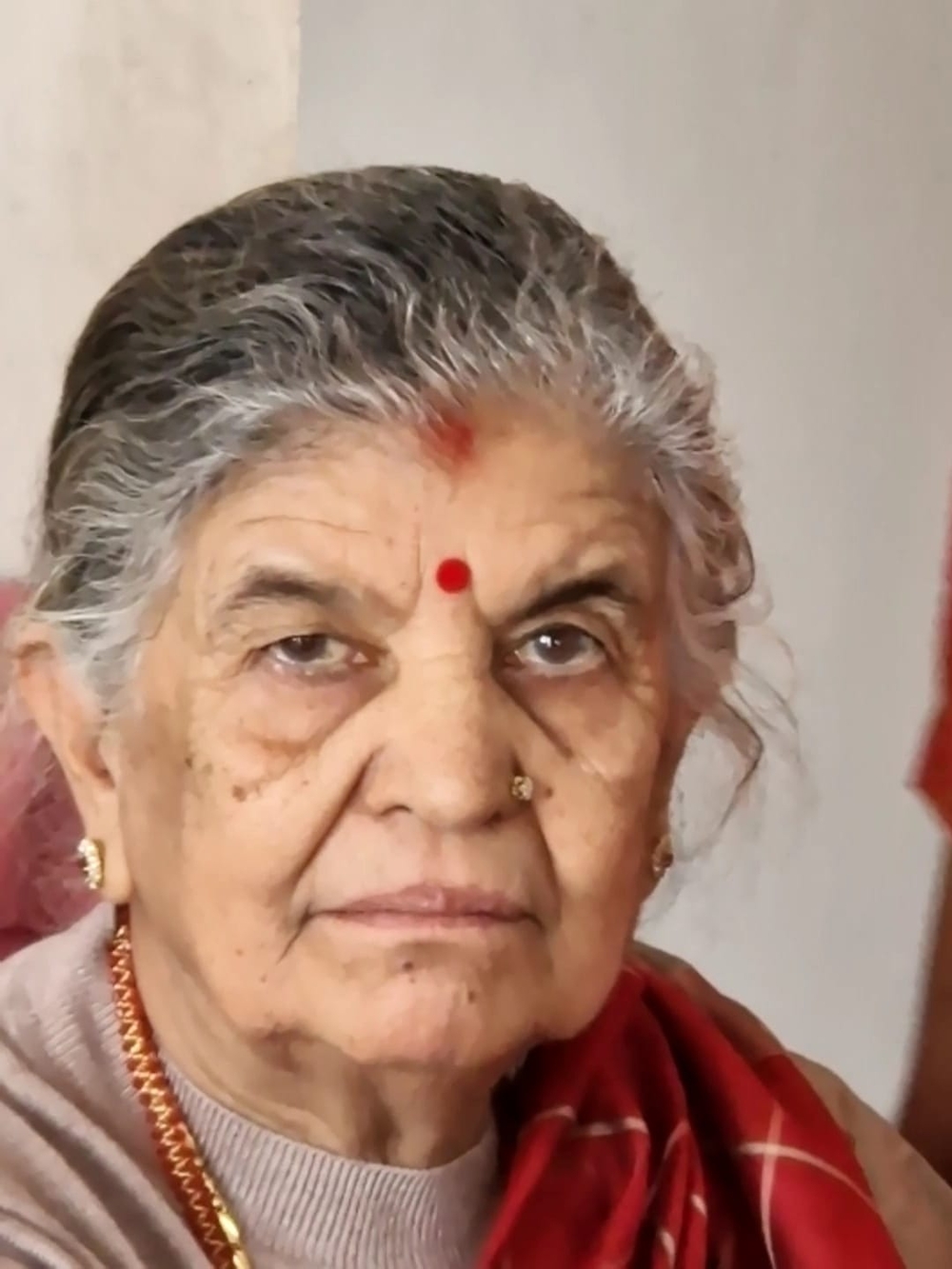
He appeared again in the avatar of a monk. He meditated for 2 years and 3 months. After meditating for a long time, the mind became peaceful. Sunil came back to rhythm. Then he returned to Nepal. Now he is at home in Baluwatar with his mother. Sasikala's mother wants, 'Don't let her son go out of her sight now.' The 81-year-old mother has no less affection for her children. He looks at his mother's face. The face is mottled. When you have a son, those socks are happy. He also does not want to be away from his aging father. Instead, he regrets, ``Why did I stay away for so many years?''
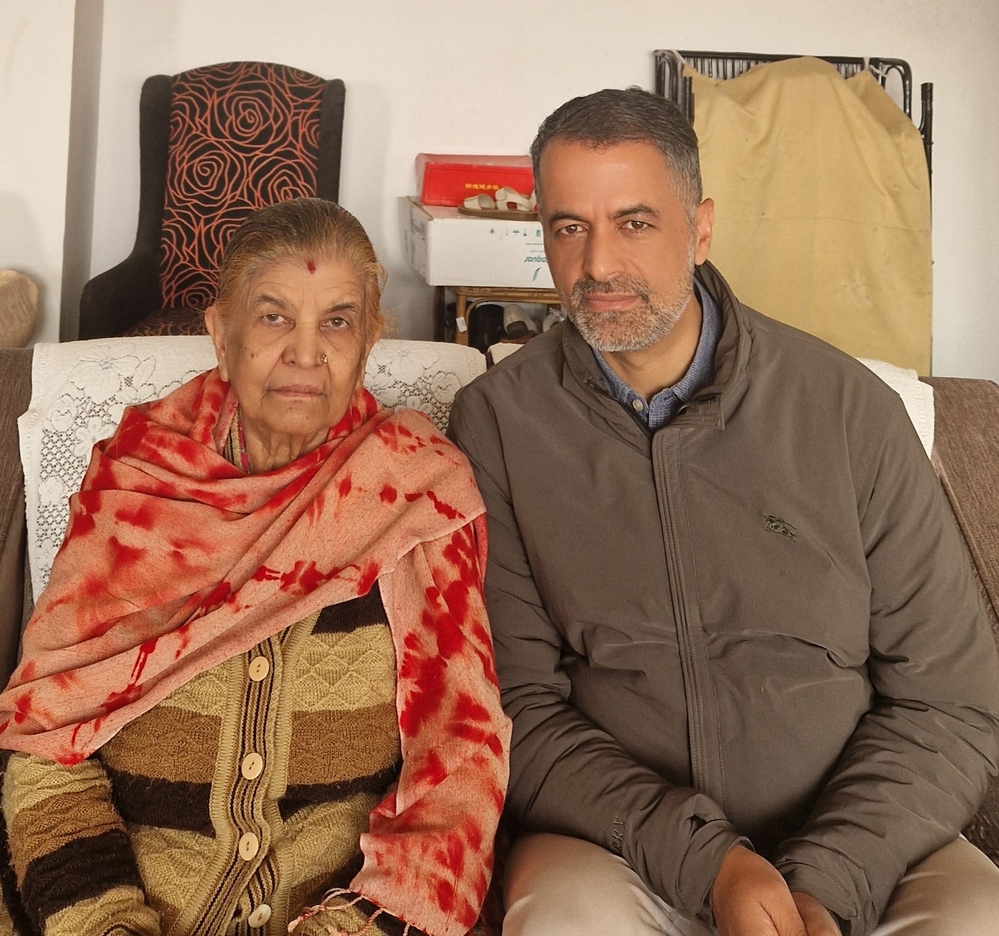
When going out of the house, his mother keeps asking, ``When will you come?'' Before he reaches anywhere, his mother's phone calls. She asks, 'When are you coming back?' Sunil thinks, 'Who else is there for me now besides Baama?' Maybe they want, 'The age of the declining father will continue to increase.'

