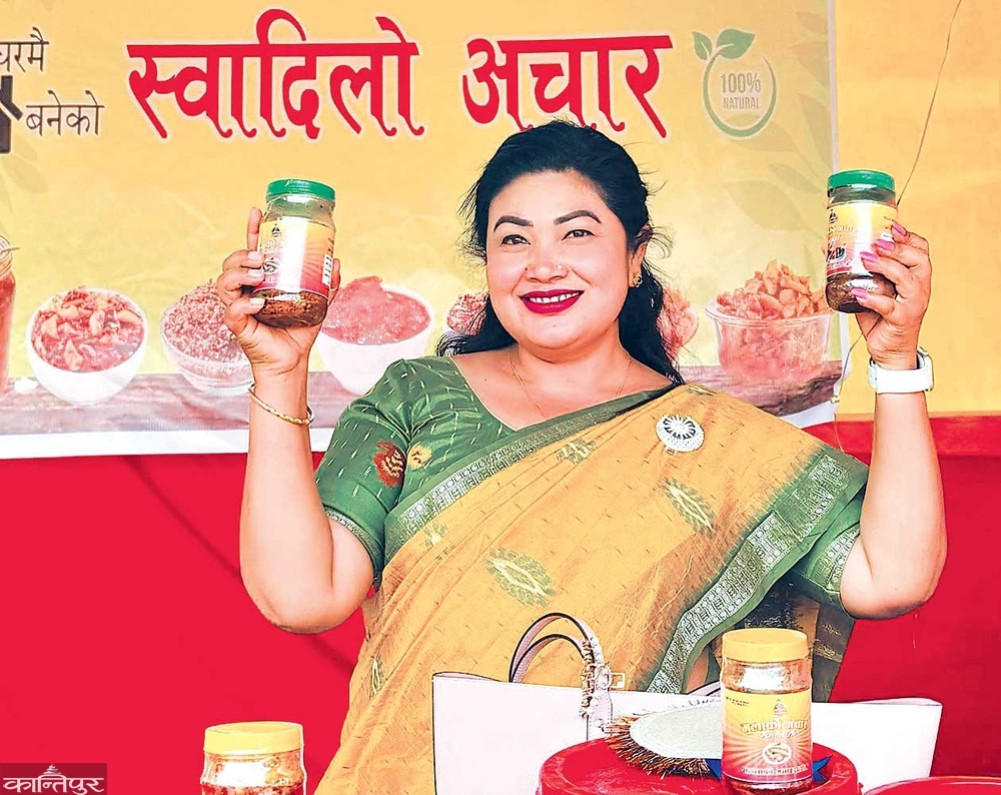
After 18 years of working as a clerk, Shanta turned to politics and became a member of the Constituent Assembly and a member of Parliament. She enrolled in school and started her formal studies. His venture, which started years ago, now produces 22 types of pickles, both vegetarian and non-vegetarian. ”Shantako Achar” reaches Australia, Qatar, Europe and America.
We use Google Cloud Translation Services. Google requires we provide the following disclaimer relating to use of this service:
This service may contain translations powered by Google. Google disclaims all warranties related to the translations, expressed or implied, including any warranties of accuracy, reliability, and any implied warranties of merchantability, fitness for a particular purpose, and noninfringement.
Shanta Choudhary, who was freed from 8 years of difficult life as a prostitute and turned to politics, also started a business of making and selling pickles to support herself financially. Shanta, who started making pickles only a year ago, has now spread her pickles in foreign markets. We are struggling to deliver the demand for pickles to him.
Shanta, who opened a pickle industry under her own name, has also named the pickle as 'Shantako Achar'. She makes pickles from agricultural produce bought from local farmers. Pickles are prepared from local organic ingredients. This delicious pickle reflects Nepal's rich culinary tradition," she said, adding, "This is the perfect choice for those looking for the authentic taste of Nepal. That's why there is a lot of demand abroad.
Shanta, who has faced many struggles and ups and downs in her life, sought a way to become independent while doing politics. She started the business of making pickles with the idea of making not only herself but also other women independent.
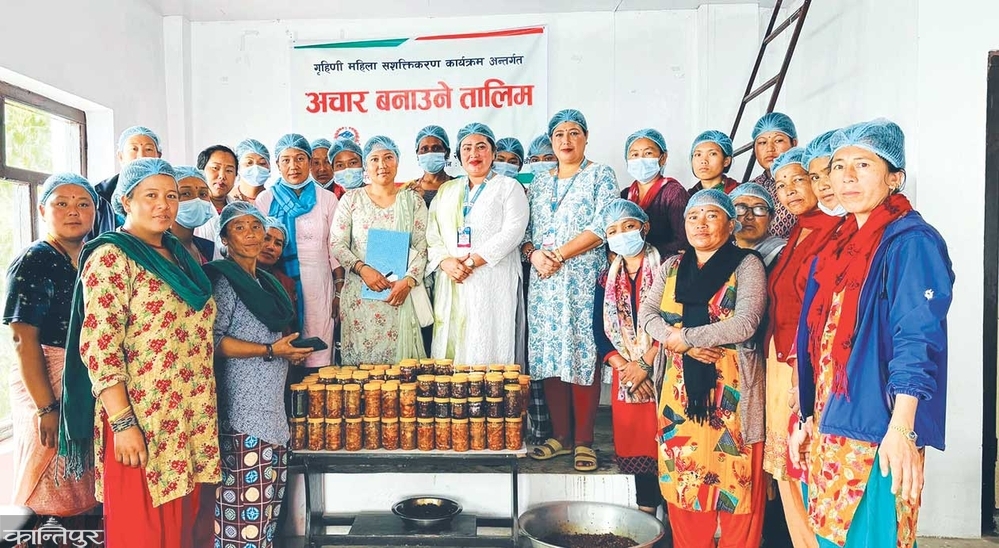
"I opened this industry to make women capable and independent," she said, "I tried to change women's lives by giving them skills and employment opportunities." There are currently 18 women working in her industry. Shanta herself is busy making pickles from early morning till late at night.
Sometimes it is not easy for him to manage business along with political life as he has to rush to political events and meetings. When there is no political program, she is engrossed in making pickles all day long. Although Shanta makes pickles, she has not set up a 'sales room' anywhere for sales distribution.
Most of the pickles produced at home are given to Bhatbhateni super markets. Apart from that, it has been given in other places as well on the basis of demand. A little larger quantity goes to European countries including Australia, Qatar, USA. She said that preparations are being made to open a pickle shop in Qatar after some time.
While some people are making politics a place for business, she has given the message that she is taking it as a pure public service and is venturing for business. "Politics is service, there is no business in politics. A leader should be self-sufficient so that wrongdoing is not seen,' she said, 'I have also ventured to convey this message. Another thing, I don't have any other source of income. This is also my forced profession.
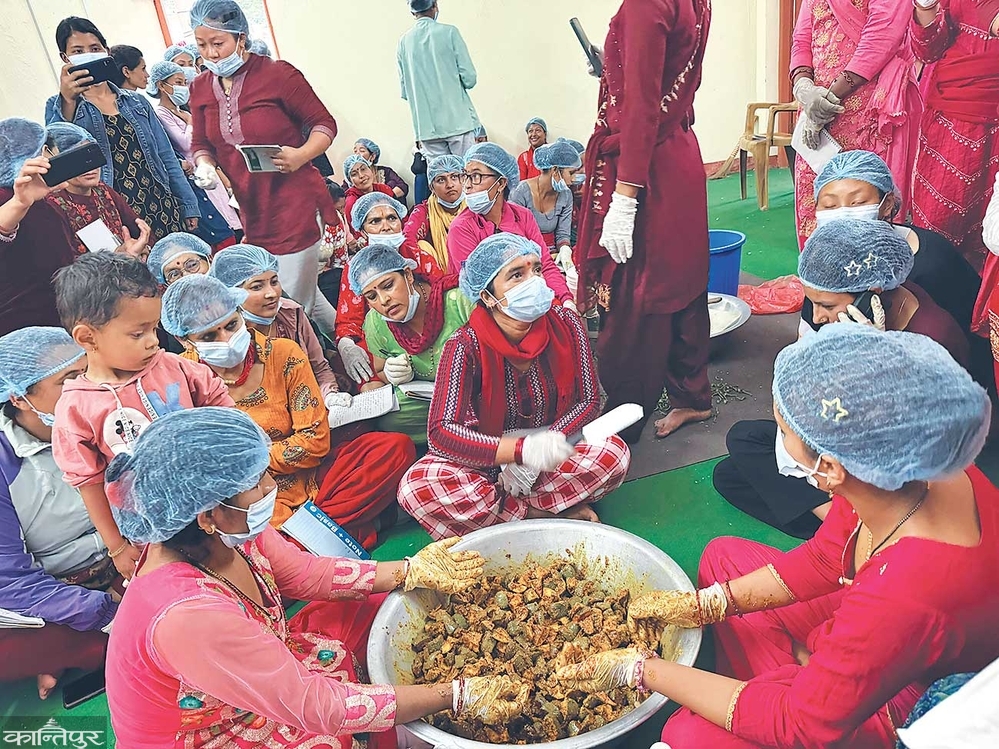
She said that she started the business with the idea of turning the skills she learned in life into a business. Women often have the skills to make pickles. If we can turn that skill into a business, it will be easy for women to become self-reliant," she said, "I am thinking of giving employment to 1000 women. I want to make women's skills a means of self-reliance.
With the same aim, she is also training women to make pickles by giving the slogan of women's empowerment and self-reliance. "I want women to do business and increase their income through training," she said, "many are working in my industry after taking training." It can also be produced and sold at home. The demand for pickles is good.
She makes pickles from various ingredients including amla, mangoes, timur, garlic, Akbare chillies, mutton chillies, radish, meat and also sells roasted corn. She said that since Shanta's pickles are made by hand from home-made spices, there is a high demand from consumers as they have the taste of home.
'Shantako Achar' industry produces 22 types of pickles for vegetarians and non-vegetarians. Vegetarian pickle consists of three layers of Akbare chilli, two layers of lentils, amla, Gundruk, Soybean, Timur paste, mushroom, bay leaf, garlic, mango, radish, lemon, mix, powdered Timmur paste etc.
For non-vegetarians, pickles are made from chicken, fish, khasi, crab, and mutton. She said that she uses separate dishes for vegetarians and non-vegetarians. There is also a good demand for pickled meat. We make different types of meat pickles according to the wishes and demands of the consumers,' she said, 'There is a lot of demand for meat in the Sukuti country and abroad. That's why we have given importance to non-veg along with veg.
Shanta goes to villages to collect the raw materials needed for pickles. Since all the goods are related to agriculture and animal production, she goes to the farmers' houses and farms and collects them. Nowadays, some farmers themselves come to sell agricultural and animal products. "Due to this, on the one hand, the farmers' produce has got a market in the village, and on the other hand, farmers have been encouraged to cultivate," she said, "We have given importance to the produce of the entire village. The farmers themselves are excited to sell it for pickles.'
Even if Shanta has to stay in Kathmandu for a long time, she starts making pickles there. At that time, she contacts the farmers and buys goods as much as possible. Since it is expensive to buy the goods from the vegetable market, she bought them from the farmers. She buys vegetables from wholesalers only when they are not available. I make pickles everywhere. I have also prepared other sisters by training,' she said, 'because of which it has become easy to work even when I go to Dang, Kathmandu. The work of pickle production does not stop anywhere.'
Shanta's pickle is sold for 180 to 1650 rupees for 350 grams. Shanta said that when selling in Nepal, they sell to traders at a discount of 20 to 30 percent on the price written on the label. The discount is reduced when selling abroad. Most of the time, wholesale price of Nepal is sold abroad," she said. "The price also varies according to the country. There are more benefits from abroad than in Nepal. Women working in the
industry get a monthly salary of 15,000 to 50,000 rupees depending on the job. "Since pickles are prepared according to demand, we sometimes have to work more and when the demand is low, we have to produce less," said Shanta. Shanta said that grinding spices, crushing garlic, cutting radish, wrapping, labeling and sealing are done by machines. She said, 'After starting to develop pickles as an industry, it is not possible to produce them on a large scale without the use of machines.'
She started making pickles by buying chicken meat worth one thousand rupees. As the demand was good, she also ventured into different types of pickles. Now she said that she is earning up to 20,000 rupees per month from pickles. "Instead of earning more, the goal is to cover her expenses by employing other women," she said.
Shanta has taken many challenges in her life. That is why she has learned to face challenges. The feeling of having to work has made it easy for him to become an entrepreneur. I have done many things in my life. I am realizing that women can also do a lot of work if they work hard, work hard and think about doing something,' she said. When do you think that you become a member of parliament by cleaning the dirty dishes of someone else's house? I have been able to join in many such unthinkable works.'
Husband left when children were 8/10 years old. It was not easy to do politics and lead a life while raising children alone. While Lukiluki participated in the land rights movement, she was established through street struggles. She became an MP from the streets. In the course of this movement, in 2064, she became a proportional member of the UML and also became the chairperson of the Natural Resources Committee.
``Absence teaches many things,'' she said, ``Even those who have nothing can do many things if they dare. Time teaches everything. She is now a member of UML's Politburo. She has continued the pickle business while bearing political responsibility.