Lumbini region is rich in local ingredients from Raithane grain production, food. The local Raithane of all the 12 districts here are moving forward in commercialization by saving crops from food grains and materials. However, entrepreneurs are disappointed that they have not yet found enough market and the government has not made the necessary plans.
We use Google Cloud Translation Services. Google requires we provide the following disclaimer relating to use of this service:
This service may contain translations powered by Google. Google disclaims all warranties related to the translations, expressed or implied, including any warranties of accuracy, reliability, and any implied warranties of merchantability, fitness for a particular purpose, and noninfringement.
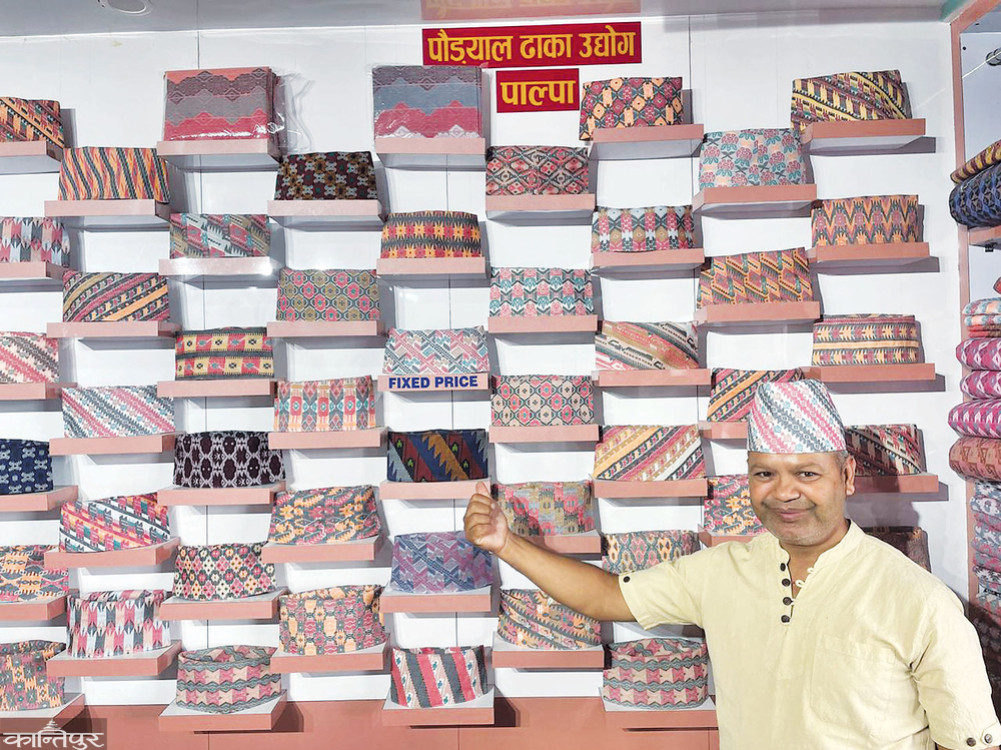
Devraj Bhandari Paudyal, who hails from Biratnagar in Morang, was choosing a hat in the Dhaka cloth showroom. Dhaka is also produced in our country, but Palpali likes to take it to Dhaka, he said. However, as much as Kunti Moktan's song 'Choli Tola Palpali Dhakako...' is famous, the word Dhaka cloth is also on the tongue of people living abroad.
Every visitor to Palpa buys Dhaka and its products as the first koseli.
Started production in 2015, Dhaka Textiles and its diversification have gained fame in the country and abroad. According to Manojraj Sharma Paudyal, a Dhaka entrepreneur, there is a growing trend of buying Dhaka and various items made from it as a gift for those who come for a visit or a personal meeting.
The Dhaka hat is seen as the headdress of Nepali people. Apart from that, hats, shawls, handkerchiefs, purses, stockcoats, bags, ties etc. produced from Dhaka are also in trend recently. There are more than 15 Dhaka textile industries in Palpa alone. More than 200 women here are earning a good income by weaving Dhaka cloth at home. According to Palpali Dhaka Association, the annual income of Palpali Dhaka is equal to 10 million rupees.
Dang's mouth-watering tilki rice
In recent years, the local and state governments have taken a policy to protect Raithane grain crops. The Lumbini state government has also included the Raithane variety grain crop protection program in the policy and program and budget of the last financial year.
In the policy and program and budget of the province, the protection and enhancement of Tilki rice of Raithane variety has been arranged in Dang. Tulsipur sub-metropolitan city of Dang has allocated the budget for Raithane crop protection in the last financial year. Although Raithane variety rice production is less, the farmers have been getting a good price for it. Tilki paddy rice is specially used for hospitality.
Rolpali gift : Alloka cloth
The first question anyone who arrives at Rolpa headquarters Liwang asks is, 'Where can you find allo cloth?' Kamal KC, a teacher visiting from Palpa's Tansen, said that he purchased handmade materials made from allo after talking to a trader about allo.
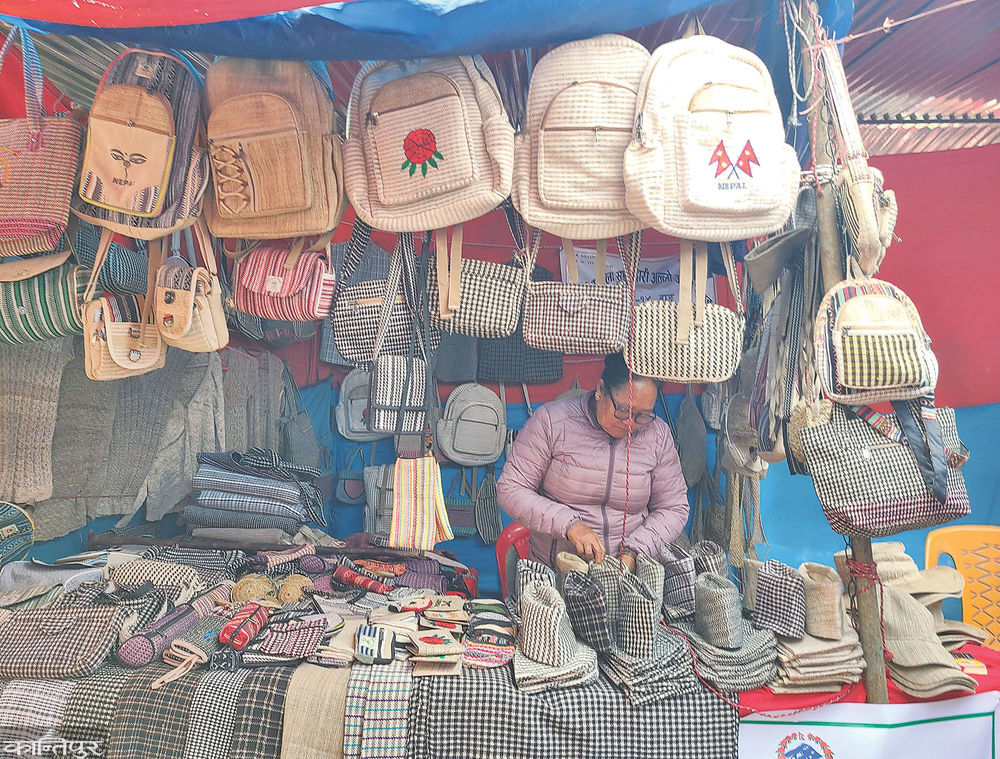
Allo or walking Cisno Rolpa can be found in wet places along forests, rivers or roads. Its fibers are used as yarn. Allo yarn is used to make various items from shoes to hats and bags. Most of the people in the district have acquired skills and knowledge about allo processing and the materials made from it. The entrepreneur complains that the material made from Allo is not getting the price according to the market and labor. Allo fiber is taken out and the material is made by completing the process of drying, cooking, and grinding.
Radipakhi and Kamlo known as Rukumpurva
Most of the people of Rukum have been involved in sheep and goat rearing since generations. The Magar community has been making various materials from sheep's wool. It also earns good income. Recently, with increasing modernity, materials made from wool have not been able to find a proper market. Lalkumari Budha of Taksera before Rukum was found at the confluence of Palpa, Gulmi and Syangja in Reedy.
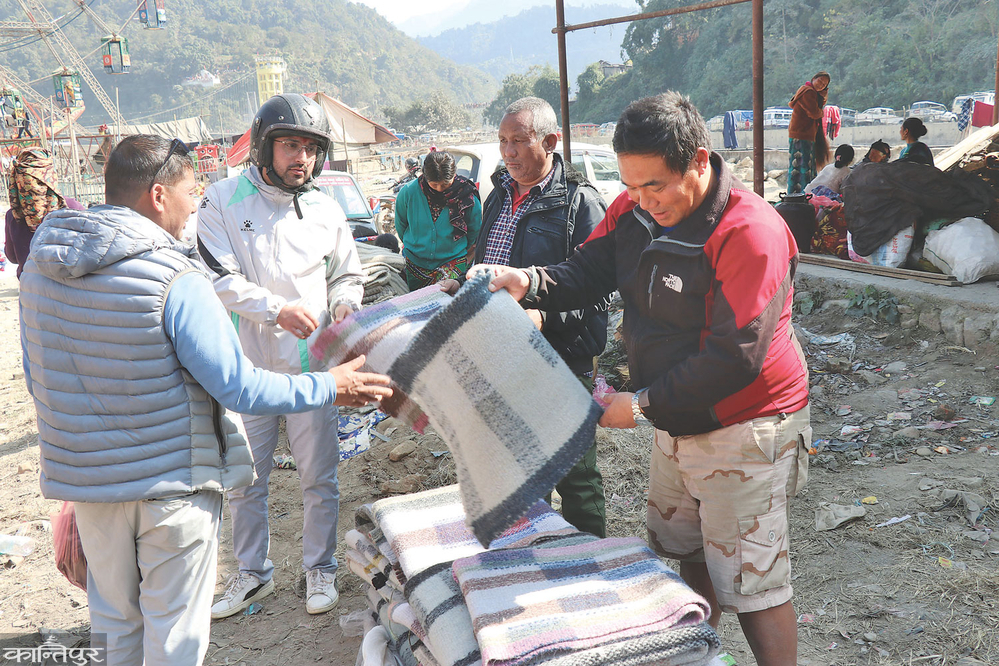
She said that she has been making materials from sheep's wool since she was old enough to know. She said that since there are sheep and goats in the house, she used to spin yarn from a young age to make radipakhi, patuka, hats, gloves, socks, carpets, sweaters, ghums, etc. Sheep and goats are reared in many places in Putha Uttarganga and Bhume. Radi, Pakhi and Bakkhu are woven by preparing wool from sheep's hair.
Pyuthan in front of Baghmukhe Chulesi
Anyone who reaches Pyuthan is looking for a symbol of love – Baghmukhe Chulesi. But due to not getting proper support in its production, the industrialist is disappointed. This Chulesi bears the identity of Pyuthan. It is customary for domestic and foreign tourists to give this Chulesi as a token of love or as a welcome and farewell. It costs around 600 to make a normal baghmukh chulesi.
whose selling price is up to 1 thousand 500. There is a demand from the associated entrepreneurs to make arrangements to get the wood chips needed for smelting copper in the community forest. Recently, this enterprise is in crisis because the young people who do the traditional work are not among them. Although Baghmukhe Chulesi has increased the historical and touristic importance of the district, it seems that the skill of making it has not been sufficiently transferred to the young generation.
Arghakhanchi is famous for honey
Arghakhanchi honey is a must in Koseli houses or shops here. Almost all places here have beekeeping. There is also a honey industry in Arghakhanchi. But it has not been conducted systematically. A honey industry was established in Arghakhanchi through the Agricultural Enterprise Center of the Ministry of Agriculture, Federation of Commerce and Industry for the 'One District One Product' programme. The cost at that time was 1 crore 5 lakh rupees. This industry has not been able to get raw materials due to the inability to emphasize on commercial honey production.
Identification of Gulmi: sugarcane and nest
On the road from Palpa to Tamghas, you can see Gulmi's nests and nests in the shops or elsewhere. Those who come to Gulmi do not miss to buy sugarcane and sugarcane here. Sugarcane is cultivated in different places of Ruru region rural municipality. Sugarcane is grown in the villages of Thorga, Ratmata, Baletxar, Thanapati, Hardineta, Digam and Hunga. Sugarcane is the main source of income for the farmers there.
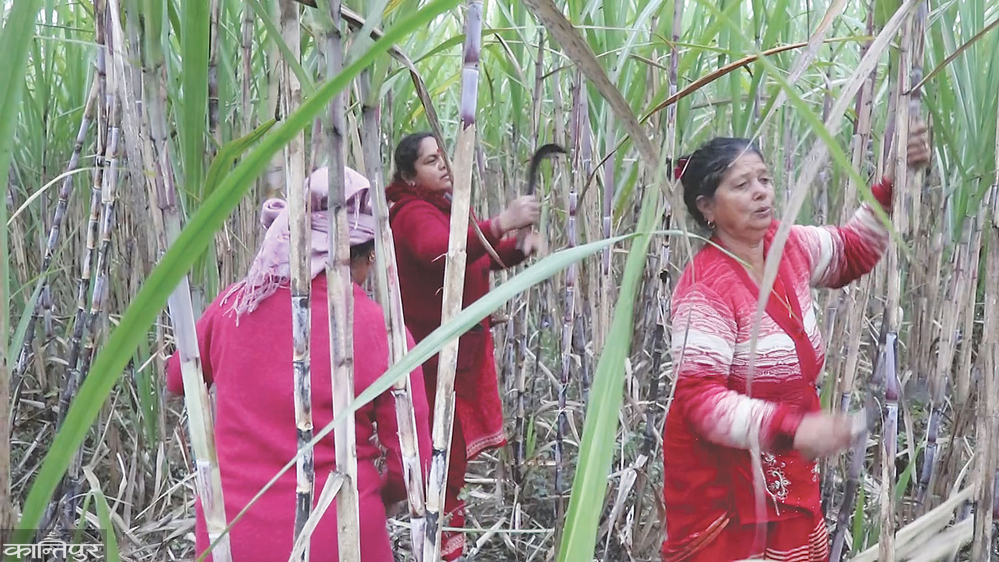
Here sugarcane is cut and made into nests. In the form of Thorga's nest and Khudo Koseli, it reaches not only the district but also outside the district and abroad. Thorga's nests are seen in trade fairs, festivals and industrial exhibitions held at various places in the country. Gulmi is available in plain, spicy, spicy, chocolate and bone nest. Plain egg is sold at Rs 200 and spiced egg at Rs 250 per kg. Retail is sold at 170 rupees per liter.
Bardiya's identity, bamboo material
Whether it is Gulria in Bardia or Rajapur, those who reach through the Thakur receive gifts of bamboo. This material is flourishing as an industry in Rajapur municipality area. Industrialists make chairs, tables, hangers and other materials from cane. Until a few years ago, the bait was thrown like this. Now rattan is used to make furniture and gift items.
Lumbini state government also put it in the policy and program to support it. In recent years, farmers have started to earn good income from the sale of rattan products. Businessmen are also engaged in expanding its market.
Bait is mainly found in the coastal area of Karnali river in Rajapur of Bardia. Mohan Bahadur KC of Rajapur-4 says that he has started earning good income from the sale of rattan furniture. Betka furniture and gift materials reach from Surkhet in Karnali Province, Dang in Lumbini Province, Butwal, Nepalgunj to Kathmandu.
Nawalparasi (West): sugarcane is sugarcane
As the identity of Nawalparasi West, sugarcane cultivation is flourishing. When the Lumbini sugar factory was fully operational, the farmers here started sugarcane cultivation. Navalparasi (West) has Lumbini Sugar Industry, Bagmati Sugar Industry, Indira Sugar Industry and Mohini Sugar Industry.
The sugarcane of Nawalparasi is also exported to the outer districts. 15 to 2.5 million quintals of sugarcane are produced here annually. Navalparasi also has more than 50 Veli small crusher industries. According to the data of Krishi Gyan Kendra, sugarcane is cultivated in an area of seven and a half thousand hectares in Nawalparasi. About 14 thousand households are dependent on sugarcane cultivation.
Rupandehi: Pawan Peda on Janibro
Many people who disembark at Gautam Budh International Airport Bhairahawa think that they will return with Pawan Peda. Most of those who reach Butwal do not forget to taste the Pawan Peda of Bhairahawa. During the festival, not only the plains, but also the hills reach Pawan's trees. According to Pawan Kumar Haluwai, the owner of Pawan Misthan Bhandar, there are not only Butwal and Bhairahawa but also those who take them to Pokhara and Mustang through the hilly district.
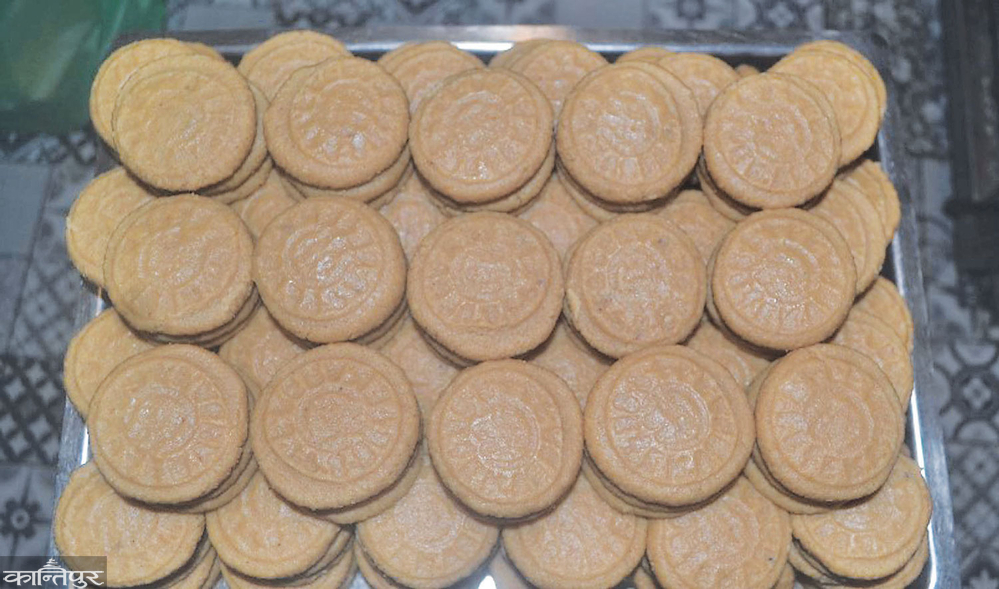
This sweet shop, which was started in 2025 from a bush at Milan Chowk in Bhairahawa, has now expanded its capacity to produce at least 25 types of sweets including peda. Although there is competition in the market, the attractiveness of wind farms has not decreased.
Kala Namak Paddy of Kapilvastu
Kapilvastu is a district with high rice production. Raithane paddy is still practiced here. One of Raithane is black salt. Most of the farmers have still not stopped planting black salt paddy. Black salt rice is reaching the kitchens of Kathmandu from the neighboring districts. It is popular because its rice is delicious.
Kala Namak has become a brand of Kapilvastu. It is called black salt because it is black. According to Krishi Gyan Kendra, till 15 years ago, more than 10,000 hectares of black salt was cultivated. According to Krishi Gyan Kendra, it has been cultivated in an area of more than 600 hectares in recent years.
Banke: mouth-watering rowdy
The rowdy here attracts anyone who comes to Nepalgunj. Rawadi, which hangs in people's mouths, is a popular dish in Nepalgunj of Banke. There are about a dozen Rawadi shops in Tribhuvan Chowk here. In recent times, you can buy Rawadi at the hotel.
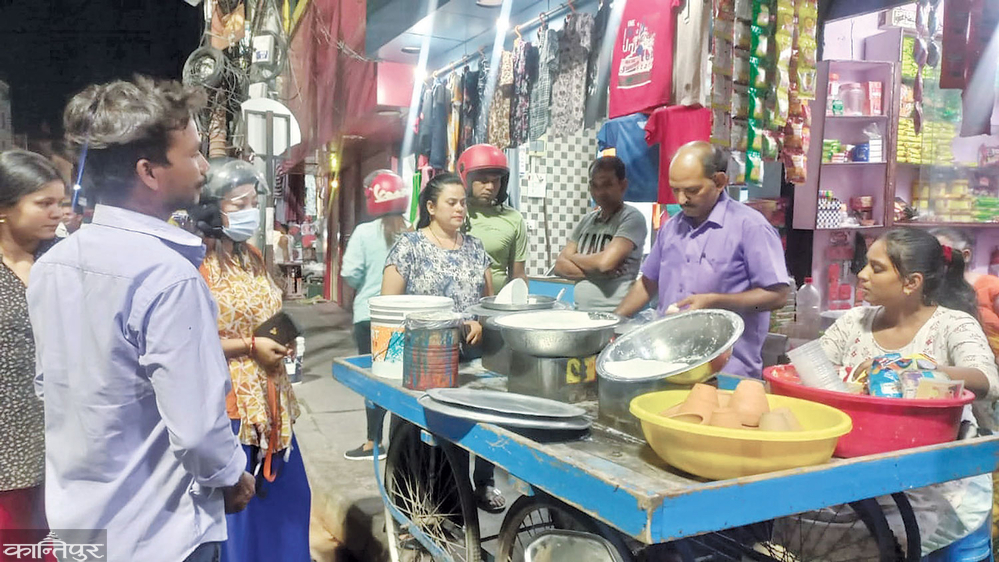
The price of Rawdi is about 700 per kilo. Sweet shops and hotels here sell 5 to 10 kilos of Rawdi daily.