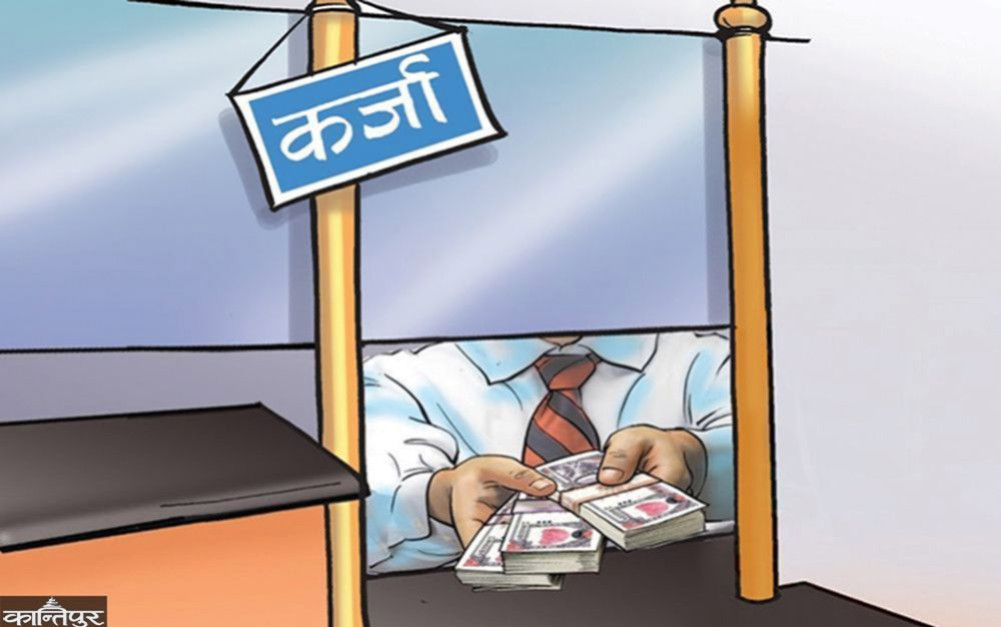
11 billion allocated for concessional loans is insufficient to pay the budget arrears
We use Google Cloud Translation Services. Google requires we provide the following disclaimer relating to use of this service:
This service may contain translations powered by Google. Google disclaims all warranties related to the translations, expressed or implied, including any warranties of accuracy, reliability, and any implied warranties of merchantability, fitness for a particular purpose, and noninfringement.
The government has allocated the budget for interest subsidized concessional loan program in such a way that it is not enough to pay even the old arrears. The government will have to pay about 14 billion rupees to banks and financial institutions for the interest subsidy for nine months of the last financial year and the current financial year as well. However, only 11 billion rupees have been allocated for this program in the next financial year.
Under the program, the government subsidizes interest on 10 types of loans. There is a provision of 6 percent interest subsidy on women entrepreneurship loans and 5 percent on the remaining nine types of loans. However, since the last 20 months (from 079 October till now), the government has not paid the amount of interest subsidy. This amount has reached about 14 billion rupees so far.
As the amount allocated by the government is not even enough to pay the old arrears, experts say that there is no possibility of citizens getting subsidized loans this year as well. "Looking at the budget allocation, there is now a doubt about the continuation of the concession program of interest subsidy," said the chief executive officer of a commercial bank.
He disclosed that since last year, after the government stopped payment, the banks have not provided new loans at subsidized rates and they have been charging the full interest (including subsidies from the government) from the old borrowers. "The banks have told the customer that the money has not come from the government, until the money comes, you have to pay the full interest, and when the money comes, we will return the money for the subsidy," said the official, "Thus, the lack of money from the government does not directly affect the bank, but the citizens are deprived of facilities."
With the objectives of increasing production, promoting internal employment, and developing entrepreneurship, the government has introduced a subsidized interest program since 2007. The government had issued the Integrated Procedure 075 regarding interest subsidy for subsidized loans. According to the same procedure, on October 20, 075, the National Bank issued instructions to the banks and financial institutions for the implementation of the procedure related to subsidized loans. Initially this loan was voluntary. When the banks and financial institutions did not accept the date, the National Bank made it compulsory by specifying the number.
initially provided interest subsidies for seven types of loans, including agriculture and livestock, educated youth self-employment, youth projects returning from abroad, women entrepreneurs, Dalit community business development, higher and technical and vocational education and private housing construction loans for earthquake victims. Of these, agricultural loans are the oldest.
Similarly, 1 trillion 40 billion 500 million subsidized loans have been disbursed to 127,212 borrowers in the middle of Chait 080 (to be raised). Out of this, 94 billion 85 million loans have been disbursed to 49 thousand 648 borrowers under agriculture and livestock business loans. During the same period, 43 billion 79 crores of loans have been transferred to 75 thousand 333 women entrepreneurs under women entrepreneurial loans. Under other titles of subsidized loans, 1 billion 85 million loans of 2 thousand 231 borrowers are in investment Many questions have also been raised regarding the use of
concessional loans. For this reason, the program to be evaluated to find out the situation of credit utilization was mentioned in the budget and monetary policy of the current financial year. Based on the same policy, the National Bank also conducted an evaluation through an independent auditor. The National Bank has submitted its report to the Ministry of Finance. However, the sources said that there was no decision on the interest subsidy payment until Thursday. "Recently, we were busy working on the new budget, so we could not work on this," the source said, "Now we will proceed with the process of paying the remaining amount."
Finance officials say that there is no problem in paying the interest subsidy and subsidy on agricultural insurance fee. Rashtra Bank is also aware of the fact that the amount for the interest subsidy did not come from the government, banks stopped new loans under it and charged full interest from old borrowers. "We are constantly waiting," said a Rashtra Bank source, "every time we get assurances from the Ministry of Finance that the payment will be made soon, but the money has not come yet."
Nar Bahadur Thapa, former Executive Director of Nepal Rastra Bank, says that banks and financial institutions will not be excited to implement such programs after the lack of funds to implement the government's programs. He said that the government should immediately pay all the amounts due to its obligations. "When such payments stop, on the one hand citizens lose faith in banks and the government," he says, "on the other hand, if money does not come in the market, borrowers cannot even pay interest to the bank." Bank's bad loans increase.'
Similarly, the Auditor General's 61st Annual Report has pointed out that there is a lot of uncertainty in interest subsidized loans. "Once a borrower who has availed a subsidized loan cannot take such a loan from another bank or financial institution, he will not get interest subsidy on the swapped loan, when the credit limit is increased for the borrower who is using the subsidized loan, after that he will not get any interest subsidy facility, but it has not been fully complied with. ,' it is said in the report, 'The National Bank and the Ministry of Finance have not done the task of evaluating the implementation of the provisions in the procedure, and giving instructions to the relevant banks and financial institutions for the implementation of the matters seen through the monitoring.' The General Account's suggestion is to make arrangements to provide the amount of interest subsidy only by ensuring that the loan is invested in the same sector.