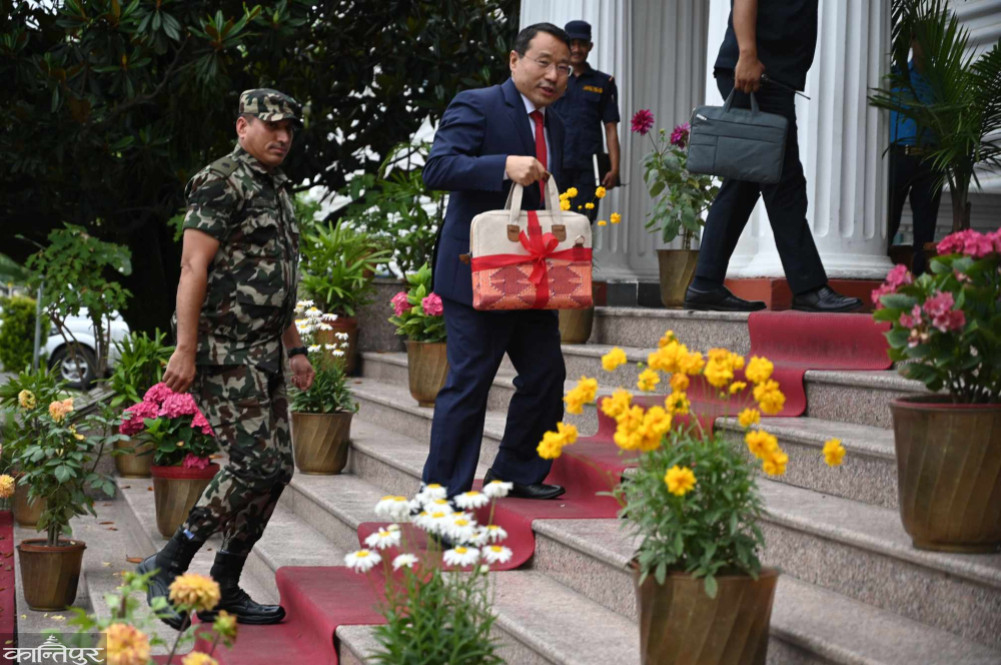
Duty increased from 5 percent to 20 percent on electric vehicles
We use Google Cloud Translation Services. Google requires we provide the following disclaimer relating to use of this service:
This service may contain translations powered by Google. Google disclaims all warranties related to the translations, expressed or implied, including any warranties of accuracy, reliability, and any implied warranties of merchantability, fitness for a particular purpose, and noninfringement.
Aiming to collect 14 trillion 22 billion 54 crores through revenue in the coming financial year, the government has changed the tax rates on various goods and services. The government has revised the tax rates through the 'Bill (Financial Bill) 2081 to implement the proposals of the government of Nepal' which was submitted to the Federal Parliament on Tuesday.
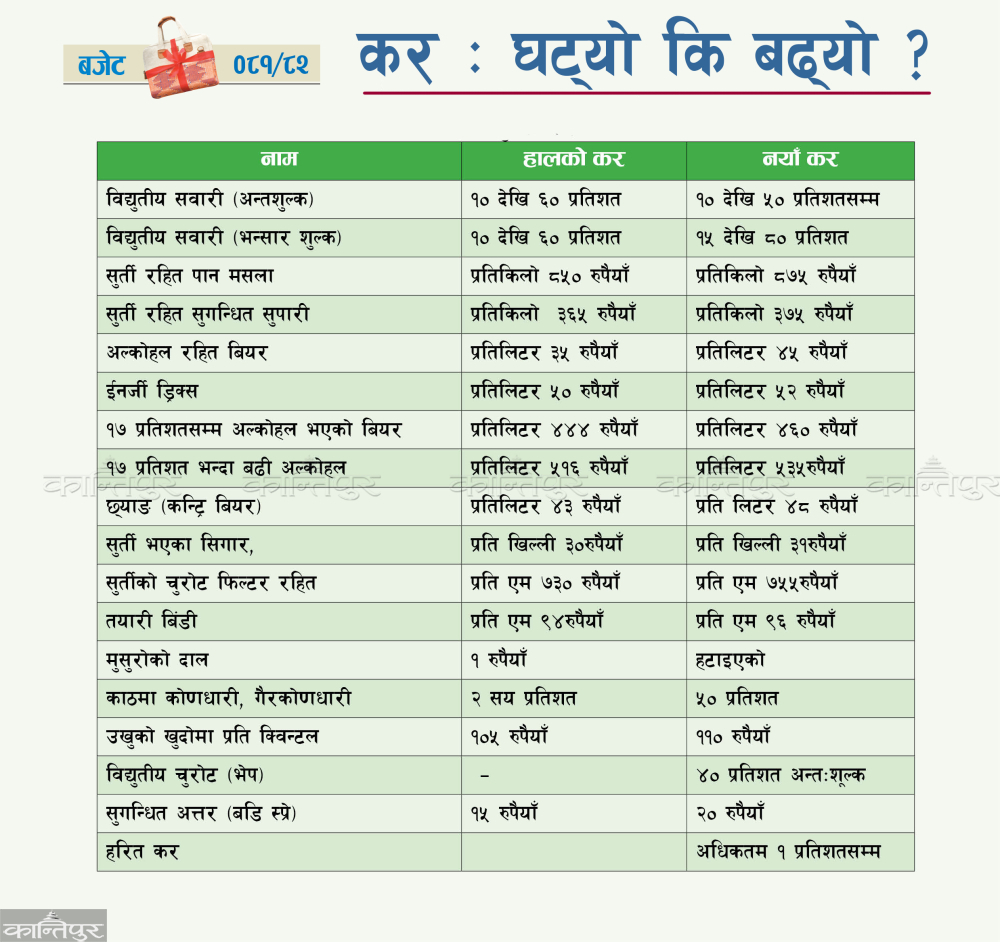
Through the economic bill, the government has increased customs and excise duties on electric vehicles (EVs), which are much talked about is According to which now 15 percent customs duty and 5 percent excise duty will be levied on EVs up to 50 KW. This year, there was no excise duty, while 10 percent customs duty was levied. Similarly, customs and excise duties have been increased by an additional 5/5 percent from 51 to 100 kW.
 Earlier there was 15 percent customs duty and 10 percent excise duty. From 101 to 200 kW, 30 percent customs duty and 20 percent excise duty have been raised. Earlier, customs duty was 20 percent and excise duty was 20 percent. 201 to 300 KW duty has been increased by 20 percent. 10 percent excise duty has been reduced. 20 percent duty has been increased on more than 300. 10 percent excise duty has been reduced. Overall, the tax has increased by 10 percent. For the first time, the system of green tax has been introduced. For the first time, a green tax of maximum 1 percent has been imposed on goods such as coal, coal, petroleum oil imported into Nepal. The fee of 100 for customs clearance and 500 for import has been abolished. Similarly, the agricultural reform fee has been abolished, and under the foreign tourism fee, it has been further clarified that the foreign tour package means a package including transportation, food, travel and entertainment.
Arun Raut, President of Nepal Chartered Accountant Association (ACAN), said that there was no significant change in the tax rates through the Economic Bill. Previously, the method of determining the price was not determined in the transaction between the relationship parties, now that method is to be applied. "In the bill, an attempt has been made to create a comfortable environment for bringing in new investors by making additional provisions in Section 57 of the Income Tax Act," he said. It seems that the cost of Nepali Bank will decrease.' He also said that the provision of ghost tax as in the past has not been made through the bill.
Through the economic bill, the government has set the tariff on the import of finished goods at least one level lower than the tariff on the raw material imported by the industry. Import duty and excise duty on raw materials of industries including medicines, induction stoves, thread, helmets, incense sticks, sanitary pads, cashew and almond processing, spring leaf making have been reduced. The value added tax on vegetables and fruits including potatoes, onions, apples has been abolished, while the excise duty on alcohol, beer, tobacco and cigarettes has been increased. It has been arranged that VAT will not be levied on basic agricultural products such as potatoes, onions, capsicums, garlic, onions, apples, pears, quinces, etc. related to Subsection 3 of Section 5 of Value Added Tax 2052.
According to the economic bill, the agricultural reform fee charged at the customs point on the import of various goods has been increased from five percent to nine percent. Such duty has been increased to 9 percent on imports of fish including Pacific salmon, sole, spekjack tuna, dogfish and other sharks, albacore and longfin tuna. Export duty of 1 per kg has been levied on the export of musuro dal (split red lentils), which has been removed. There has been a change in goods like polypropylene, polyisobutylene, propylene copolymer, with an export duty equal to five rupees per kilogram. In wood, angular (coniferous), non-angular (non-coniferous) has been reduced from 200 percent to 50 percent. The export duty on wood such as Salo, Deodaru, Bhojapatra, Lahere Peepal etc. has been reduced.
Previously, there was a provision that gold jewelry weighing 25 grams for men and 50 grams for women would not be charged customs duty, and gold imported in excess of 150 grams could be imported by paying three percent customs duty, but now only 50 grams more gold can be brought after paying customs duty. Similarly, there has been a change in the arrangements regarding the fee for temporary immigration. A new arrangement has been introduced to levy a tax of 1,500 rupees for 96 hours after the goods have passed inspection for unloading bullet trucks transporting LP gas at the destination. Trucks, trailers, tractors and other means of transportation brought in other than LP gas will be charged a fee of 1,500 rupees for 72 hours after the goods have passed the inspection to unload the goods at the destination.
Scooters designed to be used by persons with disabilities are exempt from VAT. Similarly, zero rate of VAT has also been maintained on 'deep cycle lead acid batteries' produced by indigenous industries used in electric vehicles. The Finance Bill imposed 15 percent excise duty on desiccated coconut pulp (copra). Excise duty of Rs 105 per quintal has been levied on sugarcane, but it has been increased to Rs 110 per quintal. Bulgar wheat, cornflakes and chocolate containing more than 6 percent cocoa by weight are subject to a 10 percent excise duty. 50 paisa has been added to 13 percent excise duty on bhogte, palmo, bhuinkatahar, cranberry, mango and other juices.
The excise duty on tobacco-free pan masala has been reduced from 850 per kg to 875, while on tobacco-free aromatic betel nut the excise duty has been reduced from 365 to 375. Non-alcoholic beer has been increased from Rs 35 to Rs 45 per litre, while energy drinks have been increased from Rs 50 to Rs 52 per litre. Beer with alcohol content up to 12 percent has been increased from 444 to 460. Excise duty has been increased to 16 per liter on beer with 12 to 17 per cent alcohol and 19 per liter on alcohol above 17 per cent. Similarly, the excise duty on chyang (country beer) has been raised to 48 per liter from 43 per litre.
15 UP strength 48.5% alcohol content prepared brandy has been levying excise duty equal to 1,800 per liter, but it has been increased to 1,860. Brandy of such nature with 25 UP strength has been increased by 45 per cent tax per litre. A 31 percent excise duty has been levied on cigars, cigars and small cigars containing tobacco. Similarly, the excise duty on unfiltered cigarettes has been increased to Rs 755 per m from the current rate of Rs 730 per m. Similarly, the excise duty on filtered cigarettes up to 70 mm has been increased by Rs 50 per m. Earlier, excise duty equal to 1 thousand 690 per m has been levied, but it has been increased to 1 thousand 740.
Similarly, the excise duty on Zarda, Khaini, Nas Gutkha and similar tobacco mixed preparations has been charged at Rs 850 per kilogram, but the excise duty has been made Rs 880 per kilogram. Excise duty of 475 per kilogram of tobacco and dust tobacco kept for retail sale has been increased to 480 per kilogram. Excise duty has been increased by Rs 45 per kg on tobacco packed for retail sale. The excise duty on hookah flabber has increased to Rs 1,500 per kilogram.
A 40 percent excise duty has been levied on electronic cigarettes (vapes). The excise duty on perfumes (body sprays) and personal deodorants and antiperspirants was Rs 15, but it has been increased to Rs 20. Excise duty on floor coverings in the form of tiles or in rolls has been increased from five percent to 10 percent. Excise duty on semi-finished products of iron or alloy steel (non-albaye steel) has been abolished. Five percent excise duty has been imposed on laptops and notebooks.