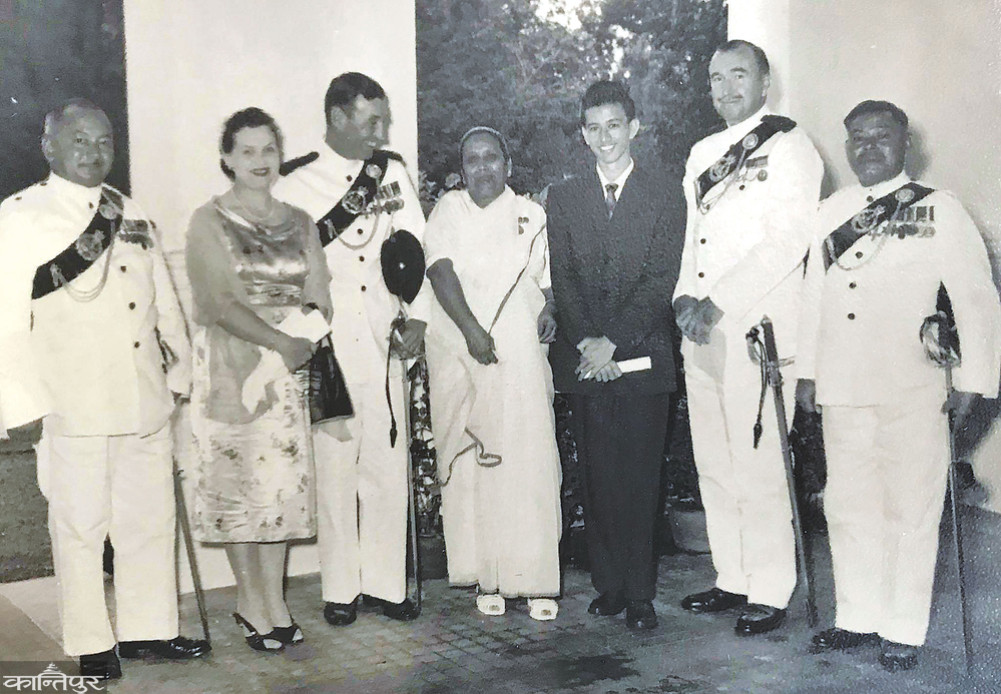
When British India began recruiting Gorkhalis into its army from 1816 onwards, the Matwalis of the region, especially the Gurungs, Magars, Thakurs and a few Tamangs, seem to have continued the tradition of joining the British army, with Chhetris joining from around 1900.
We use Google Cloud Translation Services. Google requires we provide the following disclaimer relating to use of this service:
This service may contain translations powered by Google. Google disclaims all warranties related to the translations, expressed or implied, including any warranties of accuracy, reliability, and any implied warranties of merchantability, fitness for a particular purpose, and noninfringement.
When talking about Gandaki province, the entire subject remains incomplete without considering the Lahure culture and the contribution and impact of the Lahures on the society and economy. Apart from the main places in Manang and Mustang districts of Gandaki, there is no such village where Lahure is not influenced.
When talking about Lahure here, it is important to understand two types of Lahure. Traditionally, soldiers who have served in the Indian or British Army and those who have served in the civilian sector in Indian cities are in the first line. In the second line, after becoming a policy priority of the government since 1990, there are those who go to countries such as Arab countries, Israel, Malaysia and Korea in labor migration and those who reach there due to the policy taken by the UK when it leaves Hong Kong, which are affecting the demographic, economic and cultural life of Pokhara today. Recently, those who sent remittances to America, Canada, various countries of Europe and Australia are among those who affect the life here like in many other parts of the country.
Going back to history
Gandaki region's economy and sociology were given a new shape by the traditional Lahures. 8 British Gurkhas from this region, including Karna Bahadur Rana Magar, Lal Bahadur Thapa (Baglung), Tul Bahadur Pun (Magdi), Thaman Gurung, Bhanubhakta Gurung and Gaje Ghale (Gorkha), Netra Bahadur Thapa and Sher Bahadur Thapa Tanahun, received the Victoria Cross. Out of a total of 13 Nepalis who received this honor, 8 of them are from Gandaki region, which indicates what kind of Lahure tradition was in this region.
Gandaki is the ancestral home and main residential area of the Gurung. Magar is also among the tribes of this region. The Gurung and Magars may have been at the forefront of the recruitment tradition due to the effect of the martial race-based policy that the British initially did not recruit Chhetri and its influence is also greater in these tribes. Lately, if it is the time to understand the pension in the Indian pension camp in Pokhara and the temporary pension distribution camp in the district, it seems that the dominance of the Indian Army in this area is evident.
In the British Gurkha brigade, because the British made the brigades that gave priority to Gurung, Magar, Rai and Limbu, there were very few recruits from that region. When British India started recruiting Gorkhali in its army from 1816, Matwalis of this region, especially Gurung, Magar, Thakuri and some number of Tamang, seem to have continued the tradition of going to the British army, in which the Chhetri got entry from around 1900.
Gurkhas who have been serving both the British and Indian forces since 1947 are currently serving regularly in the British Army, 35,000 in the Indian Army and 2,500 in the Singapore Police. Its main supply is from the Gandaki area, but there is no data available on how many lahures there are or were in Gandaki. The size of the Indian pension camp at Pokhara and the presence of the only British Gurkha recruiting depot in Nepal at Pokhara confirm that Gandaki is the birthplace of the Lahures.
According to recorded history, Bhupal Singh Thapa (son of Badakaji Amarsingh Thapa), believed to be Adi Lahure, was a Gorkha who also inspired his nephew Balabhadra Kunwar to go to Lahore to join the army of Punjabi King Ranjit Singh. Those who went to Lahore to serve in the Punjab army and later to serve in British India, independent India and the British Empire created the Lahore tradition.
With the expansion of railway services by the British in India, Nepalis who went to work in non-military fields in developed cities like Calcutta, Bombay and Delhi became an integral part of the Lahure tradition. The word Lahure specifically identifies them.
effect
Before the construction of Siddharth Highway, there used to be a regular flight between Pokhara and Bhairahawa, which was operated by Lahure, a recruiter. India built the Sunauli-Pokhara highway because of the number of people going to the Indian Army from this area. With the construction of the highway, not only those going to Batauli Khashouli for salt oil, but also those who were recruiting and returning on foot could travel easily. This road has contributed to the development of semi-urban areas like Galyang, Waling, Putlibazar.
The contributions of the Lahures are of a unique nature. Those who were influenced by the development and socio-cultural lifestyle of other countries of the world after coming back from Lahure brought many cultures. After returning to the village, hundreds of them opened schools, worked as teachers, and were active in village roadways and social work.
Dozens of Indian Lahures I know have actively led political and social work by being Pradhanpanch or gavis presidents in their villages, and are still doing so. According to the memoirs of Sardar Bhim Bahadur Pandey, the culture of liquor and tas in the mountains of Nepal was developed by the Lahures. They have contributed in bringing the custom of drinking tea to the village. The Magar, Gurung and Tamang women of Gandaki learned to wear lungi in Singapore when they moved to Malaya.
After pension distribution started in Pokhara in 1955, the process of turning Pokhara into their permanent residence started by the Lahures. Since 1960, after the permanent operation of the Pension Distribution Camp at Rambazar, a military camp headed by a colonel or lieutenant colonel of the Indian Army began to be established. This influenced the urbanization here. Along with the camp, Indian government programs were also implemented in charity work. The Soldier Board High School established in 2013, the current Amarsingh School was started in that order. Even now, the Nepal-Bharatmaitri Vidyalaya is running in Pokhara with the direct investment and operation of the Indian Pension Camp.
After the British Recruit Depot in Paklihwa moved to Pokhara, it influenced the next phase of urbanization. After the British depot of Dharan was also merged in Pokhara, those who wanted to be recruited in the British Gorkhas from all over the country did not come to Pokhara. The small furnaces built for the convenience of the pensioners were the predecessors of the present day Rambazar.
I remember when I went to Pokhara around 2030, Bale took me to Rambazar to spend the evening at the furnace of Mangali Tamang in the village. The squatter settlement of the current Pokhara Bus Park is an extended form of Bhattis and snack shops or hotels targeting the Lahures who came first by ship and later by bus via Bhairahawa. The Soldier Board School, built with the help of the Indian government, attracted a large number of people who migrated from the villages to the cities for education. After
2079, the British Lahures who were able to go to the service of the Sultan of Brunei as a second career, made Pokhara full of people. Lahure has played a major role in the expansion and development of settlements in the present Bagar, Deep, Nadipur, Banjhapatan, Matepani, Bhadrakali, Laligurans Tol, Archalbot, Rambazar, Birouta, Chorepatan, Ramghat, Ranipauwa, Phoolbari and other areas. Such an effect has also affected the expansion of city markets including Beni, Baglung, Damauli, Khaireni, Walling, Besi Sahar, Putlibazar, Gorkha.
Before 1990, the main source of boarding schools in Pokhara were the children of Lahure. Retired from the British Army. Tekansinh Gurung opened a boarding school in Pokhara Bhadrakali. Captain Gurung has played an important role in making Bhadrakali School/College what it is today. One of his sons fell into a drug rut, and the captain suffered a heartbreak. Why this is meaningful here is that in the nineties, families from Lahure were also considered as a source of youth who fell into the Kulat in Pokhara.
Retired from the Indian Army Syangja Sirubarika Ky. Rudraman Gurung (who was also an elected Member of Parliament from the Nepali Congress in 2004) is credited with laying the foundation for the development of rural tourism in Nepal. It was he who established Sirubari as a homestay village, which is considered the pioneer of homestay tourism in Nepal. Influenced by Sirubari itself, Ghalegaon has now become another important homestay destination and homestays have become a means of rural tourism in all parts of Gandaki.
Damfekala Temple, which played a significant and historical role in the cultural sector of Pokhara, was also established and operated by Meen Bahadur Gurung from Purva Lahure. Conducting regular ticketed cultural programs and professionally staging lama chota dramas goes hand in hand. I remember watching some drama in the Damphekala temple around 2035. This institution produced many cultural workers. Later it also played a leading role in the production of Gurung Cinema.
Lahure is one of the commanders of the 2007 revolution, Chitra Bahadur Gurung of Parbat. He later contributed throughout his life as a central member of the Communist Party. These are just a few examples, which highlight the social role of the Lahures in Gandaki.
Lahore and the influence of Lahure on the folk culture and folk songs here is tremendous. From Jhalakman Gandharb's Hey Barai... song to Haridevi Koirala, Purushottam Neupane, Bimakumari Dura, there are many songs sung by many based on the image of Lahure, which carries the fragrance of the soil here where Lahure has its influence. The sharp feeling of the latest Lahure image is expressed in the song Maya Ekfer Bol.. by Prakash Saput. Songwriter Chetan Karki and former campus head of Prithvi Narayan Campus in Pokhara Prof. Birendra Gurung is also a product of the study opportunities provided by the Gurkha recruitment.
Hark Gurung's description of Sikles houses in the early 1960s and when comparing the Lekali Gurung villages I saw/seen 20 years later, with the money brought in by Lahures working in the Indian Army, small huts with stone roofs have started to be built in these villages. The British Lahures also used to bring whatever wealth they had earned earlier to the village and added real estate. Khagendrajung Gurung told me that when the returnees from the First World War started buying land, the fields in Besi also started going into the hands of the Gurung Magars. It became one of the reasons for the economic-political change in that area.
The first intensive intervention in the traditional architecture of houses in Pokhara was done by the Lahures. Lahure also has a role in popularizing Pokhara's restaurant culture, many areas of night life, departmental store culture. Also in the field of institutional business, Bhupu Transport's bus service, Bhupu Petrol Pump were operational. The Lumley Agricultural Center established by the British is an important institution for inculcating modern knowledge in agriculture in the region.
This influence of the Lahures affecting migration can be seen in Pokhara's socio-economic life and political power balance. Lately, as British Lahures have started staying in Britain, the number of highly paid Lahures has decreased. Similarly, those who earn money by going to Japan, Korea, Germany (including those who returned from Iraq and Afghanistan) have made an impact on the main settlements of the city, while those who go to Arabia and Malaysia have contributed to the expansion of peripheral settlements.
After the Agneepath plan implemented by India for the past three years, there has been a break in the tradition of recruiting Nepalis in the Indian Army. But the trend of direct contact and recruitment after reaching India has not stopped. Pokhara still has many recruit training centers for those who want to join the British army. In the morning, hundreds of youths are seen running for recruitment in Doko carrying wheat goods. It directly reflects the influence or culture of Lahore. At least for the next hundred years, Gandaki will not be seen separately from Lahore, Lahure culture and its meaning-social impact.
(Subedi's book 'Nepali Mohra of the British Empire, Nalibeli of Garkha recruitment' is published.)