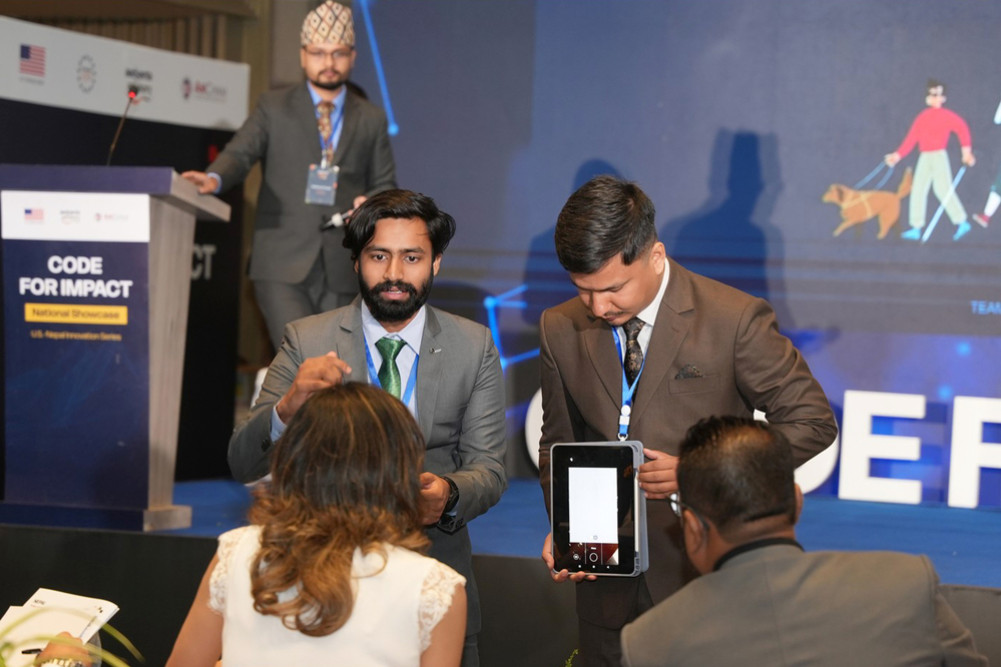
Seven startups developed by Nepali youth in sectors including health, education, tourism, agriculture, finance, and more have presented innovative solutions to solve daily life problems through technology.
We use Google Cloud Translation Services. Google requires we provide the following disclaimer relating to use of this service:
This service may contain translations powered by Google. Google disclaims all warranties related to the translations, expressed or implied, including any warranties of accuracy, reliability, and any implied warranties of merchantability, fitness for a particular purpose, and noninfringement.
Organized by the US Embassy and Adyanta Advisory, the ‘Code for Impact’ hackathon saw 190 companies present their startups that solve problems through technology in the fields of health, education, tourism, and inclusion.
The competition, which aimed to connect technology with solving people’s daily problems, saw 7 teams being declared the best. Ashirwad Care, Neptune, Data Hitty, and Synaptic were the national winners and received cash prizes. These startups are working mainly in the fields of health, finance, education, and tourism. What are the seven startups like?
Ashirwad Care: Supporting Senior Citizens
‘Ashirwad Care’ has launched a service to provide treatment and care facilities to senior citizens who are getting older and are suffering from health problems at their homes. The company’s co-founder, Dr. Rohit Rawat said.
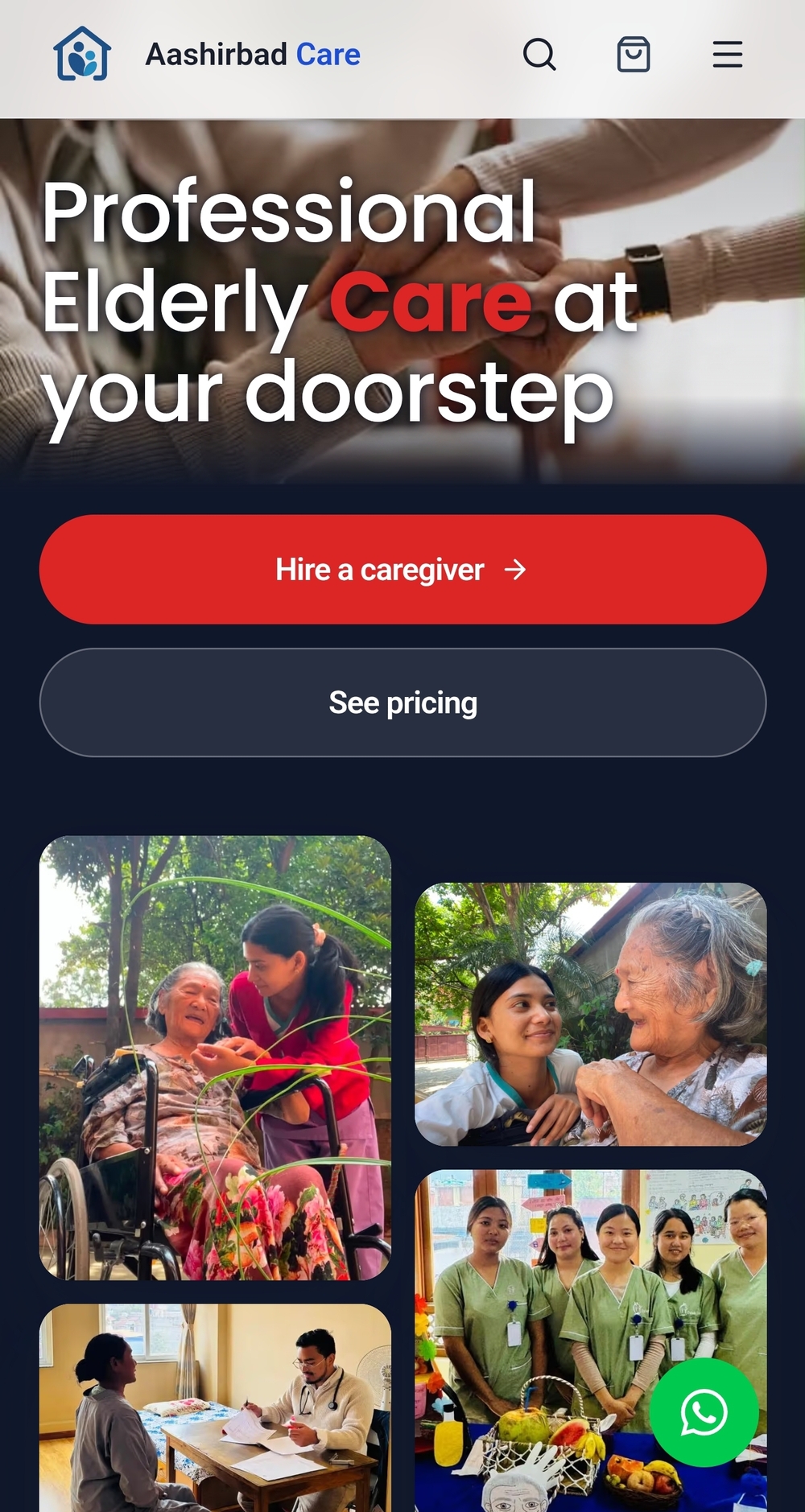 According to Rawat, who works in the clinical department of Patan Academy of Health Sciences, ‘Aashirwad Care’ is a technology-based care coordination platform developed by a team of doctors. The fee for the care giver service is fixed according to the patient’s condition and needs. The company has informed that a minimum shift of 8 hours is required for this. For general care, it costs Rs 100 per hour. For patients who need special care like NJ feeding, suction, dementia, the fee is up to Rs 150 per hour.
Initially started by Rawat and Prateek Gautam with an investment of Rs 500,000, this startup has now expanded to a team of 57 people including Dr. Shitanshu Dhakal and Pravesh Gautam. It has 50 trained caregivers. This organization, which provides services in all three districts of Kathmandu Valley, has recently started a ‘Hospital Assistance Service’ where nurses stay in hospitals.
Rawat has experienced a huge increase in demand and popularity. ‘It has been about 2 months since this service was started, and it is becoming very popular,’ he said, ‘Currently, our nurses have provided services to 10 clients in BP Smriti, Teaching and Patan hospitals.’ We charge Rs 110 to Rs 120 per hour for this service.’
NepAI: Braille now in Unicode
Pokhara’s ‘Access Code’ group has developed ‘NepAI’ technology to convert Braille into digital characters or Unicode so that everyone can read it. Arun Shrestha, Chhabi Ale, Rohanraj Poudel and Dheeraj Chaurasia are part of this team.
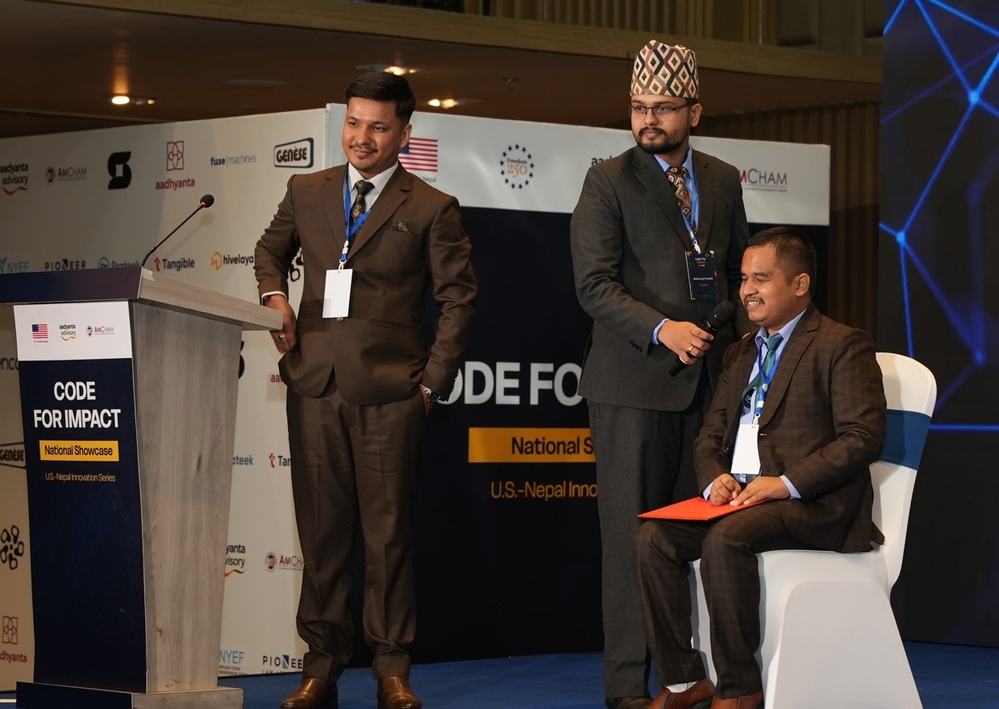
Team member Chhabi is blind himself, so this technology is based on his own experiences. He has been working on preparing the Braille dataset required for the app. ‘When teachers or parents cannot understand what students write in Braille, the learning process slows down,’ he says. ‘We write in Braille, we give exams in Braille, but since there is no transcriber to convert that material into normal letters, we have to wait weeks to check our copies and give feedback.’
There are more than 145,000 visually impaired people in Nepal. Banks have been reluctant to allow them to open bank accounts, make payments, take signatures, and access banking applications. In such a situation, Chhabi is expected to make it easier with the Braille to Unicode technology. ‘This will also be an effective medium for employers who want to hire blind people but are hesitant due to communication gaps,’ he said, ‘This will also broaden our employment opportunities. Organizations like the Nepal Blind Association and the Federation of the Disabled can use it institutionally for the educational and professional development of their members.’ This is the team’s business model, which provides paid services through access codes.
Data Hiti: Making cross-border transactions easier
‘Data Hiti’, which is working in the field of digital payments, aims to make cross-border transactions easier. According to its co-founder Kavish Pokharel, they had been making international products since before. However, Kavish says that Data Hiti developed the concept of the ‘Elytra’ app while looking for a solution after it became very difficult to bring payments from outside while working.
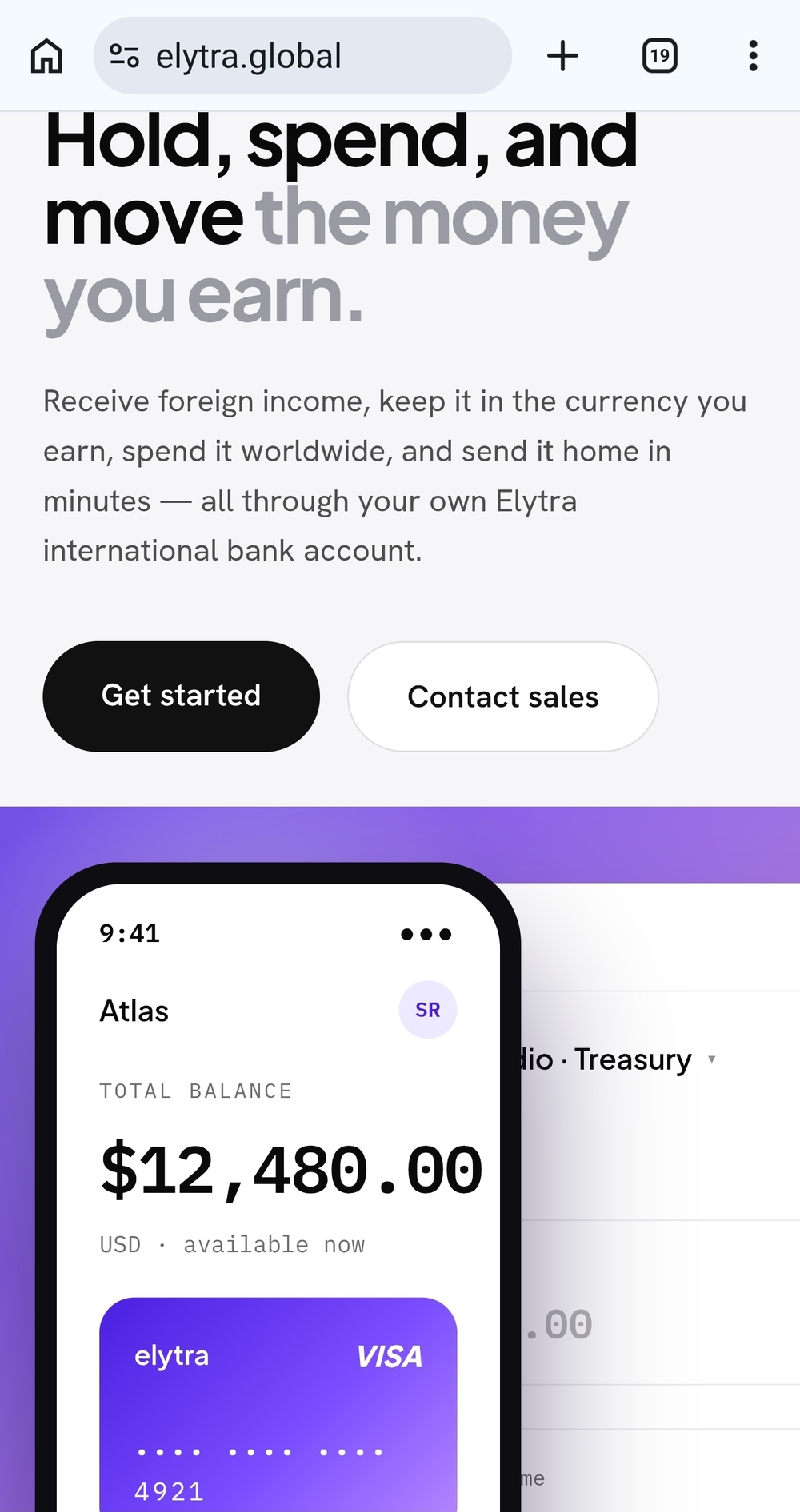 ‘We expedite cross-border payments, we are providing payment services to American companies in Nepal to bring money to Nepal,’ he said, ‘Data Hiti has developed technology that provides instant settlement as an alternative to the traditional banking system.’ Along with Kavish, this group includes Anshu Regmi and Riz Maharjan.
According to Kavish, the ‘Elytra’ app settles cross-border transactions within minutes through ‘non-custodial ABI’. Kavish claims that this technology will solve the problem of ‘pre-funding’ and that it takes several days for remittances to reach Nepal in the traditional banking system. ‘We are not a remittance company or a payment service provider,’ he said, ‘We are just a technology company. We provide technical services to licensed banks and financial institutions.’ We have designed the product to serve them, not compete with existing big fintech companies.'
CAD Coder: From drug search to appointment
Considering the problems in the health sector, 'CAD Coder', a team of Vishal Sharma, Ritesh Raut, Prabhu Shrestha and Samisha Yonghang from Jhapa, has developed a platform called 'Dose'. This startup works to connect patients, doctors, hospitals and drugstores in a single network.
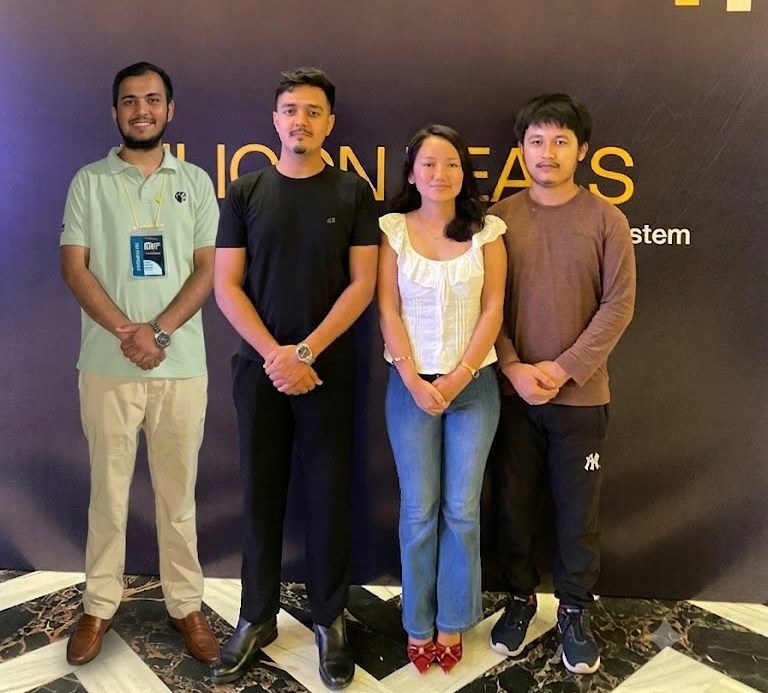
Vishal said that it will provide transparent information, especially in the Nepali environment where it is difficult to get details of medicines and health services. 'Health-related details in Nepal are scattered and inaccessible,' he says, 'Patients cannot identify official medicines, compare prices or easily find a doctor.' Doze allows users to search for medicines, compare prices and book hospital appointments all in one place.
It also has a prescription verification feature to prevent misuse of medicines. Cad Coder has said that its technology uses modern software infrastructures like Dingo and Langchen. The startup is currently expanding its network by partnering with hospitals and drugstores.
Neptune: A unique experience for tourists
In the tourism sector, Neptune is helping tourists discover new and overlooked destinations through AI. It is a hyper-local tourism app that helps foreign tourists, especially foreign tourists, understand the local experience of Nepal and create travel itineraries for them, said Alisha Hada, Business Lead of Neptune.
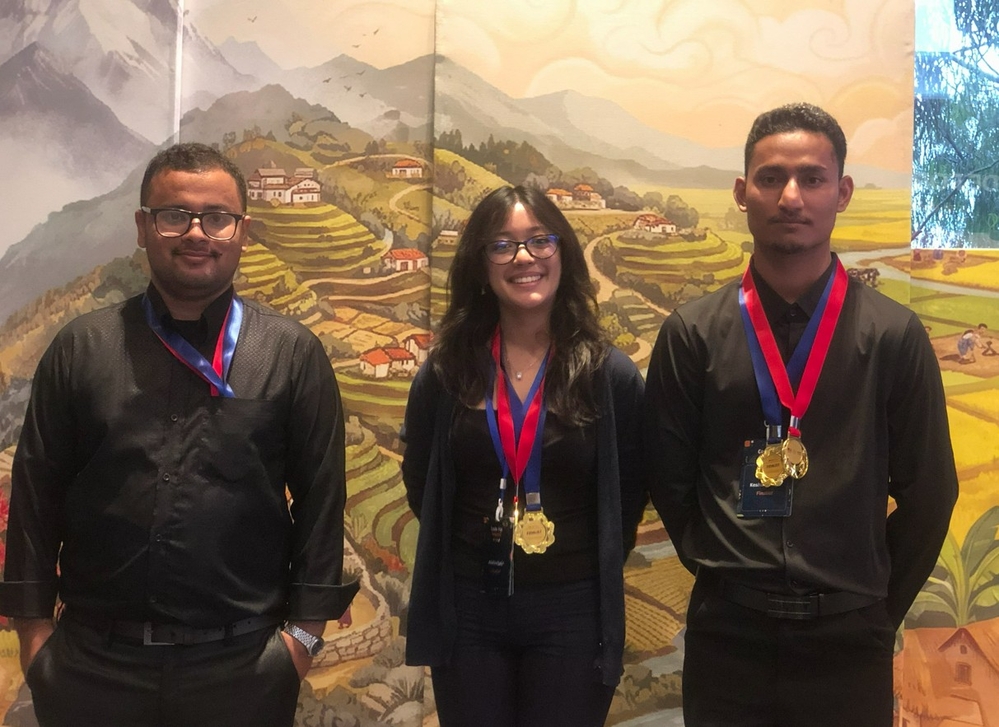
‘Not all features have been added to the app yet, but AI itineraries and information about local places are available,’ said Alisha, ‘After some time, tourists will be able to book local guides from this app. We will arrange for local guides to take tourists around and guide them during cultural events like Holi, Jatra or Mud Festival in Nepal. We also plan to include local dishes and experiences like making clay pots in Bhaktapur in the package.’
Subodh Kathayat conceived the concept of Neptune in 2022. Along with Subodh and Alisha, who are studying at the New Jersey Institute of Technology in the US, the team includes founding engineers Dheeraj KC and Keshav Thapa.
Synaptic: A friend for children with autism
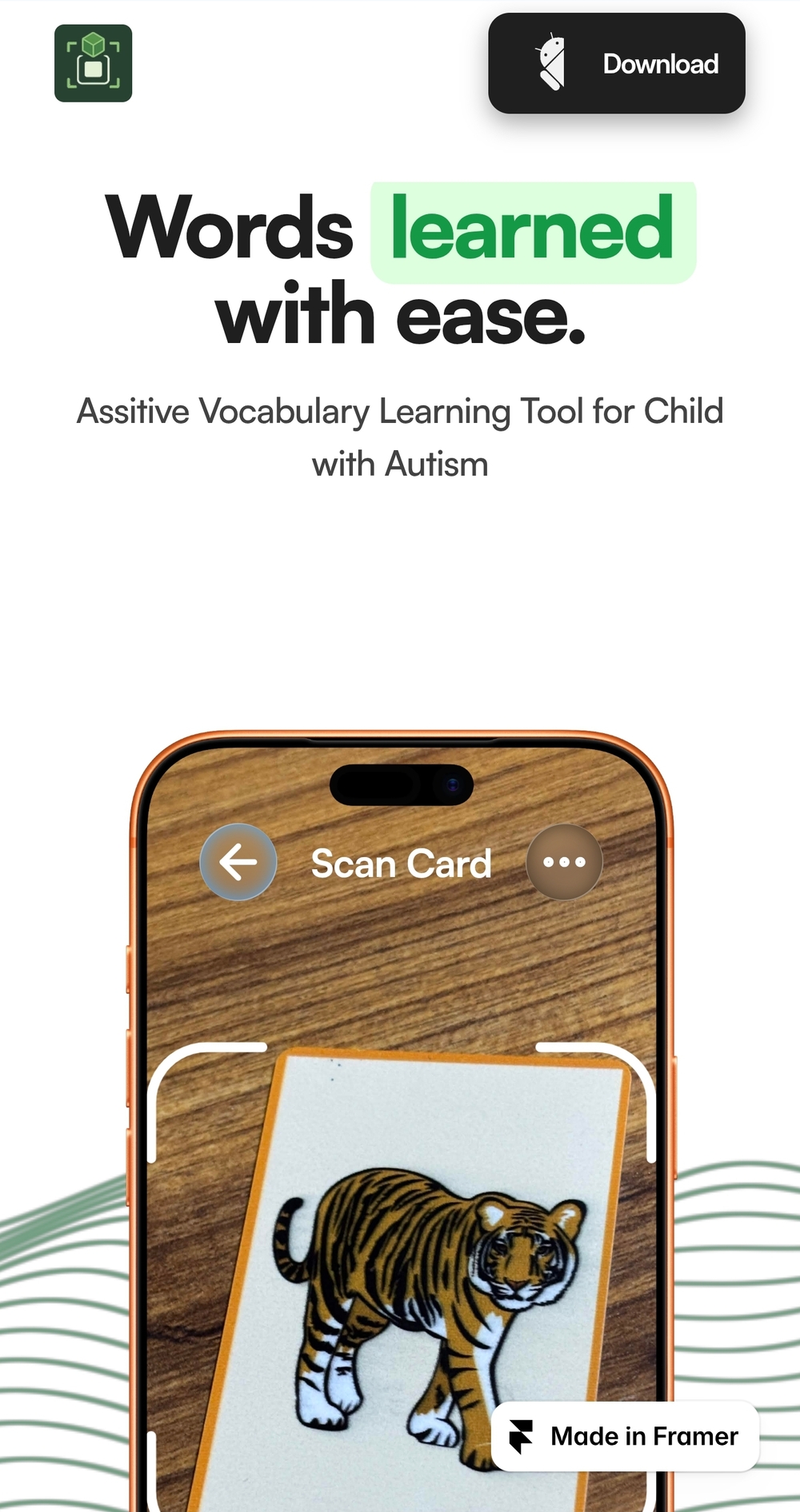 ‘Synoptic’ has created an environment for children with autism or learning disabilities, who have low speech, to learn vocabulary through augmented reality (AR) technology. The Card AI app, created by Arya Pathak, Himesh Dulal, Safal Narsingh Shrestha, Shoham Kayastha and Shreyan Vasti, all studying at Kathmandu University, converts physical learning cards into 3D visuals and sounds through AR.
‘When you scan any physical card through our app, a 3D model of the related creature or object appears,’ said Arya. ‘Also, since voices and natural sounds are heard in both Nepali and English, children can easily learn words by treating them like toys.’
According to Arya, although there is a lack of official and reliable government data on autism in Nepal, it is estimated that about 300,000 children here are affected by it based on indicators from the World Health Organization and neighboring countries. To address this serious problem, they have been collaborating with the Cognitive Science and Psycholinguistics Lab of Tribhuvan University and the Hope Care Center for Child Development and Research Center for the past year. Currently, the initial prototype they have prepared is being used as a test by 1 teacher, 3 parents, and 6 therapists.
Mithila Coder: Farmers' Advisor
Janakpur's 'Mithila Coder' is working to provide agricultural advice to farmers in the local language. The 'AgriSense' app developed by this startup guides farmers like an expert from sowing seeds to harvesting crops. Amardeep Soni of the group told Kantipur that they have prepared the app to give concrete suggestions on which crops are best planted on which land, taking soil details and weather information from the Nepal Agricultural Research Council (NARC).
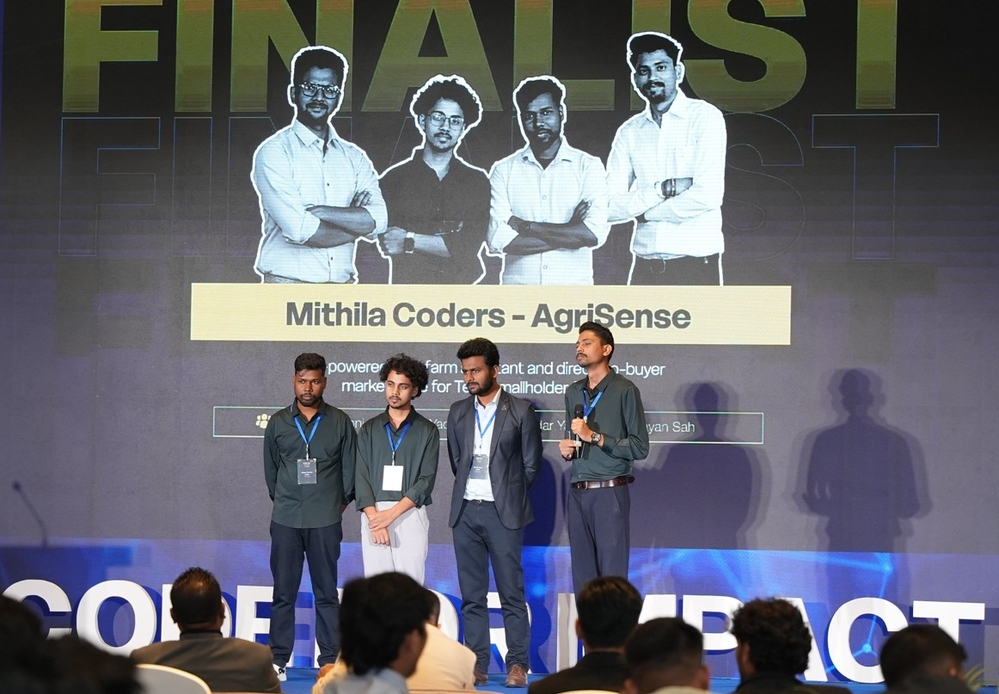
Along with Amardeep, Purushottam Yadav, Shyamsundar Yadav and Satyanarayan Sah are associated with the group. ‘All four of us are developers and we ourselves are farmers, so this was our family problem,’ said Amardeep, ‘The farmers of the Terai are still farming in the old way and are forced to work based on guesswork, so we are making the AgriSense app. We aim to solve the problems faced by farmers due to the lack of experts through technology.’ He said that if a crop is affected by a disease, the farmer takes a photo and sends it, and the app will use AI to tell the treatment method.
000
Speaking at the award ceremony for the winning team, Mike Harker, the head of public affairs at the US Embassy, who was also the judge of the hackathon, said that the creativity of Nepali youth and collaboration with American technology will create new opportunities. He compared entrepreneurship to climbing Mount Everest, noting that reaching the summit is not the only success, but only half of the journey. ‘Success requires strong partnerships and preparation, not alone,’ he said.
Stuti Basnyat, co-founder of Adyanta Advisory, said that the main achievement of the program was connecting technology to solving real problems of people. American Chamber of Commerce (AMCHAM) Nepal President Kailash Vijayananda mentioned that the participating startups tried to find solutions that would have a positive impact on people’s lives.