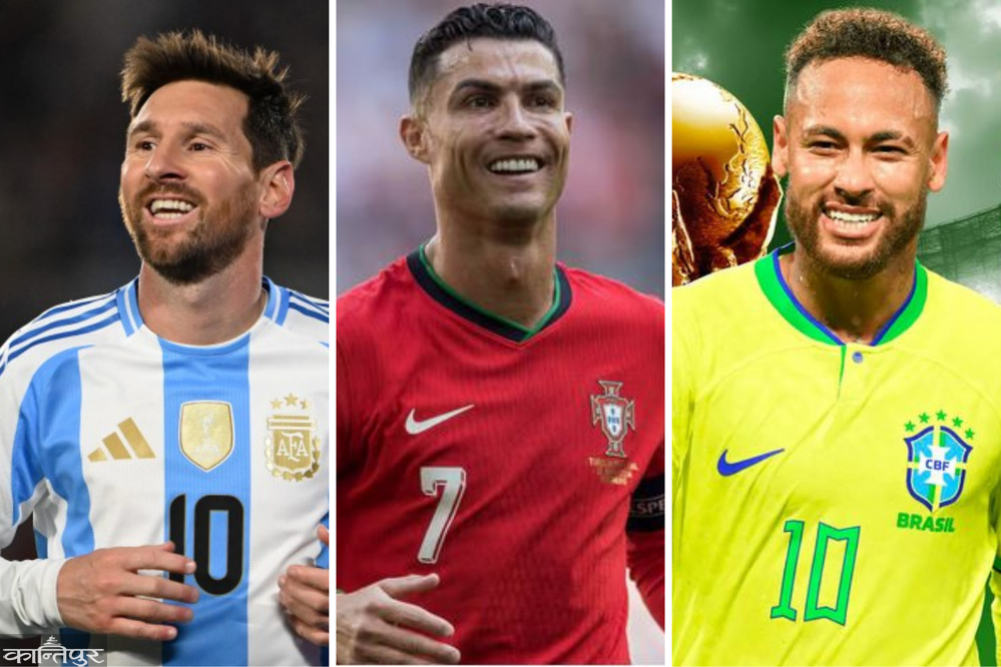
48 teams are participating in the 23rd edition of the FIFA World Cup, jointly hosted by the United States, Canada, and Mexico. The tournament, which is set to begin amid some questions and controversies, will last for six weeks.
We use Google Cloud Translation Services. Google requires we provide the following disclaimer relating to use of this service:
This service may contain translations powered by Google. Google disclaims all warranties related to the translations, expressed or implied, including any warranties of accuracy, reliability, and any implied warranties of merchantability, fitness for a particular purpose, and noninfringement.
The 2026 FIFA World Cup officially begins at 12:45 midnight on Thursday at Mexico City's Azteca Stadium. It is not only making waves on the field but also in the economic sector.
This time, the United States, Canada and Mexico have jointly organized the tournament. This edition of the World Cup, which will feature 48 teams, is considered the largest tournament in football history. The World Cup, which is about to begin amid some questions and controversies, will last for six weeks, which will capture the attention of the entire world.
As an opportunity for huge economic activity, this tournament is expected to generate billions of dollars in business, change the shape of the advertising market, further boost the global sports betting industry and take the latest technologies such as sensors and artificial intelligence (AI) to new heights in conducting sports competitions. Gianni Infantino, President of the International Federation of Association Football (FIFA), has repeatedly described the 2026 World Cup as a World Cup of unprecedented size.
FIFA expects this edition to generate the biggest commercial return ever in terms of broadcasting rights, sponsorship and match-winning revenue. But while FIFA and its commercial partners are likely to generate significant revenue, economists say the economic benefits to the host country are often concentrated in a limited number of regions and cities. Past experience has shown that the returns from hosting countries are not sustainable given the costs and billions of dollars invested.
The most interesting and intriguing
The two main issues that everyone is interested in are the exorbitant ticket prices and the ongoing tensions in world politics. It will also be interesting to see how the tournament, jointly hosted by Mexico and the United States and Canada, will be coordinated. When the tournament begins, everyone's attention will be on the field. The final match for the title will be held on July 19. And, there will be fierce competition for that.
'This World Cup will be the biggest, it will not only be special, but also successful,' claims FIFA President Infantino, 'This World Cup will be watched directly by seven million fans in the stadium.
Most of the matches in this World Cup will be held in the US. World politics will naturally be linked to this. America's war with Iran and President Donald Trump's world policy will not be far from this World Cup.
Since the number of participating teams has increased from 32 to 48, both the number of matches and the number of days have increased. This means that even small countries like Curacao and Cape Verde are getting the opportunity to participate. The initial league stage has been divided into 12 groups. There will be 72 matches in this stage alone. For the first time in World Cup history, there will be last 32 matches. Perhaps such a tight competition in the league stage is not expected. Because there is no situation where there are two strong teams in the same group.
The real competition in the World Cup will only start from the last 16. So one of the issues of debate now is whether increasing the number of participating teams will benefit small countries with no long football history. But there is a fear that this will reduce the level of football that the tournament will produce. Only the top two teams in each group will advance to the knockout stage this time, while the eight best third-place teams will also advance to the next stage of the competition.
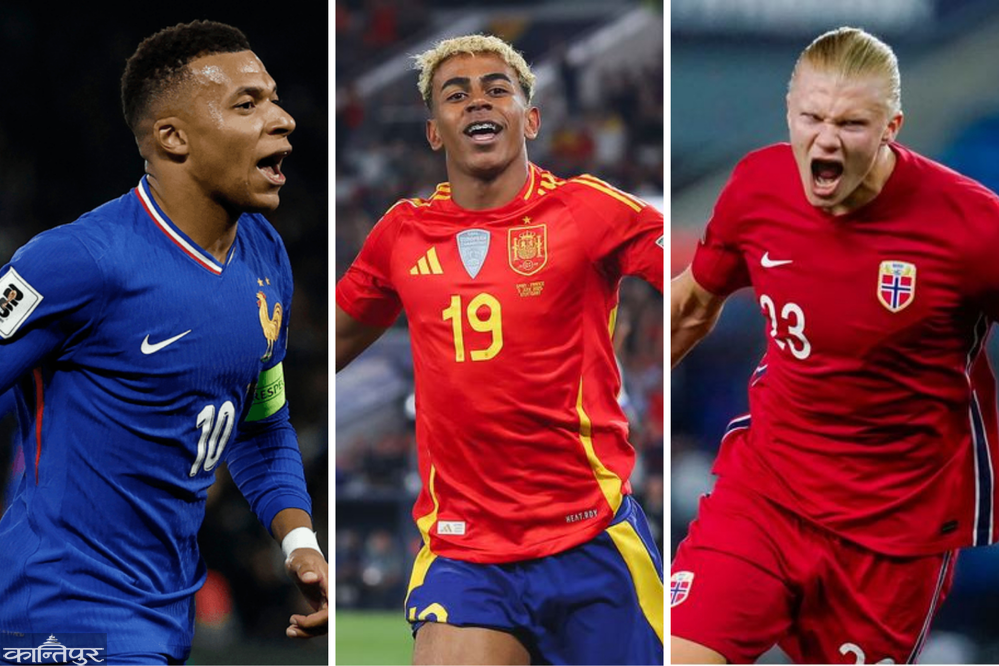
Therefore, some teams will be more likely to play restrained and less aggressive football in the hope of reaching the knockout stage.
Messi and Ronaldo's last World Cup
What makes this World Cup special is that it will also be the last World Cup for two of the greatest players this century has seen, Lionel Messi and Cristiano Ronaldo. Argentina is the defending champion of the tournament. They are playing under the leadership of 38-year-old Messi. The question will be - can Messi bring another success to his country? And can 41-year-old Ronaldo end his successful playing career by winning a big tournament for Portugal?
Both these players are playing in the World Cup for the sixth time. They will not be active on the field in the next World Cup. Who is the strong candidate for the title of the tournament? Everyone will be interested in this too. Brazil is the most successful team in World Cup history. It has won this tournament five times. But in the last two decades, the brilliance of the Brazilian team seems to have faded. That is why Brazil is playing this World Cup under the leadership of experienced Italian coach Carlo Ancelotti. England is also depending on German coach Thomas Tuchel to win its first major title in 60 years. This time too, there will probably be no new winner, one of the old winners will win the title.
That means that there will be a decisive clash for the title between the strongest teams from Europe and South America. In that, Argentina and Brazil are from South America, while from Europe, along with Portugal and England, France and Spain. Some other European countries are also capable of high performances. Some African and Asian countries will also be eyed. Their responsibility will be to break the dominance of Europe and South America over the title. A similar eye will be on one of the three host countries, the United States. The United States is playing at home. And, the coach is the experienced Argentine Mauricio Pochettino. The challenge that the United States will present will probably not be small.
Mexico's famous 'Estadio Azteca' stadium is also setting a rare record this time. It is becoming the first stadium in the world to host the games of 1970, 1986 and 2026 and the opening match. Maradona scored the famous 'Hand of God' goal in this stadium in 1986.
Football's biggest business
The total cost of the event is estimated to be $13.9 billion. According to a joint study released by FIFA and the World Trade Organization, the tournament will contribute $40.9 billion to the world's gross domestic product. The study projects that about 824,000 new jobs will be created worldwide. About 200,000 jobs are expected to be created in the United States alone.
The World Cup is expected to generate about $80.1 billion in new economic activity worldwide. The World Cup is expected to boost sales of goods and services in various businesses around the world and boost economic activity. FIFA's own costs are estimated to be about $3.8 billion. FIFA has allocated $1.12 billion for operations, $1.02 billion for prizes, $890 million for teams, $420 million for stadium maintenance, rental and sports equipment, and $90 million for administration.
More than 6 billion people, or three-quarters of the global population, are expected to watch the tournament this time thanks to internet and digital technology. The 2022 World Cup in Qatar was watched by 5 billion people. At that time, FIFA's four-year commercial income is estimated to have been around $7.5 billion. Based on this income from broadcasting rights, sponsorship deals and licensing, FIFA's total income for the 2026 World Cup is expected to exceed $10 billion.
The main economic backbone of the tournament is broadcasting rights. Television and digital broadcasting rights have traditionally accounted for more than half of FIFA's total income. FIFA has provided free broadcasting facilities to countries with low per capita income or underdeveloped regions in previous World Cups. But this time, the World Cup broadcasting rights have been sold to 190 countries and regions.
It was reported that American broadcasters Fox News and NBC paid about $1 billion for the broadcasting rights. In India and China, they had to sell them at a low price because they did not attract much attention until the last minute. This broadcast, which often comes at an inconvenient time for viewers, will be broadcast by Zee Network in India and CCTV in China at the last minute. In Nepal, the FIFA World Cup 2026 games can be watched officially on the Himalaya Sports HD television channel and the Digo mobile app.
It is estimated that advertising spending in the United States alone could reach about $500 million due to the World Cup. There will be two types of major sponsors in the tournament. Among them, one is the long-term sponsors of FIFA such as Aramco, Adidas, Coca-Cola, Visa, Hyundai, Lenovo, Qatar Airways. The other type of sponsor is Bank of America, McDonald's, Unilever, Verizon, etc., which are associated with FIFA in the 2026 World Cup.
US broadcasters alone are expected to generate more than $850 million in advertising revenue from the tournament. Global advertising revenue is also expected to top $11 billion. Aramco, FIFA's main sponsor, pays the organization $100 million annually in advertising revenue.
Economic stakes of host countries
The three host countries are looking at football as a new source of economic activity. According to the White House Task Force website, the games in 11 US cities will provide a major boost to local economies. In the US alone, it is claimed that $17.2 billion in economic activity will be added from tourism, hospitality, transportation and competition-related spending. The White House is planning to celebrate the tournament as a major celebration by linking it to the country's 250th anniversary.
Canada is also expecting economic activity worth billions of Canadian dollars. The local Global News, citing a report by the Bank of Montreal, said that Canada's gross domestic product will increase modestly due to spending on tourism and hospitality during the World Cup. The bank's chief economist, Doug Porter, described this as a "short-term benefit." FIFA, however, estimates that the Greater Toronto Area alone will see an economic benefit of about $940 million.
Hotels, restaurants, airlines, transportation services and small businesses in the host cities are expected to face extraordinary demand. As millions of spectators flock to various cities during the tournament, local spending is expected to increase significantly. Mexico is being analyzed as the biggest beneficiary. The World Cup is estimated to add about $3 billion to the Mexican economy. Cities such as Mexico City, Monterrey and Guadalajara are expected to benefit the most. However, managing it is considered a major challenge due to the long-standing water shortage there.
The World Cup will also be affected by the heat. The heat during the match will not only affect the general public, but also the performance of the players and referees. It is extremely hot in most American cities at this time. That is why FIFA has also arranged for a mandatory break in each half. That means that each game of the World Cup will be divided into four parts in a sense. This mandatory break can have a decisive effect on slowing down the pace of the game. But this break will also be useful for some teams to change their strategy and stop the constant attacks of the opponent.
Billions of dollars spent
Qatar built most of the infrastructure for the World Cup. The World Cup in North America is based on existing stadiums. But this does not mean that the tournament is cheap. The host cities have invested heavily in stadium upgrades, security systems, transportation improvements, telecommunications infrastructure and fan zones.
Work has been done to bring the NFL stadiums up to FIFA standards, including playing fields, hospitality services, communication facilities and temporary capacity expansion. Tourist food, accommodation and transport alone are estimated to generate an economic turnover of $7.5 billion. FIFA plans to spend $3.8 billion on the operation of the games, prizes and teams. The FIFA and World Trade Organization report states that $1.8 billion will be spent on the management of the host cities and about $900 million on capital investment in stadiums and other infrastructure.
Public investment is not limited to stadiums. Airports, roads, public transport and urban infrastructure have also been improved. Critics have criticized the fact that such investment from public sources should not be borne by taxpayers, but rather directly benefit the private sector. Supporters argue that infrastructure improvements and tourism promotion will provide long-term benefits.
The economy of the games
It is estimated that about $3 billion can be earned from ticket sales and corporate hospitality services alone. The main reason for this is not only the increase in the number of games, but also the use of the huge NFL stadium, which can accommodate more than 70,000 spectators. Global alcohol and beverage companies have seen a significant increase in sales during such tournaments.
Sportswear companies such as Nike, Adidas and Puma are also major beneficiaries of the World Cup. They have been doing well selling national team jerseys, limited edition merchandise and tournament-related products. It is also considered one of the busiest times of the decade for airlines, hotels and online travel companies. In the US, the accommodation and food services sector alone is expected to benefit
by $2.4 billion. The global publicity of the host cities is expected to increase tourist arrivals and continue to generate income after the games.
The World Economic Forum report also discusses some economic challenges. Experts are concerned that hotel rates and tourist arrivals in some host cities will not be as high as expected due to high and expensive tickets. However, the FIFA report claims that this billion-dollar investment before the games will have a positive impact on the health and mental health of society worth $8.3 billion.
Betting, AI and new technologies
Market analysts estimate that global betting turnover during the World Cup cycle could exceed $100 billion. Betting companies are using AI to provide personalized offers to users this time. They are creating new betting options instantly while the game is in progress. Now, not only can bets be placed on winning or losing a match, but also on subtle events such as whether a goal will be scored after a corner kick.
AI has made it possible to create thousands of small betting markets for a single match, which is said to be increasing the revenue of betting companies. However, AI is also expected to help broadcasters and advertisers understand audience behavior, tailor promotional materials and modify business strategies. This edition is considered the most technology-friendly World Cup in history.
The development of semi-automated offside technology on the field, sensor-based balls and the use of advanced data systems to make the decision-making process faster and more reliable. FIFA is also experimenting with body cameras for referees. Adidas says it has developed a special cooling vest, jacket and shoe based on its Climacool system to help players cool down from the heat.
Adidas says it uses frozen gel to cool the body, stomach and back. “This system helps reduce the player’s body temperature and increase their ability to tolerate heat,” Adidas says. “The overshoe reduces the temperature of the foot inside the boot by two degrees Celsius within seven minutes. This reduces foot swelling and makes players more comfortable.”
Some of the biggest technological changes at the World Cup will be seen outside the stadiums. Digital ticketing systems, AI-based crowd management, predictive security systems and multilingual virtual assistants are expected to play a role in managing the massive tournament spread across three countries and different time zones.
Broadcast companies are set to use machine learning to create personalized highlight content for viewers. Streaming platforms will also be able to recommend games and team content according to the viewer's interests.
This time, the official ball 'Trionda' has a small sensor (IMU) inside it, which collects data 500 times per second and sends information about the speed and direction of the ball to the video assistant referee (VAR), according to News.adidas. 3D avatars of the players have been created to make it easier for referees to make offside decisions. The news mentions that such an avatar was created by scanning the body of each player and AI was included in it.
Political impact
With all this, how can this World Cup be untouched by off-field politics? US President Donald Trump is happy to host the World Cup in his country. He considers this World Cup as part of his plan to make America great again. FIFA is also fully aware of Trump's global influence. That is why this highest body of world football awarded the same Trump the FIFA Peace Prize last year, that too after Trump did not receive the Nobel Peace Prize. The World Cup will also be affected by the US attack on Iran in collaboration with Israel and the rising price of oil.
Many will also be interested in how Iran will perform in this World Cup. Iran has already moved its training center from the US to Mexico. At the same time, FIFA is also being criticized for its high ticket prices. It is alleged that football is no longer the beautiful game of the poor, it is only for the rich. Meanwhile, the common football fans want all such political confusion and disputes to end when the real game starts. Instead, the talk should be about football on the field. Let's believe that the 2026 World Cup can bring a new flavor of football and the common fans can enjoy it. – With the help of the agency