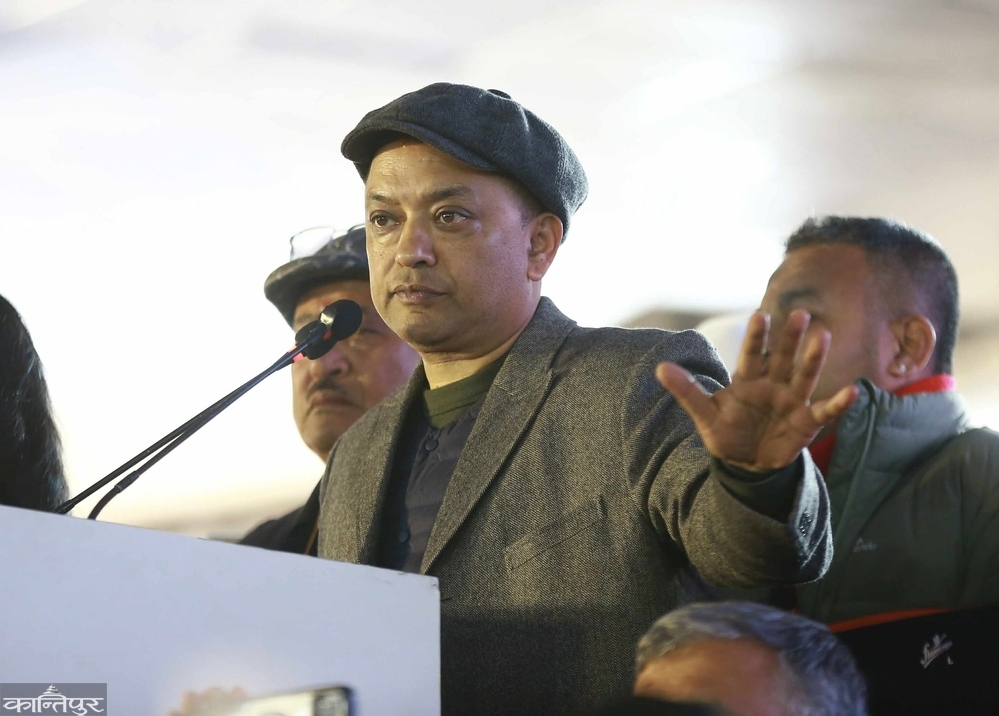
The debate continues on the rise of the Gen-G movement, the historic election, the social, economic, and cultural transformations of the Rashtriya Swayamsevak Sangh (RSS).
We use Google Cloud Translation Services. Google requires we provide the following disclaimer relating to use of this service:
This service may contain translations powered by Google. Google disclaims all warranties related to the translations, expressed or implied, including any warranties of accuracy, reliability, and any implied warranties of merchantability, fitness for a particular purpose, and noninfringement.
The year 2082 was not just a year of changing the calendar for Nepal. This year, an unexpected change of power occurred, and a new force rose to power with the storm of the digital age. The youth discontent that started from the streets was taken directly to the center of power, which has overturned the equation of parties that had been entrenched for decades.
The long-simmering public anger and the discontent of the young generation exploded together this year. This uprising has made 2082 one of the most decisive years in history.
Since Bhadra, the debate on Nepal's political, social and governing structure has reached a new place. The understanding that no party can bring a majority according to the political system provided by the constitution has been rejected by giving the Rashtriya Swayamsevak Sangh (RSS) about two-thirds of the votes. After the governments of 048 and 056 (Congress) and 074 (UML-Maoist), Balendra Shah has become the Prime Minister with the strength of the RSSP's single majority.
In the elections held on 21 Falgun, the victorious wave of the Rashtriya Swayamsevak Sangh (RSS) reduced the long-standing Congress, UML, and NCP to a small number of points.
What will be the future of the country with the political changes of 084? Debates are ongoing from a social, economic, and cultural perspective.
Gen-G activist Sanket Rai says that we should look at the results of the new political force that came to power with the major political changes in 084. 'The Gen-G movement brought about a major change. A new force also emerged in power,' she said, 'With the review of 084, social, economic, and cultural transformation will be necessary in the coming days. Some seem to be stuck in the election results and after the formation of the government. But there will be no more chaos until there is a structural change in the state institutions.'
Explosion of youth discontent
The Congress-UML coalition government decided to shut down social media in the third week of Bhadra, saying that social media had not been registered in Nepal. The peaceful movement that began after the then Prime Minister KP Sharma Oli's government banned social media turned into an uprising. The biggest political event of 2082 was the Gen-G movement. The movement that began peacefully from Kathmandu's Maitighar on Bhadra 23 and the demolition on Bhadra 24 displaced the Oli government. The House of Representatives was dissolved. On the 23rd, 29 people were killed in clashes in the Parliament building complex and other areas in New Baneshwor. 17 people died on the same day and 12 died later during treatment.
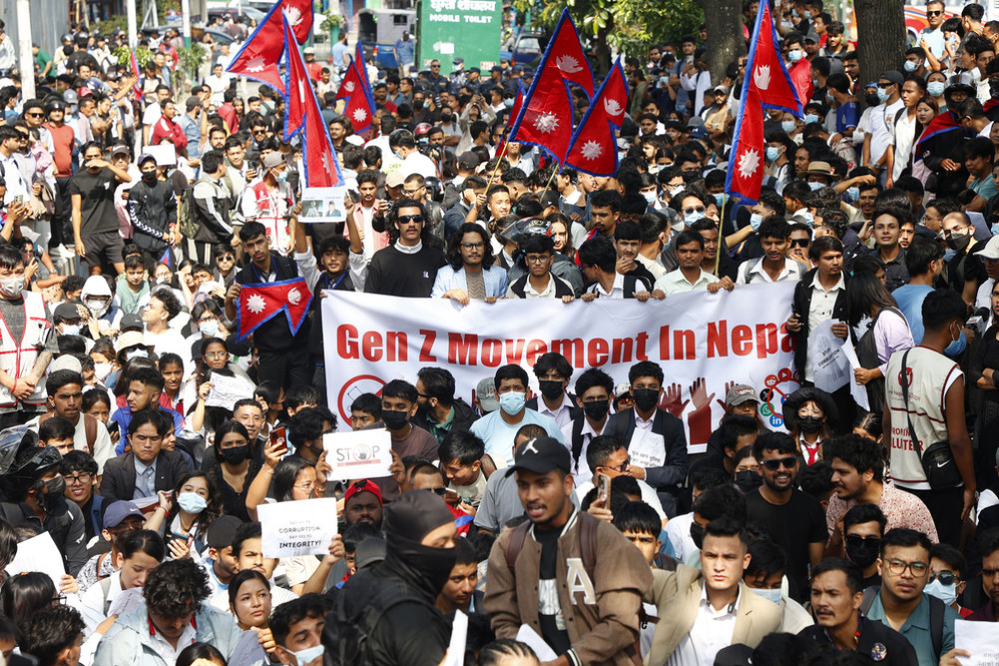
Thousands of protesters gathered to surround the Federal Parliament building in New Baneshwor on Bhadra 24 to protest against government repression. There, too, clashes broke out with the police. The protesters set fire to the parliament building. Then, government and private institutions across the country, including Singha Dabar, the Supreme Court, and various ministries, were set on fire. This is the first incident in Nepal's political movement in which so many government and private structures were set on fire in a single day.
76 people lost their lives in the incidents of 23 and 24.
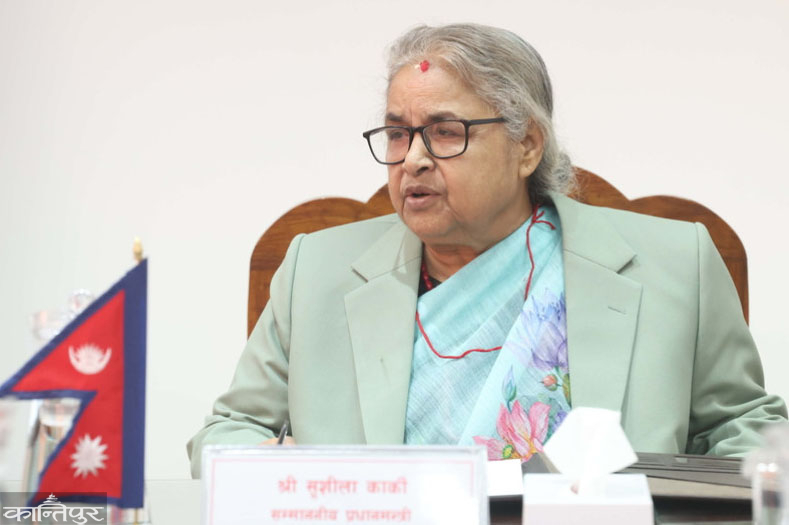
After 2062/063, the Nepali Army also joined Nepal's politics. The army held political talks with Gen-G representatives at its headquarters. After that, an electoral government was formed under the leadership of former Chief Justice Sushila Karki on the basis of an agreement reached by President Ram Chandra Poudel with Nepal's political parties and Gen-G representatives, in collaboration with the army. Nepal has made another history by getting its first female Prime Minister
. The same government announced the election for the House of Representatives on Falgun 21. NCP Coordinator Pushpa Kamal Dahal and Co-Coordinator Madhav Kumar Nepal also participated in the talks coordinated by President Poudele. The talks held at Sheetal Niwas had agreed to go for the elections under the leadership of Prime Minister Karki. UML and Congress, on the other hand, have approached the Supreme Court demanding the restoration of the parliament.
The government has already formally declared 45 people who lost their lives in the protests of Bhadra 23 and 24 as 'martyrs'. UML has interpreted this protest as a conspiracy. While Congress, NCP and Rashtriya Swayamsevak Sangh (RSS) support the Gen-G movement, they have been demanding an investigation into the Bhadra 24 incident. Exit of the coalition government
The exit of Prime Minister KP Sharma Oli from the Congress-UML coalition government was not easy . Not because of a minority in parliament, but because of the Gen-G movement that ousted Oli from power . After protesters set fire to the Prime Minister's residence on Bhadra 24, he was rescued by the Nepali Army and taken to a safe place .
Oli was forced to resign from his post on Bhadra 24, 2082. The slogans raised on the streets saying 'All the old leaders have failed' put the ruling party on the defensive . The anger of the common people towards the old parties and leaders turned into an explosion .
Since the end of 2081, the people were extremely disappointed due to the economic recession, unemployment and increasing corruption in the country. Due to the power struggle between the old parties and the lack of good governance, citizens were looking for alternative forces . In 2002, after the names of top leaders were implicated in the cooperative fraud case and various scandals, public pressure on the streets had already started increasing.
In 2001, the government led by Maoist Chairman Pushpa Kamal Dahal collapsed after the Congress-UML formed a power alliance. The power struggle between the three parties was also increasing the dissatisfaction among the common people.
After the Oli government banned social media, the dissatisfaction of the youth turned into an explosion. Along with this, the Gen-G movement that emerged against corruption and with the demand for good governance displaced the strong Congress-UML government. The existential crisis of the old parties After the government banned social media, the youth started uniting on digital platforms. The strong impact of the Gen-G movement that started through digital was also seen in the general elections.
The Rashtriya Swayamsevak Sangh (RSS) made digital media its main medium of propaganda. The strategic collaboration between the then mayor of Kathmandu Metropolitan City, Balendra Shah, and the Rashtriya Swayamsevak Sangh (RSS) not only brought a new impetus to the electoral arena, but also saw a digital revolution in terms of results.
The election has put the existence of the old parties in danger. The strongholds of the Congress, UML, and NCP collapsed. The Madhesh-centric party was eliminated. UML Chairman Oli himself had to be defeated by a large margin. Among the top leaders of the old parties, only NCP coordinator Dahal won from Rukum East.
The RSS got almost two-thirds of the votes, including 182. The Congress was reduced to 38, UML to 25, and NCP to 17 seats. This election brought the Hark Sangpang-led Shram Sanskriti Party to the forefront as a new force.
Government's aggressive 'action'
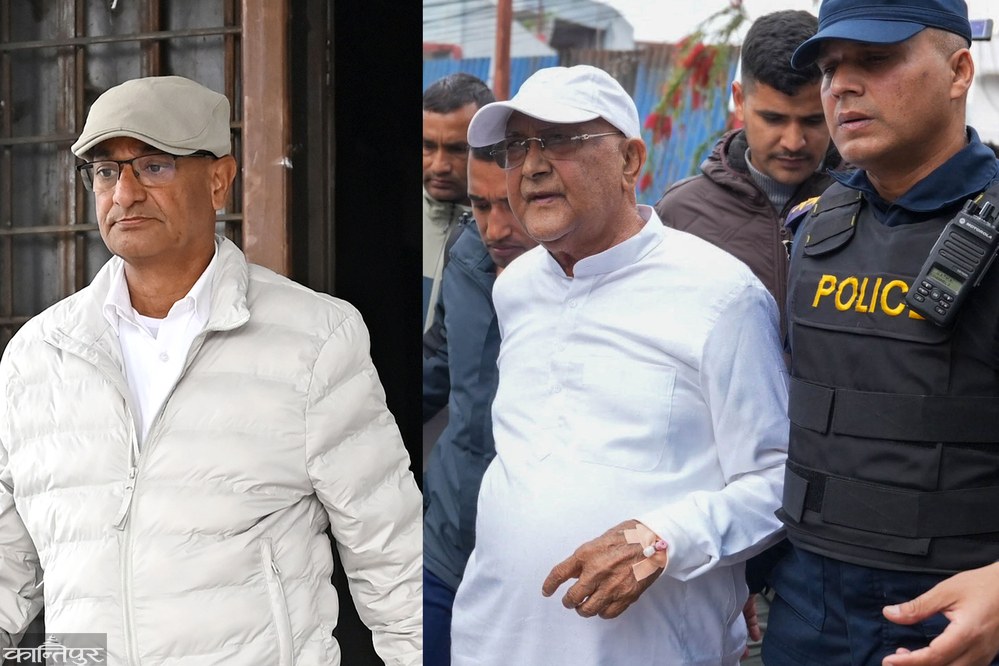
Less than 24 hours after the formation of the government led by Balendra Shah, former Prime Minister and UML Chairman KP Sharma Oli and former Home Minister and Congress leader Ramesh Lekhak
were arrested on the morning of Chaitra 24.
The government said that they were arrested based on the recommendation of the commission formed under the chairmanship of Gauri Bahadur Karki to investigate the Gen-G movement. Both leaders have been released on Chaitra 26.
Stating that the government has prioritized the issue of good governance, former Minister Deepak Khadka has also been arrested and is being investigated in the asset investigation.
In a sign that it has begun a tough journey of good governance, the government dismissed Labor Minister Deepak Kumar Sah
within two weeks. He was relieved of his post after news of his wife Junu Shrestha being appointed to the Health Insurance Board at the instigation of Minister Sah was published. Debate on constitutional reform The government has started making necessary reforms to the constitution. Discussions have begun to prepare a draft of the constitution reform under the coordination of Prime Minister Balendra Shah's political advisor Asim Sah.
Towards the end of 2082 BS, the demand to improve some of the weaknesses in the Constitution of Nepal 2072 BS became stronger. The new government is preparing to move forward with the process of amending the constitution on issues such as 'directly elected executive chief' and restructuring of provinces.
New leadership from 'rebellion' in the Congress
The special general convention of the Congress has become a very complicated and controversial topic in Nepali politics. Which has brought about a major change in the internal democracy and balance of power of the party. Under the leadership of Congress General Secretaries Gagan Thapa and Bishwaprakash Sharma, 40 percent of the general convention delegates had submitted their signatures as per the party's statute and demanded a special general convention. After the establishment party refused, the general convention at Bhrikutimandap in Kathmandu formed a new working committee under Thapa's leadership in the last week of December 2082. The main achievement of the general convention is the coming of the Congress under the leadership of the young generation. Which displaced the old leadership that had been in place for decades and elected Thapa as the president. The establishment party of the Congress has approached the Supreme Court claiming that the special general convention was illegal.
Overall, 2082 not only brought about a change in power, but also created hope with the emergence of a new force. But there is an equal challenge in converting it into results.
Correction of error:
The date has been corrected as it is different.
Related news
Year 2082: Most Nepali films could not make a profit
Media 2082: From the Bhadra 24 attack to the economic crisis