The historic victory was ensured by the old parties being punished by voters angered by three and a half decades of misrule, corruption, and impunity, the organizational foundation of the National Independent Party, and the popularity of the then mayor of the capital, Balendra Shah.
We use Google Cloud Translation Services. Google requires we provide the following disclaimer relating to use of this service:
This service may contain translations powered by Google. Google disclaims all warranties related to the translations, expressed or implied, including any warranties of accuracy, reliability, and any implied warranties of merchantability, fitness for a particular purpose, and noninfringement.
As the results of the election for members of the House of Representatives held on Thursday are coming in, a wave of the Rashtriya Swayamsevak Sangh (RSS) has been seen across the country. Out of the 165 direct constituencies, the RSS is leading by a margin of two-thirds. The RSS is also far ahead in proportional representation. As of 5 am on Saturday, the RSS has won 29 out of 32 elections in Madhesh and 8 out of 33 in Bagmati, and is leading in 18 constituencies. As of 5 am, the RSS candidates who won 6 seats, including Ranju Darshana in Kathmandu-1, Rajunath Pandey in Kathmandu-3, Shishir Khanal in Kathmandu-6, Ganesh Parajuli in Kathmandu-7, Biraj Bhakta Shrestha in Kathmandu-8, DP Aryal in Kathmandu-9 and Pradeep Bista in Kathmandu-10, are leading in 102 seats across the country.
UML Chairman KP Sharma Oli is seen trailing far behind the Rashtriya Swayamsevak Sangh (RSS) candidate in Jhapa, UML Vice-Chairman Bishnu Poudel in Rupandehi, and UML General Secretary Shankar Pokharel in Dang. Similarly, Congress General Secretary Pradeep Poudel has been defeated from Kathmandu-5, while another General Secretary Gururaj Ghimire has also been defeated in Morang-4. Similarly, President Gagan Kumar Thapa is struggling hard in Sarlahi-4. In Rautahat, NCP Co-Coordinator Madhav Kumar Nepal is competing for the fourth place, while in Saptari, JSP Nepal Chairman Upendra Yadav is competing with Rashtriya Swayamsevak Sangh (RSS) candidate Amar Kant Chaudhary for the second place. In Saptari, Janmat Party Chairman CK Raut has also been defeated by the RSS candidate.
The leaders themselves became kings and queens. They promoted impunity. They did not respect the sovereign citizen. That is why the people gave a mandate for a very big change' - Social/political activist Reshu Aryal Independent social/political activist Reshu Aryal says that the people are looking for an alternative to corrupt leaders who only make speeches. 'Corruption has permeated everywhere in the current structure. No leader is accountable to the citizens,' she said, 'They became kings and queens. They promoted impunity. They did not respect the sovereign citizen. That is why the people gave a mandate for a very big change.’ Why is there such a wave in favor of the RSS? Political analysts are of the opinion that the people, angered by the arbitrariness and impunity shown by the old parties during their rule of more than three decades, have punished them. Similarly, they say that Balendra Shah's work as mayor of Kathmandu Metropolitan City without being involved in any scandals including corruption and the excitement generated among the Madhesi people over the possibility of a Madhesi becoming the Prime Minister for the first time have also brought this wave.
In the previous election held within 6 months of its formation, the Rashtriya Swayamsevak Sangh (RSS) had won 21 seats in the House of Representatives in 2079. In the next election held less than three years later, it defeated parties with decades of history and networks of organizations reaching villages, including the Congress and UML, all at once. Whether it was the Congress/UML (then ML), which organized underground during the ban on panchayat parties, or the Maoists (currently the CPN), which established itself on its strength through an armed rebellion in 2047 after the restoration of democracy, or the Madhesh-centric parties that emerged in national politics from the Madhesh movement, or the RPP, which is pursuing progressive politics, voters have now unanimously given the votes they had been distributing among those parties until now to the RSS.
‘It seemed as if the old parties did not respect the citizens’ desire for change at all, and even ignored them. That is why there was anger and resentment towards them, says Anup Subedi, a doctor who is active in civil rights. In that situation, it was natural for the people to punish them.
Subedi said that the three main leaders of the Congress, UML and the then Maoists, Sher Bahadur Deuba, KP Sharma Oli and Pushpa Kamal Dahal, respectively, have always placed themselves above the law and procedure both inside and outside the party. “They cannot be touched by the authorities, they cannot be held accountable by the parliamentary committee, they are their own umbrella inside and outside the party,” he said. “The alliance led to dictatorship in all organs of the state – universities, hospitals, schools, police, Red Cross, constitutional organs, and there was a kind of chaos throughout the country. In such a situation, anger was natural.”
After the restoration of democracy, the Congress, which led the people's movement of 2046, had won a majority in the parliamentary elections held in 2048. However, the Congress could not last the full term of the parliament, and after the dissolution of the majority parliament, it went to mid-term elections in 2051. From that, the UML emerged as the largest party in the parliament. But again, after the Supreme Court stayed the dissolution of the parliament by the UML, it lasted for 5 years, but the Congress-UML competed to hand over the leadership of the government to the power that was defeated by the then people's movement, such as the RPP. Politics became limited to a game of musical chairs between top leaders, so the people expressed their lack of trust in them, and showed their trust in the new ones: Prof. Krishna Khanal, Political Scientist
Even after getting a majority after the 2056 elections, the Congress could not save it in the political situation at that time. The Congress, embroiled in internal strife, was caught between the armed violence started by the Maoists in 2052 on the one hand, and the undemocratic ambitions of the then King Gyanendra, who came to power after the royal family was destroyed in the palace massacre in 2058, on the other. Finally, through the dissolution of parliament, Gyanendra took the sovereign power into his own hands and exercised an autocratic rule. The people's movement of 2062/63 ended the king's autocracy. After the Maoists returned to peaceful politics, a republic came from the Constituent Assembly formed. The second Constituent Assembly drafted the constitution in 2072. However, the major parties and their main leaders took turns in power.
'Our politics has become limited to a game of musical chairs between top leaders,' says political scientist Professor Krishna Khanal, 'Now the people have shown that they do not trust them. They have shown trust in the new. They trusted the Congress/UML leaders less than Balen.’
Another political analyst, Tulanarayan Sah, believes that the current result is mainly due to Balendra Shah, who resigned from the post of mayor of Kathmandu Metropolitan City and contested the election from Jhapa-5 as the prime ministerial candidate on behalf of the Rashtriya Swayamsevak Sangh (RSS). ‘This result is not only unexpected, it is a miracle,’ he said. ‘In Madhesh, there is only talk of Balen and Ghanti. Neither anyone knows the RSSW, nor are the other candidates known to be that well-known.’
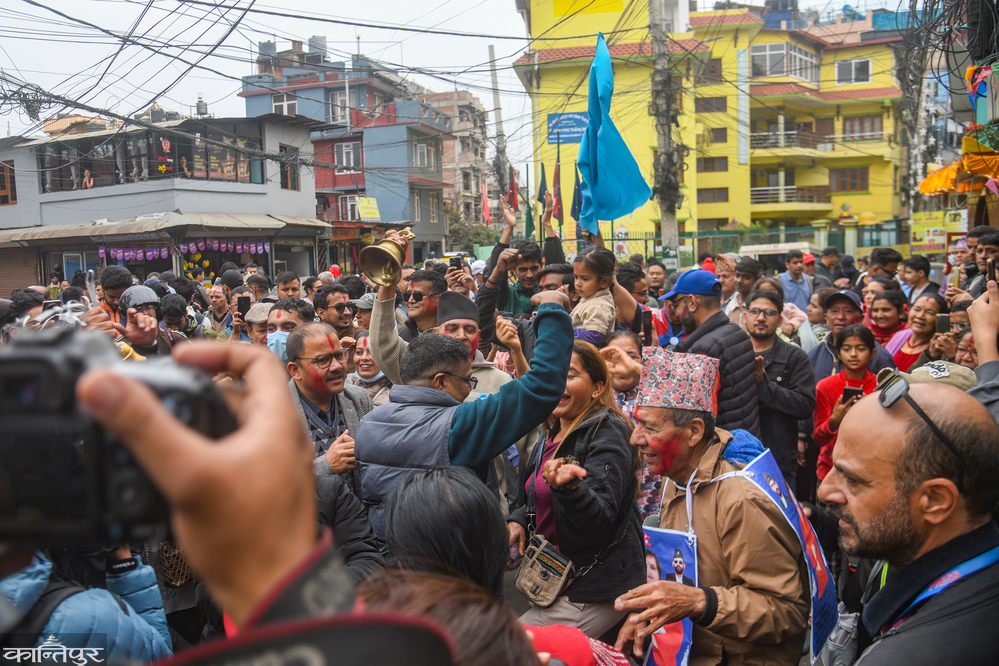
Analyst Sah says, ‘The romanticism created by the statement that a Madheshi leader is becoming the prime minister for the first time has created a wave in Madhesh.’ He says that the wave elsewhere came from Balendra’s legacy of the Gen-G movement. ‘It seems to have come because of the image he created while working as the mayor of Kathmandu that he would not tolerate corruption and would not fear anyone,’ he said.
On the first day of the Gen-G movement on 23 Bhadra, 22 protesters were killed by police firing. Doctor Subedi says that the incident showed how irresponsible the old leaders were because the political leadership failed to show even normal human feelings and did not take political responsibility. ‘Therefore, this anger expressed through votes was natural,’ he said, ‘There was a hope, it would have been better if there had been a strong opposition. Someone would have to monitor the so-called new ones too. It seems that this will not happen now, which is worrying.’
Noting that the winners of the elections have a tendency to be very ambitious, not to follow the rules and not to communicate, he said that this could soon lead to disappointment among the people again. ‘We need to institutionalize democracy rather than worshiping individuals,’ he said. Corruption spread everywhere, some leaders were not responsible to the citizens, did not respect the sovereign citizens, so the people gave a mandate for major changes through the referendum: – Reshu Aryal, political-social activist
Political activist Aryal also says that ‘the people voted to change the leadership that killed the youth who were exercising their freedom of expression in the Gen-G movement and did not take responsibility for it.’ Aryal, who was also an education advisor in the Metropolitan City for some time when Shah was mayor, says that the leadership that emerged from the elections needs determination to end impunity.
‘No one is above the law, not even leaders,’ she said, ‘A leader should be a servant. The new leadership should adopt such political conduct.’ She warned that the new parties and their leaders did not seem serious about accepting women’s leadership and providing representation as guaranteed by the constitution. ‘What is this culture that the new parties do not provide women’s representation within the scope of the constitution?’ she said, ‘The new parties did not carry the culture of not accepting women in leadership.’
The second-generation leaders within the Congress, who understood the growing public discontent against the old political leadership, did not intervene to change the leadership and restructure the party. General Secretary Gagan Thapa, who held a special general convention at the end of last December, was elected president, replacing Deuba and other old leaders. However, according to many analysts, Thapa, who came to the leadership in this way, made a clear plan in the form of policy reforms, and made himself ready for dialogue with all parties, ran out of time. Political scientist Khanal said that after the change in leadership in the Congress and the promises made by Gagan for policy reforms, many expected there to be more competition with the Rashtriya Swayamsevak Sangh (RSS), but that did not happen.
‘The Congress changed leadership, but it was too late,’ he said, ‘UML and Oliji had said that the fight was between accepting or not accepting the oppression in the Gen-G movement. Other leaders of their own party ended up sharing Deuba and Oli’s weaknesses.’
Bishwa Prakash Sharma, who was elected vice president of the Congress at the special general convention, says that this situation has arisen because the people have failed to understand the repeated signals given by them. "First, the people gave a signal by winning independent candidates in major cities in the local elections, then they gave another signal by winning 21 seats in the federal parliament for the Rashtriya Swayamsevak Sangh (RSS) in a short time. They expressed their views through the movement some time ago and now through the ballot papers," he said. "We should have understood that signal at least a year and a half ago. Understanding that, we changed the party through a special general convention. But, it was too late. We could not connect the people."
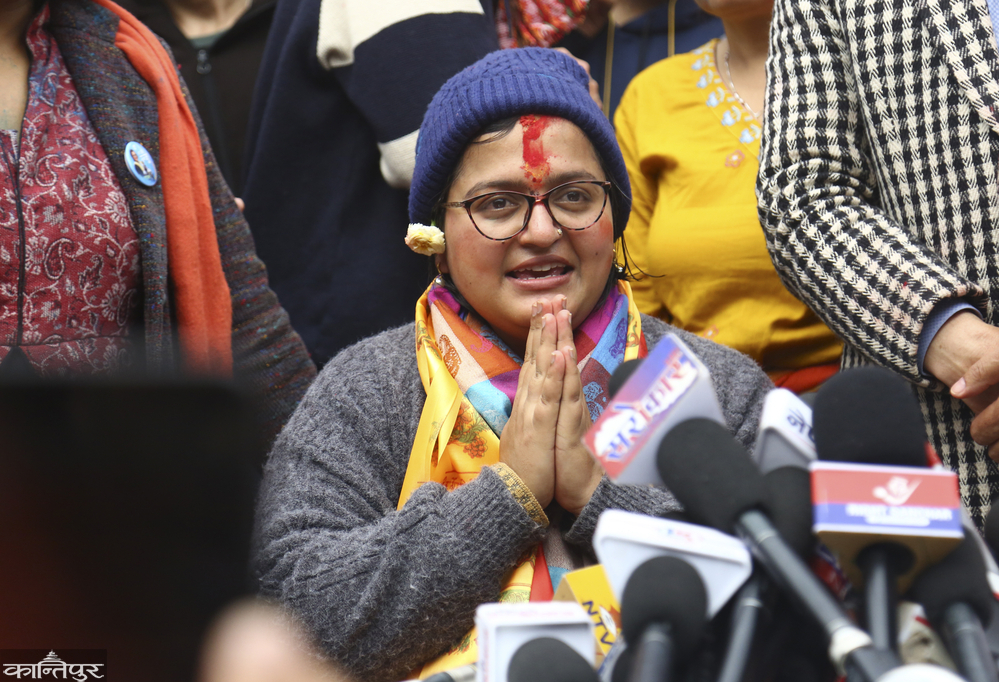
Vice President Sharma said that they would respect the decision given by the voters, sit in the opposition and hold regular general conventions and move forward.
Former MP Pampha Bhusal, a leader of the Nepal Communist Party (NCP), said that the people expressed their opinion seeking change and accepted it. "We changed the system. We led the way to make arrangements for anyone to stand on the field, express their opinions and seek votes,' she said, 'The situation could not change as the people wanted. There was little left to do, such as eliminate poverty, create an environment where everyone can get the same type of education, health, and employment in the country. If the new party and leader could lead for that, this referendum would have been meaningful.' The old parties did not respect the citizens' desire for change at all, anger and resentment had grown towards them, it was natural for the people to punish them: - Anup Subedi, a doctor active for civil rights
UML Publicity Department Chief Min Bahadur Shahi said that there was no alternative to accepting the opinion expressed by the people using their right to choose. 'There will naturally be a discussion on where we went wrong,' he said, 'We will discuss why we could not connect the recent achievements with the people.'
Shishir Khanal, a second-time elected Rashtriya Swayamsevak Sangh (RSS) MP from Kathmandu-6, said that they received a 'vote of trust and hope'. 'Last time, it could be said to be a vote of anger to a large extent. We were new,' he said, 'but this time we are not so new. 21 people had reached the parliament. "Based on the way we worked in parliament, the way we worked in government, and the work our senior leader Balendra Shah did as mayor in Kathmandu, this is a vote of hope for youth leadership." He said that the people have expressed their opinion in favor of change, youth leadership, good governance, and prosperity.

