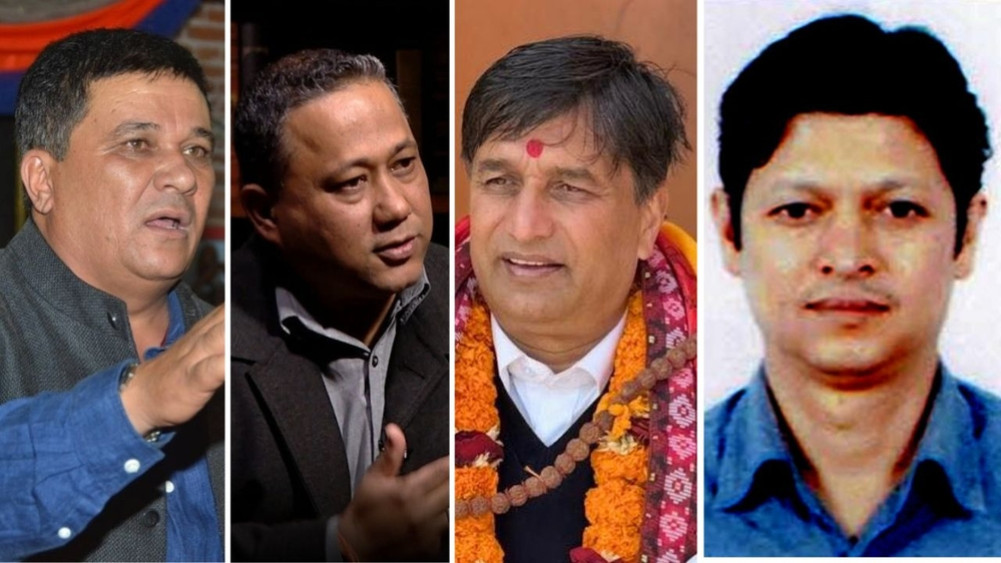
This time, 22 candidates are in the fray from Kathmandu-6. Of these, 7 are independent candidates.
We use Google Cloud Translation Services. Google requires we provide the following disclaimer relating to use of this service:
This service may contain translations powered by Google. Google disclaims all warranties related to the translations, expressed or implied, including any warranties of accuracy, reliability, and any implied warranties of merchantability, fitness for a particular purpose, and noninfringement.
Parvati Rimal, a voter from Tokha-8, Gairigaun, runs a grocery store. The recurring topic of conversation with nearby customers who come to the store in recent days is the election. ‘Who will you vote for this time?’ Acquaintances ask curiously. She answers with a laugh, ‘The old one was given. Now, let’s see the new one!’ And she repeats the same question.
Her family, who migrated to Kathmandu from Nuwakot, are now regular voters in the Kathmandu-6 constituency. ‘We have been facing water problems here for years. There are other facilities. But the shortage of drinking water keeps recurring,’ she says.
This is the main condition she will set for the candidates who will come to the door in the upcoming House of Representatives elections scheduled for 21 Falgun. ‘We need leaders who will solve the problem, not increase it,’ she says. This time, 22 candidates are in the fray from Kathmandu-6. Seven of them are independent candidates.
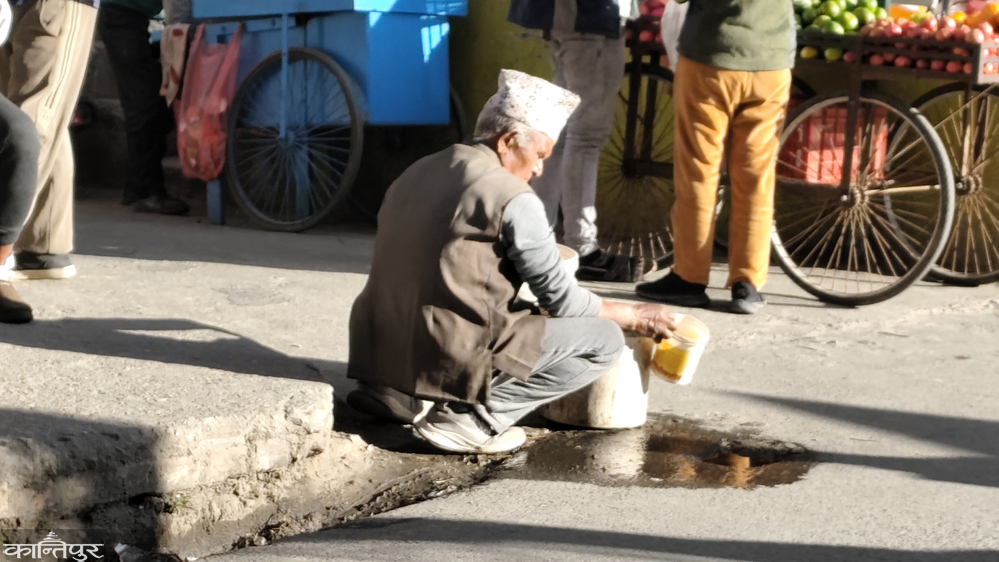 77-year-old Dum Prasad Rimal, who has been living in Gongabu since 2047, was collecting water from a ditch on the road. After watching the scene from afar, we asked Rimal, ‘Why are you collecting water from the road like this?’
‘It’s a small garden.’ To put it in,' he replied.
The scene showed that it was difficult to irrigate the land in a place where there is a shortage of water. He is also a candidate from here. He is planning to choose a new and promising face who can solve the problem. The problem he has been facing recently, having migrated from Nuwakot, is water. 'I took the initiative in the ward and now it has become easier. But we had to make a plan to solve it forever,' he says, pointing to the state's responsibility, 'The old ones did not do much. Now we will put in the new candidate.'
The number of voters has also increased in this election compared to the previous one. In 2079, there were 62,102 voters in this area, there are 67,759 this time. Shishir Khanal of the Rashtriya Swatantra Party won from this area in 2079. This time too, Khanal is in the fray from the Rashtriya Swayamsevak Sangh (RSS). Bhimsen Das Pradhan, who has been repeatedly contesting from the Nepali Congress, did not repeat himself in this constituency. Instead, Sabuj Krishna Baniya is the candidate from the Congress this time. Although Baniya is a candidate for the House of Representatives for the first time, he is a well-known person in this constituency. Bhimsen Das of the Congress had won from this constituency consecutively in 2070 and 2071. But the results of 2079 were not in his hands. He came third. Shishir Khanal won by getting 14,204 votes. Shishir, who won the election in 2079, also served as the Minister of Education and Science Technology for a short time in the cabinet led by Pushpa Kamal Dahal. Shishir's closest rival in the election was former Inspector General of Police of Nepal Police, Sarvendra Khanal. He had received 8,911 votes.
This time, the leaders of the National Independent Party are claiming that their grip has been strengthened, while the Congress workers are also claiming that their legacy will be returned.
This time, Aman Kumar Maskey is the candidate from UML. Aman is a person who was elected to the Provincial Assembly from the CPN-UML in Kathmandu-6 Kai (2). He resigned from the Provincial Assembly and entered the fray for the House of Representatives. Hemlal Sharma is from the Nepali Communist Party. Waris Dharel is the candidate from the Ujjaya Nepal Party led by Kulman Ghising.
Uddhav Raj Bhetuwal from the National Democracy Party, Jagat Prasad Regmi from the National Janamorcha, Indra Kumari Bajracharya from the Nepal Workers and Peasants Party, Uddhav Prasad Mishra from the Democratic Party Nepal, Sukhata Bogati from the Aam Janata Party (single election symbol), Giriraj Aryal from the Progressive Democratic Party, Romlal Giri from the Jaya Matrubhumi Party, Lovely Thapa from the Shram Sanskriti Party, Shukra Bahadur Lama from the Communist Party of Nepal (Maoist) and Indira Thapa from the National Liberation Party Nepal (single election symbol) are in the fray.
The number of voters has also increased in this election compared to the previous one. In 2079, there were 62,102 voters in this constituency, and this time there are 67,759.
Shishir, who won from this constituency, had made some commitments to the media after winning the election the previous time. He said that he would work on education reform and public health, and on policies to promote entrepreneurship and employment, and address the needs of the sector. Some voters are dissatisfied with Shishir's tenure, while others are beginning to reconsider, saying that the time is insufficient. Shishir claims that the current atmosphere is getting better because of the positive efforts he made in his previous term.
'This time, there is a clear desire among the people to win over new forces from the beginning.' Therefore, he believes that the results will be even stronger,' he says. Noting that during his short tenure as Education Minister, he took the initiative to deliver textbooks to government schools before the academic session begins, he said, 'Even though it is a short time, it is a matter of satisfaction to be able to start the work of delivering books to students on the day the school opens.' Stating that he has registered 76 amendments to the Education Bill as an MP and is active in legal reforms related to entrepreneurship and online businesses, he said, ‘The main responsibility of an MP is lawmaking, so I am focused on this.’
Claiming that Kathmandu-6 is a traditional stronghold of the Congress, Congress candidate Sabuj Krishna Baniya says he will return it. ‘All our 16 units here are strong, the local level results also clearly show the organization and activism of the Congress in Tokha Municipality,’ he says. He has been a resident of this area for a long time. ‘I was born and raised here and have been involved in politics and development here for more than four decades. The party has given me this opportunity this time after evaluating my activism and passion, for which the public and friends from other parties also have goodwill,’ he says.
Admitting that social media and a new type of campaign created confusion among voters in the 2079 elections, he says, ‘We could not overcome that national wave, but now the organization is fully prepared after reviewing the weaknesses.’ He is committed to raising the agenda set by the party in parliament with a loud voice.
UML candidate Aman Kumar Maskey claims that he is an engineering student and can do a lot of work in this field due to his in-depth study of physical infrastructure. ‘I raise the problems and needs in this field in the House of Representatives in a policy sense. I myself am an engineer. Since physical infrastructure is my subject, I can do a lot of work,’ he says, ‘That is why the atmosphere here is good in our favor.’
Other candidates are also equally active in their campaign to win votes.
Voters are the decider
Gongabuka's Mahendra Shrestha sells puja items in his shop. A permanent resident here, he remembers the problems that locals have been facing for years. 'The state demolishes the houses that have been inhabited since our ancestors in the name of road expansion. Those with power will get money, but ordinary people will have to live on their own.' We are looking for a candidate who thinks this way,' he says, 'who understands our problems and works at the policy level.'
Mahendra also says that a common problem they are facing, like other voters, is water.
'The water in Melamchi sometimes comes and sometimes it stops.' Now it comes once in four days, and that too for only two hours. It is enough for a family, but this water is not enough for those who pay rent,' he complains. Since the solution to all these problems lies in a new face, he promises to vote for one of the new faces.
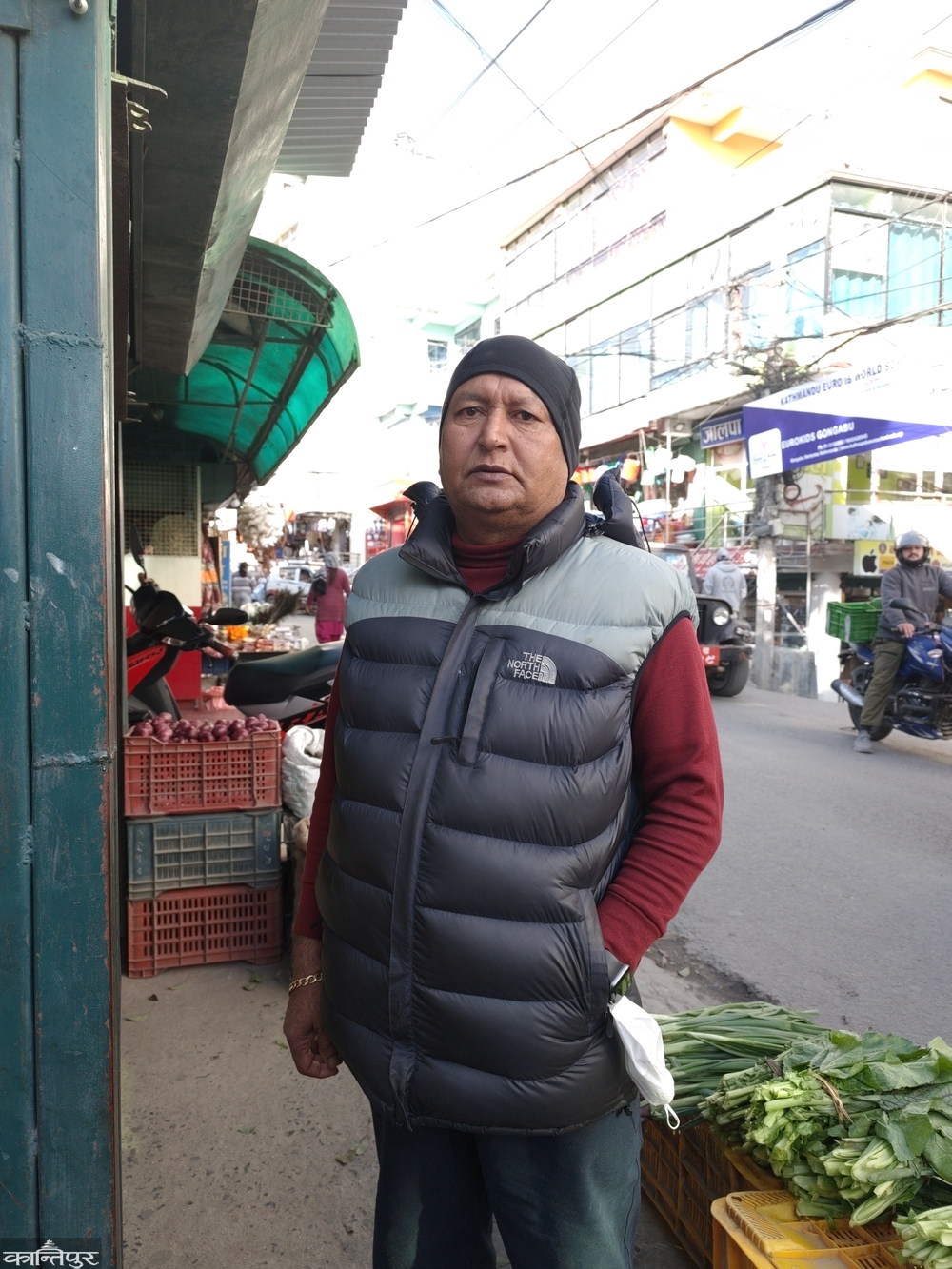 Sachin Shrestha of Samakhusi says he is fed up with the tendency to keep quiet while working, which includes everything related to roads and development in the manifesto. He now wants to see a state that can provide business security. ‘We pay taxes to the government, but the government does not guarantee the security of our business.’ Some time ago, a businessman’s goods worth crores were destroyed when a Melamchi pipe burst, but the state did not look into it and there is no proper insurance arrangement,’ he has a list of complaints. He is envisioning a state that will create an environment where the next generation can live in this country with dignity and says he is looking for a similar face to go to the House of Representatives.
Sachin, an experienced voter who has been voting since 1954, recalls the previous elections, saying, ‘Now we will not repeat the same mistake.’
Kul Bahadur Adhikari, a 62-year-old voter from Shanti Tole, Jalpa Chowk, Baniyatar, Kathmandu, considers water and sewage as a common problem in Kathmandu. "I will vote for the candidate who can solve this, whether it's on the development side or in policy," he says.