While some are running as independent candidates in protest against the lack of opportunities for women, some are not even aware of their own candidacy.
We use Google Cloud Translation Services. Google requires we provide the following disclaimer relating to use of this service:
This service may contain translations powered by Google. Google disclaims all warranties related to the translations, expressed or implied, including any warranties of accuracy, reliability, and any implied warranties of merchantability, fitness for a particular purpose, and noninfringement.
Jhapa-5 is in the news a lot as the election approaches. The constituency is being watched with special interest due to the candidacies of UML Chairman KP Sharma Oli and senior leader of the National Independent Party Balendra Shah.
A total of 24 candidates are in the fray in this area, of which 9 have filed their candidacies as independent candidates. Ranjana Gautam is one of those independent candidates, who is currently reaching out to voters with the election symbol ‘Gas Stove’.
She has taken the gas stove not only as a symbol, but also as a symbol of energy and self-reliance. ‘Every kitchen has gas. Gas is energy, and I have entered the fray with this energy,’ she says. Gautam, who has been running a small business, is campaigning at her own expense.
When asked why she has become an independent candidate among big parties and powerful candidates, her answer is clear. According to her, the presence of women in politics is still weak, and she wants to send a message of women empowerment by filing her candidacy as an independent candidate.
‘Women have not yet been able to take the lead.’ My wish is that my representation will inspire other women to move forward,' she said. She said that she entered the field with the belief that she can heal the wounds of the backward, victimized, and out-of-reach communities. She feels that despite the physical development in Jhapa, children and parents are still deprived of opportunities. She believes that there is still much to be done in agriculture, education, and infrastructure development.
Although she could have become a candidate from a party, she decided to stand as an independent, saying, 'Do I need a party flag to carry an agenda? I carried the agenda myself.' She seems confident that the objective of taking her issues to the voters will be achieved regardless of the election results. She has embarked on the election journey with the belief that women should raise their voices and come forward.
Asha Tamang has also filed an independent candidacy from Kavrepalanchok Constituency No. 2. Out of the 24 candidates in the constituency, 8 have filed their candidacies as independent candidates. Among them, Tamang is a representative of the younger generation studying in the third year of her graduation. She says she became an independent candidate against the instability and continuous failure of the parties. In the past elections, the parties made promises, but she said that she filed her candidacy with the determination to do something because there was no work and development. Tamang says that her experience of voting earlier, hoping but not getting results, has inspired her to enter the electoral fray. Being financially weak, she does not have her own resources to contest the election, but she says that she is campaigning with the help of her supporters. “I do not have the money to contest the election, I am taking this journey forward with the help of others,” she says.
She emphasizes that youth and women should take the lead in politics in the future. She has entered the election contest with the symbol of a sparrow. She says she is trying to send a message that even a small bird can move forward. Feeling that the region is not united, she said that she has moved forward with the goal of increasing unity.
Although the parties have fielded very few female candidates directly in the House of Representatives elections, the number of women running as independent candidates has been seen as significant. According to the Election Commission's data, out of a total of 3,484 candidates, 395 are women. Out of them, 160 women have run as independent candidates.
There are also those running as independent candidates in protest against the lack of opportunities for women in the elections. Some candidates are not even aware of their own candidacies. Sangita Shrestha, an independent candidate from Dolakha-1, says she is unaware of her candidacy. Saying that others came and registered her name, she said, ‘The election came, I was asked to register your name, I don’t know anything else.’ She says that she doesn’t know much about the election process except that she spent five thousand rupees while registering her candidacy.
Shrestha, who is an independent candidate, has not been directly affected by the election hype. She says that she has come to Kathmandu for treatment and will have to stay here for about 15 days. She says that she doesn’t even know what her election symbol is. Shrestha, a housewife, said that she has been voting for parties before.
 Sociologist and writer Samjhana Wagle Bhattarai says that women’s access to Nepal’s political landscape is limited and that women are not given opportunities in leadership and decision-making roles in political parties, so women come to independent candidacies. She says that women’s participation is low due to the practice of parties often fielding only well-known or famous faces, which is why women are attracted to independent candidacies.
She said, ‘Since social inclusion has not been adequately covered in democracy, women seem to be trying to make their voices heard through independent candidacies.’ She said that independent candidacies have helped women present their issues and perspectives easily.
According to former administrator Sharada Prasad Trital, the trend of ‘dummy candidates’ seen in foreign countries has been increasing in Nepal in recent days. He says, ‘This trend has been going on in countries like India for a long time. There, dummy candidates are used to confuse voters, impose spending limits, or as a pure election strategy.’
He says that this practice is used to field some candidates with prior preparation to influence voters and to facilitate vote distribution when necessary. Stating that the trend of dummy candidates is not good, he says, ‘This trend was less common in Nepal earlier, but it seems to be increasing in recent elections.’
He said that this trend has also increased due to the ease of use of resources due to the strictness of the election code of conduct
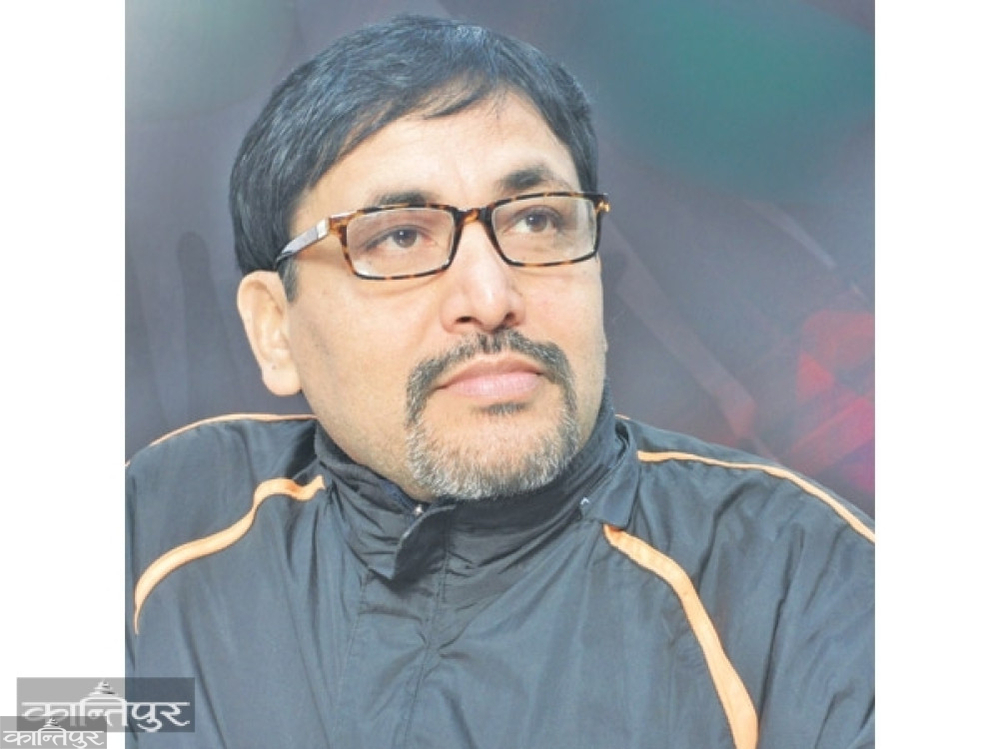 . According to political analyst Chandra Kishore, the influence of India is visible in the trend of independent candidates. He says, ‘Uttar Pradesh and Bihar seem to have had an influence in Madhesh Pradesh. On the other hand, the same practice has been repeated here as dummy candidates are prevalent. ’ According to him, although the constitution ensures inclusive representation, in practice, due to insufficient attention to inclusiveness, the number of independent candidates seems to have increased due to dissatisfaction.
He said, ‘Although the constitution aims to ensure the participation of all communities and classes, in practice, the weaker classes have not been able to get adequate representation.
Shah says that the trend of preventing the weaker parties from participating in the voting, the strong parties influencing the polling stations and capturing the booths has also increased the trend of fielding dummy candidates. It seems that women are also being brought forward in this. He said that local workers of the powerful party tried to limit the access of voters by placing dummy representatives in the polling booths.

