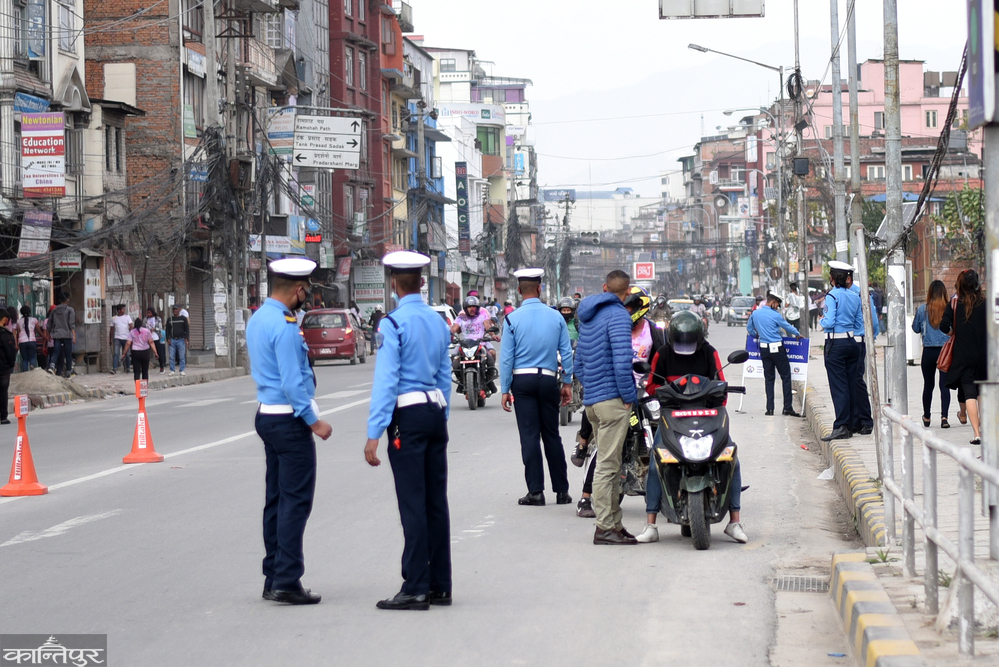
Police morale seems to be declining due to poor uniforms, low salaries, discrimination in daily meals, access to missions and awards, and a disorganized duty system. For similar reasons, 6,203 police officers have resigned from the service before their term ends in the last 5 years.
We use Google Cloud Translation Services. Google requires we provide the following disclaimer relating to use of this service:
This service may contain translations powered by Google. Google disclaims all warranties related to the translations, expressed or implied, including any warranties of accuracy, reliability, and any implied warranties of merchantability, fitness for a particular purpose, and noninfringement.
While addressing high-ranking officers at the Police Headquarters on March 16, the then Home Minister Sudhan Gurung and Inspector General of Police (IGP) Dan Bahadur Karki discussed the issue of police uniforms with different images.
The then Home Minister Gurung himself had said, ‘Looking at the uniforms of police in other countries, you would think, “Oh, criminals will be caught soon,” but ‘For us, we see torn clothes, torn pants, torn boots...’ He stressed the need to change it, saying that it would create a different kind of respect for the police.
Even the uniforms of the police under the STF (Special Task Force), which is deployed to protect prominent people, are seen as ordinary, he said, ‘Look and see if they are dangerous police.’
After hearing this statement from the powerful Home Minister of the two-thirds government, the senior police officers expressed their gratitude with thunderous applause. Earlier, IGP Karki had said that he would prefer to call the police uniform black rather than blue.
According to officers working in the Inspector General's secretariat, the statement was not only about the quality of the uniform, but also about the status given to the police by the state, limited resources and a deteriorating social image.
'It was a statement aimed at the respect, morale and low priority given to the uniform by the state,' the officer told Kantipur. 'He was trying to say that just as a labourer working in a rice warehouse only opens and closes the door as per the instructions of the owner, the police were also trying to be made like that. '
He had also tried to raise the issue of the police not being given operational autonomy. However, the debate was limited to clothing. In the memory of Chandra Prasad Rajbanshi (82) of Gauriganj Rural Municipality-3, Jhapa, who was a police constable in 2048 BS, everyone would look at him with respect when he stepped out on the road.
‘Whenever a police constable was said to have stepped out on the road, the message would be heard even in the neighboring village, and when he walked with a stick, everyone would fall silent,’ says a former member of the Jhapa Police Organization. ‘Now the organization has become so entangled in politics that people have both trust and fear in the police.’
Now the police themselves are also bringing programs like Police with Smiles, Police My Friend, and Community Police Partnership to get closer to the citizens. However, in his understanding, security is something that can be felt and to guarantee it, sometimes it is necessary for criminals to fear the police.
Deepak Thapa, former Inspector General of Police of Bhaktapur, Sipadol, who entered the service in 2052 BS, also joined the police after seeing the 'charm' of the uniforms worn by Shambhu Thapa, Shailesh Thapa, Pradyumna Karki and others from the village.
He left his job as a teacher and joined the police service and became the Inspector General of Police in 2081 Chaitra. 'Sitaram Hachethu and Govinda Karki had also joined the police, so I was attracted by the blue uniform,' he says.
Hari Bahadur Pal, who retired as Additional Inspector General of Police (AIG), also remembers that before he entered the service, he used to have a separate status as a constable.
‘At that time, if a constable and a jawan stood on the road carrying a stick, the perpetrators would be just as scared,’ he says, ‘now in some places the police themselves are being mistreated.’
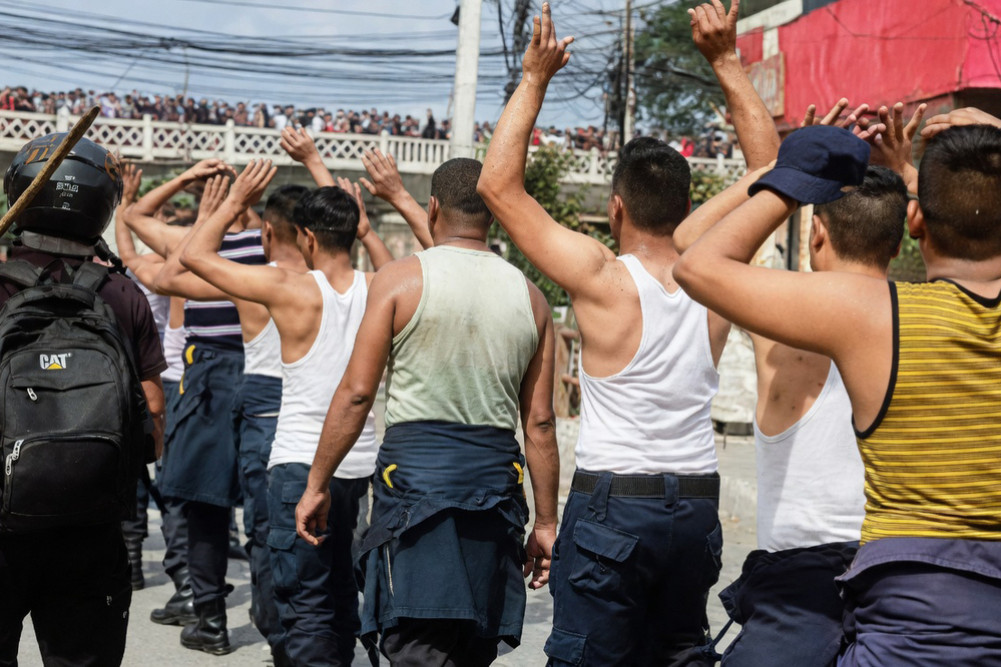
The latest example of this is the situation that arose on 24 Bhadra after the Gen-G movement. Police personnel from Baneshwor were chased half-naked, and they had to jump into the river to save their lives. Four police personnel lost their lives. Even after that, there was a tendency to disobey the police and abuse them.
‘That incident boosted the morale of those with bad attitudes so much that they thought they could do anything,’ says Pal.
At that time, if a constable and a jawan stood on the road carrying a stick, the perpetrators would be just as scared, now in some places the police themselves are being mistreated. -
, Former AIG The police organization responsible for managing the country's internal security has 79,541 employees, of which about 78 percent are police constables and jawans, 17 percent are junior police officers, and only 3 percent are senior police officers. 'Lower-ranking police officers are the ones who face the most problems on the job. They are also the latest targets of incidents that have lowered the morale of the police,' says former AIG Bhim Prasad Dhakal. 'Only if their morale can be increased will the reputation of the organization increase.' Hari Bahadur Pal
Community-level police offices are led by junior police officers, while lower-ranking police constables and police constables who work at the field level are deployed. Three percent of the higher-ranking senior police officers mobilize lower-ranking officers.
‘They are frontline employees as they are directly connected with the public every day, how they work determines the public’s image of the organization,’ adds Dhakal, ‘Therefore, the face of the entire police organization is the officers working at the lower levels.’
IGP Karki had expressed his frustration at not being able to retain lower-level employees at all in the same program. An internal study by the police also shows that lower-level officers in the organization are not satisfied with their service.
In a study titled ‘Satisfaction with the Service of Junior Police Officers and Factors Affecting Work Performance’ conducted by the Directorate of Research, Planning and Development of the Police Headquarters in 2079, only 53.4 percent of the participants felt that they were completely satisfied with their service. 41.8 percent said that they only get moderate satisfaction from their job, while 4.8 percent said that they were completely dissatisfied.
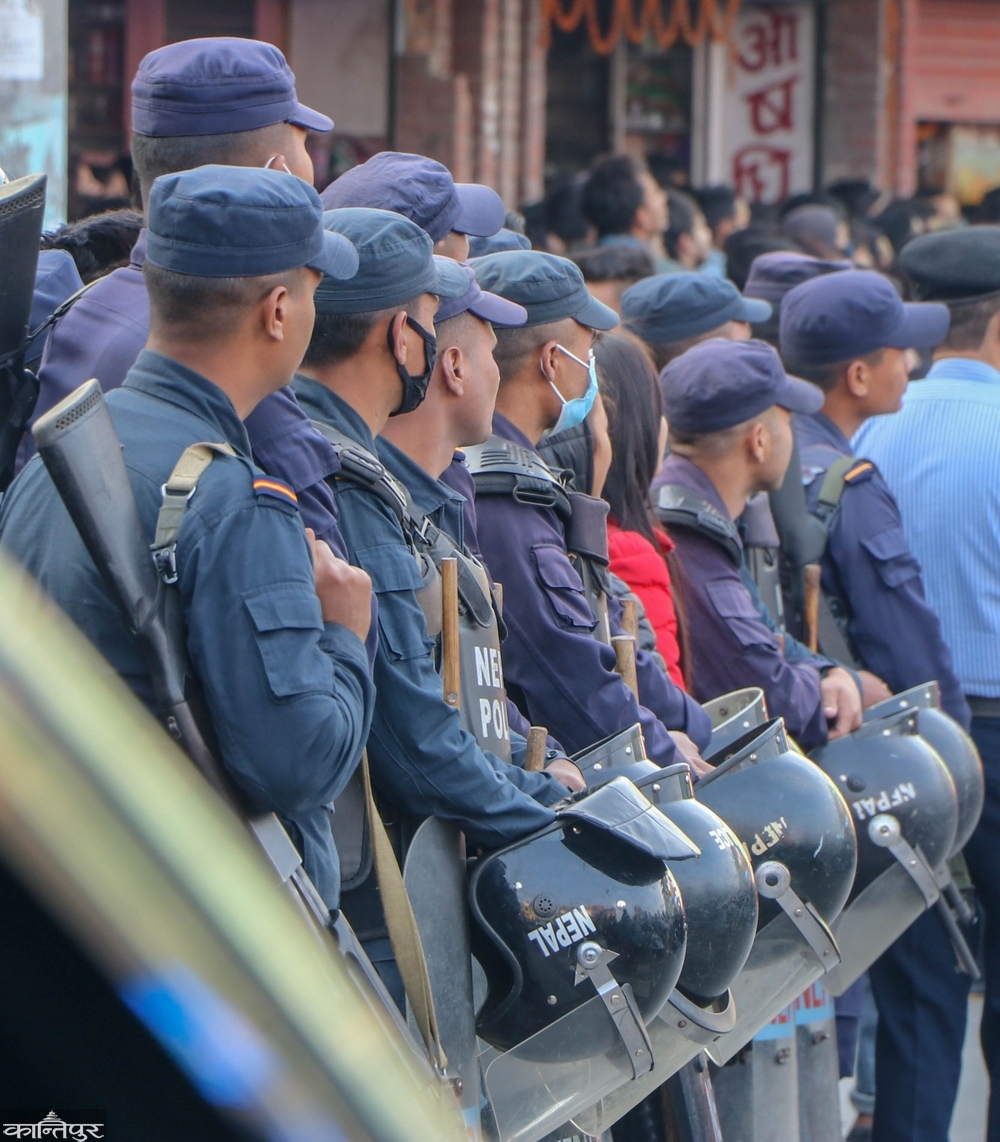
The Police Headquarters conducted another study targeting constables and police constables, in which 26.87 percent of the participants said that they were dissatisfied due to the bad work environment. They said that they were dissatisfied due to inconvenience during leave, unorganized duty system, discrimination, having to stay away from family, lack of work evaluation, and addressing complaints.
The fear of quitting job
During the conversation that Kantipur conducted with at least 16 lower-ranking police employees and retired officers from different provinces of the country, it was also seen that dissatisfaction is increasing because only those who are close to or have access to higher authorities in the office are given facilities.
A police constable from the Valley Police Office, Ranipokhari, who was willing to talk on condition of anonymity, gave the example of the canteen in the police office and said that only those who work around higher authorities get the opportunity to operate it. ‘Whoever gets the canteen does not have to do duty,’ he said, ‘in return, the boss should be given free food and snacks. Sometimes alcohol should also be gifted.’
A study report conducted by the Police Headquarters also mentions that lower-ranking officers feel inferior in society and family due to lack of promotion for a long time.
The opportunity to go to a UN peacekeeping mission was also an attraction in the police. However, after the team deployed in Haiti returned in 2019, the Nepal Police has not had the opportunity to go to a Formed Police Unit (FPU) yet. The team that returned in 2020 was the last to go to the Darfur mission.’ According to the salary scale implemented from Shrawan 2079/080, the salary of a police constable is 33,032 rupees. The salary of a constable is 34,052, that of an assistant inspector is 40,521, and that of a sub-inspector is 43,732 rupees. ‘Nowadays, if you have to rent a room somewhere in Kathmandu, it will cost 15,000 rupees,’ the constable added, ‘And how much will it cost to eat? How much will you save?’ Having some opportunities like a canteen would have been easier for some, but even that is not accessible.’
‘Earlier, after going to a mission and returning, there was a gap in income that could be used to buy a house or add something, so many people used to say that the mission was still there,’ says former AIG Uttamraj Subedi. ‘Now, as opportunities in the mission are decreasing, other plans need to be brought in to attract and retain employees.’
Not only do lower-ranking officers have to face hardships after entering the police service, but they also have to face hardships even to get the minimum leave entitlement. ‘I wrote a 15-day leave and gave it to the constable major, then went to the subedar major and reached the administration and office chief, but only three days of leave were approved,’ a policeman from the Koshi Province Police Office told Kantipur, ‘After having to go through so much trouble to go home, it is natural to wonder when I should retire and quit my job.’
Lower-ranking officers had long been demanding the facility of getting a pension after completing 16 years of service. Currently, according to the Police Regulations, 2071, there is a provision to get a pension only after completing 20 years. Despite repeated attempts to remove it, it has not been successful.
When the trend of leaving jobs and going abroad increased in the lower ranks, most of them made this demand during an internal study by the police. After that, from Shakti Bahadur Basnet to Ravi Lamichhane, the police had been proposing that they should get a pension after 16 years. The government has always been stalling this proposal, citing the opinion of the Ministry of Finance that the financial burden would increase. In the Nepali Army, in 2077, there was a provision for voluntary retirement of followers and soldiers after completing 16 years of service and receiving pension. After a long blunder, the Military Service Regulations, 2077 were amended so that although one can retire at 16 years, they have to wait an additional four years for pension. The ministry moved forward after an army officer came up with this trick to avoid financial burden.
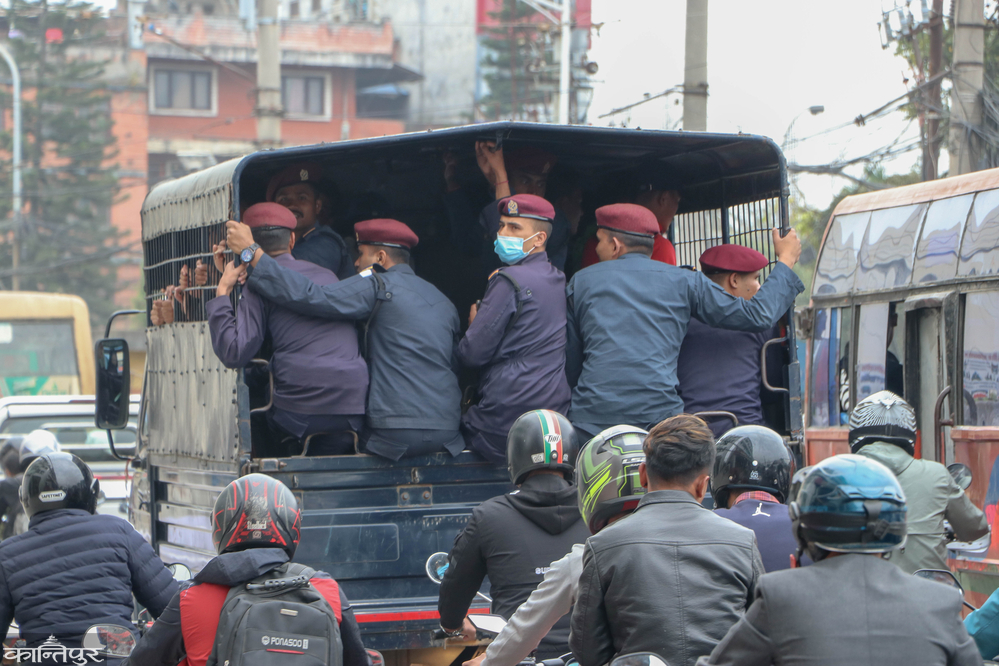
The treatment of lower-ranking officers by higher-ranking officers in the police office is also not respectful.
It is the lower-ranking police officers who face the most problems in their jobs, and they have also been the latest targets of incidents that have lowered the morale of the police. -
Bhim Prasad Dhakal
Former AIG ‘Earlier, during the reign of the King, there was a tendency to treat the boss as a god and do whatever he said. There was a big gap between the two ranks,’ says former Superintendent of Police (SP) Rabindra Regmi, ‘Now society has changed, but senior police officers still try to treat junior police officers the same way as before.’ Experts say that the organization has not been able to change itself with the changes in society. A senior constable from the District Police Complex, Kathmandu, said that some of his colleagues in his rank were ‘employed as domestic workers’ in the houses of retired senior officers. ‘Former DIGs and IGs have had to pitch tents in their houses, and have had to help when they were building houses,’ he told Kantipur, ‘This has been happening for a long time.’ ,
He also complained that he had to stay in the same position for 18 years. Higher-ranking officers in the police force are promoted quickly. Even though political lobbying is intense for the race to become the Inspector General, promotions at higher levels always get priority. ‘But, the bosses never see me staying in the same rank until I am 18,’ he said. ‘I have not been prosecuted, I have studied, I have the qualifications and ability, even after becoming an Inspector Saab and SSP in the same unit, why should I stay in the same position for so many years?’
A study report conducted by the Police Headquarters also mentions that lower-ranking officers feel inferior in society and family due to not being promoted for a long time. However, the organization does not seem to have done enough to automate the promotion system.
‘Working in the same rank for 16/17 years has also led to a decrease in readiness,’ the report says. ‘Those who have entered the ASI have been seen resigning, going abroad or looking for another option if they are not successful in the open inspector category.’
According to the data of the Police Headquarters, 6,203 police personnel have resigned from the service in the last 5 years. Police spokesperson Abhinarayan Kafle says that most of the resigning officers are constables, senior constables and assistant inspectors.
During this period, 894 police personnel, 2,12 police constables, 1,105 senior constables and 1,355 police assistant inspectors have resigned. In the upper ranks, 1 AIG, 1 DIG, 8 SSPs, 8 SPs and 18 DSPs have resigned in the last 5 years.
//
Although many people mention personal reasons in their resignation letters, most of them quit their jobs with the goal of going abroad for employment as soon as their pension period is completed, according to officers. Having a background in the police, they get good opportunities, so there is a rush to quit their jobs as soon as their pension period reaches.
‘The career development of the police is strange here, those who have passed grade 12 become second lieutenants in the army, sub-lieutenants in the civil service, and in the Nepal Police, they are like a scoundrel,’ said a deputy inspector of the police, ‘an honest junior police officer who does not indulge in infiltration has to quit his job due to poverty.’
Most of the lower-ranking police officers that Kantipur spoke to said that they had faced humiliating treatment from higher-ups in the office.
‘I have also graduated, I have become young due to circumstances, but the leadership that mobilizes us does not respect those who work at home as much as those who do,’ he complained, ‘Even in this day and age, who wants to work for 18 hours and then get a slap on the face?’
He says that to understand how there is discrimination within the organization, one can go to the toilets of the police office and see. ‘Go to the traffic police office and see the toilets reserved for senior and junior police officers,’ he added, ‘The senior ones smell good, the junior police officers smell bad.’
Shambhu Suskera, who resigned from his post as Deputy Inspector of Police (SI) and joined politics, also says that higher-ranking officers in the police never think about the condition of junior police officers. ‘Even now, there is no sense of brotherhood like in the time of the king and the king’, he, who is also a Rashtriya Swayamsevak Sangh (RSS) MP, told Kantipur. ‘The upper ranks only act as if they have privileges, whereas whether inside or outside the organization, the weak should be helped and the needy should be protected.’ He believes that the higher-ranking officers in the police force have created discrimination within the organization due to their ego of being special and of a higher level. ‘Rank is a classification of responsibilities. Some people have been promoted to higher levels due to time, qualifications and education, while others have been promoted to lower levels,’ he said with a sigh. ‘But, everyone is human. When you cut their hands, blood comes out. No one thought that the feeling is the same.’ A police constable of the lower rank working at the District Police Office, Kanchanpur, said that the clothes they wear are of low quality. ‘Earlier, only clothes were supplied, and the police personnel had to sew them themselves,’ he said, ‘now they are already sewn, but they wear out after washing once.’
Even if you go out and buy clothes for 2,000 to 2,200 rupees, they will last for two years, but the clothes that come from within the organization will not last.’ ‘There are clothes that wear out after wearing them once, if you buy them from outside, they say, ‘Wear what you get,’ he said, ‘They say, ‘Wear whatever you get,’ which creates more problems.’
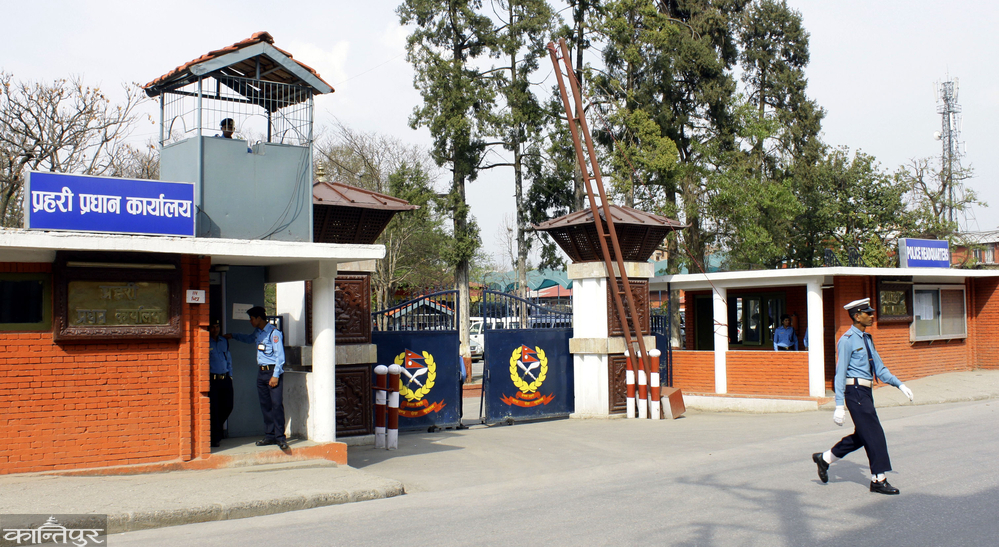
He said that the clothes they receive are of a kind that burn when they stand in the sun and get completely soaked when they sweat. When he was the Home Minister, Sudhan Gurung had even announced to open a factory to produce police clothes in Nepal. However, now that he has left the ministry, this plan is limited to an announcement.
A constable at the District Police Office, Morang, said that their office does not even have a washing machine to wash clothes. ‘The police should change with the times, but even now, they have to work 18 hours a day and come back in the evening to wash clothes,’ he said. ‘It would be much easier if there was only a washing machine in the office.’
Police personnel in the Special Bureau, which investigates terrorism and transnational crimes, the Central Bureau of Investigation (CIB), which investigates crimes of a specific nature, and the Valley Crime Investigation Office, which investigates heinous crimes in the Valley, work in plain clothes. Their suffering is also different.
‘We work day and night for the organization, as much as the office chief gets,’ said a police assistant inspector who has been working in crime investigation for a long time, ‘We even have to spend money to educate our children.’
Not only that, he said that even if he made a small mistake, he would be the first to be targeted and be held accountable. Police Inspector Dipendra Adhikari, who had worked for a long time in the CIB and the Valley Crime Investigation Office and had established himself as an excellent investigation officer, also took voluntary retirement in 2075 BS for the same reason.
Writing an article about why he resigned a year later, he mentioned that the decision was not according to his wishes or pre-plan. The then Inspector General of Police Sarbendra Khanal, who had been honored as an excellent crime investigator and had also been specially promoted, called him to his office and asked, 'How much did you do for Pushkar Karki?'
‘We are disappointed when even those who do good work in the organization are separated into this and that person,’ the officer said, ‘He himself brought out the incident of Dipendra Saab, but many of his friends are experiencing such incidents.’
In his understanding, even if there is no mistake in the police, there is a situation where lower-ranking employees are immediately taken action.’ However, in the case of higher-ranking employees, there is a tendency to take action only after looking at the background and understanding.’
‘Shouldn’t we take action only after distinguishing whether it is our fault or not?’, he said, ‘In the case of the boss, if he had access to the leaders, nothing would be done. Only we are caught off guard.’
If we look at the list of those who have been taken action in the police organization in the last 5 years, the highest number of lower-ranking employees are. The maximum number of police personnel, 5,918, have been taken into action in the 5-year period from 2077/78 to 2082/83.
1,862 police assistant constables, 2,270 police constables, 338 senior constables, 917 police assistant inspectors and 401 deputy inspectors of police have been taken into action. During this period, the number of police inspectors who have been taken into action is 173, the number of deputy superintendents of police (DSPs) is 36, the number of superintendents of police (SPs) is 19, the number of senior superintendents of police (SSPs) is 3 and the number of deputy inspectors of police (DIGs) is one.
(function(){function e(){window.addEventListener(`message`,function(e){if(e.data[`datawrapper-height`]!==void 0){var t=document.querySelectorAll(`iframe`);for(var n in e.data[`datawrapper-height`])for(var r=0,i;i=t[r];r++)if(i.contentWindow===e.source){var a=e.data[`datawrapper-height`][n]+`px`;i.style.height=a}}})}e()})();
Senior police officers say that the number of actions is high because lower-level employees engage in many unethical activities. Former AIG Dhakal, however, admits that there is a tendency to rush to take action against lower ranks in the organization, saying, ‘Anyone who makes a mistake should be taken action, but the process needs to be made uniform for everyone.’
The police have to work almost twice as hard as other government services. Even lower-ranking officers are usually on duty for 15 to 16 hours. In the case of traffic police, they have to work even longer.
According to a senior officer of the Nepal Police, higher-ranking officers blame the lower-ranking officers for their mistakes, and never pay attention to providing them with resources. ‘Remember, if the training was adequate, would there have been indiscriminate shooting on 23 Bhadra?’, he asked. ‘In the Nirmala murder case, should the police personnel have been seen removing the victim’s clothes, which could later become evidence, and washing them?’
In the 2074 BS rape and murder case of Nirmala Panta in Kanchanpur, the police were accused of destroying evidence.
Workload
‘Even if it is just that I am evaluated after working, the results will be good,’ he said. ‘Those who do well should be rewarded by the commander concerned, from praising them to joining their careers.’ In the case of traffic police, there was a system of giving additional allowances earlier. But now that too has been abolished. ‘They are standing on the road from morning to evening, they don’t even have water to eat,’ said a constable at the Valley Traffic Police Office. ‘They don’t have a good place to live, they don’t have access to toilets, traffic police are the most affected police force.’ That is why former AIG Bhim Dhakal says that attention should be paid to providing them with various opportunities for career development, fair services, allowances and incentives.
First of all, ‘smart policing’, as stated by senior police officers, will be successful only if the morale of the lower-ranking police personnel who reach the doorsteps of the citizens is high. That is why the police in Kathmandu had recently started a campaign to take them to watch films on specific days, targeting lower-ranking police personnel.
However, most of the lower-ranking police personnel that Kantipur spoke to said that timely salaries, a predictable transfer and promotion system, regular training and respectful treatment are the main things that motivate them.
Krishna Gaire, an employee of the Ministry of Home Affairs and Chief Deputy Secretary of the Administration Branch, says that a committee is being formed under the leadership of Joint Secretary of the Ministry Anand Kafle to study the work, duties and issues to be strengthened by both police organizations. ‘The committee has identified the overall issues required for reform and the ministry has taken the work forward accordingly,’ he told Kantipur.