The mega city or NEOM project, announced by Saudi Crown Prince Mohammed bin Salman in 2017, is gradually being shut down, putting the employment of 80,000 Nepali workers working there at risk.
We use Google Cloud Translation Services. Google requires we provide the following disclaimer relating to use of this service:
This service may contain translations powered by Google. Google disclaims all warranties related to the translations, expressed or implied, including any warranties of accuracy, reliability, and any implied warranties of merchantability, fitness for a particular purpose, and noninfringement.
Jayaram Rai (37) from Khotang was building a ‘city of the future’ in the Tawuk mountains of Saudi Arabia. Rai, who had been working day and night to build a ski village in the high mountains since March, suddenly took a break from his work on the 27th. A month later, on April 29, he returned home carrying a bag with his contract remaining.
Rai, along with 3,000 Nepalis, were working day and night on the ‘ski village’ being built in the mountainous area of Tawuk. In the third week of March, the company that was to employ him issued a written notice that the ‘site will now be closed’. The contract for the structural steel of the Trazena Ski Village was awarded to Eversendai in collaboration with Al Bawani Company on March 13, 2024. ‘We have received a notice regarding the termination of the contract, which will be effective from March 26, 2026.’ "Up until the date of receipt of the information, Eversendai had been fully fulfilling all the project obligations as per the agreement," a statement issued by Eversendai said, adding, "The work was completed without any compromise on safety and quality. We believe that this situation has arisen due to the current geopolitical situation in the Middle East."
Some of the 80,000 Nepali workers working on this project have already started returning to the country. There is a risk of losing at least 2.36 billion rupees per month if all Nepalis return. The Trajena Ski Village is one of the four important projects within the NEOM project. NEOM presented the 'Giga-City' (Mega City) project as an ambitious dream of the 'city of the future'. It was announced in 2017 by Saudi Crown Prince Mohammed bin Salman under 'Saudi Vision-2030' . It was planned to be built in the Red Sea coast area of Tawook province in northwestern Saudi Arabia. Its estimated cost is about 500 billion US dollars.
NEOM has stated that this project is being taken forward to transform the oil-dependent economy towards tourism, technology, industry, green energy and investment. The main projects include The Line, Trazena, Oxgan and Sindhla. Currently, some contracts under The Line and Trazena have been canceled and restructured. Although the Oxgan and Sindhla projects are being continued, it is slow. Overall, the NEOM project is in the process of being closed.
Tom Ravenscroft, editor of ‘Dejen’, who has been writing reports on architecture and construction, wrote a comment on his online account on November 10. According to him, the financial resources of the NEOM project are starting to dry up amid delays, controversy and criticism. Speaking to ‘The Times’, a Saudi official said, ‘We were running at a speed of 100 miles per hour.’ We are currently in a loss. Now we need to change our priorities.’
Various contracts are being canceled due to the high cost of the project and the need to review it according to the changing geopolitical situation. So far, contracts for three main projects, including the ski village under NEOM, have been closed.
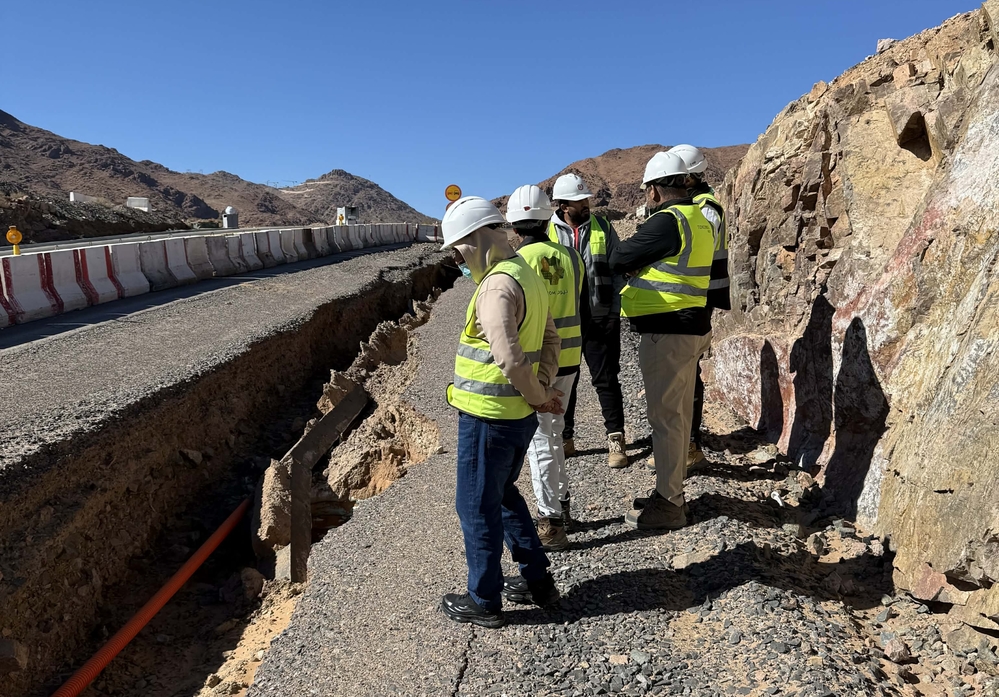
With the closure of contracts for the NEOM project, a large number of the 80,000 Nepali workers have started returning home. If all Nepalis have to return, the risk of losing at least Rs 2.36 billion per month has increased.
Eversendai is sending the remaining workers back to their respective countries, with the manpower needed from site closure to equipment return (demobilization). Eversendai Corporation Verhaad, which won the contract, has not disclosed the official number of workers who will lose their jobs. Jayaram Rai of Khotang, who has been working as a scaffolder for 16 months, had to return to the country 8 months before the end of his contract. ‘Around 3,000 Nepalis used to work in the Ski Village project alone,’ Rai claims, ‘Around 2,500 Nepalis have returned from the company alone. Some have been transferred to other projects. Some have been kept to clear the site.’
This project was very important in terms of the income of the workers there. ‘I lost my monthly employment of 60,000 rupees.’ To get the same job, it may cost another 2-3 lakh rupees to recruit. There is no guarantee of regular salary and no guarantee from the company,’ he says, ‘We went to build the city of the future. We had to return to the country with our own future in doubt.’
In fact, the NEOM project collapsed for many reasons at once. The drop in crude oil prices below $80 per barrel has put Saudi Arabia’s Public Investment Fund, which is the main source of finance for Neom, under severe pressure. An internal audit report obtained by Western media has shown that the actual cost of The Line could reach $8.8 trillion, nearly nine times Saudi Arabia’s annual gross domestic product. The Iran-Israel conflict has further disrupted shipping and oil exports in the Gulf region.
Saudi Arabia’s priorities have shifted as it has been tasked with hosting the 2030 World Expo in Riyadh and the 2034 FIFA World Cup. On September 16, 2025, the Public Investment Fund formally suspended construction of The Line. The 2029 Asian Winter Games, which were due to be held in Trabzon in January 2026, have been postponed indefinitely. According to Western media outlets, including the Wall Street Journal, Crown Prince Mohammed bin Salman himself has privately admitted that the city to be built will ultimately be “much smaller” than originally announced. Some small projects, such as Sindhla Island, are still in operation, but they are only a shadow of Neom’s original ambitions.
According to Jayaram, the salary of scaffolders working on this project was set at 1,600 riyals (60,000 rupees). Everyone was a scaffolder. The 3,000 Nepalis working on the Trazena project alone have lost an income equivalent to about 180 million rupees per month.
According to Sushil Bik of Chitwan, who has been working on the same project for four months, the camps set up for workers are being emptied. “Hundreds of workers are returning to their respective countries every day,” he says. “The contract period of 300 people, including me, has been extended by another two months.” During this time, work is underway to remove equipment from the closed projects, open scaffolding, and clear the site. After this is completed, we will also return home.'
Tens of thousands of workers lost their jobs
Millions of workers who arrived there from countries including Nepal, India, Bangladesh, Pakistan, and the Philippines have lost their jobs due to the canceled projects. Neom has not made public the data on the workers involved in the project in recent times. A report in the 'Saudi Gazette' daily says that Neom's Chief Executive Officer Nadhami Al Nasr, speaking at the 'Great Future' conference held in Riyadh on May 15, 2024, said that about 140,000 workers were working around the clock at various construction sites of the Neom Giga-City project. At that time, he also expressed the expectation that this number would increase to 200,000 by 2025. “A large number of workers are working through contractors and supply companies involved in construction, infrastructure and support services,” he said.
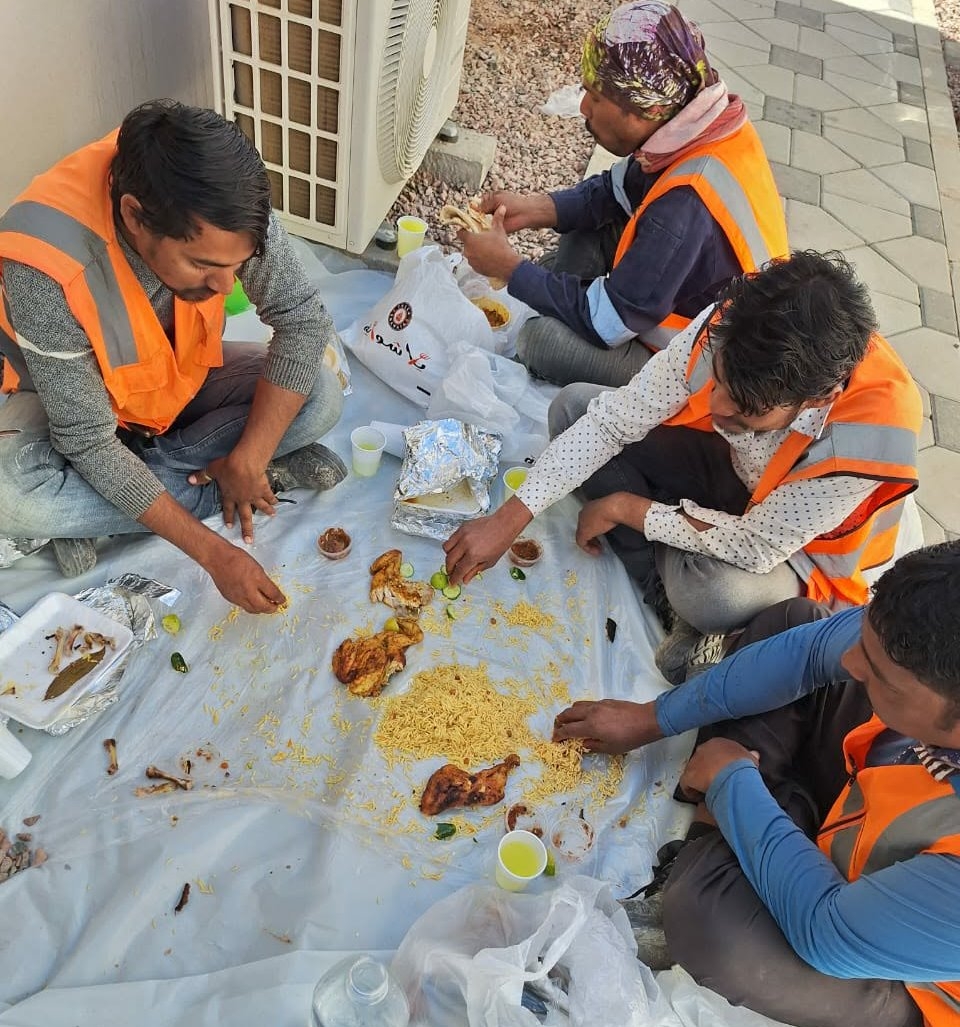
The nationality was not disclosed. Nepalis in high positions at the employer company that won the NEOM contract estimated that 80,000 Nepalis were working there, both directly and through supply companies.
The impact is not limited to Nepali workers. The NEOM project employed about 5,000 full-time salaried employees from 100 countries – including European and American architects, engineers and urban planners. CNBC reported that the number of active construction workers had fallen by about 35 percent by April 2025, months before the official suspension. According to Semafor, NEOM planned to cut about 20 percent of its more than 1,000 full-time employees (professionals) and relocate another 1,000 from remote construction sites to Riyadh. Since the relocation entails the loss of facilities like housing and food, it is actually a salary cut for those employees. The Public Investment Fund has already recorded a loss of $8 billion in its huge project.
Since the start of the NEOM project in Saudi Arabia (fiscal year 79/80 to 81/82), the number of Nepalis who have obtained work permits has been recorded as 46,836 – according to the Department of Foreign Employment. A large part of this has gone to NEOM. Along with this, the company in Qatar that had been awarded the contract to supply labor also took Nepali workers working under it to work in the NEOM project. One of them is Redco International. ‘We were brought from Qatar in large numbers. Actually, we were brought here two years ago to build an industry,’ says Rizwan Sah of Mahottari, ‘It has been a month since the company sent us to Nepal saying that the site was closed. Most of them have returned to Nepal. They say there is no site in Qatar either. We were sent on a 6-month unpaid leave.'
Nepalis are in fourth place among migrant workers in Saudi Arabia. According to the 2025 fourth-quarter labor force survey of Saudi Arabia's official national statistics agency, the General Authority for Statistics, there are about 3.4 million workers working in the construction sector in Saudi Arabia. Of these, 92 percent are non-Saudi foreign workers (migrant workers). Accordingly, the largest number are Indians (28 percent), Bangladeshis (18 percent), Pakistanis (16 percent), Nepalis (9 percent), Egyptians (8 percent), Filipinos (4 percent) and the rest are from other countries.
'The Line' project at the center of Neom was envisioned as a 170-kilometer-long futuristic city. Slowing down a huge project like Neom could have a serious impact on remittance flow, reemployment and even the labor market in Nepal, says former Nepali ambassador to Saudi Arabia Udayaraj Pandey. ‘Employment opportunities in the Gulf region have shrunk further after the Iran-US war. In such a situation, when a project like Neom slows down or stops, thousands of workers lose their jobs. This will have a big impact on us,’ he said.
‘The Line’ project at the center of Neom was envisioned as a 170-kilometer-long futuristic city. It was a vision to build a mirror-like city 170 kilometers long, 500 meters high and 200 meters wide from the shores of the ‘Red Sea’ to the interior of Saudi Arabia. It was claimed that this city would have no cars, no roads and zero carbon emissions. All transportation would be operated via underground high-speed rail and people would be able to access all services within a five-minute walk. But now it looks like just a long line drawn in the desert. The plan, which was aimed at housing more than a million people by 2030, has now been reduced to three hundred thousand. But that too is starting to look unrealistic. Austrian architect Wolf Prix had said, ‘The Line may eventually be limited to luxury hotels.’ His words now seem to be getting closer to reality. Out of the 170 kilometers, only about 2.4 kilometers of basic infrastructure has been built, which is only about 1.4 percent of the total plan. The main above-ground structure has not been built. After the work stopped here, the workers have started returning.
Similarly, the NEOM project has canceled the tunnel construction contract worth about 1 billion US dollars being built under the ‘The Line’ giga-project. According to a statement released by South Korean company Hyundai Engineering and Construction on March 13, Neom had sent a formal notice on March 12 stating that the June 2022 contract was terminated as part of the restructuring. Hyundai was involved in this project in a joint venture (consortium) with Samsung C&T and Greece-based Archirodon.
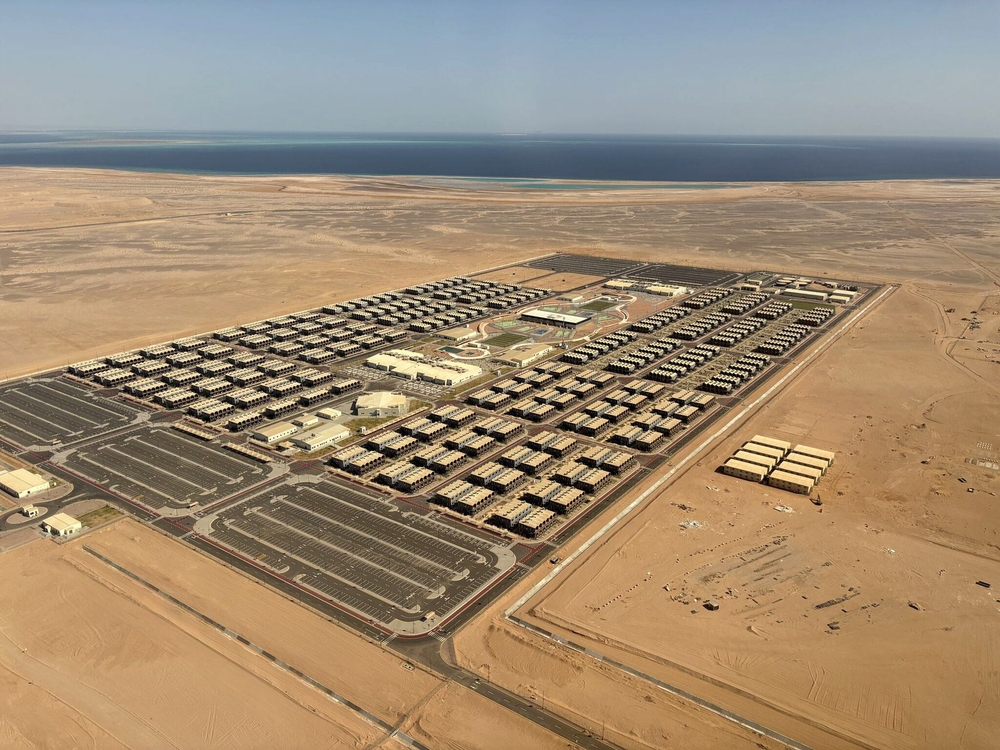
The project planned to build a 12.5-kilometer-long underground tunnel. According to Umesh Tiwari of Butwal, who is working on the ‘The Line’ project, thousands of workers lost their jobs at once. ‘Three labor camps that could accommodate 10,000-10,000 have been vacated.’ Some have been shifted to other projects in Saudi Arabia. Some have been sent to their countries,' says Tiwari, who has been working as a foreman for three years, 'All these workers used to work only on the Line project.'
Ganesh Thapa, who is working as a site foreman on this project, said that he had been unemployed for 7 months. 'We worked on the Line City construction project. This project seems to go on for many years. Demolition of mountains, construction of camps, excavation work was going on. Work was also going on to build hospitals, colleges, helipads, and roads. The flow of manpower continued. Thousands of workers were getting work through four to 500 companies,' he said. 'Suddenly, we received a notice that we would not be working. We were disappointed. The company has already sent more than 70 percent of its workers home after there was no work. I stayed home for four months. Even after three months of coming here, I have not found any new work. Now I am in a dilemma whether to work for another company or return to Nepal.’
The contract for the construction of three dams for the Trizena water reservoir in NEOM’s other important project, which was awarded to Italian construction company Webuild in January 2024 as part of a $4.7 billion infrastructure development package, was halted on March 29. According to the company, about 30 percent of the project had been completed. Construction of the dams had begun to create a 2.8-kilometer lake.
Webuild confirmed the cancellation of the contract in a statement on March 25. It said, “The costs up to the effective date of the contract and the costs of early closure of the project (including site clearance and removal of workers and equipment – demobilization) will be borne by NEOM.” According to Sharif Arsaf Maof, a senior engineer working on the project, 5,348 people were working there as of last December.
Good facilities, uncertain future
Tekram Rai from Khotang said that the ‘site’ where he works has been closed. ‘It is not yet decided when he will be sent home.’ There are probably 300 people left in the camp where we are now. For a few weeks, 5-700 people were leaving daily,’ he said.
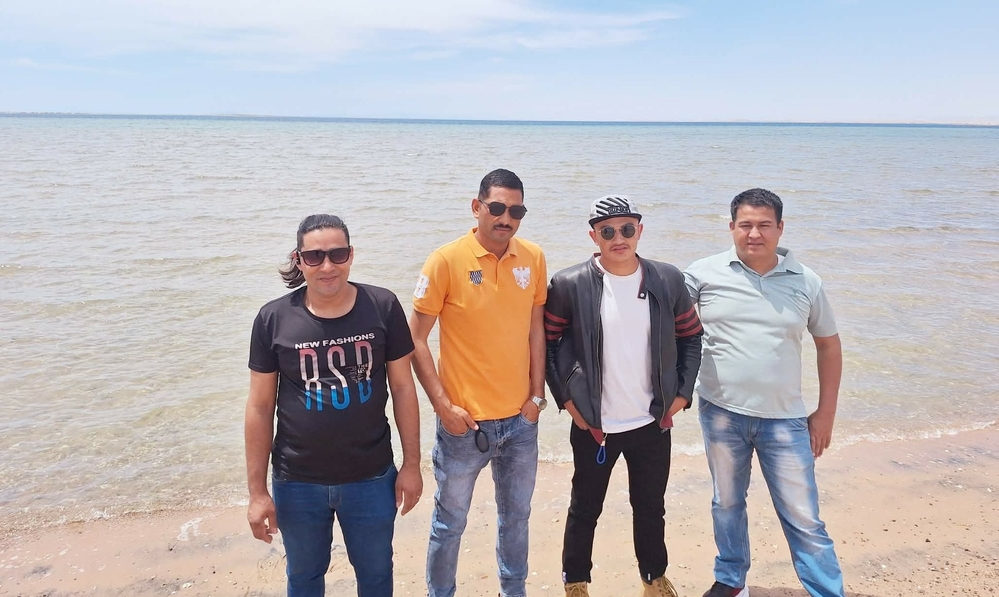
Bikash Gurung from Lamjung said that they were given two months’ salary and sent off. ‘We were given two months’ additional salary and gratuity and sent off,’ said Gurung, who worked on The Red Line project. ‘Friends were sent off in groups. There were 300 people in our group alone.’
According to the Nepali worker, Neom had given high priority to the payment of workers’ salaries. ‘My minimum salary was 800 riyals. There was four hours of overtime daily. We worked even on Fridays, which was a holiday, which earned us 1,400 riyals.’ This salary would come by the 10th of every month,' says Rajaram Mishra of Dhanusha, 'All this money would be kept clean. Three meals a day would be provided. If the site was far away, the food would be brought to the site. In the evening, food would be served on the site and brought to the camp. I am very sad to have to leave such a facility.'
Ganesh Karki of Nawalparasi, who returned home after working on the NEOM project, said that the management of the camp was attractive. 'When I worked on another project in Saudi Arabia, there was a camp where sheep and goats were kept. It was a pleasure to stay in the room of the NEOM camp. There were only four of us in the room. Drawers were provided to store our belongings. The cleanliness of the camp was regular,' he says, 'Each camp was two-storeyed. There was drinking water, water came from a jar. There was no charge to wash clothes, they would wash them themselves. We used to go to the city only once a month or two.'
The Nepali embassy does not have accurate data on the number of workers who have returned from there. However, according to workers and community representatives, thousands of Nepalis have left the Neom area in the last few months. Buddhi Prasad Vastola, president of the Non-Resident Nepali Association, Tawuk, said that almost all the Nepalis working in the Neom project have returned. 'The Nepali workers were sad to leave a good project. Some had taken loans to build houses. Some were educating their children in good places. They were worried about what the future would hold,' he says. 'Now, only those who buy luggage bags and chocolates come to the Tawuk market. The traffic in this market is decreasing day by day.'
However, there is no accurate government data on exactly how many Nepalis have returned. According to Paras Pandit, Nepali Consul General in Jeddah, who oversees the Tawuk area where the Neom project is located, the project has been reducing the number of workers for five months. ‘If there was an issue of not getting paid and not being able to go home, Nepali workers would have contacted us.’ ‘We have not received any labor-related issues here,’ he says. ‘We do not have exact details of how many Nepalis have returned home and how many have been transferred to other projects.’
Saudi claims: Project not closed
Saudi Arabia has been officially stating that the project has not been ‘completely closed.’ Yasser Al-Rumayyan, Governor of the Public Investment Fund, said in an interview with ‘Al Arabiya’ media on April 15, ‘No project within Neom has been canceled.’ He said that the industrial port of Oksgan is a priority and that it is not mandatory to complete ‘The Line’ by 2030.
However, the gap between this statement and the ground reality is wide. Thousands of workers have returned. Three major contracts have been formally cancelled. The Public Investment Fund has already incurred losses of $8 billion. Internal audits have shown that the final cost of ‘The Line’ could reach $8.8 trillion. The Crown Prince himself has been quoted by Western media as having privately admitted that the project will be ‘much smaller’ than the original plan. Al-Rumayyan’s ‘scope review’, seen from the empty camps in Tawuq, looks like the orderly end of a grand dream.

According to Rajan Shrestha, former executive director of the Foreign Employment Board, at a time when the ongoing tensions in West Asia are causing massive job losses, the lack of further employment opportunities has diminished. ‘The workforce in our labor market is still not in a position to find employment in the country.’ The ongoing construction projects in the Arab region are the main source of employment for us,' he says, 'The government has not yet come up with an effective program to settle workers who have returned from foreign employment in their home country.'
Jayaram Rai, who is looking for foreign employment again, says he sees no other option than going abroad. 'I had built a house on a loan.' I have to pay 35,000 rupees a month in installments.' The school fees of my two children are 5,000 rupees,' Jayaram says, 'I still have to go abroad for a few more years.' But, the manpower says - there is no demand from good companies right now.'
Rai and thousands of workers like Rai, who dreamed of improving their future by building the 'city of the future' in Saudi Arabia, have been abandoned by the city before they can leave.'

